
Search visibility is getting harder to win, even for businesses that publish regularly. Rankings shift faster, competition is stronger, and the old approach of guessing what Google wants is no longer enough. That is why so many marketers, freelancers, and business owners are paying close attention to the role of AI in SEO.
Used well, artificial intelligence can help you research keywords faster, uncover content gaps, improve on-page optimization, and spot patterns that would take hours to find manually. Used poorly, it can flood your site with thin content, bad advice, and pages that never rank. The difference is not the tool itself, it is how you use it.
This guide breaks down what AI for SEO actually means, where it helps most, and how to start without overcomplicating your workflow. Whether you run a small business site, manage client projects, or build products that depend on organic traffic, the goal is the same: use AI to make smarter SEO decisions, not noisier ones.
What Is AI in SEO?
At its core, AI in SEO means using artificial intelligence to improve how you plan, create, optimize, and measure search-focused content. Instead of relying only on manual research and instinct, you use machine-driven analysis to process large amounts of data and identify opportunities more quickly.
That can include everything from keyword clustering and search intent analysis to content briefs, title suggestions, internal linking ideas, and technical audits. AI can review patterns across thousands of search results far faster than a human can. This makes it especially useful for small teams that need leverage.
The important distinction is that AI is not a replacement for strategy. Search engine optimization still depends on clear positioning, credible expertise, useful content, and a strong user experience. AI speeds up parts of the work, but it does not automatically create authority or trust.
A helpful way to think about it is this: traditional SEO is like working with a compass and a paper map. You can still reach the destination, but it takes more time and interpretation. AI adds a dynamic navigation layer, it helps you see faster routes, missed turns, and hidden opportunities. You still have to decide where to go.
Why AI Has Become So Important for Search
SEO has always involved data, but the volume of that data has exploded. Search results now reflect intent, context, freshness, topical authority, user behavior, and competitive depth. Manually evaluating all of that is possible, but increasingly inefficient.
Artificial intelligence helps by finding relationships that are easy to miss. It can group related keywords, detect semantic coverage gaps, and surface themes across competitor pages. That gives you a more structured view of what search engines may expect from high-quality content in a given topic area.
There is also a practical reason for its rise. Content teams are under pressure to publish more, update faster, and prove results sooner. AI can reduce the time spent on repetitive tasks, which frees up more energy for strategy, editing, and quality control.
What AI Can and Cannot Do
AI can support idea generation, streamline research, and improve consistency. It is particularly useful when you need to organize large keyword lists, create first drafts, analyze page structure, or prioritize optimization opportunities across many URLs.
What it cannot do reliably on its own is understand your business nuance the way you do. It does not inherently know your customers, your competitive edge, or the lived experience behind your expertise. It can imitate authority, it cannot guarantee it.
That matters because search engines reward content that is genuinely helpful. If your workflow becomes fully automated, your site may start to sound polished but empty. Readers notice that quickly, and so do search systems designed to detect shallow content.
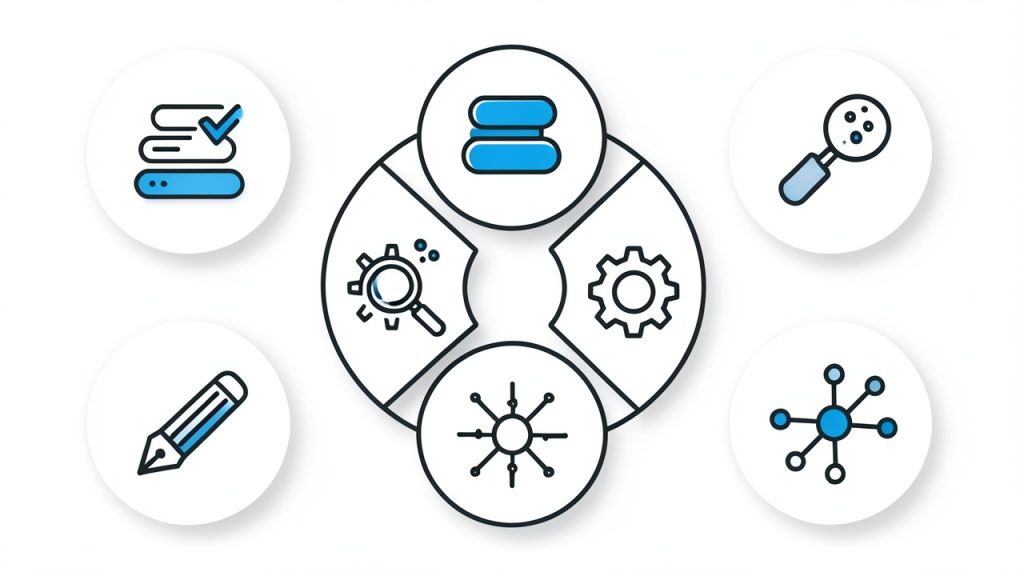
Key Aspects of AI for SEO
The value of AI becomes clearer when you look at the specific parts of SEO it can improve. Not every use case delivers the same impact, and not every business needs the same level of automation.
Keyword Research and Topic Discovery
One of the strongest use cases for AI in SEO strategy is keyword research. AI tools can process large sets of search queries and group them by similarity, intent, and topical relevance. That helps you move beyond isolated keywords and start building content around complete subject areas.
For example, instead of targeting only one term like “email marketing tips,” AI can help uncover related needs such as beginner setup, automation workflows, open rate improvement, segmentation tactics, and reporting questions. This leads to more comprehensive content planning.
It also improves prioritization. Rather than chasing every keyword with volume, you can use AI-assisted analysis to identify themes that better match your audience and commercial goals. This matters because not all traffic is useful traffic. Relevance beats raw volume.
Search Intent Analysis
Search intent is one of the most important ideas in modern SEO, and AI is particularly good at pattern recognition. By analyzing search results at scale, AI can help you understand whether users want a guide, a tool, a product page, a comparison, or a quick answer.
That prevents a common mistake: creating the wrong type of content for the query. If the top results are all product comparison pages and you publish a short educational article, your page may struggle even if the writing is strong.
Intent analysis also helps with content depth. Some topics need a concise answer. Others need a full framework, examples, and visuals. AI can reveal those expectations faster by studying how successful pages are structured.
Content Creation and Optimization
This is the area that gets the most attention, and also the most misuse. AI can absolutely help with content creation. It can generate outlines, draft introductions, rewrite weak sections, suggest FAQs, and improve readability. For busy teams, that can cut production time significantly.
But there is a clear difference between AI-assisted writing and AI-dependent publishing. The first uses AI as a drafting partner, the second treats it like a substitute for expertise. That is where quality drops.
The best results usually come from a layered process. AI handles the heavy lifting of organizing ideas and producing a rough draft. A human then sharpens the argument, adds examples, checks accuracy, aligns the tone, and contributes real insight. That combination is far stronger than either approach on its own.
On-Page SEO Improvements
Artificial intelligence can also help optimize existing pages. It can suggest stronger titles, better subheading structures, improved keyword placement, missing entities, and clearer calls to action. This is useful when you already have content but need to make it more competitive.
In many cases, the gains come from clarity rather than keyword density. AI can identify where a page is vague, repetitive, or incomplete. It can also compare your page against similar ranking content and highlight missing subtopics.
That said, suggestions should not be followed blindly. If every recommendation is accepted mechanically, content can become formulaic. Search performance often improves when a page is both well optimized and distinctly useful.
Technical SEO and Site Analysis
Technical SEO can feel intimidating, especially for small teams. AI does not remove the need for technical knowledge, but it can make issue detection more accessible. It can summarize crawl problems, flag duplicate content risks, spot internal linking weaknesses, and identify pages that may be underperforming due to structural issues.
This is especially helpful when a website has grown quickly. Over time, many sites accumulate orphan pages, inconsistent metadata, redirect chains, and outdated content. AI can surface these patterns more quickly than a manual page-by-page review.
For developers and technically minded site owners, AI can also speed up diagnosis. Instead of just listing errors, better systems can explain likely causes and suggest practical fixes in plain language. That shortens the gap between noticing a problem and acting on it.
Competitor Analysis
Competitor research is often where AI saves the most time. Reviewing rival pages manually takes effort, especially when you are comparing multiple domains across many keywords. AI can summarize content themes, ranking patterns, topical gaps, and structural differences much faster.
This can reveal opportunities that are not obvious at first glance. You might discover that competitors rank not because they write better, but because they answer a broader range of related questions. Or you may find that a weaker-looking site is winning with stronger internal linking and clearer page intent.
The point is not to copy competitors. It is to understand the landscape so you can build something more complete, more useful, or more focused for your audience.
Performance Forecasting and Workflow Efficiency
Another growing benefit of using AI in SEO is operational. Beyond rankings and content, AI can help teams prioritize work. It can identify which pages are most likely to benefit from an update, which topics deserve expansion, and where effort is unlikely to pay off.
That kind of forecasting matters when resources are limited. Most small businesses and freelancers cannot optimize everything at once. AI can act like a filter, helping you decide what deserves attention first.
The efficiency gains are real, but they should be measured carefully. Faster output is only valuable if it leads to better outcomes. Publishing twice as much mediocre content rarely beats publishing fewer, stronger pages with a clear purpose.
How to Get Started With AI for SEO
Getting started does not require a complex stack or a large budget. In fact, the smartest approach is usually the simplest one. Begin by improving one part of your workflow where time is being lost or quality is inconsistent.
Start With a Specific Use Case
If you try to apply AI to every SEO task at once, you will likely end up with clutter instead of clarity. A better approach is to choose one focused use case. For some teams, that is keyword clustering. For others, it is content brief creation, content updates, or metadata optimization.
When you begin with a narrow goal, it becomes easier to judge whether AI is actually helping. You can compare speed, quality, and outcomes against your old process. That gives you a practical baseline instead of relying on hype.
A simple first step is to take an existing topic and use AI to organize related keywords and subtopics. Then compare that output to what you would have planned manually. In many cases, you will find useful patterns, but also some irrelevant suggestions. That is normal. The skill lies in filtering.
Keep Human Review in the Loop
The fastest way to damage your SEO is to publish AI-generated content without meaningful review. Even when the writing sounds smooth, it may contain vague claims, outdated advice, or filler that adds no value.
Human review protects quality. It ensures the content matches your brand, reflects your audience’s real questions, and includes details AI cannot invent responsibly. This is especially important in industries where trust matters, such as finance, health, legal services, or B2B consulting.
Think of AI as your first-pass assistant, not your final editor. It can accelerate the early stages, but judgment still belongs to the human side of the workflow.
Build a Repeatable Process
SEO becomes more effective when it is systematic. If AI is going to help, it should fit into a repeatable process rather than being used randomly from task to task.
A practical starter workflow often looks like this:
Research the topic and gather search queries, competitor pages, and audience questions.
Use AI to organize patterns such as intent, clusters, missing subtopics, and content structure.
Create or revise content with human expertise, examples, and brand-specific positioning.
Review performance after publishing, then update based on impressions, clicks, and ranking movement.
This kind of structure keeps AI grounded in real SEO work. It also makes it easier to improve over time because you can see where the output was genuinely useful and where it created extra editing.
Focus on High-Leverage Pages First
Not every page deserves the same level of effort. If you are new to AI-assisted SEO, start with pages that can produce visible results. That usually means service pages, high-intent blog posts, product category pages, or aging content that already gets impressions but underperforms.
These are the pages where better structure, stronger relevance, and fresher information can have an outsized impact. AI can help you identify what is missing, but the page still needs a clear business objective and a useful reader experience.
That is why page selection matters. You do not need hundreds of AI-touched pages. You need a handful of pages where improved optimization can actually move traffic or conversions.
Measure More Than Output
It is easy to get impressed by speed. A tool that creates ten content ideas in seconds feels productive. But SEO success is not about how quickly assets are produced. It is about whether they rank, earn clicks, satisfy visitors, and support business goals.
So measure outcomes, not just activity. Track whether AI-assisted pages attract better traffic, whether content updates improve visibility, and whether search visitors convert at a useful rate. If those numbers do not improve, the workflow may be efficient but ineffective.
The table below shows the difference between a healthy and unhealthy approach to using AI for SEO.
Many early mistakes with AI in SEO come from unrealistic expectations. Some users assume AI will replace expertise. Others assume more content automatically means more rankings. Neither assumption holds up for long.
The most common problem is sameness. When everyone uses similar prompts and publishes lightly edited drafts, content starts to blend together. It may be readable, but it lacks the specificity that makes a page worth ranking or sharing.
Another mistake is skipping fact-checking. AI can sound certain while being wrong. In SEO, inaccurate content is more than embarrassing. It can hurt trust, weaken conversions, and create expensive cleanup work later.
Conclusion
Artificial intelligence is changing SEO, but not by making strategy obsolete. Its real value is speed, pattern recognition, and support across research, optimization, and analysis. When used carefully, it helps small teams work with more precision and less wasted effort.
The strongest approach is simple: use AI to handle repetition and surface insights, then rely on human judgment to shape the final result. Start with one use case, test it on important pages, and measure whether it improves outcomes. That is how AI for SEO becomes a practical advantage instead of just another trend.
Your next step is to pick a single workflow, whether keyword research, content optimization, or content brief creation, and improve it with AI this week. Keep the process lean, review everything with a human eye, and build from what actually works.
Choosing the right SEO software can save months of wasted effort. Choosing the wrong stack can do the opposite, flooding you with dashboards, noisy metrics, and expensive subscriptions that never turn into rankings, leads, or sales.
The best SEO tools are not always the most expensive ones. They are the tools that match your goals, your team size, and your workflow, a solo consultant usually needs a lean setup with strong keyword research and rank tracking, a local business may get most of its value from Google Search Console, a local listing platform, and a simple on-page plugin, and an agency often needs collaboration, reporting, crawling, and backlink intelligence at scale.
This guide covers both free and paid SEO tools, with ranked recommendations, side-by-side comparisons, practical workflows, and advice on how to build a stack that actually works. If you want a quick shortcut, start with your primary need: keyword research, technical SEO, backlinks, content optimization, local SEO, or reporting. Then choose one core tool, one validation source from Google, and only add specialized tools when you hit a real limitation.
Why Choosing the Right SEO Tools Matters
SEO tools now cover far more than keyword ideas. A modern toolkit may include keyword research, rank tracking, backlink analysis, technical crawling, on-page optimization, content planning, page speed testing, local listing management, and reporting. That breadth is useful, but it also makes tool selection harder because many platforms overlap.
The good news is that most people do not need everything at once. Small businesses usually need visibility into search queries, page performance, and local presence. Freelancers often need fast audits, competitor research, and lightweight reporting. In-house teams may need deeper integrations, API access, and clearer collaboration features. The best setup depends less on industry hype and more on what work you need to do every week.
This article is structured to help you move from confusion to a practical decision. First, you will learn how to choose SEO tools based on goals and budget. Then you will see the top tools by category, followed by ranked short reviews, a comparison table, and step-by-step workflows for using multiple tools together.
How to Choose the Right SEO Tools for Your Needs
Start with the outcome you care about most. If your goal is traffic growth, prioritize keyword research, content planning, and rank tracking. If your goal is technical stability, put more weight on crawling, page speed testing, and Search Console diagnostics. If you run a local business, local listings, reviews, and map visibility matter more than a huge backlink database.
Match tasks to features. Keyword research tools help you find topics, estimate search demand, and assess competition. Site audit tools uncover crawl errors, redirects, duplicate content, missing metadata, and indexation issues. Backlink tools help with link prospecting, competitor analysis, and toxicity review. Content optimization platforms help turn a target keyword into a stronger brief and more complete page.
Budget matters, but so does team fit. A free stack can go surprisingly far when combined well. Entry-level plans are often enough for a freelancer or early-stage business. Enterprise plans only make sense when you need larger data allowances, more seats, API access, and formal reporting.
Before committing, test three things during a free trial: data quality, usability, and exportability. You should be able to answer simple questions quickly, such as which pages lost traffic, which keywords a competitor ranks for, what technical issues matter first, and how easily you can export data into a spreadsheet or dashboard.
Top SEO Tools by Category
If you want a quick map of the market, it helps to think in categories. Ahrefs, SEMrush, and Moz Pro are broad suites. Screaming Frog is a technical crawler. Google Search Console and Google Analytics are foundational free data sources. Surfer SEO and Clearscope focus on content optimization. AccuRanker and SERPWatcher are rank trackers. GTmetrix, PageSpeed Insights, and WebPageTest handle performance testing. Yoast and Rank Math support WordPress on-page SEO.
For keyword research, the strongest choices are usually Ahrefs, SEMrush, and Google’s own search data via Search Console. For technical audits, Screaming Frog remains one of the most trusted options because it shows what a crawler sees, not just what a marketing dashboard summarizes.
For backlinks, Ahrefs and Majestic are widely respected. For local SEO, Moz Local and Google Business Profile-related workflows are often enough for many small businesses.
What matters most is not finding one perfect tool. It is building a complementary stack. A strong stack often includes one discovery tool, one technical tool, and one source of truth from Google.
1. Ahrefs
Ahrefs is one of the most respected SEO platforms for backlink analysis, keyword research, competitor discovery, and content gap analysis. It is especially useful when you want to understand why a competing page ranks, where its links come from, and which topics are driving growth in a niche.
Key features include Site Explorer for backlink and organic traffic analysis, Keywords Explorer for keyword ideas, difficulty, and SERP review, a Site Audit tool for technical SEO monitoring, and Content Gap and competitor comparison tools. Its strengths are strong backlink intelligence, excellent competitor research workflows, and useful keyword and content gap features. Pricing can be steep for small teams, some users find usage limits restrictive, and it is not the cheapest option for occasional use. Ahrefs typically fits best when SEO is a consistent growth channel rather than an occasional task.
SEMrush is a broad digital marketing suite with strong SEO functionality, especially in keyword research, site audits, rank tracking, competitor analysis, and advertising research. It is often the best fit for teams that want one platform to cover both organic and paid search visibility.
Its advantage is breadth, enabling keyword research, site audits, position monitoring, competitor examination, and report generation without switching systems constantly. That makes it attractive for agencies and marketing managers who need all-in-one convenience more than specialist depth in one narrow area. SEMrush offers a wide feature set beyond pure SEO, strong reporting and project organization, and a good fit for agencies and multi-channel teams. The interface can feel busy at first, cost rises quickly with add-ons and limits, and heavy overlap of features can overwhelm new users.
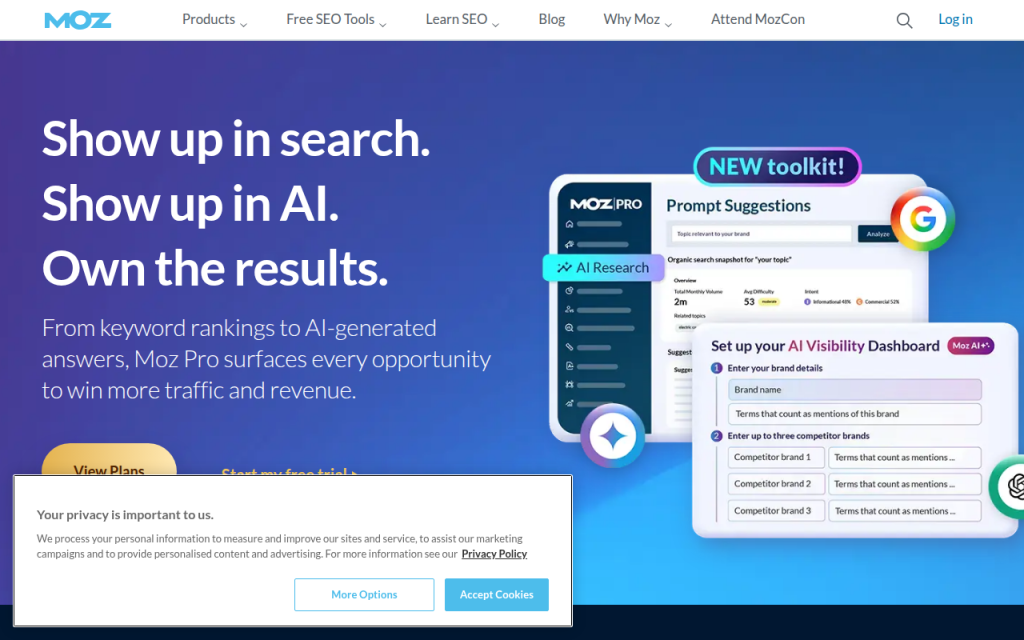
Moz Pro remains a solid choice for users who want a more approachable SEO suite. It is often recommended for beginners, small businesses, and teams that want straightforward workflows without too much clutter.
Moz’s strengths include keyword tracking, site audits, and recognizable authority metrics. It may not feel as expansive as Ahrefs or SEMrush in every area, but that simplicity can be an advantage when adoption matters more than power-user depth. Moz is beginner-friendly, backed by a good educational ecosystem, and useful for small teams and local visibility work. Some datasets feel less expansive than top-tier rivals, power users may outgrow it, and advanced workflows are not its strongest angle.
Screaming Frog is the technical SEO specialist on this list. It crawls websites the way a search engine bot might, revealing status codes, redirect chains, duplicate tags, missing metadata, canonicals, orphan pages, and indexation problems.
This is the tool to use when rankings are blocked by technical issues rather than weak content. It gives raw, actionable data and is beloved by consultants, developers, and technical SEOs. Features include deep site crawling, custom extraction, technical filtering, and integrations with analytics and Search Console for richer audits. Screaming Frog is one of the best technical crawlers available, excellent for audits and migrations, and useful for large sites and detailed QA work. It has a learning curve for non-technical users, a desktop-software feel that may not suit everyone, and it is less useful for keyword discovery than all-in-one suites. There is a free version with crawl limits and a paid version that unlocks larger-scale and advanced functionality.
Google Search Console is not optional. It shows how your site actually performs in Google Search, including queries, clicks, impressions, average position, indexing status, and coverage issues.
For small businesses and experienced SEOs alike, this is your validation layer. Third-party tools estimate, Search Console reports what Google is willing to tell you directly. It is essential for identifying pages that rank without getting clicks, queries with growing impressions, and indexing problems that can quietly suppress performance. It is free and authoritative, essential for indexing and performance diagnostics, and valuable for validating third-party data. Limitations include less historical granularity compared with some paid tools and an interface built more for function than polish.
Google Analytics complements Search Console by showing what happens after the click, helping you understand traffic sources, engagement, conversions, landing-page performance, and user behavior.
Analytics is critical because ranking alone is not the goal. If a page attracts traffic but drives no leads, purchases, or signups, it may need a different keyword target or a stronger page experience. Used with Search Console, Analytics helps connect visibility to business outcomes. Setup can be confusing for beginners, and event tracking requires care, but it remains free and powerful when implemented well.
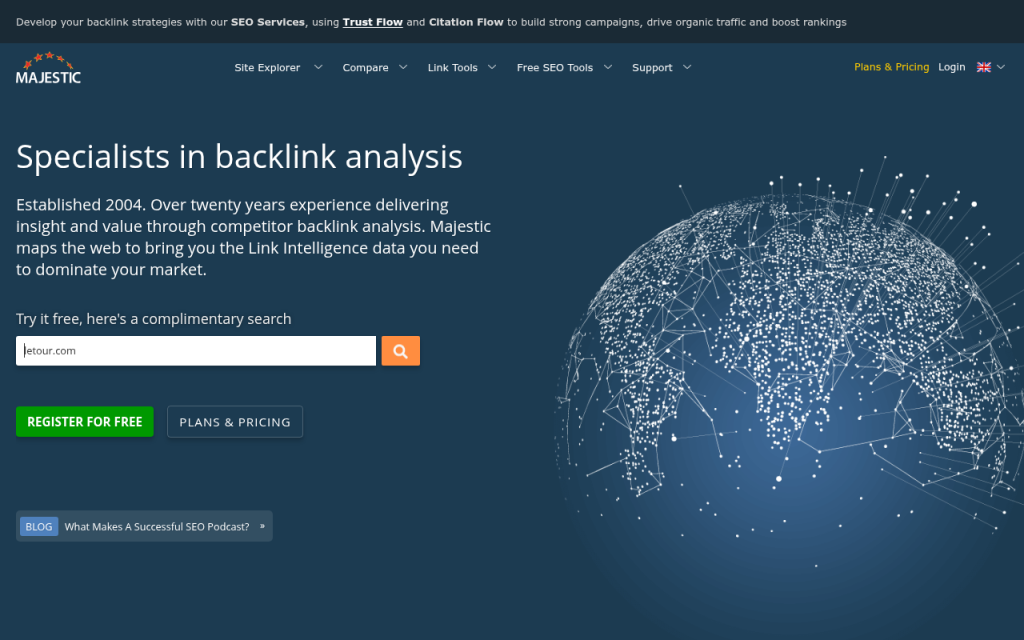
Majestic is a specialized link intelligence platform focusing on backlink profiles, trust metrics, citation metrics, and link neighborhood analysis. It is not trying to be an all-in-one SEO suite, and that focus is why many link builders still value it.
If your work revolves around authority analysis, competitor link comparisons, and prospect qualification, Majestic provides a link-centric lens rather than an everything dashboard. Its strengths are backlink-focused workflows and proprietary trust metrics. It can feel narrow compared with broader suites, the interface may seem dated to some users, and it is usually justified for teams doing regular backlink work.
Surfer SEO focuses on content optimization, SERP-based content structure, on-page recommendations, and workflow support for writers and editors. It helps teams build pages that better match search intent and topical coverage by suggesting subtopics and relevant terms based on ranking pages.
Its real value is speed and structured briefs. Surfer is excellent for content briefs and optimization, aligning pages to SERP patterns, and supporting writers and editors. It can encourage formulaic writing if used too rigidly, and it is best combined with editorial judgment rather than used as an optimization score alone. You will need a separate tool for technical and backlink work.
Clearscope is a leading content optimization platform, praised for a clean editorial workflow and strong relevance guidance. It helps teams produce content that is more complete, aligned with search intent, and easier to brief across stakeholders.
Clearscope feels polished for larger content teams and publishers that want consistency across many writers. It is premium priced and more narrowly focused than all-in-one suites, making it better for mature content workflows than for early experimentation.
AccuRanker is a specialist rank tracking tool designed for accurate, frequent keyword position monitoring. If daily ranking movements matter, especially across many terms, locations, or devices, a dedicated tracker like AccuRanker is often more reliable and flexible than bundled trackers inside general SEO suites.
It is best for agencies and larger teams where reporting precision matters. AccuRanker offers strong rank tracking accuracy, frequent reporting options, and useful filters for segmentation. It is a specialized subscription that adds another cost to the stack and is overkill for very small sites. Pricing typically scales with the number of tracked keywords.
GTmetrix is a practical tool for testing page speed, loading behavior, and performance bottlenecks. It translates site speed into visible issues such as oversized assets, script delays, and render-blocking resources.
For many businesses, GTmetrix is easier to interpret than raw developer diagnostics alone. It is especially useful during redesigns, template changes, and troubleshooting drops in page experience.
WebPageTest is a deeper performance testing platform favored by developers and technical specialists. It allows more detailed test conditions and waterfall analysis than many beginner tools.
If GTmetrix gives you the headline, WebPageTest gives you the engineering detail. It is ideal when SEO and performance work overlap heavily.
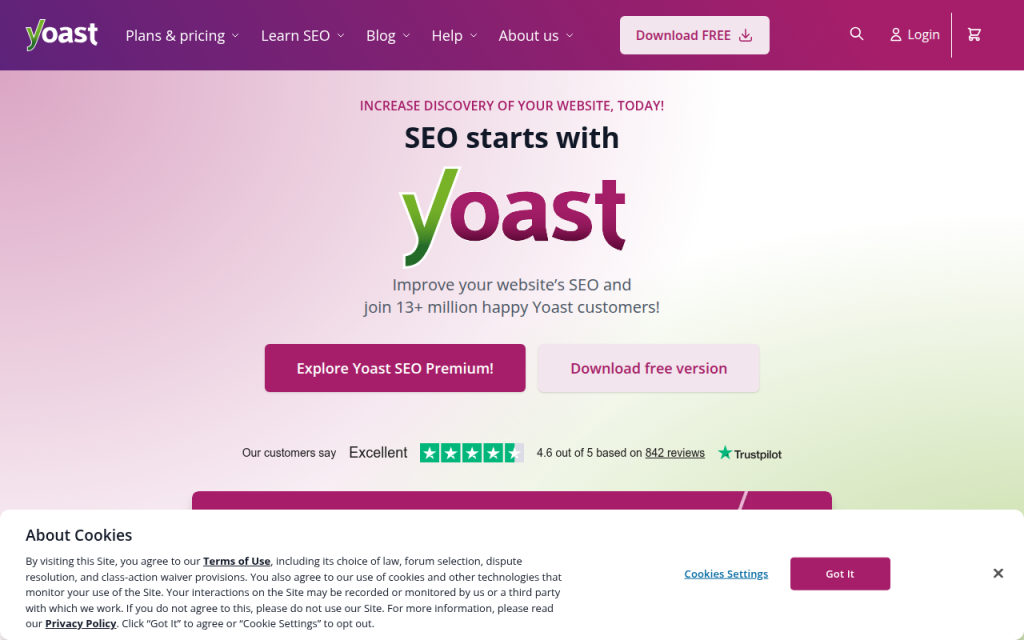
Yoast SEO is a well-known WordPress plugin that handles titles, meta descriptions, XML sitemaps, schema basics, and on-page optimization guidance. It helps site owners manage important SEO settings without editing code.
For small business sites on WordPress, Yoast is often enough to establish a strong on-page foundation, especially when combined with Search Console and a basic keyword workflow.
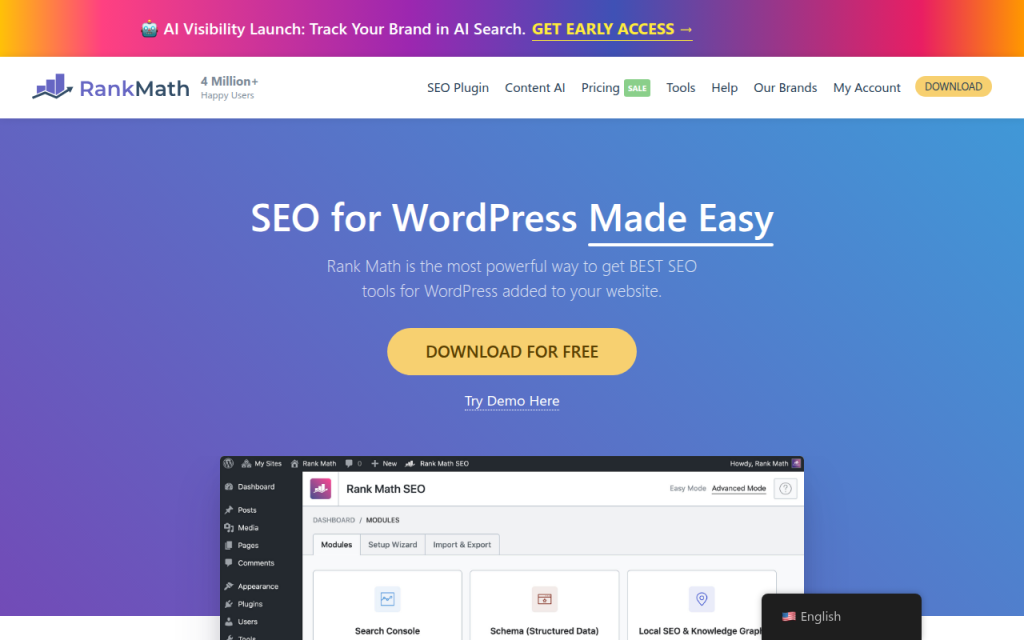
Rank Math is another popular WordPress SEO plugin with a broad feature set and a modern interface. Many users like it because it packs schema options, on-page checks, redirects, and integrations into a single plugin.
It appeals to site owners who want more built-in functionality from their WordPress SEO plugin without adding several separate extensions.
Side-by-Side Comparison: Features, Pricing, and Best Use Cases
Here is a practical comparison of leading options.
Tool
Best For
Strength Area
Free Option
Typical Pricing Level
Best User
Ahrefs
Competitor SEO research
Backlinks, keywords
Limited tools
Premium
Agencies, in-house teams
SEMrush
All-in-one marketing SEO
Keywords, audits, reporting
Limited trials/tools
Premium
Agencies, multi-channel teams
Moz Pro
Simpler SEO suite
Usability, tracking
Limited free tools
Mid to premium
Small teams, beginners
Screaming Frog
Technical SEO
Crawling, audits
Yes, limited crawl
Low to mid
Consultants, developers
Google Search Console
Search performance
Queries, indexing
Yes
Free
Everyone
Google Analytics
User behavior
Engagement, conversion
Yes
Free
Everyone
Majestic
Link analysis
Trust and backlink data
Limited
Mid
Link-focused SEOs
Surfer SEO
On-page content
Optimization, briefs
No meaningful free tier
Mid
Content teams
Clearscope
Editorial SEO
Content relevance
No
Premium
Publishers, large teams
AccuRanker
Rank tracking
Position accuracy
No
Mid to premium
Agencies, reporting-heavy teams
GTmetrix
Speed testing
Performance diagnostics
Yes
Free to mid
Site owners, developers
Yoast SEO
WordPress on-page SEO
Metadata, sitemaps
Yes
Low
WordPress site owners
Rank Math
WordPress SEO plugin
On-page, schema, redirects
Yes
Low
WordPress site owners
A smart stack avoids too much overlap. For many teams, Ahrefs plus Screaming Frog plus Search Console is a strong research and technical combination. SEMrush plus GA4 plus a WordPress plugin suits many small marketing teams. Search Console plus Analytics plus Screaming Frog free plus Yoast or Rank Math is an excellent low-cost starting point.
Practical Workflows: How to Use Tools Together
For a new site launch, start in Search Console and your CMS. Set up verification, submit the sitemap, and confirm indexing access. Then run Screaming Frog to check titles, canonicals, redirects, and noindex issues. Use Ahrefs or SEMrush to build a keyword map by assigning one primary intent to each core page. Finally, use Yoast or Rank Math to implement on-page basics and monitor impressions in Search Console during the first few weeks.
For a content workflow, begin with topic discovery in Ahrefs or SEMrush and pick a keyword cluster based on realistic competition and business relevance. Then use Surfer SEO or Clearscope to create a brief with subtopics, headings, and coverage guidance. After publishing, track early impressions and query variations in Search Console, then refine the page based on actual search behavior rather than only optimization scores.
For a backlink workflow, use Ahrefs or Majestic to review competitor links and identify realistic prospects. Evaluate link quality by relevance, authority patterns, and traffic signals rather than one metric alone. After outreach and link acquisition, monitor the impact on target pages in Search Console and rankings in AccuRanker or your suite’s tracker.
For a technical SEO workflow, crawl the site with Screaming Frog, sort issues by impact, then hand off priority fixes to development. Re-crawl after deployment to verify changes. Use Search Console to confirm that indexing and coverage trends improve over time. Technical SEO is not just about finding errors, it is about verifying that search engines respond positively after the fix.
Free and Low-Cost Alternatives
If budget is tight, start with Google Search Console, Google Analytics, PageSpeed Insights, Screaming Frog free, and a WordPress plugin like Yoast or Rank Math. That stack will not replace a premium suite for competitor intelligence, but it covers the essentials surprisingly well.
Low-cost tools become attractive when you need one extra capability without buying a giant platform. A smaller rank tracker, a limited content optimization subscription, or a standalone crawler license can often produce better ROI than paying for a large suite you barely use.
A simple way to extend free tools is to export data into spreadsheets. Search Console query exports can reveal pages with high impressions but low click-through rates, which often surfaces quick wins faster than broad keyword databases. CSV exports from crawlers can also be filtered to uncover missing metadata, redirect chains, and thin category pages.
Advanced Topics and Emerging Trends in SEO Tools
AI is changing how SEO tools assist with content briefs, topical clustering, internal linking suggestions, and intent modeling. The best use of AI in SEO is acceleration, not blind content generation. AI helps teams analyze SERPs faster, organize information, and identify missing angles, while human judgment protects quality and originality.
Privacy changes and reduced data transparency also affect tool choice. Third-party estimates remain useful, but they are still estimates. That makes first-party sources like Search Console, Analytics, CRM data, and server logs more important. Future-proof SEO stacks will combine external intelligence with internal evidence.
Another growing area is SERP feature tracking. Ranking number three means less if the page is pushed down by ads, video packs, local packs, and AI-generated search features. Modern SEO tools need to help you see not just rank, but visibility context.
Common Mistakes When Choosing or Using SEO Tools
One of the biggest mistakes is relying too heavily on a single metric such as Domain Authority, Domain Rating, or Trust Flow. These numbers are helpful shorthand, not business truth. A lower-metric site can still outrank stronger domains with better relevance, structure, and intent match.
Another common mistake is buying overlapping subscriptions too early. Many teams pay for two large suites when one suite plus Search Console would cover most tasks. Complexity rises, adoption drops, and reporting becomes inconsistent.
Misconfiguration is another silent failure point. If Analytics events are wrong, Search Console is not verified properly, or crawlers are blocked, your tool stack will produce false confidence. Always validate setup before trusting output.
Tool Evaluation Checklist and Quick Decision Guide
Use this simple framework when comparing three candidate tools: core feature fit, data trust, ease of use, integrations, export options, support, and total monthly cost. Score each category from 1 to 5. The highest score should not automatically win, but patterns become obvious quickly.
For a small business, prioritize ease of use, essential audits, Google integration, and affordable pricing. For a freelancer, prioritize research depth, exportability, and technical troubleshooting. For an agency, prioritize collaboration, reporting, crawl capacity, and keyword-tracking scale. For an enterprise team, API access, governance, and integration flexibility become much more important.
Conclusion and Next Steps
The best SEO software is rarely one tool. It is usually a stack built around a clear job. For many users, a practical starting point is Google Search Console plus Google Analytics, one core SEO platform, and one technical or content specialist tool as needed. That combination keeps costs controlled while giving you enough data to make better decisions.
If you are evaluating options now, run a two-week trial with one real objective. Audit your site, research one competitor, optimize one page, and track one set of target keywords. If the tool helps you make faster, better decisions in that short window, it has probably earned a place in your stack.
Ranking in search is rarely about luck. Most pages that win organic traffic do so because they send clear, useful, and technically sound signals to search engines and to people. If your content is good but invisible, or your pages get impressions but few clicks, the problem is often on the page itself.
That is why on-page SEO matters so much. It is the part of search optimization you can directly control, from the title tag, headings, and content depth, to internal links, structured data, and page experience. When these elements work together, your pages become easier to understand, easier to rank, and easier to convert.
This guide shows you how to optimize pages for search in a practical, prioritized way. You will learn what matters most, how to implement it, how to measure results, and how to build a repeatable workflow that works whether you run a small business site, a blog, a SaaS product, or a large e-commerce catalog.
What On-Page SEO Is and Why It Matters
Definition: On-page vs. off-page vs. technical SEO
On-page SEO is the practice of optimizing the elements on a webpage so search engines can understand it and users can get value from it quickly. That includes your title tag, meta description, URL, headings, copy, images, internal links, and structured data.
A simple metaphor helps. Think of your webpage as a product shelf in a store. Your content is the product. Your title tag is the shelf label. Your headings are the section dividers. Your internal links are the signs pointing shoppers to related aisles. Your technical setup is the lighting and store layout that makes the shelf easy to find and navigate. If any of those pieces are weak, the product may still be great, but fewer people will discover it.
Off-page SEO is different. It covers signals that happen away from your site, such as backlinks, brand mentions, and reputation. Technical SEO sits beneath both, focusing on crawlability, indexation, site architecture, page speed, and other infrastructure. On-page SEO lives at the intersection of content quality and discoverability, which is why it has such a direct impact on performance.
How search engines use on-page signals
Search engines read on-page elements to understand topic, intent, quality, and context. Your title tag and headings help define the page’s primary subject. The body copy explains depth and relevance. Internal links show how the page connects to the rest of the site. Image alt text and schema add more meaning.
Google does not rank pages because they contain a certain number of keywords. It ranks pages because they appear to satisfy a searcher’s need better than alternatives. On-page signals help it make that judgment.
Industry studies have consistently shown that optimized titles and compelling meta descriptions can improve click-through rate, and higher-quality content aligned with search intent tends to correlate with stronger rankings. Google’s own documentation also emphasizes helpful content, page experience, and clear structure, all of which are central to strong on-page optimization.
Business impact: traffic, conversions, and UX
Good on-page SEO does more than improve rankings. It improves click-through rate from search results, engagement on the page, and conversion performance once users arrive.
A better title tag can increase clicks without any ranking change. A clearer introduction can reduce bounces. Stronger internal links can move visitors from an article to a service page or product page. Faster image loading can improve both mobile usability and revenue.
This is why on-page SEO is not just an SEO task. It is a content, UX, and conversion task too.
Core On-Page Ranking Factors (What to Optimize)
Title tags: best practices and examples
The title tag is still one of the most important on-page elements because it helps search engines understand page topic and heavily influences SERP clicks. A strong title should be specific, relevant, and aligned with search intent.
A good title usually places the primary topic near the beginning, stays readable, and gives a clear reason to click. For example, “On-Page SEO Checklist for Beginners | 15 Quick Fixes” is stronger than “SEO Tips” because it communicates topic, audience, and benefit.
Common mistakes include stuffing too many keywords, writing titles that are too vague, and duplicating the same title across multiple pages. In terms of prioritization, title optimization is high impact and low effort, which makes it one of the fastest wins.
Here is a simple example:
<title>Complete On-Page SEO Guide: How to Optimize Your Pages for Search</title>
Meta descriptions and SERP CTR optimization
Meta descriptions are not direct ranking factors in the classic sense, but they strongly influence whether users click your result. Think of them as your ad copy in organic search.
The best meta descriptions match the query’s intent and promise a useful outcome. For an informational query, clarity works better than hype. For a transactional page, benefits and urgency matter more.
A solid example would be: Learn how to improve title tags, headings, content, internal links, schema, and page speed with this complete on-page SEO guide.
Avoid generic descriptions, missing descriptions, or descriptions that simply repeat the title. Optimizing them is usually medium impact and low effort, especially for pages already receiving impressions.
URL structure and canonicalization
URLs should be short, descriptive, and readable. They help reinforce page topic and improve usability. A page like /on-page-seo-guide/ is easier to understand than /blog/post?id=4839.
Canonicalization matters when similar or duplicate pages exist. A canonical tag tells search engines which version is preferred. This is especially important for e-commerce filters, tracking parameters, and republished content.
Common errors include pointing canonicals to the wrong page, canonicalizing paginated pages incorrectly, or leaving duplicate pages fully indexable. Canonicals are high impact where duplication exists, but lower priority on small, simple sites.
Heading tags (H1 to H3): structure and keyword usage
Headings help users scan and help search engines understand content hierarchy. Your H1 should state the page’s main topic clearly. H2s and H3s should break the subject into logical sections.
Good heading structure feels natural. It guides the reader through the page instead of acting like a list of keywords. For instance, “How Search Engines Use On-Page Signals” is better than “On Page SEO Search Engine Ranking Keyword Guide”.
The biggest mistake is using headings only for styling instead of structure. Another is having no H1 or several competing H1s. Heading optimization is high impact and low effort, especially for pages with weak structure.
Content quality, depth, and topical relevance
Content remains the center of on-page SEO. Search engines want to rank content that is useful, reliable, and aligned with the user’s intent. That does not always mean longer content. It means content that answers the query well.
An informational query often benefits from depth, examples, and context. A transactional query may need concise copy, trust signals, comparison details, and clear calls to action. The right content is the one that helps the user complete their task.
Thin content, filler text, and shallow rewrites are common failures. Improving core content is usually very high impact but medium to high effort, which is why it deserves prioritization on pages with strong business value.
Keyword usage and placement (intent-driven optimization)
Keyword optimization is about relevance, not repetition. Your primary topic should appear naturally in the title, H1, opening paragraph, key subheadings, and body copy where it makes sense. But intent matters more than exact phrasing.
For a query around on-page SEO, related concepts such as title tags, internal links, search intent, and schema help strengthen the page. Search engines increasingly evaluate meaning and coverage, not just string matching.
The most common error is forcing awkward wording. Another is targeting one keyword while writing a page that serves a different intent. This is high impact and low to medium effort when mapped properly.
LSI, related keywords, and semantic optimization
“LSI keywords” is an outdated phrase, but the underlying idea still matters. Search engines look for semantically related terms and entities that help confirm topic depth.
If you are writing about on-page SEO, you would naturally discuss CTR, meta tags, Core Web Vitals, schema markup, indexation, and content relevance. Those related terms signal breadth and expertise.
A simple way to find these terms is to review People Also Ask results, related searches, competitor headings, and Search Console query data. Semantic optimization is generally medium impact and low effort once you understand the topic.
Internal linking and anchor text strategy
Internal links help search engines discover pages, understand site structure, and distribute authority across your site. They also help users move from awareness to action.
A strong internal link strategy connects related pages with descriptive anchor text. For example, from a blog post on page speed, you might link to a service page about technical SEO or an article on image optimization.
Avoid vague anchors like “click here” and avoid over-optimizing every anchor with the exact same phrase. Internal linking is one of the most underused high-impact, low-effort tactics in SEO.
Images: file names, alt text, compression, and captions
Images support comprehension, improve engagement, and can drive traffic from image search. But they can also slow a page down if handled poorly.
Descriptive file names and useful alt text help search engines understand image content. Compression and proper dimensions improve load time. Captions can increase user attention when relevant.
A helpful alt text example is “On-page SEO checklist shown in a website audit dashboard”. A poor one is “image123” or keyword-stuffed text. Image optimization is medium impact and low effort, with strong UX upside.
Schema and structured data: types and quick wins
Structured data helps search engines understand your content more precisely and can unlock rich results in some cases. Article, FAQ, Product, HowTo, and LocalBusiness schema are among the most useful types.
For example, a local business page can benefit from LocalBusiness schema, while a product page can use Product schema with price, availability, and review information. Structured data does not guarantee a richer search result, but it improves eligibility.
Quick wins often include adding Article schema to editorial content, Product schema to e-commerce pages, and FAQ schema where it genuinely reflects page content. Impact is medium, but implementation effort can range from low to medium depending on the CMS.
Mobile friendliness and Core Web Vitals (page speed)
Most searches now happen on mobile devices, so on-page performance is inseparable from mobile usability. Slow pages, shifting layouts, and poor responsiveness hurt engagement and can limit search visibility.
Core Web Vitals focus on loading, interactivity, and visual stability. Heavy images, bloated scripts, poor font handling, and intrusive elements often create problems at the page level.
This area can range from high impact and medium effort to high effort, depending on the site. Start with image optimization, lazy loading, and removing avoidable page bloat before moving into deeper development tasks.
Step-by-Step On-Page SEO Optimization Workflow
A good workflow turns SEO from a one-time cleanup into a repeatable system. The most effective process starts with intent and ends with measurement.
Step 1: Keyword intent mapping and prioritization
Start by choosing pages and queries that matter. Look at Search Console impressions, current ranking positions, conversion value, and business importance. Pages sitting in positions 5 through 20 are often the best candidates because they already show search potential.
Map each page to one primary intent: informational, commercial, transactional, or navigational. If the page’s current format does not match the query’s intent, fix that first.
Estimated time is 30 to 60 minutes per priority page. Ownership usually sits with SEO or content strategy.
Step 2: Content brief creation
A content brief prevents random optimization. It aligns topic, intent, structure, sources, and conversion goals before editing starts.
A practical brief should include the target query, search intent, working title, suggested H2s and H3s, related questions, internal link targets, source references, and desired CTA. For content teams, this is where consistency begins.
Here is a simple template:
Field
Example
Primary Topic
On-page SEO
Intent
Informational
Audience
Small business owners, marketers
Suggested Title
Complete On-Page SEO Guide: How to Optimize Your Pages for Search
Primary H2s
What It Is, Ranking Factors, Workflow, Measurement
Related Terms
title tags, internal links, schema, search intent
Internal Links
Technical SEO guide, keyword research guide
CTA
Download on-page checklist
Sources
Search Console, competitor analysis, Google documentation
Estimated time is 20 to 45 minutes. Ownership belongs to SEO and content.
Step 3: On-page implementation checklist
This is where the edits happen. Update the title tag, refine the meta description, improve the H1 and heading hierarchy, strengthen the introduction, add related terms naturally, improve internal links, compress images, and add relevant schema.
For small teams, standardizing this step with a checklist saves time and reduces missed details. If your site uses templates, some elements like schema or canonical tags can be rolled out across many pages at once.
Estimated time is 45 minutes to 3 hours per page, depending on depth. Ownership is shared across content, SEO, and sometimes design.
Step 4: Technical validation
Before publishing, verify that the page is indexable, mobile friendly, fast enough, and correctly canonicalized. Also confirm that robots directives, hreflang tags, and structured data are correct where relevant.
Developers can use a short command list during review: check canonical, inspect robots meta, validate structured data, test mobile rendering, and confirm no important resources are blocked. Search Console URL Inspection is especially useful here.
Estimated time is 15 to 45 minutes. Ownership is usually developer or technical SEO.
Step 5: Publish, monitor, and iterate
After publication, track impressions, clicks, CTR, average position, organic sessions, and conversions over time. Review early movement after two to four weeks, but expect more meaningful patterns after four to twelve weeks depending on crawl frequency and competition.
On-page SEO is rarely a one-and-done task. The best teams treat it like product optimization. They ship, measure, learn, and improve.
Practical Content Optimization Techniques
Structuring content for scanners
Most visitors do not read a page line by line. They scan. That means your content should be easy to navigate with short paragraphs, meaningful subheadings, and occasional visual breaks.
Good structure improves both UX and SEO because it makes the page easier to interpret. It also increases the chances that users find the answer they came for without friction.
Optimizing introductions and on-page CTAs for search intent
The introduction should confirm immediately that the visitor is in the right place. For an informational query, state the problem and promise the outcome. For a product or service page, lead with value, differentiation, and trust.
The CTA should match intent too. An early CTA on an informational guide might be Download the checklist. On a transactional page, it might be Start your free trial or Request pricing. Matching CTA to search intent improves conversion without fighting the user journey.
Balancing depth and readability
Content length should follow intent. A local service page may only need 600 to 1,000 strong words plus trust elements, FAQs, and location relevance. A competitive informational guide may need 1,500 to 3,000 words to fully cover the topic. Product category pages often sit somewhere between, depending on market complexity.
The goal is not to hit a number. The goal is to satisfy the query with the least friction. If a page is long but repetitive, it loses. If it is short but complete, it can still win.
Using internal links to spread authority and support conversion
Internal links should do two jobs at once. They should strengthen topic relationships for SEO and create natural next steps for users.
For example, a blog post about page speed can link to a technical audit service, a guide to image compression, and a case study on Core Web Vitals. That turns content into a pathway instead of a dead end.
Multimedia: when to use images, video, charts, and transcripts
Multimedia helps when the topic benefits from demonstration or visual explanation. Screenshots are useful for tutorials. Charts help with comparisons. Video is effective for walkthroughs and product pages. Transcripts add accessibility and text relevance.
Use media with purpose. Do not add video just because it looks modern. Add it when it makes the page clearer, more useful, or more persuasive.
Technical On-Page Elements That Support SEO
Canonical tags and duplicate content strategies
Canonical tags are essential when multiple URLs contain substantially similar content. Common cases include filtered category pages, campaign parameters, print versions, and duplicate CMS paths.
A self-referencing canonical is usually a safe default on indexable pages, but problems arise when canonicals point to irrelevant URLs or conflict with internal linking. Always make sure the canonical reflects the preferred, live version of the page.
Robots meta tags and indexation controls
Robots meta tags help control whether a page can be indexed and whether its links can be followed. A page accidentally marked noindex can wipe out visibility even if the content is excellent.
Use indexation controls carefully. Admin pages, search result pages, and duplicate utility pages often deserve restrictions. Revenue-driving pages usually do not.
hreflang and international content considerations
If your site targets multiple languages or regions, hreflang helps search engines serve the right version to the right audience. This matters for both user experience and international SEO accuracy.
Common pitfalls include incorrect language-region codes, missing return tags, and pointing all country pages to one global canonical. International setups need extra validation because small tag errors can create large visibility issues.
Pagination, faceted navigation, and parameter handling
Large content sites and e-commerce stores often generate many URL variations through pagination and filters. Without control, these can dilute crawl budget and create duplication.
The right approach depends on the site, but the principle is simple. Important category and product pages should be indexable and clearly linked. Low-value filtered combinations often should not compete for indexation unless they serve meaningful search demand.
Speed optimizations tied to on-page elements
Many speed issues come directly from page-level decisions. Oversized images, unnecessary embeds, bulky sliders, and unoptimized third-party scripts can slow a page before any deep engineering work begins.
Start with what is visible and controllable. Compress images, use modern formats, lazy-load below-the-fold media, and reduce nonessential page elements. Then use browser devtools and PageSpeed Insights to inspect remaining bottlenecks.
Schema and Structured Data: On-Page SEO Boosters
Which schema types matter most
The most useful schema types depend on the page type. Editorial pages often benefit from Article. Product pages benefit from Product and sometimes Review. Local landing pages benefit from LocalBusiness. FAQ and HowTo can help when the content genuinely follows those formats.
Schema is not magic. It is a clarity layer. It helps search engines interpret your content, but it cannot rescue weak content or poor intent alignment.
How to add JSON-LD and validate it
JSON-LD is the preferred structured data format for most implementations because it is easy to manage and less likely to break page markup. It can be hardcoded, template-driven, or inserted through a tag manager depending on the setup.
After adding it, test with Google Rich Results Test and inspect the page in Search Console. Validation matters because syntax errors, missing required fields, and mismatched content can prevent eligibility.
Examples: FAQ schema, product schema, and review markup
Here is a simple FAQ example:
<script type="application/ld+json">
{
"@context":"https://schema.org",
"@type":"FAQPage",
"mainEntity":[
{
"@type":"Question",
"name":"How long does on-page SEO take to work?",
"acceptedAnswer":{
"@type":"Answer",
"text":"Small improvements can appear within weeks, but competitive pages often take one to three months to show clearer movement."
}
}
]
}
</script>
A product page would include fields such as name, image, description, offers, price, availability, and review data where applicable. The key rule is that the markup must reflect what is actually visible on the page.
Measuring the impact of structured data
Measure structured data by looking for changes in impressions, CTR, and rich result visibility in Search Console. Sometimes rankings do not change much, but click-through rate improves because the result becomes more informative.
Keep expectations realistic. Schema can improve eligibility and presentation, but it does not guarantee visual enhancements in the SERP.
Measuring On-Page SEO Success
Key KPIs that matter
The most useful KPIs for on-page SEO are impressions, clicks, CTR, average position, organic sessions, and conversions. Impressions show visibility. CTR shows listing appeal. Sessions show traffic impact. Conversions show business value.
Track at both page level and template level. A single page may improve due to a unique rewrite, while a whole template may improve due to shared technical or structural changes.
Tools to use
Google Search Console is the foundation because it shows queries, pages, clicks, impressions, and average positions. GA4 adds engagement and conversion data. Screaming Frog helps audit titles, metas, canonicals, headers, and broken links at scale. Ahrefs and Semrush help with competitor visibility, keyword gaps, and SERP tracking.
A simple 6-month dashboard can look like this:
KPI
6-Month View
Why It Matters
Impressions
Trend by page group
Measures search visibility
Clicks
Trend by page group
Shows traffic from search
CTR
Query and page level
Indicates title/meta effectiveness
Average Position
Top queries
Reveals ranking movement
Organic Sessions
Landing pages
Connects search to analytics
Conversions
Form fills, sales, signups
Ties SEO to revenue
Setting up tracking and alerting for drops
Set alerts for sudden drops in clicks, impressions, and indexed pages. These can signal technical errors, title rewrites, deindexation issues, or lost rankings. Weekly page group reviews are often enough for small sites, while larger sites may need daily monitoring.
When measuring impact, try to isolate changes. If you update title tags, content, schema, and internal links all at once, you may improve performance but learn less. Controlled changes help build better SEO judgment over time.
How to run A/B tests for titles and meta descriptions
True SEO A/B testing is easier on large sites with many similar pages, but smaller sites can still run structured comparisons. Update titles or meta descriptions on a set of similar pages, keep other variables stable, and compare CTR and ranking movement against a control group or historical baseline.
For example, a publisher might test benefit-led titles versus question-led titles across 30 similar articles. An e-commerce site might test including price language or shipping value in meta descriptions for category pages.
Common On-Page SEO Mistakes and How to Fix Them
Keyword stuffing is still common, especially on older pages. It makes copy hard to read and often signals low quality. The fix is simple. Rewrite for clarity, remove repetition, and replace forced phrases with natural semantic coverage.
Duplicate or thin content often appears on category pages, location pages, and blog archives. Detect it with crawlers and manual reviews, then consolidate, expand, or noindex low-value pages where appropriate. If two pages target the same intent, one stronger page usually performs better than two weak ones.
Missing meta tags and H1s are basic but costly problems. Crawl your site, identify blanks and duplicates, and fix priority pages first. Broken internal links and orphan pages also deserve attention because they damage both UX and crawlability. Use your crawler and Search Console coverage reports to find them.
Ignoring mobile and UX issues is the mistake that ties everything together. A page can be well-written and still underperform if it is frustrating on a phone. If resources are limited, fix this order first: indexation issues, title/H1 problems, content-intent mismatch, internal linking, then speed and media optimization.
Advanced On-Page Tactics
Content clustering and topic modeling
Topic clusters help larger sites build authority around a subject. A pillar page targets a broad topic, while cluster pages cover related subtopics in depth and link back to the pillar and to each other.
For example, a pillar page on on-page SEO might connect to cluster pages on title tags, schema markup, internal linking, content optimization, and Core Web Vitals. This structure helps users explore the topic and helps search engines see subject depth.
A simple mini case is common on publisher sites. After reorganizing standalone articles into a cluster with stronger internal links and clearer parent-child relationships, rankings often improve across the entire group because topical relevance becomes easier to interpret.
Entity-based optimization and Knowledge Graph signals
Entity optimization means writing in a way that clearly reflects real concepts, relationships, brands, people, products, and places. Instead of focusing only on phrases, you strengthen the page with relevant entities and context.
If you cover local SEO for restaurants, mentioning menus, reservations, reviews, maps, and local business schema creates a richer understanding than repeating the main term. This is especially useful for competitive or ambiguous topics.
Using internal testing to improve CTR and dwell time
Larger sites can test page intros, title formats, CTA placement, and media choices to improve engagement. Better engagement is not a direct ranking factor in a simplistic sense, but improved user satisfaction often supports stronger search performance over time.
A useful approach is to test one element class at a time across similar pages. That creates patterns you can scale.
Personalization and dynamic content
Dynamic content can help when it improves relevance without harming crawlability. Localized examples, recently updated stats, or geo-specific trust signals can strengthen pages. The danger comes when personalization hides critical content from search engines or creates bloated, inconsistent experiences.
Use it carefully. The base page should still be fully understandable and valuable without user-specific variation.
Templates, Checklists, and Resources
A strong on-page SEO system gets easier when you use templates. They reduce missed steps and help teams maintain quality across many pages.
Here is a compact checklist you can apply before publishing:
Confirm intent matches the target query.
Write a clear title tag with the primary topic near the front.
Create a compelling meta description focused on click value.
Use one strong H1 and logical H2-H3 structure.
Improve the introduction so it answers the user’s first question fast.
Add internal links to related and conversion-focused pages.
Optimize images with compression, alt text, and descriptive names.
Add relevant schema and validate it.
Check canonical and indexation status.
Test mobile rendering and page speed.
Title and meta templates also help. For informational pages, a strong pattern is [Primary Topic]: [Specific Benefit or Outcome]. For example, On-Page SEO: 15 Fixes to Improve Rankings and CTR. For service pages, a useful pattern is [Service] for [Audience] | [Key Value].
Tooling can stay simple. Free essentials include Google Search Console, GA4, PageSpeed Insights, Rich Results Test, and browser devtools. Paid tools like Screaming Frog, Ahrefs, and Semrush become valuable when you need scale, crawling depth, and competitive intelligence.
Frequently Asked Questions about On-Page SEO
How often should I update on-page elements?
Review high-value pages at least every 3 to 6 months. Update sooner if rankings drop, search intent shifts, competitors improve, or the content becomes outdated.
Does keyword density still matter?
Not in the old formula-driven way. Relevance, coverage, and clarity matter far more than any percentage. Use your target topic naturally and focus on satisfying intent.
How long until I see results from on-page changes?
Small changes can show early movement in a few weeks. More competitive pages often take 1 to 3 months for clearer results, and sometimes longer on low-crawl or low-authority sites.
Can on-page SEO fix a site with bad backlinks?
It can improve performance significantly, but it cannot solve every authority problem. Strong on-page SEO gives your content the best chance to rank. Weak off-page signals may still limit how far it can go in very competitive spaces.
90-Day Action Plan: What to Do First
The first 30 days should focus on audit work and quick wins. Identify pages with high impressions and low CTR, pages ranking just outside the top results, duplicate titles, missing H1s, broken internal links, and uncompressed images. Most of this work belongs to SEO and content, with light developer support.
Days 31 through 60 should center on content refreshes and technical fixes. Rewrite weak titles and intros, improve internal links, expand thin sections, add missing schema, fix canonical problems, and improve mobile rendering on top landing pages. This phase usually produces the most visible gains because it combines intent alignment with structural cleanup.
Days 61 through 90 are where you scale and refine. Build topic clusters, add richer structured data where it fits, test title formats, improve conversion paths, and document winning patterns so they can be reused sitewide. By this point, your work shifts from repair to system building.
If you want a simple weekly rhythm, use week one for crawling and prioritization, weeks two through four for quick fixes, weeks five through eight for deeper page rewrites, and weeks nine through twelve for structured testing and scaling.
Conclusion and Next Steps
The highest-impact parts of on-page SEO are usually the least glamorous. Match the page to search intent. Write a better title. Improve the structure. Strengthen the content. Add smart internal links. Fix duplicate and indexation issues. Improve mobile experience. Then measure what changed.
If you manage a larger site, the long-term advantage comes from turning these actions into templates, workflows, and recurring reviews. That is how on-page SEO scales without becoming chaotic.
Your next step is simple. Pick five high-impression pages from Search Console and audit them today. Update the titles, intros, headings, internal links, and technical basics first. Then monitor CTR, rankings, and conversions over the next month. Small page-level improvements often create the fastest organic wins.