Here’s a quick, personal take on headless browsers: they run without a graphical user interface and handle loading pages, running JavaScript, and rendering content in automated environments.
In my experience, they’re faster and use fewer resources because there’s no UI to render. They also make automation easier, provide reliable, repeatable tests, and fit smoothly with CI pipelines.
You can drive them programmatically with standard tools, capture screenshots, generate PDFs, and simulate different devices or network conditions.
Common use cases I see include automated testing and regression suites for web applications, web scraping and data extraction at scale, and rendering dynamic content for SEO, previews, or documentation when JavaScript-heavy pages must be fully rendered before capture.
Definition and core concepts
Define ‘headless’ in this context and describe how headless browsers operate without a GUI.
Key use cases
Outline the main scenarios where headless browsers are beneficial.
Popular headless browser options
Survey the leading headless browsers and frameworks, with a note on maturity and ecosystems.
Headless Chrome / Chromium
Overview of using Chrome/Chromium in headless mode and common tooling (Puppeteer, Playwright).
Playwright and Puppeteer
Compare primary libraries that control headless browsers and their strengths.
Selenium in headless mode
Mention how Selenium can drive headless browsers and compatibility notes.
Choosing the right headless browser for your project
Provide criteria to select a solution based on API quality, performance, language bindings, and ecosystem.
Criteria to evaluate
List factors such as API stability, community support, and cross-platform compatibility.
When to prefer Playwright vs Puppeteer
Guidance on choosing between popular libraries depending on needs.
Getting started: a quick-start guide
Walk through a minimal setup to run a headless browser task (e.g., take a screenshot, render a page).
Install and setup
Steps to install the tooling and initialize a project.
Write a simple script
A tiny script that launches a headless browser and performs an action.
Run and verify results
How to execute and confirm the output.
Best practices and caveats
Guidance on performance, reliability, and responsible usage.
Best practices and caveats
Guidance on performance, reliability, and responsible usage.
Performance and resource usage
Tips to optimize memory and CPU when running headless tasks.
Ethical and legal considerations
Robots.txt, rate limiting, and compliance notes.
Troubleshooting and common issues
List common problems and how to diagnose and fix them.
Publishing manually sounds simple until it starts stealing time, creating inconsistencies, and slowing down your workflow. That is why many small business owners, freelancers, developers, and productivity-focused users look for clearer guidance on creating a manual-post process, even though the phrase can mean different things depending on the platform or task.
At its core, a manual post is content, data, or an update that a person creates and publishes directly, instead of relying on integrations, scheduling systems, or bulk tools. A manual posting workflow matters because it gives you control, accuracy, and flexibility. It also comes with trade-offs, especially when speed and scale become important. Understanding where manual posting fits and how to do it well can save time, reduce avoidable errors, and make your overall system more reliable.
What Is a New Manual Post?
A manual post usually refers to a freshly created post, update, listing, entry, or submission that someone adds by hand inside a platform. That platform could be a blog CMS, a social media dashboard, a marketplace, an internal admin panel, a CRM, a project board, or any tool where users publish information directly.
The word manual is the important part. It implies a human is entering the content, choosing formatting, checking details, and pressing publish or submit without relying on automatic rules. In practical terms, this might mean writing a social media caption yourself, uploading a single image, entering metadata into a form, or creating a new content item inside a dashboard.
For many teams and solo professionals, manual posting is not old-fashioned. It is often the best option when the content is sensitive, highly customized, time-specific, or too nuanced for automation. A freelancer posting a client update may need to review every word carefully. A shop owner adding a limited-edition product may want to control pricing, stock notes, and launch timing down to the minute.
This is also why the idea of manual posting continues to matter even in a world full of automation. Automation is powerful, but it is only as good as the rules behind it. When content needs judgment, context, or a quick human decision, manual posting still wins.
Key Aspects of a New Manual Post
Control and Precision
The biggest advantage of creating a post manually is precision. You decide exactly what appears, how it appears, and when it goes live. There is no guessing whether an automation rule pulled the wrong image, reused outdated text, or posted at the wrong time.
This level of control is particularly valuable for businesses with brand standards, legal requirements, or audience-sensitive messaging. A manually created product announcement, policy update, or client-facing post can be reviewed with intention. That small pause before publishing often prevents mistakes that are expensive to fix later.
Precision also matters for user experience. A manually reviewed post tends to have cleaner formatting, more relevant tags, better headlines, and fewer awkward details. Readers may not always notice when a post is crafted carefully, but they certainly notice when it is not.
Flexibility in Fast-Changing Situations
Manual posting is often the most flexible choice when conditions change quickly. If inventory shifts, an event is delayed, a client requests a last-minute edit, or a campaign needs a different angle, manual posting lets you react immediately.
Automated systems are efficient when the process is predictable. Manual posting is stronger when the process is dynamic, because it gives you room to apply judgment in the moment. That is especially important for small teams that cannot afford robotic mistakes.
Think of it as the difference between using a template and writing a personal note. Templates save time, but a personal note lands better when the situation requires care. Manual posts may take longer, but they often fit the moment more accurately.
Time Cost and Operational Friction
The main downside of manual posting is obvious: it takes time. If you are publishing once a week, that may not be a problem. If you are posting dozens of updates across multiple platforms every day, manual work can quickly become a bottleneck.
The time cost is not limited to writing and publishing. It includes logging in, checking formatting, resizing assets, proofreading, confirming links, and verifying that the post appears correctly after publication. Each of these steps is small on its own, but together they create friction. The time cost is not limited to writing and publishing, it also includes logging in, checking formatting, resizing assets, proofreading, confirming links, and verifying that the post appears correctly after publication.
That friction becomes more serious as your workload grows. A small business owner may begin by posting manually because it is easy and free. Later, the same process may start interfering with sales, customer service, or product work. At that point, the issue is not that manual posting is wrong, it is that the workflow has outgrown a fully manual system.
Accuracy and Accountability
Manual posts create a direct line of accountability. Someone made the post, reviewed the details, and approved the result. That is useful in environments where traceability matters, such as client work, regulated content, internal communications, and operational updates.
Accuracy improves when the person posting understands the context. A human can spot tone problems, inconsistent naming, and confusing phrasing in ways many automated tools still miss. This is especially relevant when content is short but important, such as service notices, pricing changes, deadlines, or announcements.
There is also a quality benefit. When a person owns the final step, they are more likely to ask useful questions before publishing. Is the title clear? Is the call to action visible? Does the post match the current offer? Those simple checks improve results more than most people expect.
When Manual Posting Works Best
Manual posting is most effective when volume is manageable and the value of human review is high. That includes content with strategic messaging, unique visuals, custom formatting, or details that change frequently.
It also works well for testing. If you are experimenting with messaging, landing page copy, social angles, or listing formats, manual posting gives you direct feedback. You remain close enough to notice what is working and what feels repetitive, which often helps you decide later what should be automated.
For productivity-minded users, this is the real distinction. Manual posting is not the opposite of efficiency. It is often the first stage of building an efficient process: you do the work manually first, learn the pattern, then decide what is worth systematizing.
How to Get Started With a New Manual Post
Define the Purpose Before You Open the Editor
A common mistake is starting the posting process too early. People open the platform, click “new post,” and then try to figure out the message inside the editor. That slows everything down and leads to inconsistent content.
Start with purpose instead. Ask what the post needs to accomplish. Is it meant to inform, sell, update, clarify, or drive a response? Once the purpose is clear, the writing gets easier and the structure becomes more obvious.
This step matters whether you are posting to a website, social channel, marketplace, or internal system. Clear intent improves speed because it removes unnecessary decisions. You are no longer wondering what to say, you are choosing the best way to say one specific thing.
Prepare the Core Elements in Advance
Before creating a manual post, gather the pieces you are likely to need. In most cases, that means:
Title or headline
Main body copy
Image or media asset
Link, tag, or category
Call to action
This small preparation step dramatically reduces context-switching. Instead of stopping halfway through to hunt for a file, rewrite a headline, or find the correct URL, you move through the task in one focused session.
For solo operators and lean teams, this is one of the easiest workflow improvements. It does not require new software, extra cost, or technical skill. It simply turns posting into a cleaner, repeatable habit.
Use a Lightweight Posting Checklist
If you create manual posts regularly, a short checklist is more helpful than relying on memory. It keeps quality consistent without making the process feel bureaucratic.
A practical checklist should stay brief. Review the headline, formatting, links, image quality, timing, and final call to action. That is usually enough. If the checklist becomes too long, people ignore it and it defeats the purpose.
The goal is not perfection, it is error prevention. A two-minute review can catch broken links, duplicated text, wrong dates, or formatting issues before they become public.
Create a Repeatable Workflow
A good manual posting system is not random. It follows the same sequence each time, even if the content changes. That sequence might begin with drafting, move to asset review, then formatting, preview, publishing, and post-publication verification.
The reason this matters is cognitive load. Repeating the same order reduces mental fatigue. You do not need to decide what comes next because the workflow already tells you. That makes posting faster and more accurate over time.
If you work with clients or teammates, repeatability also makes handoffs smoother. Everyone knows what “ready to post” means. That shared understanding cuts back on revisions, missed details, and back-and-forth messages.
Know When to Stay Manual and When to Evolve
Starting with a manual posting process is often smart, especially if you are still learning what your content needs. But staying fully manual forever is not always the best move.
Pay attention to patterns. If you are repeating the same captions, uploading the same asset sizes, or re-entering the same fields over and over, part of the process may be ready for templates or automation. The smartest workflows are usually hybrid systems, where high-judgment tasks stay manual and repetitive tasks become streamlined.
That balance is where many productive businesses find momentum. They keep human control where it matters while reducing wasted effort in the background. The result is not just faster posting but better focus across the entire business.
Common Mistakes to Avoid
One of the most frequent problems with manual posts is inconsistency. Without a standard approach, every new post can look slightly different. Titles vary in style, images do not match, and calls to action feel improvised. Over time, this weakens brand clarity and makes your process harder to manage.
Another common issue is publishing too quickly. Manual posting feels simple, so people skip the preview step. That is when formatting breaks, links fail, and mobile display issues slip through. A quick final review is usually enough to avoid these problems.
There is also a tendency to treat manual work as temporary and therefore not worth documenting. That is a mistake. Even a basic written process helps, especially if someone else may eventually assist with posting. Documentation turns a personal habit into an operational asset.
Manual Posting vs Automated Posting
Approach
Best For
Main Advantage
Main Drawback
Manual posting
Custom updates, sensitive content, quality control
For many readers, the best answer is a hybrid model. Use manual posting for high-value content where context matters, and automation for repetitive tasks that follow clear rules. That approach protects quality without letting routine work consume your day.
Practical Notes and Links
That platform could be a blog CMS, a social media dashboard, a marketplace, an internal admin panel, a CRM, a project board, or any tool where users publish information directly.
In practical terms, this might mean writing a social media caption yourself, uploading an image one by one, or entering metadata into a form.
The time cost is not limited to writing and publishing, it includes logging in, checking formatting, resizing assets, proofreading, confirming links, and verifying the post appears correctly after publication.
This is also why the idea of manual posting continues to matter. Automation is powerful, but it is only as good as the rules behind it.
Conclusion
A manual post is more than just publishing. It is a hands-on workflow that gives you control, flexibility, and accountability when details matter most. For small businesses, freelancers, developers, and productivity-minded users, that control can be the difference between a rushed update and a polished, effective one.
Next steps: review how you currently publish content, identify where a stronger manual process would improve quality, and tighten your workflow with a checklist and repeatable steps. If your workload is growing, use manual posting as the foundation for a smarter system that can scale without losing the human judgment that makes your content work.
A new manual post can be one of the simplest, most effective ways to publish information with control, clarity, and speed. When you are not relying entirely on automation, templates, or complex publishing workflows, manual posting gives you something many busy teams still need, precision.
For small business owners, freelancers, developers, and productivity-focused users, that matters more than it may seem at first. A manually created post often means you decide exactly what goes live, when it appears, how it reads, and what action readers should take next. In a digital environment full of scheduled content, auto-generated pages, and duplicated updates, a hands-on post can feel more intentional and more useful.
If you have been searching for what a new manual post really is, how it works, and whether it is still worth using, the short answer is yes. The longer answer is more practical, and that is where this guide comes in.
What Is a Manually Created Post?
A new manual post, sometimes described as a manually created post, is a piece of content created and published directly by a person rather than generated automatically by a system, feed, integration, or scheduling rule. The exact format depends on the platform. It could be a blog entry, a community update, a marketplace listing, a social post, a support article, or a content management system entry. What makes it manual is the method: a human writes it, edits it, formats it, and publishes it intentionally.
That human choice matters because manual posting changes the publishing process. Instead of pushing content out through automation, you make active decisions about wording, structure, timing, metadata, and presentation. This often leads to stronger messaging, fewer mistakes, and better alignment with the immediate goal.
For example, a freelancer announcing a service update may prefer a manually created post because they want every sentence to reflect their current offers. A developer documenting a product change may choose manual posting to avoid outdated auto-generated notes. A small business owner may publish a manual update to promote a flash sale, holiday hour change, or customer announcement with accurate context.
In many systems, a new post created manually is also the default starting point for content publishing. You open the editor, add the title, write the body, upload media, choose categories or tags, and press publish. It sounds basic, but that direct workflow remains one of the most reliable ways to create content that feels human and relevant.
Key Aspects of a New Manual Post
Control Over Content Quality
The biggest advantage of a manually created post is editorial control. You decide the tone, the structure, and the final message. That can be especially important when the content affects brand perception, customer trust, or search visibility.
Automated systems are useful for speed, but they often struggle with nuance. They can repeat language, miss context, or publish generic updates that do not reflect what your audience actually needs. A manually written post lets you shape the message around a real purpose, whether that is to educate, convert, clarify, or update.
This is also where quality tends to improve. Manual editing catches awkward phrasing, broken logic, and unsupported claims before they go live. For businesses and solo operators who cannot afford sloppy communication, that extra attention is valuable.
Better Relevance and Timing
A manually created post is often more timely because it responds to what is happening right now. That could mean a market change, a customer question, a product fix, or a sudden opportunity. Since you are writing the post directly, you can tailor it to the exact situation instead of waiting for a content pipeline or automation rule to catch up.
This kind of responsiveness builds trust. Readers notice when content feels current and specific. They also notice when it feels stale, vague, or mass-produced. Manual posting helps reduce that gap.
For instance, if your audience is confused about a pricing change, a quick manual post can explain the reasoning in plain language. If your software tool gets a new feature, a hand-written update can focus on the user benefit instead of just listing technical changes.
Human Voice and Brand Consistency
One reason manual posts still perform well is simple: people respond to people. A post written by someone who understands the business, product, or audience usually sounds more credible than a generic system output.
That does not mean every manual post needs to be personal or informal. It means the content should sound deliberate. A professional voice, clear phrasing, and a recognizable style can make your posts more memorable over time.
Brand consistency also improves when manual posts are created with intention. You can match your existing tone, use your preferred formatting, and keep your messaging aligned across channels. That consistency becomes especially useful when different types of readers interact with your content, such as customers, leads, collaborators, or support users.
Search Engine Value
From an SEO perspective, a manually created post often has a stronger foundation because it can be optimized naturally. You can structure headings properly, write useful meta text, clarify the topic, and include relevant keyword variations without stuffing them into the copy.
In the case of a search phrase like “New Manual Post”, readability matters more than exact repetition. Search engines increasingly reward content that answers intent clearly. A helpful article about creating a new post manually, understanding manual publishing, and using direct post workflows can serve that intent better than robotic repetition.
Manual posts also make it easier to add context. Search engines interpret relevance not just through keywords, but through related terms, structure, depth, and user value. A post that genuinely explains the topic has a better chance of performing well than one written only to satisfy a phrase match.
Flexibility Across Platforms
A manually created post is not limited to one type of tool or website. The principle applies across blogging platforms, CMS dashboards, e-commerce systems, documentation portals, project boards, and social channels. If there is a field where you enter content yourself and publish it by choice, you are working manually.
That flexibility is useful for productivity-minded users because the skill transfers. Once you understand how to plan, write, and publish a manual update effectively, you can apply the same discipline in different environments. A good post is still a good post, whether it appears on a website, a help center, or a professional profile.
The exact interface may change, but the process remains familiar: define the goal, write clearly, format for readability, review carefully, and publish with intent.
How to Get Started With a Manually Created Post
Start With a Single Purpose
The most common mistake in manual publishing is trying to do too much in one post. Before writing anything, identify the one main purpose of the post. Are you informing readers, promoting a service, explaining a change, or answering a question?
When that purpose is clear, decisions become easier. Your title becomes sharper. Your opening becomes more direct. Your call to action becomes more obvious. Without that focus, a manual post can quickly turn into a cluttered update that says a lot but achieves very little.
A useful test is to finish this sentence before you start writing: This post exists to help readers do or understand one specific thing. If you can complete that sentence cleanly, you are on the right track.
Choose a Clean Structure
Even a short manual post benefits from structure. Readers scan first, then commit. If the content looks dense or disorganized, many will leave before they reach your key message.
A simple structure works well in most cases:
Opening: State what the post is about and why it matters.
Middle: Explain the core information clearly.
Closing: Tell the reader what to do next.
This is not complicated, but it is effective. It also prevents a common problem with manual content, wandering off-topic. Good structure acts like a frame. It keeps the message readable and useful.
Write for Real Readers, Not Just the Platform
Manual posting gives you direct control, but that control only pays off if you write with the reader in mind. Think about what they already know, what they are trying to solve, and what might confuse them.
For small business audiences, clarity usually beats cleverness. For developers, accuracy matters more than flair. For freelancers, trust and positioning may matter more than volume. A productivity-minded user often wants fast answers, minimal friction, and a clear next action.
That is why strong manual posts tend to feel practical. They do not waste space. They respect the reader’s time. They explain enough to be useful, then move forward.
Review Before Publishing
A manual post should feel deliberate, and that means reviewing it before it goes live. Even a quick editing pass can make a major difference. Look for unclear phrasing, repeated ideas, formatting issues, broken links, and any detail that could age badly or confuse the audience.
Use this short checklist before publishing:
Title clarity: Does the headline say what the post is actually about?
Reader value: Is the main benefit obvious in the first paragraph?
Formatting: Are headings, spacing, and links easy to scan?
Next step: Does the post tell the reader what to do after reading?
This kind of review is one reason manual posting remains powerful. It creates a pause between drafting and publishing, and that pause often improves quality.
Compare Manual Posting With Automated Publishing
Manual posting is not always better than automation. The right choice depends on the use case. Automation is efficient for repetitive updates, scheduled distribution, and large-scale workflows. Manual posts are stronger when accuracy, nuance, timing, or brand voice matter most.
Here is a practical comparison:
Factor
Manual Post
Automated Post
Control
High, every element is reviewed directly
Lower, depends on system rules
Speed at scale
Slower for large volumes
Faster for repeated publishing
Tone quality
More natural and intentional
Can feel generic
Error risk
Lower when reviewed carefully
Higher if bad data enters the workflow
Best use case
Announcements, thought leadership, updates, custom content
For many users, the ideal setup is a hybrid model. Use automation for repetitive tasks, and reserve manual posts for high-value communication where precision matters.
Build a Repeatable Workflow
A manually created post becomes easier every time you create one if you follow a repeatable process. You do not need a complicated system. You just need a sequence that reduces friction and improves consistency.
A practical workflow usually includes drafting the idea, defining the goal, writing the first version, editing for clarity, checking formatting, and then publishing. Over time, this routine speeds you up while protecting quality. That is especially useful for solo creators and lean teams who need efficiency without losing their voice.
If you publish often, keep a simple template for recurring post types. For example, product updates, service announcements, and educational articles can each have their own structure. Templates save time, but the manual writing process keeps the content relevant and human.
Conclusion
A manually created post is more than just a basic content entry. It is a deliberate publishing choice that gives you control over message, timing, quality, and reader experience. In a crowded digital space, that control is often what makes content useful instead of forgettable.
If you are getting started, begin with one clear purpose, use a simple structure, and review the post before publishing. That approach works whether you are updating a website, posting to a platform, documenting a feature, or sharing business news. The next step is straightforward: create one manual post with intention, then refine your process until it becomes one of your most reliable publishing habits.
New manual posting remains one of the simplest ways to control how content is created, reviewed, and published. In a landscape dominated by automation, scheduled workflows, and AI-assisted generation, the manual post still matters because it gives teams precision. When every field, formatting choice, category assignment, and publication trigger is handled intentionally, quality tends to improve.
For developers and efficiency-focused users, the appeal is not nostalgia. It is control, auditability, and reduced ambiguity. A new manual post is often the cleanest option when content must be reviewed carefully, metadata must be validated, or platform automation is either too rigid or too risky. In other words, manual does not mean outdated. In many workflows, it means reliable.
What Is a New Manual Post?
A new manual post is a content entry created directly by a user, without relying on automatic import pipelines, API-driven generation, RSS ingestion, or bulk publishing scripts. The author or editor enters the title, body content, media, tags, categories, and publication settings by hand inside a content management system, publishing tool, or internal platform.
This process is common in blogs, documentation systems, community platforms, e-commerce content hubs, and internal knowledge bases. It is especially useful when a post requires human judgment, structured review, or exact formatting. A manually created post allows the operator to inspect every content component before it goes live.
From a systems perspective, manual posting functions as a high-control publishing path. Automated workflows optimize throughput, but a manual post optimizes certainty. That distinction matters when publishing release notes, legal updates, product changes, incident reports, or high-stakes landing page content where a small mistake can cascade into user confusion or reputational damage.
Why Manual Posting Still Matters
The modern content stack encourages automation because scale is expensive. Yet scale introduces new failure modes. Imported content can map incorrectly. Metadata can be incomplete. Auto-generated summaries can distort the original meaning. Category assignment rules can misfire. A post created manually avoids many of these issues because a human verifies the content before publication.
Manual workflows are also valuable in environments where editorial intent matters more than publishing speed. Technical writers, developer advocates, and product marketers often need careful control over snippets, headings, syntax formatting, internal links, and CTA placement. That level of precision is difficult to guarantee through generic automation.
There is also a governance angle. In regulated or operationally sensitive organizations, a manual post is easier to review, approve, and trace. When every change is introduced deliberately, teams gain stronger accountability and clearer revision history.
Key Aspects of a New Manual Post
A useful way to understand manual posting is to break it into its operational components. The post itself is not just text on a page. It is a bundle of fields, relationships, validation checks, and publishing states that work together to produce a final asset.
Content Accuracy and Field-Level Control
The strongest advantage of a new manual post is field-level precision. The creator decides what goes into the title, slug, summary, body, metadata, category set, featured image, and publication timestamp. That level of control reduces unintended output.
For example, an automated tool might create a technically correct but contextually weak title. A human editor, by contrast, can tune it for relevance, clarity, and search intent. The same applies to excerpts, anchor text, and section hierarchy. Manual posting supports better judgment in places where syntax alone is not enough.
This matters even more in technical environments. Developers and platform teams often publish changelogs, implementation notes, migration warnings, or release documentation. In these cases, a single malformed heading, broken link, or misplaced code reference can degrade the reader experience quickly. Manual review catches what automation frequently misses.
Workflow Simplicity
A manual process can actually be more efficient than a complex automated one when the content volume is moderate. That may sound counterintuitive, but it reflects a common operational truth, simple systems fail less often.
If a team spends hours maintaining import rules, repairing formatting transformations, and troubleshooting publishing triggers, automation stops being efficient. A direct manual entry process, particularly when paired with a clean checklist and an organized editor interface, can deliver better results with lower overhead.
This is why many teams maintain a hybrid model. High-volume repetitive content may be automated, while high-value or high-risk content is posted manually. The distinction is practical, not ideological.
Editorial Review and Quality Assurance
A new manual post creates natural checkpoints for quality assurance. Because the author is present in the publishing interface, there is an opportunity to inspect grammar, visual layout, CTA placement, accessibility attributes, and metadata completeness before publishing.
This review step often improves outcomes more than teams expect. A post that looks fine in draft form can reveal issues once rendered in the editor preview. Headers may feel uneven. Images may crop badly on mobile. Internal links may point to staging URLs. A manual flow allows these issues to be caught before they become public.
In technical publishing, this is even more important. A manual pass helps ensure that terminology is consistent, that version references are correct, and that procedural steps are shown in the right order. Precision compounds trust.
Search and Discoverability Considerations
A manually created post also tends to perform better in search when the editor takes time to shape it intentionally. Search optimization is not just about inserting the phrase ‘a new manual post’ into a page. It is about aligning the content structure with user intent, creating a coherent hierarchy, and ensuring that metadata supports discoverability.
The post title should reflect the actual topic. The headings should match the questions users are trying to answer. The introduction should establish relevance quickly. Internal links should connect the new article to related resources. These are not difficult tasks, but they do require attention.
A manual post gives the creator room to make those decisions well. That is one reason why editorially managed content often outperforms mass-produced content over time.
Large content imports, repetitive content pipelines
Semi-automated workflow
Balance of efficiency and oversight
Process complexity
Teams with mixed content priorities
The table makes one point clear. A new post handled manually is not inherently better in every situation, but it is often better where correctness, clarity, and accountability matter most.
How to Get Started With a New Manual Post
Getting started does not require a large system redesign. It requires a structured approach. Most problems with manual posting come from inconsistency, not from the method itself. When teams define a repeatable process, manual publication becomes faster and less error-prone.
Define the Post Objective First
Before opening the editor, the creator should define what the post is supposed to do. Is it informing users, documenting a release, explaining a feature, or driving a conversion? A new manual post works best when its purpose is explicit from the start.
Without that clarity, content fields become guesswork. Titles drift. Introductions become vague. Supporting sections lose focus. A concise objective acts as a constraint, and constraints improve quality. Developers already understand this principle from software design. Content benefits from the same discipline.
A useful framing method is to identify the reader, the task, and the desired result. That simple triad makes drafting more efficient and reduces revision cycles.
Standardize the Required Inputs
The next step is to standardize what every manual post must include. This is where efficiency gains appear. Instead of relying on memory, teams should define a compact set of required inputs that every post must satisfy before publication.
A short set of baseline requirements is usually enough:
Title: Clear, specific, and aligned with search intent
Body content: Structured with meaningful headings
Metadata: Slug, excerpt, category, and relevant tags
Validation: Link check, formatting review, and preview inspection
This kind of standardization turns manual posting into a lightweight operational system. It preserves control without introducing unnecessary friction.
Build a Repeatable Publishing Sequence
The most effective manual workflows are sequential. They reduce context switching and help operators avoid skipped steps. A typical sequence starts with drafting, moves into formatting and metadata, then ends with validation and publication.
The sequence matters because each stage depends on the previous one. Writing body copy before finalizing the post objective creates drift. Adding metadata before reviewing the content structure can lead to mismatched tags or summaries. A clean order of operations lowers rework.
For many teams, the best practice is to keep this sequence visible in the editor documentation or internal SOP. If the platform supports saved templates, the process becomes even faster.
Optimize the Interface for Speed
Efficiency does not only come from process design. It also comes from interface quality. If the publishing tool is cluttered, requires duplicate input, or hides critical settings, manual posting becomes slower than it needs to be.
This is where platforms like Home can help. When the publishing environment is organized around practical workflows, users can create a new post manually without hunting for fields, missing metadata, or rechecking the same settings repeatedly. The benefit is not merely convenience, it is a measurable reduction in errors and decision fatigue.
An efficient interface should make common actions obvious, validation states visible, and review steps easy to complete. Good tooling supports manual work by removing avoidable friction.
Review Before Publishing
The final preparation step is review. It sounds basic, but this is where many publishing issues are prevented. The creator should inspect the post as a reader would, not just as an author.
That means checking whether the title matches the body, whether headings flow logically, whether links resolve correctly, and whether visual elements render well across likely devices. If the post includes technical references, product names, version numbers, or process instructions, those details should be checked one more time.
A manual post earns its value at this stage. The whole point of the method is deliberate validation. Publishing should be the last action, not the first moment of discovery.
Common Challenges and How to Avoid Them
Manual workflows are powerful, but they are not immune to inefficiency. Most failures come from inconsistent standards or poorly designed tools, not from the act of posting manually itself.
Inconsistency Across Authors
When multiple people create manual posts without shared standards, the content base starts to fragment. Titles follow different patterns. Metadata quality varies. Category assignment becomes unreliable. Over time, the site or platform feels harder to navigate.
The solution is editorial normalization. Shared templates, field guidance, and review rules create a stable baseline without restricting expertise. This is particularly important in developer-focused environments, where technical accuracy must coexist with readable structure.
Slow Publishing Cycles
A manual process can become slow if it includes redundant approvals or unclear ownership. The answer is not necessarily more automation. Often, the better fix is to simplify responsibility. One person drafts, one person reviews, one person publishes. Clean ownership creates flow.
When the process is implemented well, a new post handled manually can move quickly while still maintaining quality. Speed and control are not mutually exclusive if the workflow is designed intentionally.
Hidden Metadata Problems
Metadata issues often go unnoticed because they do not affect the visible body content immediately. But poor slugs, weak summaries, and misclassified categories reduce search visibility and degrade internal discoverability.
This is why metadata should be treated as part of the content, not as an afterthought. In a manual post workflow, metadata entry should sit inside the core process, not outside it.
Best Practices for Long-Term Efficiency
Teams that rely on manual posting over time usually discover that efficiency depends less on speed and more on repeatability. A repeatable system reduces cognitive load. It lets authors focus on clarity and accuracy instead of remembering procedural details.
Templates are one effective mechanism. They provide a default structure for titles, summaries, section ordering, and metadata fields. Internal style references are another. They make terminology, capitalization, and formatting rules consistent across posts.
Performance review also matters. Teams should periodically inspect how manual posts perform in terms of traffic, engagement, revision frequency, and publishing time. That data reveals whether the workflow is actually improving quality or simply preserving habits.
Where possible, the best approach is selective optimization. Keep the judgment-heavy parts manual. Streamline the repetitive parts with better syntax formatting, templates, or tooling. This preserves the strength of the manual post while reducing operational drag.
Conclusion
A new manual post is not just a basic publishing action. It is a deliberate content workflow built around accuracy, control, and accountability. For developers, technical teams, and anyone seeking efficiency without sacrificing quality, manual posting remains highly relevant.
The practical next step is simple. Define a clear publishing standard, create a repeatable sequence, and use a platform that minimizes friction. With the right process, a manually created post becomes faster to produce, easier to review, and more reliable once published.
A new manual post sounds simple until it becomes a bottleneck.
For developers, operators, and anyone building efficient publishing or workflow systems, manual posting often sits in an awkward middle ground, it is more controlled than automation, but slower than a scripted pipeline. It gives precision, but it also introduces repetition, inconsistency, and human error when the process is not designed well. That tension is exactly why the topic matters.
A well-structured approach to creating a new post manually is not outdated. In many environments, it is the right choice. Teams use manual posting when approvals matter, when content must be verified line by line, when a system lacks API coverage, or when a human operator needs to make judgment calls that automation cannot yet handle reliably. The goal is not to eliminate the manual step at any cost. The goal is to make it repeatable, fast, and low-risk.
What Is a New Manual Post?
A new manual post is a content entry, update, or publication created directly by a person rather than generated or pushed automatically by a script, integration, or scheduled pipeline. In practical terms, this could mean publishing a blog article inside a CMS, posting an update to a knowledge base, entering a marketplace listing, or submitting a status message into an internal platform through a user interface.
The defining characteristic is not the type of content, it is the method of creation. A manual post depends on human interaction at the point of input. Someone opens the system, enters the title, body, metadata, media, tags, and publication settings, then saves or publishes the result. That makes the process more flexible, but also more dependent on process discipline.
For developers and efficiency-focused users, the phrase often raises an immediate question: why keep anything manual at all? The answer is straightforward. Many systems still require human validation for legal, editorial, or operational reasons. Some platforms have incomplete automation support. Others technically support automation, but the cost of implementing and maintaining that automation exceeds the value. In those cases, a manually created post remains the most practical approach.
Think of manual posting as a controlled interface layer. Automation is excellent when inputs are stable and rules are clear. Manual execution is stronger when context matters, when exceptions are common, or when the user needs to inspect the output before release. A mature workflow does not treat manual posting as primitive, it treats it as a deliberate operational mode.
Key Aspects of a New Manual Post
Accuracy and Input Quality
The first critical aspect is data quality at entry time. A manually created post is only as reliable as the information entered into the form or editor. This includes obvious elements such as title and body text, but also metadata, categories, slugs, timestamps, and visibility settings. In many systems, small mistakes in these fields cause outsized problems later, including broken URLs, poor search discoverability, duplicate records, or publishing to the wrong audience.
This is where manual work often fails quietly. The post looks correct on the surface, but the underlying configuration is inconsistent. A developer may recognize this as a form-validation problem. An operations lead may recognize it as a missing checklist. Either way, the issue is not just human error, it is usually a workflow design error that failed to guide the user toward a correct result.
A strong manual posting process reduces ambiguity. Fields should be clearly named, required values should be obvious, and formatting expectations should be standardized. If users must guess whether a summary should be 160 characters, 300 characters, or optional, inconsistency becomes inevitable. The more explicit the structure, the better the output.
Speed Versus Control
Manual posting creates an important trade-off between operational speed and editorial control. Automation minimizes touchpoints. Manual workflows maximize oversight. Neither side is universally better. The right choice depends on the cost of mistakes and the frequency of exceptions.
When content is highly standardized, manual posting can become wasteful. Repeating the same sequence dozens of times invites fatigue and delay. In that context, templates, prefilled fields, or partial automation become necessary. On the other hand, when each post requires a different judgment call, a manual process may outperform a rigid automated system because the human can adapt in real time.
This trade-off matters especially to developers building internal tools. If the interface is poorly designed, users experience the worst of both worlds, the slowness of manual work and the fragility of ad hoc execution. A good manual post workflow preserves control while eliminating unnecessary friction. That means reducing the number of decisions users need to make and standardizing the rest.
Consistency Across Posts
Consistency is what separates a workable manual system from a chaotic one. A single manual post is easy. A hundred posts created by five different people over six months is where inconsistency becomes visible. Titles vary in style, tags drift, categories overlap, and formatting standards begin to erode.
In technical environments, consistency should be treated as a system property, not a personal virtue. Expecting every contributor to remember every convention is unreliable. Instead, the posting environment should encode the conventions directly through templates, helper text, validations, defaults, and review steps.
A useful analogy is schema design. A database without constraints becomes messy over time. A posting workflow without constraints behaves the same way. Manual does not have to mean unstructured. In fact, a manual process benefits more than most from lightweight structure, because it compensates for natural variation in how people work.
Auditability and Accountability
A new manual post should always be traceable. This is especially important in business, engineering, compliance, and knowledge-management contexts. Knowing who created the post, when it was edited, what changed, and why it was published is not bureaucratic overhead, it is operational memory.
Manual workflows often become risky when they lack this audit trail. A wrong update appears, a page goes live too early, or a critical note gets overwritten, and no one can reconstruct what happened. Systems that support revision history, draft states, change logs, and approval records make manual posting much safer.
For teams that prioritize efficiency, auditability may seem secondary compared to throughput. It is not. A process that is fast but impossible to inspect becomes expensive the moment something goes wrong. The most efficient workflows are the ones that are both quick to execute and easy to verify.
How to Get Started With a New Manual Post
Define the Posting Objective First
Before creating a new post manually, the objective should be explicit. That sounds basic, but it prevents a surprising amount of wasted effort. A post may exist to inform, document, promote, update, escalate, or archive. Each objective changes what the content must contain and how it should be structured.
A technical announcement, for example, requires clarity, version specificity, and rollout context. A support article needs reproducible steps and stable terminology. A project update may need owner attribution, timestamps, and status indicators. If the purpose is not clear at the start, the resulting post often becomes too vague for any use case.
This is why mature teams define post types. They do not begin from a blank canvas every time. They begin from a recognized format with expected fields and editorial rules. That reduces cognitive load and improves output quality without removing human control.
Build a Repeatable Manual Workflow
Getting started effectively means creating a repeatable path from draft to publish. The workflow does not need to be complex, but it should be explicit. In most environments, the sequence includes opening the target platform, selecting the content type, entering the required fields, reviewing formatting, attaching media or references, validating metadata, previewing the result, and publishing or saving as draft.
The important point is that this sequence should be stable. Repetition creates speed only when the path is consistent. If every new post requires a different interpretation of where fields live or which settings matter, users stay slow no matter how experienced they become.
For many teams, the fastest improvement comes from introducing a short prerequisite checklist:
Template: Use the correct content structure for the post type.
Metadata: Confirm title, slugs, tags, category, and visibility.
Review: Check formatting, links, and factual accuracy.
Publish Rule: Verify whether the post should go live immediately or remain in draft.
This checklist acts as an operational gate rather than a conceptual explanation.
Use Templates to Reduce Friction
Templates are often mistaken for a content convenience. They are actually a process-control mechanism. A template reduces the number of choices a user must make and ensures that recurring fields are not forgotten. For manual posting, that directly improves speed and consistency.
A template can be as simple as a predefined title pattern and body structure, or as advanced as a dynamic form with conditional fields. In either case, the objective is the same: remove repetitive decision-making. Developers will recognize the logic immediately. Good templates behave like interfaces with sensible defaults.
This is where a tool such as Home can fit naturally into the workflow. If Home is being used as a central workspace for drafting, organizing, or managing operational content, it can reduce the overhead of manual posting by keeping source material, checklists, and approval context in one place. That does not eliminate the manual step, but it makes the step cleaner and faster.
Standardize What “Done” Means
Many manual posts are delayed, revised, or republished because nobody defined a clear completion standard. One user believes the post is done when the text is entered. Another believes it is done only after a preview check. A third assumes links and metadata can be added later. These differences create friction and inconsistent quality.
A better approach is to define a completion state that is visible and shared. A post should be considered ready only when content, metadata, links, formatting, and publication status all meet the expected standard. This is especially useful in environments where multiple roles touch the same entry, such as writers, editors, product managers, and technical reviewers.
The practical effect is significant. Users spend less time rechecking old work, and reviewers spend less time sending avoidable corrections back downstream. Efficiency improves not because people type faster, but because the process creates fewer loops.
Compare Manual Posting With Alternative Approaches
Approach
Strength
Limitation
Best Use Case
Manual posting
High control and flexible judgment
Slower at scale
Sensitive, variable, or reviewed content
Template-assisted manual posting
Better consistency and faster entry
Still requires human execution
Teams with recurring post formats
Semi-automated posting
Reduces repetitive field entry
Needs integration logic
Structured workflows with human approval
Fully automated posting
Highest throughput
Weak with edge cases and nuance
High-volume, rules-based publishing
This comparison matters because many teams try to jump directly from an unstructured manual process to full automation. That leap often fails. The better path is usually incremental. First standardize the manual post. Then add templates. Then automate the fields and decisions that are truly repetitive.
Start Small and Measure Failure Points
The best way to improve manual posting is not to redesign everything at once. It is to observe where the process breaks. Common failure points include missing metadata, duplicate submissions, inconsistent naming, unreviewed links, and incorrect publication settings. These are measurable problems, and each one points to a process fix.
A team can start by tracking a small set of operational signals. How long does it take to create a new post manually from start to finish? How often does a published post require correction? Which fields are most commonly wrong or blank? Where does approval stall? These metrics reveal whether the problem is user training, poor interface design, or unnecessary process complexity.
This diagnostic mindset is familiar to developers. You do not optimize a system by guessing. You inspect the actual bottlenecks. Manual posting deserves the same treatment. It is an operational system, and like any system, it improves through observation and refinement.
Conclusion
A manually created post is not a relic of an older workflow, it is a practical publishing method that remains valuable when precision, review, and context matter. The difference between a painful manual process and an efficient one comes down to structure. Clear templates, defined completion rules, stable workflows, and lightweight validation turn manual posting into a dependable operational pattern rather than a recurring source of friction.
The next step is straightforward. Review how a manually created post is currently created in your environment, identify the repetitive decisions and common errors, then standardize them. If the work still needs a human touch, keep it manual, but make it intentional. If a platform like Home can centralize drafts, guidance, and review context, use it to reduce overhead without giving up control. That is where real efficiency begins.
A new manual post can be the simplest thing in your workflow, or the reason your publishing process feels slow, inconsistent, and harder than it should be. For small business owners, freelancers, developers, and productivity-focused teams, the phrase sounds straightforward. In practice, it often represents a very specific challenge, creating and publishing content by hand, with intention, without relying on full automation.
That matters more than it seems. Manual posting gives you control over timing, wording, formatting, and context. It can help you avoid robotic content, catch mistakes before they go live, and tailor each update to a real audience. At the same time, it can become messy if there is no system behind it.
If you are trying to understand what a manual post is, when a new manual post makes sense, and how to make the process efficient, this guide gives you a practical framework. The goal is not just to define the term, but to help you use manual posting in a way that supports speed, quality, and consistency.
What Is a New Manual Post?
At its core, a manual post is a piece of content created and published directly by a person, rather than generated, queued, or distributed entirely through automation. That content might be a blog post, social media update, marketplace listing, community announcement, changelog entry, or internal knowledge-base article. The common thread is simple, a human is actively writing, editing, and posting it.
For many businesses, manual posting is still the default way to publish important updates. A freelancer may write a client-facing project update manually to make the tone more personal. A small ecommerce store may manually publish a product announcement to ensure pricing, images, and offers are accurate. A developer may create a manual release note because technical changes need precision and context that automation often misses.
The word new matters here as well. It signals that this is not just an edit to existing content or a recycled template. It is a fresh post, created for a current purpose. That may sound obvious, but in content workflows, the difference between a truly new post and a duplicated or lightly modified one has real implications for search visibility, user trust, and brand credibility.
A manual post is not automatically better than an automated one. It is better when the situation calls for judgment. If timing, nuance, compliance, branding, or audience sensitivity matter, a manual approach usually delivers stronger results.
Key Aspects of a New Manual Post
Control and accuracy
One of the biggest advantages of creating a post manually is control. You decide the headline, the structure, the formatting, the call to action, and the exact moment the content goes live. That control is valuable when details matter, especially in customer-facing communication.
Accuracy is often where manual posting proves its worth. Automated systems are useful, but they can publish outdated information, pull the wrong template field, or miss contextual issues. A manual process creates a natural review point. You can catch an expired offer, a broken link, a formatting issue, or wording that feels off before your audience sees it.
For productivity-minded users, this can seem like extra effort. In reality, it is often preventive efficiency. Spending five more minutes before publishing can save hours of cleanup, customer confusion, or reputation repair later.
Personalization and tone
A manual post usually feels more human because a human wrote it. That is not just a branding preference, it affects engagement. Readers can often tell when content was created from a rigid template or published in bulk without much thought.
When you create a manual post, you can adapt your message to the audience, platform, and moment. A LinkedIn post announcing a service update should not sound like a support article. A product launch email should not read like a tweet. Manual creation helps you shape tone with purpose.
This is especially useful for small businesses and solo professionals. You may not have a large content team, but you do have the advantage of authenticity. A carefully written manual post can build trust in a way generic content rarely does.
Flexibility across platforms
The practical meaning of a manual post changes depending on where it appears. On a website, it may involve drafting, formatting, optimizing metadata, and publishing in a content management system. On social media, it may mean writing a platform-specific caption, attaching media, choosing the right tags, and posting at the right time.
That flexibility is both a strength and a risk. It allows you to tailor content precisely, but it can also create inconsistency if there is no process. The same announcement can end up with different wording, mismatched visuals, or conflicting links across platforms if every post is handled ad hoc.
The solution is not to eliminate manual work. It is to support it with a light structure. Think of manual posting like cooking without a meal kit. You have more freedom and usually better results, but only if you know the recipe and keep the ingredients organized.
Time investment versus strategic value
Manual posting takes time. There is no point pretending otherwise. If you publish frequently, the effort can add up quickly. That is why many teams swing hard toward scheduling tools, templates, and automation.
Still, the right question is not whether manual posting takes time. The better question is whether the value of direct control outweighs the time required. For high-stakes content, the answer is often yes. For repetitive updates, the answer may be no.
A useful way to think about it is to separate content into tiers. Important announcements, original thought leadership, sensitive updates, and client-specific communication often deserve a manual workflow. Routine reminders, evergreen reposts, and standardized notices may be better handled through templates or automation with review.
Note: Time investment is not uniformly bad. Allocate manual effort to high-value posts where context, accuracy, and tone materially affect outcomes, and automate where repeatability and scale matter.
SEO and discoverability
If your manual post lives on a website or blog, search visibility matters. A manually created post gives you the chance to optimize title structure, internal links, readability, keyword use, and metadata with more care than an automated pipeline might allow.
That does not mean stuffing awkward phrases into the content. In fact, good SEO depends on the opposite. If you are targeting a phrase like a phrase such as “new manual post”, the content should use those terms naturally and in a way that makes sense to readers. Search engines increasingly reward clarity, relevance, and user value over mechanical repetition.
Manual posting can support SEO because it encourages editorial judgment. You can identify what the reader actually needs, create a cleaner structure, and answer related questions in plain language. That often performs better than thin, mass-produced pages.
How to Get Started With a New Manual Post
Start with a clear purpose
Before you write anything, define what the post is supposed to accomplish. That sounds basic, but it eliminates a surprising amount of wasted effort. A manual post without a clear objective usually turns into vague content that does not inform, persuade, or convert.
Ask yourself whether the post is meant to announce, educate, sell, update, clarify, or invite action. A single post can do more than one of those things, but one primary goal should lead. When the purpose is clear, decisions about tone, structure, and length become much easier.
For example, a business update post should prioritize clarity and timeliness. A promotional post should focus on benefits and a strong call to action. An educational article should answer questions with enough depth to be genuinely useful. Purpose shapes everything.
Build a simple repeatable workflow
You do not need a complicated content system to create good manual posts. You need a reliable one. Even a lightweight workflow can reduce friction and improve quality dramatically.
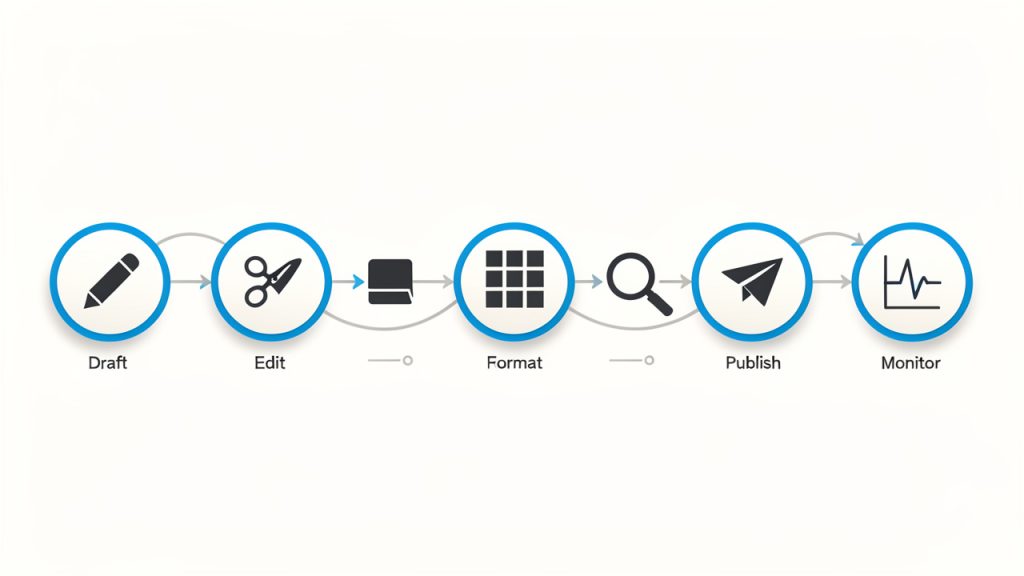
A practical manual posting process often includes these steps:
Draft the message with one clear goal.
Edit for clarity, tone, and accuracy.
Format it for the platform where it will appear.
Review links, visuals, dates, names, and calls to action.
Publish at the most appropriate time.
Monitor performance and feedback after posting.
The reason this works is simple. It turns manual posting from a random act into a manageable routine. That is especially important for freelancers and small teams who switch between client work, operations, and marketing throughout the day.
Use templates without sounding templated
There is a common misconception that manual posting and templates are opposites. They are not. The smartest workflows combine both. A template can save time on structure while still leaving room for customization and human judgment.
For instance, you might use a standard format for product updates, service announcements, or content summaries. The template handles recurring elements like title style, image size, metadata fields, or CTA placement. The actual message, however, is still written manually to match the moment.
This balance matters. Too much structure makes every post feel interchangeable. Too little structure creates delays and inconsistency. The goal is guided flexibility, not rigid repetition.
Focus on readability and platform fit
A strong manual post is not just well written, it is well presented. That means short paragraphs, clear headings where appropriate, strong opening lines, and formatting that suits the platform.
A website article can support more depth. A social post needs speed and punch. A community update should be easy to scan. A marketplace listing should prioritize clarity and trust. The same information may need to be expressed differently in each context.
This is where manual effort pays off. You can shape the presentation to fit user behavior. People do not read a support update the same way they read a promotional caption. Matching the format to the platform improves engagement and reduces confusion.
Measure what happens after publishing
A manual post should not end when you hit publish. One of the most overlooked parts of a manual workflow is the feedback loop. If you never review performance, you are relying on guesswork.
Look at the signals that matter most for the platform and purpose. On a blog post, that may be time on page, scroll depth, clicks, and conversions. On social media, it may be saves, comments, shares, or link clicks. For client communication, it may simply be response quality or reduced follow-up questions.
You do not need enterprise analytics to learn from manual posts. Even basic observation can reveal patterns. You may notice that shorter intros perform better, certain headlines get more clicks, or posts published at specific times earn stronger engagement. Over time, those small insights turn manual posting into a smarter system.
Common Challenges and How to Avoid Them
One of the most common problems with manual posting is inconsistency. When content is created only when someone remembers or feels inspired, publishing becomes irregular. That hurts audience expectations and weakens overall momentum. The fix is not constant output, it is a realistic cadence you can maintain.
Another issue is overediting. Because manual posts are hands-on, it is easy to spend too long polishing details that have little impact. Perfectionism can slow down publishing to the point where timely content loses relevance. The better standard is clear, accurate, and useful. If those three are in place, the post is usually ready.
There is also the risk of fragmented messaging. When multiple people create manual posts without shared guidelines, the brand can start sounding inconsistent. A simple style guide helps. It does not need to be formal or complicated. Even a one-page reference with preferred tone, formatting rules, naming conventions, and CTA style can make a major difference.
Aspect
Manual Posting
Automated Posting
Control
High, with direct human oversight
Lower, depends on setup
Speed at scale
Slower for large volumes
Faster for recurring content
Personalization
Strong, easier to tailor
Limited unless deeply configured
Error prevention
Better for context-sensitive checks
Better for repetitive consistency
Best use case
Important, nuanced, timely content
Routine, repeatable distribution
For most productivity-focused users, the best answer is not choosing one method exclusively. It is knowing when each one serves the goal.
When a New Manual Post Makes the Most Sense
A manual post is especially valuable when the content carries business, reputational, or relational weight. That includes service changes, product launches, client updates, sales announcements, policy clarifications, and original insights intended to build authority.
It also makes sense when audience context matters. If your readers are responding to a trend, a recent event, or a current concern, a manually created post allows you to speak directly and appropriately. Automated content often lacks that awareness.
For developers and technical teams, manual posts are useful when publishing release notes, outage explanations, setup instructions, or migration updates. Precision matters in those scenarios. One vague sentence can create support tickets, confusion, or implementation mistakes.
For freelancers and service businesses, a manual post can function as a relationship tool. A short, carefully written update can remind clients and prospects that there is a real person behind the brand, paying attention and communicating with intention.
Conclusion
A new manual post is more than content published by hand. It is a deliberate choice to prioritize accuracy, control, tone, and context. In a world full of automation, that choice can be a competitive advantage when used well.
The smartest approach is not to publish everything manually or automate everything blindly. It is to build a workflow where manual posting is reserved for the moments that deserve a human touch, then support that process with simple systems that keep it efficient.
Your next step is practical, choose one type of content you publish regularly, define a clear manual posting workflow for it, and use that process for the next three posts. You will quickly see where manual effort adds value, where templates can save time, and how to create content that feels both efficient and genuinely human.
Manual posting remains one of the fastest ways to regain control when automation becomes noisy, brittle, or overly abstract. A new manual post workflow matters because many teams and solo operators need something simple, visible, and dependable. When publishing depends on layers of integrations, schedulers, and opaque rules, even a small mistake can become expensive.
A well-structured approach to creating a thoughtful manual post solves a practical problem. It gives the publisher direct control over timing, content, formatting, and review. For developers and efficiency-focused users, that control is not old-fashioned, it is a form of operational clarity. Manual posting, when done correctly, becomes a deliberate process that reduces ambiguity and improves quality.
What Is a New Manual Post?
A manual post is a piece of content created, reviewed, and published directly by a user rather than being generated or deployed through an automated pipeline. The term applies across multiple environments, including content management systems, internal dashboards, knowledge bases, product update feeds, and social publishing interfaces. The defining attribute is the method, not the platform: a human initiates the post and controls each stage of publication.
This distinction matters because manual posting introduces intentionality. In automated systems, content can inherit templates, metadata, and timing rules without sufficient scrutiny. A manual process forces inspection. The author sees the title, body, links, tags, attachments, and publish state as discrete inputs. That visibility often leads to fewer errors and stronger editorial alignment.
For technical teams, the idea of a manual post is also comparable to a manual deployment. It is not always the fastest path in terms of raw volume, but it is often the safest path when precision matters. If the content is sensitive, time-bound, or tied to a product release, a manual entry can provide the confidence that no background rule has altered the intended output.
In practical terms, a manual post typically includes direct interaction with the publishing interface. The user enters content into a form, selects categories or channels, optionally previews the result, and then publishes. That sounds basic, but the underlying value is high. Every field becomes auditable at the moment of creation.
Key Aspects of a New Manual Post
Direct control over content quality
The first major advantage of a manual post is quality control at the point of entry. Instead of trusting a sync job or template engine to assemble the final message, the author validates the content in its finished form. This reduces formatting anomalies, broken internal references, accidental duplication, and incorrect metadata.
That hands-on review is especially useful when content contains technical instructions, release notes, pricing updates, or legal language. In those scenarios, small differences matter. A missing character in a version number or a malformed link can create support overhead that far exceeds the time saved by automation. Manual posting acts as the final inspection layer before publication.
Better context awareness
A manual post is usually created with full awareness of current conditions. The author knows what else has been published, what the audience is seeing, and what should be emphasized now. Automated systems work from rules, humans work from context. That difference is substantial.
For example, a product team may need to publish a quick update after an outage, a patch release, or a policy change. A manual process allows the message to reflect the real situation rather than a generic content pattern. The tone, structure, and timing can all be adapted without rewriting automation logic.
Lower system dependency
Manual posting reduces dependency on upstream services, connectors, and scheduling infrastructure. Every automated workflow introduces failure points, including API mismatches, expired credentials, queue delays, malformed payloads, and edge-case formatting issues.
A manual post bypasses much of that complexity because the user works in the destination system directly. That can be inefficient for high-volume publishing, but it is efficient in a different sense. It lowers the probability of invisible failure. For teams that value reliability over throughput in certain workflows, this trade-off is often worthwhile.
Improved accountability
Another key aspect is clear ownership. When someone creates a post manually, the responsible party is usually obvious. That supports review, revision, and auditability. In organizations where multiple people contribute content, accountability can be more valuable than speed.
This becomes even more relevant in environments with compliance requirements or cross-functional approvals. A manual process can preserve the chain of responsibility. The person who entered the copy, chose the category, and pressed publish can be identified without reconstructing an automation trail.
Manual does not mean inefficient
There is a common assumption that manual work is inherently slow and outdated. That is only partially true. Poorly designed manual workflows are inefficient. Well-designed ones are not. If the interface is streamlined, templates are sensible, and review standards are clear, a manual post can be completed quickly while still preserving quality.
This is where tools and workflow design matter. Platforms such as Home can help centralize content tasks, reduce friction in navigation, and make manual publishing less fragmented. The value is not that they remove the human decision, the value is that they reduce the cost of making the right decision.
How to Get Started with a New Manual Post
Define the purpose before opening the editor
The fastest way to create a poor manual post is to begin typing without a clear objective. Before touching the interface, the author should know what the post is supposed to do. Is it informing, announcing, documenting, correcting, or persuading? That purpose determines structure, tone, and the level of detail required.
A useful mental model is to treat the post as an operational artifact rather than just content. Every post has an input, a target audience, and an expected outcome. If those are undefined, the manual process becomes guesswork. If they are defined, the process becomes efficient.
Prepare the essential inputs
A successful manual post usually depends on a small set of inputs being ready in advance. In most systems, the practical prerequisites are:
Title: A clear, specific heading that reflects the post’s purpose.
Body content: The main message, already reviewed for clarity and accuracy.
Metadata: Tags, categories, publish date, author attribution, or status values.
Linked assets: Images, attachments, URLs, or references needed by the post.
Having these ready turns manual posting from a stop-start task into a controlled execution step. It also reduces the chance of publishing placeholders, partial text, or incorrect categorization.
Use a repeatable creation sequence
The most efficient way to handle a manual post is to follow the same sequence every time. Consistency removes cognitive overhead. The author no longer decides what to check next. The workflow itself provides order.
A practical sequence starts with entering the title and body, then validating formatting, then adding metadata, then previewing the output, and finally publishing. In high-risk contexts, a peer review or approval state may sit between preview and publication. This sequence mirrors the logic of software release discipline. First create, then validate, then deploy.
Optimize for readability and retrieval
Manual posts are often created under time pressure, which leads many authors to focus only on publication. That is short-sighted. A good post should not only be readable in the moment but also retrievable later. Searchability matters, especially in internal documentation systems and knowledge repositories.
This means using precise titles, meaningful section breaks, and tags that reflect how users will look for the information. A vague title may feel fast to write, but it creates friction for everyone who needs to find the post later. The manual process is the ideal point to enforce this discipline because the author is still present and accountable.
Check the post as a user would see it
Preview is not a cosmetic step. It is a validation layer. When reviewing a manual post, the author should inspect it as if encountering it for the first time. The critical question is simple: does the post communicate correctly without requiring extra explanation?
Formatting issues, missing links, broken hierarchy, and awkward spacing are easy to ignore in an editor view. They become obvious in preview or after publication. This is why strong manual workflows include a final user-perspective review. The post must not merely exist, it must function.
Compare manual posting to automated publishing realistically
The most useful way to decide whether to use manual posting is not through ideology, but through fit. Some tasks benefit from scale and automation, others benefit from direct oversight. The following comparison clarifies the difference:
Aspect
Manual Post
Automated Publishing
Control
High, field-by-field validation
Rule-based, less visible at publish time
Speed at scale
Lower for large volumes
High for recurring or bulk tasks
Error visibility
Immediate to the author
Often discovered after execution
Context sensitivity
Strong, human-led judgment
Limited to configured logic
Operational complexity
Lower in simple cases
Higher due to integrations and dependencies
This comparison shows why a manual post remains relevant. It is not replacing automation in every case, it is providing a safer and often smarter path when context, accuracy, and accountability are the priority.
Build a lightweight standard operating procedure
If manual posting is part of a recurring workflow, the process should be documented in a compact internal standard. Not a bloated policy document, but a short operating guide. This ensures that quality does not depend entirely on individual habits.
That standard can define naming patterns, required metadata, review thresholds, and publication timing. Over time, this creates a predictable content system. The paradox is useful: a manual process becomes more efficient when it is standardized. Human control and procedural discipline work well together.
Conclusion
A manual post is more than a basic publishing action. It is a deliberate workflow for maintaining control, improving quality, and reducing the hidden risks that often accompany automation-heavy systems. For developers, operators, and efficiency-minded teams, manual posting remains valuable because it creates visibility at the exact moment when errors are easiest to prevent.
The next step is straightforward. Review the systems where content is currently published, identify the moments where precision matters most, and introduce a clear manual posting workflow for those cases. If the current process feels scattered, a centralized environment such as Home can help simplify execution while keeping human oversight intact. The goal is not to avoid automation entirely, the goal is to use manual posting where it delivers the highest operational value.