

The difference between a page that gets buried and one that brings in steady traffic often comes down to a simple question: Are you targeting the terms people actually search for? That is where keyword research tools earn their keep.
For small business owners, freelancers, developers, and anyone trying to grow online without wasting time, choosing the right tool can remove a lot of guesswork. Good keyword tools help you spot demand, understand competition, and find realistic opportunities before you invest hours writing content, building landing pages, or launching ads.
What Are Keyword Research Tools?
Keyword research tools are platforms that help you discover the words and phrases people type into search engines. At the most basic level, they turn a broad topic like “accounting software” or “portfolio website” into a map of search intent. Instead of guessing what your audience wants, you can see how people phrase their questions, what related topics they care about, and which search terms are worth targeting.
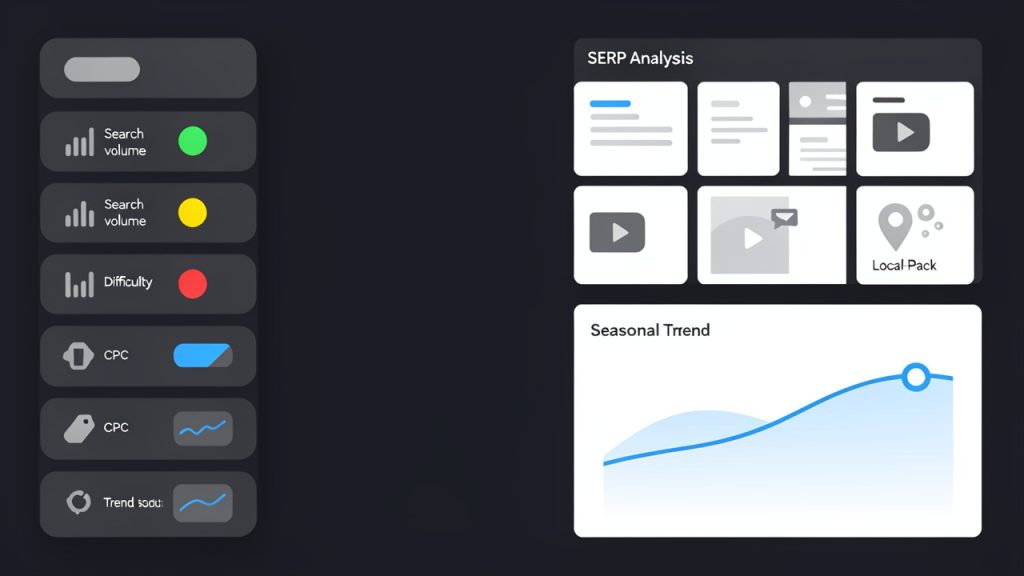
That sounds simple, but the real value goes deeper. A strong keyword research tool does not just generate ideas. It also gives context. You can usually see estimated search volume, ranking difficulty, cost-per-click data for ads, seasonal trends, and related queries. When used well, that information helps you decide whether a keyword is too competitive, too vague, too commercial, or perfectly matched to your audience.
For practical marketers and budget-conscious teams, this matters because content has a cost. Even if you are writing your own blog posts or product pages, your time is not free. The best keyword research platforms help you invest that time where it has the highest chance of paying off.
Why These Tools Matter for Smaller Teams
Large companies can afford trial and error. Most small businesses cannot. If you run a local service business, sell digital products, freelance, or manage a lean startup, you need a clearer path from effort to results.
Keyword tools reduce the risk of publishing content nobody searches for. They also help you avoid chasing broad, highly competitive terms that are almost impossible to rank for without a large site and a long timeline. Often, the smartest move is not to target the biggest keyword. It is to target the most relevant and reachable one.
Think of keyword research like choosing a market stall location. A crowded main street may look attractive, but if the rent is too high and the competition is fierce, a smaller side street with the right foot traffic can be far more profitable. Search works in a similar way.

Key Aspects of Keyword Research Tools
Not all keyword research platforms are built for the same purpose. Some are designed for SEO content planning. Others lean toward PPC campaigns, product research, YouTube optimization, or ecommerce listings. To choose well, you need to understand what actually makes a tool useful.
Search Volume and Demand Signals
One of the first metrics people look for is search volume, which estimates how many times a keyword is searched in a given month. This is helpful, but it should never be treated as a perfect truth. Search volume is often modeled data, not an exact count, and different tools may report different numbers for the same term.
What matters more is how you use that number. A keyword with moderate volume but strong relevance can outperform a high-volume term that attracts the wrong audience. If you are a freelancer offering “Shopify speed optimization,” a keyword with 200 focused monthly searches may be far more valuable than a broad ecommerce term with 20,000 searches.
Good keyword research tools also help you spot patterns around demand. Some show trend data over time, which is useful if your market is seasonal. Others group related phrases so you can see whether one topic deserves a single page or an entire content cluster.
Keyword Difficulty and Competition
Another major feature is keyword difficulty, a score meant to estimate how hard it would be to rank organically. This can be helpful for prioritization, especially when you are building a newer site. But like search volume, difficulty scores are directional, not absolute.
A smart approach is to use the score as a starting point, then manually inspect the search results. If the first page is packed with high-authority domains, government sites, or deeply established brands, the practical difficulty may be much higher than a number suggests. On the other hand, if the results are weak, outdated, or poorly matched to intent, you may have an opening.
This is where experienced users get more value from keyword tools than beginners. They do not just collect scores. They interpret the landscape behind them.
Search Intent and Topic Relevance
The most important question in keyword research is not “How many people search this?” It is “What does the searcher want?”
A person searching “best invoicing software” is likely comparing options. Someone searching “how to create an invoice as a freelancer” wants guidance. Someone searching “buy invoicing software” is close to taking action. A useful keyword tool helps you identify these differences through related terms, SERP analysis, and keyword modifiers.
This matters because content performs best when it matches intent. If your page tries to sell when the user wants education, it will struggle. If your article explains basics when the user wants product comparisons, it may never gain traction. Strong keyword research helps align the page type, format, and message with what searchers actually expect.
Long-Tail Keywords and Realistic Wins
For many small websites, long-tail keywords are where momentum starts. These are more specific search phrases, often with lower search volume but clearer intent and lower competition. They may include location qualifiers, problem-based wording, or detailed use cases.
A broad keyword like “project management software” is difficult territory. A phrase like “project management software for freelance designers” is narrower, but often far more actionable. The searcher knows what they want, and your content can answer that need directly.
Many keyword research platforms are especially useful here because they surface related questions, autocomplete suggestions, and phrase variations that would be hard to brainstorm manually. These insights often lead to practical content ideas, landing pages, service pages, and FAQs that convert well.
SERP Analysis and Content Feasibility
The best keyword tools do more than list phrases. They show you the actual search engine results page, or at least key details about it. This matters because rankings are shaped by the kind of content Google believes fits the query.
If the results for a keyword are dominated by videos, product pages, local listings, or giant media brands, that tells you something. If every result is a blog post with thin information, that tells you something too. SERP analysis turns keyword research from a spreadsheet exercise into a realistic editorial strategy.
For example, if you are planning to target “best time tracking app for freelancers,” you want to know whether the results favor list posts, software review sites, comparison pages, or vendor landing pages. That insight affects not only whether you should target the term, but how you should build the page.
Pricing, Accessibility, and Ease of Use
For many readers, feature depth is only half the story. Cost and usability matter just as much. Some tools are built for agencies and SEO professionals, with robust databases and advanced filters. Others are simpler, cheaper, or even free, which can be ideal if you are just getting started.
A tool is only useful if you will actually use it. If a platform is too expensive, too cluttered, or too complex for your workflow, it often becomes shelfware. In that case, a lighter tool with fewer features but clearer output may deliver better results.
The sweet spot for many small teams is a platform that balances reliable data, intuitive reporting, and affordable pricing. You do not necessarily need the most advanced software. You need the one that helps you make better decisions consistently.
Comparing Common Types of Keyword Research Tools
There is no single “best” platform for everyone. The better question is which category fits your goals, budget, and experience level.
| Tool Type | Best For | Strengths | Trade-Offs |
|---|---|---|---|
| Free search-based tools | Beginners, small sites, idea generation | Easy access, low cost, useful for discovering questions and topic variations | Limited data depth, fewer filters, less competitive insight |
| SEO suites | Content teams, agencies, established sites | Broad databases, difficulty scores, competitor analysis, rank tracking | Higher monthly cost, steeper learning curve |
| PPC-focused tools | Advertisers, conversion-focused campaigns | Useful bid data, commercial intent signals, ad planning insights | Organic SEO features may be secondary |
| Niche platform tools | YouTube creators, Amazon sellers, app marketers | Tailored data for specific search ecosystems | Less helpful for general website SEO |
| Browser and SERP extensions | Quick checks, lightweight workflows | Fast access to page-level SEO data and search result context | Often limited without paid plans |
A free tool can be enough when you need early-stage validation. If your business depends heavily on search traffic, though, the cost of a more complete platform may be justified quickly. The key is not chasing every feature. It is matching the tool to the decisions you need to make.
How to Get Started With Keyword Research Tools
Getting value from keyword research is less about technical expertise and more about asking better questions. Many beginners open a tool, type in a broad phrase, and get overwhelmed by hundreds or thousands of suggestions. The solution is to begin with business clarity, not just data.
Start With Core Topics, Not Random Keywords
Before you touch any tool, define the main areas your audience cares about. A freelance web developer might start with topics like website performance, landing page design, WordPress fixes, and ecommerce setup. A local bakery might focus on custom cakes, wedding desserts, catering, and nearby delivery.
These topic buckets become your starting seeds. Once entered into a keyword research platform, they reveal how real searchers talk about those needs. That is often where the most useful insight appears. People may use terms you never considered, or search around problems rather than services.
Evaluate Keywords Through a Business Lens
It is easy to get distracted by large search numbers. Resist that urge. A keyword is only valuable if it connects to your goals. Sometimes that means leads. Sometimes it means affiliate traffic, newsletter growth, or product sales. Relevance should always come before volume.
A useful way to judge a keyword is to ask whether someone landing on that page could realistically become a customer, subscriber, or qualified visitor. If the answer is no, high traffic alone is not enough. This is especially important for small businesses that need outcomes, not vanity metrics.
Build Around Topics, Clusters, and Intent
Modern keyword research works best when you think in topic clusters rather than isolated phrases. Instead of creating one page per tiny variation, build a strong main page around a core topic, then support it with related subtopics and question-based content.
For example, a productivity consultant targeting “time management for remote teams” might also create supporting content around meeting overload, async communication, workload planning, and productivity metrics. Keyword tools help reveal those relationships. This not only improves content planning, it also creates a stronger site structure for both users and search engines.
Keep Your First Workflow Simple
You do not need a complicated system to begin. In fact, simpler is usually better. A practical starter process looks like this:
- Choose a seed topic that connects directly to your service, product, or audience problem.
- Use a keyword tool to find related phrases, questions, and long-tail variations.
- Check intent and competition by reviewing the current search results.
- Select one realistic keyword target and create a page that answers it better than what already exists.
That process is enough to generate momentum. Once you see which pages attract clicks, rankings, and conversions, you can refine your approach with more confidence.
Common Mistakes to Avoid
Many people assume keyword research is about collecting the biggest list possible. It is not. More data does not automatically mean better strategy. In fact, one of the most common mistakes is turning research into endless analysis without publishing anything.
Another frequent error is treating tool metrics as facts instead of estimates. Search volume, difficulty, and traffic potential are useful guides, but they are not guarantees. Real performance depends on page quality, search intent fit, domain strength, internal linking, and many other factors.
A subtler mistake is focusing only on what is searched, while ignoring what your audience is trying to solve. The best keyword work sits at the intersection of demand, relevance, and usefulness. If your content genuinely helps the right people, keyword tools become amplifiers, not crutches.
Choosing the Right Tool for Your Needs
The right keyword research platform depends on where you are in your growth journey. If you are validating ideas, publishing your first content, or running a small site, a free or low-cost tool may be enough. What you need most is visibility into language, questions, and basic demand.
If you are publishing consistently, competing in tougher markets, or managing multiple clients, you will likely need stronger features. That includes competitor analysis, content gap reports, historical trends, and more detailed SERP data. At that stage, investing in a more advanced tool can save time and sharpen your decisions.
Developers and technically minded users often benefit from platforms that make filtering, exporting, and analyzing large keyword sets easier. Business owners and freelancers, on the other hand, may prefer cleaner interfaces that translate search data into quick action. Neither preference is better. The best tool is the one that fits your workflow and helps you move from insight to execution.
Conclusion
Keyword research tools are not just for SEO specialists. They are practical decision-making tools for anyone who creates content, runs campaigns, builds landing pages, or wants to reach the right audience online. Used well, they help you understand demand, identify realistic opportunities, and create pages that match what people are actually looking for.
The next step is simple. Pick one core topic in your business, run it through a keyword research platform, and study the results with a critical eye. Look for intent, relevance, and realistic competition. Then publish one well-targeted page. That single action is often where better search strategy begins.