

Great content does not fail because the ideas are weak. It usually fails because the presentation is weak. A page can be helpful, accurate, and well written, yet still underperform if it is hard to scan, mismatched to search intent, or missing the signals that help readers and search engines understand its value.
That is why smart content optimization matters. For small business owners, freelancers, developers, and productivity-focused teams, improving existing content is often faster and cheaper than constantly creating new pages. A few deliberate changes can lift rankings, increase engagement, and turn a neglected article into a reliable traffic and conversion asset.
What tips for content optimization really mean
Content optimization is the process of improving a piece of content so it performs better for both human readers and search engines. That includes refining structure, sharpening relevance, improving readability, aligning with user intent, and strengthening on-page SEO elements such as headings, metadata, internal links, and keyword usage.
The phrase “tips for content optimization” sounds simple, but the practice is more strategic than it first appears. Optimization is not just sprinkling keywords into a paragraph. It is about making the page more useful, more focused, and easier to consume. Search engines increasingly reward pages that satisfy user needs clearly and efficiently, so optimization now sits at the intersection of SEO, UX, and editorial quality.
For many site owners, the biggest shift is this, optimization is not a one-time task. Search intent changes, competitors improve, and older content becomes stale. Pages that once ranked well can slip simply because they no longer answer the question as effectively as newer alternatives.
Why optimization matters more than publishing volume
Many people assume growth comes from publishing more. In reality, publishing without optimization often creates a library of underperforming content. You end up with dozens of pages competing for attention, but only a few generating meaningful results.
Optimized content gives each page a stronger chance of ranking, retaining visitors, and moving people toward action. If you run a small business website, this can mean more service inquiries. If you are a freelancer, it can mean more qualified leads. If you are building a developer-focused blog or tool site, it can mean more product signups and stronger brand trust.
The difference between writing and optimizing
Writing creates the first version. Optimization improves its effectiveness. A writer may produce a thoughtful 1,200-word article. An optimizer asks harder questions. Does the title match what people search for? Does the introduction confirm relevance fast enough? Are the headings useful? Is the page answering the right question at the right depth?
This distinction matters because many weak pages are not badly written. They are simply unfocused. Optimization brings clarity. It helps every section earn its place.
Key aspects of effective content optimization
The best tips for content optimization start with a mindset shift. You are not editing for style alone. You are improving performance. That means measuring a page by how well it satisfies intent, supports discovery, and encourages action.
Match search intent before anything else
If a page misses search intent, almost nothing else will save it. Search intent is the reason behind the query. Someone searching for advice on improving blog performance may want practical steps, not a dense theory lesson. Someone searching for a product comparison may not want a long opinion piece.
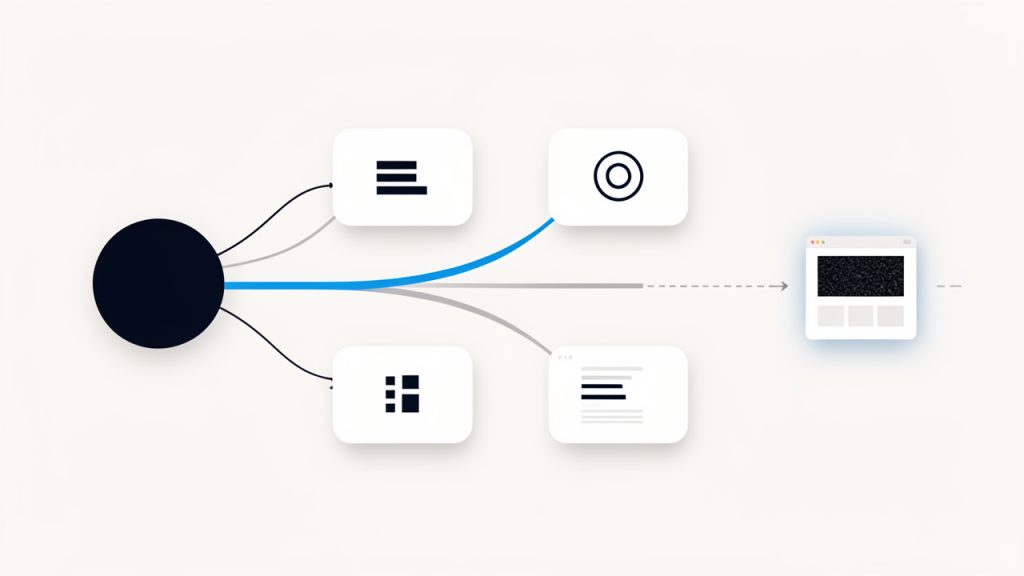
A strong page signals intent match almost immediately. The title sets expectations. The introduction confirms the topic. The body delivers the format users want, whether that is a tutorial, checklist, explainer, or comparison. When content underperforms, intent mismatch is often the first issue to inspect.
A useful way to think about this is to imagine the page as an answer in a conversation. If the user asks, “How do I improve my content?” and your page responds with brand history, general marketing philosophy, and vague advice, the conversation breaks down. Optimization restores alignment.
Improve readability and scannability
Most people do not read web content line by line. They scan first, decide whether the page feels useful, and then commit attention. This is why formatting is not cosmetic. It directly affects performance.

Readable content uses clear headings, short paragraphs, descriptive subheadings, and strong opening sentences. Dense blocks of text create friction. Even good ideas get ignored when they look hard to consume. On the other hand, a well-structured page makes the reader feel progress. That sense of ease increases time on page and reduces bounce risk.
See research on how users read on the web for more on readability and scannability.
Scannability also helps search engines interpret the hierarchy of your information. A clear heading structure makes it easier to understand which ideas are primary and which support them.
Use keywords naturally, not mechanically
One of the most important tips for content optimization is also one of the most misunderstood. Keywords matter, but awkward keyword stuffing harms trust and readability. The goal is not to force an exact phrase into every section. The goal is to use the topic language naturally, in places where it helps clarify relevance.
That means your primary keyword should appear in the title area, early in the article, in at least one subheading where it fits naturally, and throughout the copy in a way that feels organic. Related terms should appear as well, because they help establish topic depth. If you are writing about optimizing content, words like readability, search intent, internal linking, metadata, click-through rate, and engagement naturally belong in the discussion.
Think of keywords as signals, not decorations. They should strengthen clarity, not interrupt it.
Strengthen titles, meta descriptions, and introductions
A page can rank and still disappoint if no one clicks it. That is where titles and meta descriptions matter. A strong title combines relevance with a clear benefit. It tells readers what they will get and why the page is worth opening.
The introduction has a similar job once the click happens. It must confirm quickly that the visitor is in the right place. If the first paragraph feels generic, overly broad, or slow to reach the point, readers may leave before they ever reach your best insights.
Optimization often begins here because these elements shape both visibility and engagement. Better titles improve click-through potential. Better openings improve retention.
Build strong internal linking
Internal links are one of the most overlooked ways to optimize content. They help search engines discover related pages and understand topical relationships, but they also guide human readers toward useful next steps.
A page about optimizing content should naturally connect to related resources such as keyword research, content briefs, editorial workflows, analytics, or on-page SEO. These links extend the user journey and help distribute authority across the site.
The key is relevance. Random or excessive linking creates noise. Strategic linking creates pathways.
Update for freshness and accuracy
Some content loses rankings simply because it feels old. Statistics become outdated. Screenshots no longer match current tools. Search results shift. Competitor content becomes more complete.
Refreshing content is often more efficient than rewriting from scratch. Update examples, replace old claims, improve weak sections, and add current context where needed. If the topic evolves quickly, freshness can be a major advantage.
For businesses and solo creators with limited time, this is one of the highest-return habits. Instead of producing ten new weak pages, improve three existing ones that already have some traction.
Optimize for action, not just attention
Traffic is useful, but attention without action has limits. A page should lead readers somewhere meaningful, even if the goal is modest. That next step could be reading a related guide, joining a mailing list, trying a tool, booking a consultation, or exploring a service page.
Optimization should support that movement subtly. Calls to action work best when they feel like a logical extension of the reader’s progress. If someone has just learned how to improve their content structure, a next step around auditing their current pages feels natural. If the CTA feels unrelated or premature, it weakens the experience.
How to evaluate a piece of content before optimizing it
Before making changes, it helps to diagnose the page clearly. Optimization is more effective when you know whether the issue is visibility, relevance, readability, engagement, or conversion.
Start with performance signals
Look at how the page performs in search and on site. Impressions tell you whether search engines are surfacing it. Click-through rate suggests whether the title and description are compelling. Time on page, scroll depth, and bounce patterns hint at whether the content delivers on its promise.
A page with high impressions but low clicks likely has a packaging problem. A page with decent clicks but weak engagement may have a content quality or intent issue. A page with strong traffic but no conversions might need better internal links or stronger calls to action.
Compare the page against current search results
Search results reveal what Google currently believes satisfies the query. Review the top-ranking pages and study their patterns. Are they more practical, more detailed, more current, or better structured? Do they use clearer headings? Are they answering adjacent questions your page ignores?
This exercise is not about copying competitors. It is about understanding the standard your page must meet. If every top result includes examples, templates, or specific frameworks and your content stays abstract, that gap matters.
Audit the reader experience
Read your page like a busy visitor, not like its creator. The first question is simple, does it feel easy to use? If the answer is no, optimization should address that before anything else.
The table below highlights common content problems and the optimization response that usually helps.
| Common Issue | What It Looks Like | Likely Impact | Better Optimization Move |
|---|---|---|---|
| Weak title | Generic or vague headline | Lower click-through rate | Rewrite for clarity, relevance, and benefit |
| Slow introduction | Takes too long to address the topic | Higher bounce rate | Confirm value and intent in the first paragraph |
| Poor structure | Long blocks with few subheadings | Low readability | Break into logical sections with descriptive H3s |
| Keyword stuffing | Repetitive phrases that sound forced | Lower trust, weaker UX | Use natural phrasing and related terms |
| Thin coverage | Surface-level advice only | Lower rankings and engagement | Add examples, detail, and practical context |
| Outdated information | Old stats, stale examples, obsolete steps | Declining trust and rankings | Refresh facts, tools, and references |
| Weak internal links | No useful next steps | Lower page depth and conversions | Add relevant links to connected resources |
How to get started with content optimization
Getting started does not require a giant content team or expensive software. What you need is a repeatable process. The most practical tips for content optimization are the ones you can apply consistently, even with limited time.
Begin with high-potential pages
Not every page deserves immediate attention. Start with content that already has some visibility, relevance, or business value. These are usually pages that rank on page two, attract impressions without many clicks, or bring traffic without converting.
This approach works because optimization compounds existing momentum. A page already close to performing well often responds faster to improvements than a brand-new post with no history.
A simple prioritization framework can help:
- Traffic opportunity: Find pages with impressions but weak rankings.
- Business value: Focus on pages tied to offers, services, or lead generation.
- Content quality gap: Identify pages that are useful but clearly underdeveloped.
- Freshness need: Update pages with outdated examples, stats, or advice.
Rewrite the first 200 words carefully
The opening of a page does a disproportionate amount of work. It tells readers whether to stay, tells search engines what the page is about, and shapes how the rest of the content will be interpreted.
A strong opening quickly identifies the problem, states the promise, and establishes relevance. It should not wander. If your article takes five paragraphs to explain why the topic matters, optimization should begin there.
For example, if your page is about improving website copy, start with the common frustration, traffic without results, content that ranks poorly, or pages that feel invisible. Then explain what the reader will gain from the article. This immediate clarity makes the rest of the page easier to trust.
Refine headings so they carry meaning
Headings should do more than break up text. They should guide the reader through the logic of the page. Vague headings like “Overview” or “More Tips” are rarely helpful. Specific headings improve usability because they let readers spot the section they need.
Good headings also improve SEO by making the topic map clearer. If a reader scans only the subheadings and still understands the flow of the article, the structure is doing its job.
Add depth where readers need it most
One common mistake is trying to make every section equally long. Optimization is more effective when depth is added strategically. Expand the sections that answer key questions, remove filler, and sharpen transitions so the page feels purposeful.
Depth does not mean padding. It means providing the explanation, example, or nuance that turns advice into guidance. If you say “improve readability,” show what that means. Discuss paragraph length, heading use, sentence rhythm, and formatting choices. Specificity builds authority.
Use examples to make advice actionable
Abstract advice is easy to forget. Concrete examples stick. If you recommend better titles, show the difference between a weak title and a stronger one. If you discuss internal links, describe where they naturally fit and why.
Examples reduce ambiguity. They also make content more useful for mixed audiences. A freelancer may apply the advice to a portfolio blog, while a small business owner may adapt it to service pages. The principle becomes transferable.
Optimize visual support thoughtfully
Visuals can improve comprehension, especially in longer guides. Screenshots, diagrams, charts, and simple process graphics help break up text and make abstract ideas easier to grasp.
Use visuals only where they support understanding, not as decoration. A content audit workflow, for instance, may benefit from a simple diagram. A table comparing weak and strong optimization choices can be more effective than paragraphs alone.
Improve old content in rounds
Trying to perfect a page in one sitting can be inefficient. A better approach is to optimize in rounds. The first round addresses intent, structure, and obvious quality issues. The second improves SEO elements such as title, metadata, and internal links. The third focuses on conversion paths and freshness updates.
This method is especially useful for lean teams. It turns optimization into a manageable system instead of a large, irregular project.
Practical tips for content optimization that deliver results
Some tactics matter more than others. The strongest improvements usually come from a combination of editorial clarity and technical relevance.
Focus on one primary topic per page
Pages often underperform because they try to answer too many different questions at once. A broad article that jumps between strategy, tools, analytics, and social media promotion may dilute its relevance.
A focused page performs better because the message is clearer. Readers understand what the page is about. Search engines do too. If you have several related ideas, connect them with internal links instead of forcing them into one bloated article.
Write for humans first, then tighten for search
SEO writing works best when it begins with genuine clarity. Draft naturally, then optimize the language. This produces content that sounds trustworthy and readable while still sending strong relevance signals.
When editing, look for opportunities to make important terms more visible without sounding repetitive. Add them where they help, especially in headings, opening lines, and image alt text if applicable. Remove them where they create friction.
Reduce friction in every section
Each section of a page should answer a clear question or move the reader forward. If a paragraph repeats what has already been said, it creates friction. If a section exists only because “blog posts need length,” it weakens the page.
Optimization often means cutting as much as adding. Cleaner content usually performs better than longer but diluted content. Readers appreciate momentum. So do search engines trying to determine whether a page is sharply relevant.
Support claims with experience or evidence
Authority grows when advice feels grounded. You do not always need formal studies, but you do need substance. That can come from experience, examples, observed patterns, or reliable data where appropriate.
If you claim that stronger intros improve engagement, explain why. If you say internal linking helps page performance, describe the mechanism. Readers respond well to content that shows reasoning, not just recommendations.
Revisit content after publication
Publishing is not the finish line. One of the most underrated tips for content optimization is simply to review performance after a reasonable period and make improvements based on actual behavior.
A post may attract a different audience than expected. A heading may underperform. A new opportunity may appear through search queries you did not target directly. These insights are only visible after the page has time to gather data.
Common mistakes to avoid
Many optimization efforts fail because they focus on the wrong signals. Adding keywords without improving usefulness is one example. Making a page longer without making it better is another.
Another common mistake is treating every page the same. A service page, tutorial, landing page, and blog article each have different goals. Optimization should reflect that. What works for an educational article may not suit a conversion-focused page.
It is also easy to over-edit. If a page already ranks well and converts, drastic changes can backfire. Optimization should be guided by evidence, not anxiety. Improve with intent, not just activity.
A simple workflow you can repeat
Consistency beats intensity in content work. A basic optimization workflow helps you make steady gains without turning every page into a major project.
| Stage | Main Question | Primary Task | Outcome |
|---|---|---|---|
| Audit | Is the page worth improving? | Review traffic, rankings, and relevance | Clear priority list |
| Intent check | Does it match what users want? | Compare with current search results | Better alignment |
| Structural edit | Is it easy to read and scan? | Improve headings, paragraphs, flow | Better usability |
| SEO refinement | Are relevance signals clear? | Update title, metadata, keywords, links | Stronger discoverability |
| Conversion review | Does it guide the next step? | Add or improve CTAs and related links | Better business impact |
| Refresh cycle | Is it still current? | Update examples, facts, and context | Longer performance lifespan |
If you adopt this workflow, content optimization becomes less mysterious. It turns into a process you can schedule, measure, and improve over time.
Conclusion
The best tips for content optimization are not tricks. They are disciplined improvements that make content clearer, more relevant, easier to read, and more useful. When you align a page with search intent, strengthen its structure, use keywords naturally, and create a better reader experience, performance tends to follow.
Start with one page that already matters to your business. Improve the title, rewrite the introduction, sharpen the headings, and add depth where readers need it. Then review the results and repeat the process. That is how content becomes an asset instead of just another published page.