
JNTZN

Tag: product pages

  • Shopify SEO: A Practical Guide to Boost Search Traffic

    Shopify SEO: A Practical Guide to Boost Search Traffic

    Shopify SEO can quietly make or break an online store. You can have strong products, clean branding, and competitive pricing, but if your store does not appear when people search, growth becomes expensive and unpredictable.

    That is why search optimization matters so much for Shopify merchants. Good SEO helps your products, collections, and content show up for the right shoppers at the right moment. It reduces your dependence on paid ads, builds long-term visibility, and attracts visitors who are already looking for what you sell. If you run a small business, freelance for ecommerce clients, or build stores as a developer, understanding SEO for Shopify is one of the highest-leverage skills you can invest in.

    What Is Shopify SEO?

    Shopify SEO is the process of improving a Shopify store so it can rank better in search engines like Google. That includes technical improvements, content optimization, site structure, internal linking, product page quality, and user experience. The goal is simple, help search engines understand your store and help real people find exactly what they need.

    What makes SEO on Shopify different from general SEO is the platform itself. Shopify gives store owners a fast, hosted ecommerce system with many built-in features, but it also comes with structural conventions that affect optimization. URL patterns, themes, collection architecture, duplicate content risks, and app-related performance issues all play a role. In other words, the fundamentals of SEO still apply, but the way you implement them on Shopify has its own nuances.

    For most store owners, Shopify is a strong starting point. It handles hosting, security, and mobile responsiveness in many themes, and it covers a lot of technical basics out of the box. That lowers the barrier to entry. At the same time, easy setup can create a false sense of completion. A store can be launched quickly and still be poorly optimized for search.

    The real value of SEO for Shopify stores is not just ranking for broad terms. It is about matching search intent. A well-optimized store attracts shoppers who are comparing products, researching options, or ready to buy. That makes search traffic especially valuable because it often arrives with purpose.

    Key Aspects of Shopify SEO

    The most important part of Shopify SEO is keyword targeting, but not in the old-fashioned sense of stuffing phrases everywhere. Modern optimization starts by understanding what your customers actually type into search. Some searches are broad and informational, such as people learning about a type of product. Others are commercial, where users are comparing options. The most valuable ecommerce searches tend to be transactional, where the person already knows what they want and is close to buying.
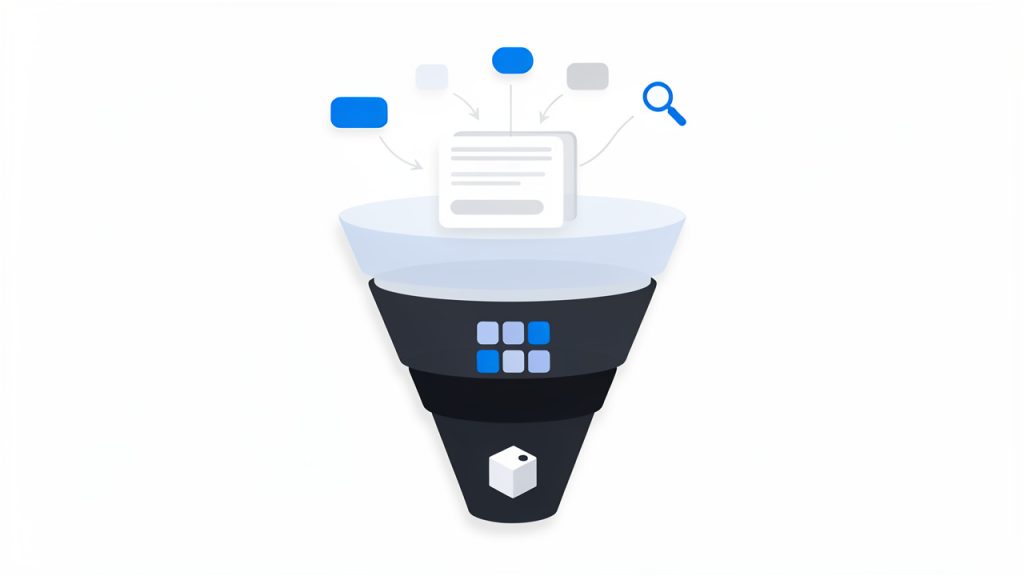
    A keyword-intent funnel: three-tiered funnel labeled Informational → Commercial/Comparison → Transactional. Each tier shows the page types that match that intent (top: blog posts/guides; middle: collections/category pages; bottom: product pages) and example search queries for each stage.

    On Shopify, this means each page should have a clear role. Your homepage usually targets branded or broad category terms. Collection pages often target category-level searches. Product pages should focus on specific product names and high-intent variations. Blog content can support the rest by capturing informational searches and guiding readers toward products.

    Another major aspect is site architecture. Search engines favor stores that are easy to crawl and easy to understand. If your products are buried under confusing navigation, scattered into overlapping collections, or connected with weak internal links, both users and search engines will struggle. A clean Shopify structure helps distribute authority across pages and makes it easier for search engines to discover what matters most.

    A strong architecture usually starts with sensible categories and collections. Think of your store like a physical shop. If everything is tossed into random aisles, shoppers leave frustrated. If the layout is intuitive, they browse longer and buy faster. Search engines respond to that same clarity because it helps them interpret topical relevance and page relationships.
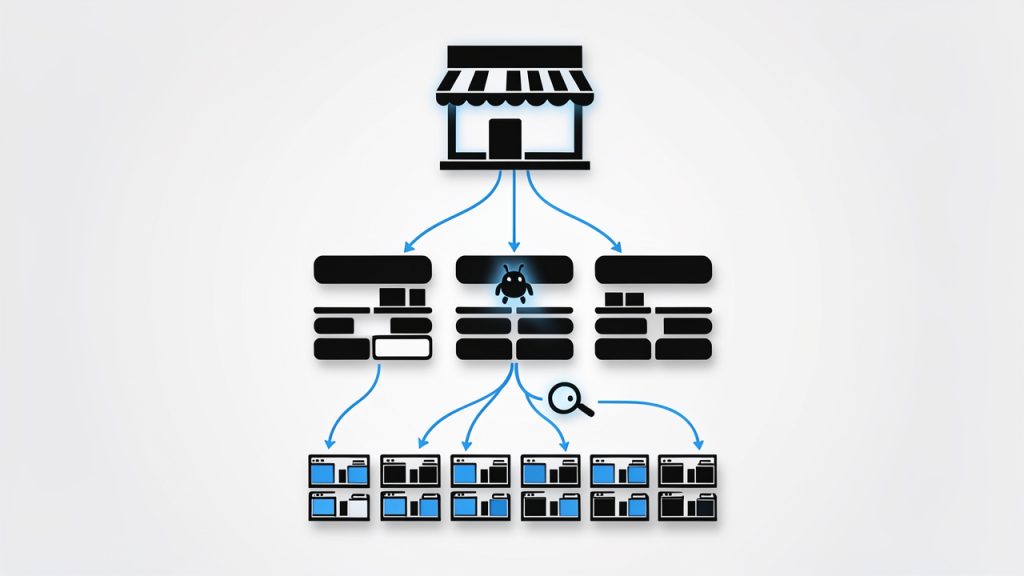
    A schematic 'store as a shop' site-architecture diagram: a storefront (homepage) at the top, branching into category/collection aisles, each aisle leading to product shelves (product pages). Include arrows showing internal linking between collections and products and a crawler icon tracing an easy path down the hierarchy to illustrate crawlability and distribution of authority.

    On-page optimization is another core pillar. This includes title tags, meta descriptions, headings, image alt text, page copy, and internal links. On a Shopify store, many merchants stop at adding a product title and price. That is not enough. Product pages need unique descriptions, useful details, and language that reflects how shoppers search. Collection pages also need real copy, not just a grid of products. Even a short, thoughtful introduction can help clarify the theme of the page.

    Technical SEO matters too, especially on ecommerce sites where page counts grow quickly. Shopify handles some technical essentials well, but store owners still need to pay attention to crawlability, indexation, canonicalization, redirects, schema support, and site speed. Themes with heavy scripts, oversized images, and too many apps can slow down the experience, which hurts both rankings and conversions.

    Content also plays a bigger role than many Shopify merchants expect. If your store only contains product and collection pages, you may be missing opportunities to rank for educational or comparison-based searches. Helpful articles, buying guides, care instructions, and use-case content can bring people into your ecosystem earlier in the buying journey. This kind of content also supports internal linking and topical authority.

    User experience overlaps with SEO more than ever. Search engines increasingly reward pages that satisfy visitors. If a page loads slowly, looks cluttered on mobile, or fails to answer the query clearly, it may struggle to perform even if the keywords are present. On Shopify, design and SEO should not be treated as separate conversations. A polished theme that hides important content, or a stylish layout that slows down the site, can work against your search visibility.

    The table below shows how the main parts of SEO for Shopify fit together:

    SEO Area What It Covers Why It Matters for Shopify Stores
    Keyword Strategy Search intent, product terms, category terms, content topics Helps each page target the right audience and query type
    Site Structure Navigation, collections, internal linking, hierarchy Makes the store easier to crawl and easier to shop
    On-Page SEO Titles, descriptions, headings, copy, alt text Improves relevance and click-through potential
    Technical SEO Speed, canonicals, redirects, indexing, mobile performance Prevents hidden issues that limit rankings
    Content Marketing Blog posts, guides, FAQs, educational pages Expands reach beyond direct product searches
    User Experience Mobile usability, page clarity, conversion flow Supports both rankings and sales outcomes

    How to Get Started With Shopify SEO

    The best way to start is with an SEO audit of your existing store. Even a small store can accumulate avoidable issues quickly. You may have duplicate product descriptions, missing title tags, oversized images, weak collection copy, or pages that do not align with what people are searching for. Before chasing new traffic, it helps to understand what is already blocking performance.

    Start by reviewing your core pages manually. Look at the homepage, top collections, best-selling products, and any blog posts already getting traffic. Ask a simple question for each page: What search intent is this page meant to serve? If the answer is unclear, the page likely needs stronger focus. SEO gets much easier when every important page has a defined purpose.

    Next, build a keyword map. This does not need to be overly complicated, especially for a small business. Assign one primary keyword theme to each major page, then support it with related variations. For example, a collection page might target a category phrase, while the products inside it target specific branded or feature-based searches. The key is to avoid making multiple pages compete for the same term unless there is a very good reason.

    After that, improve your on-page elements. Your title tags should be descriptive and compelling, not just stuffed with keywords. Your meta descriptions should invite clicks. Product pages should include original copy that explains benefits, features, dimensions, materials, shipping relevance, and use cases. Collection pages should have a short introduction that helps search engines understand the page and helps users confirm they are in the right place.

    Images deserve more attention than they usually get. On Shopify stores, product imagery often carries both commercial and SEO value. Compress files so pages load faster, use clear filenames, and write alt text that accurately describes the image. Alt text should support accessibility first, but it can also reinforce page relevance when written naturally.

    If your store has multiple collections and filtering options, pay attention to duplicate content. Shopify can generate different paths to similar pages, which can create confusion for search engines if left unmanaged. That is one reason technical review matters. Canonical signals, internal linking consistency, and careful handling of filtered or tag-based pages help keep your SEO focused.

    Content creation is often the next layer of growth. Once core commercial pages are optimized, add content that answers real questions your audience has. A Shopify store selling skincare, for example, could publish guides about ingredient types, routine order, or product selection by skin concern. A furniture store could create measurement guides, styling tips, or material comparisons. This content is not just for traffic. It can move readers toward products and strengthen the authority of your store overall.

    A practical starting sequence looks like this:

    1. Audit the store for technical, content, and structure issues.
    2. Map keywords to homepage, collections, products, and blog content.
    3. Optimize key pages with stronger titles, copy, headings, and images.
    4. Improve speed and mobile usability by reducing unnecessary app and media weight.
    5. Publish supporting content that targets informational and commercial questions.

    One of the most common mistakes is trying to optimize every product page first, especially on large catalogs. That approach often burns time without creating meaningful momentum. A better strategy is to focus on the pages with the highest business impact. Usually that means your main collections, flagship products, and strongest category opportunities. Once those are performing, you can expand outward.

    It is also important to set realistic expectations. SEO for Shopify is not an overnight fix. Search growth usually comes from consistent improvements compounded over time. You may see technical wins quickly, especially if there are major issues holding the site back. But most ranking gains come from better page quality, stronger internal structure, and content that proves relevance over weeks and months.

    Measurement matters here. Track impressions, clicks, rankings, and conversions, not just traffic volume. More visitors are not useful if they do not buy or engage. The best Shopify SEO strategy connects search visibility to business outcomes. That means watching how optimized pages influence revenue, assisted conversions, and customer acquisition efficiency.

    For developers and freelancers working on Shopify stores, there is another important layer, implementation discipline. Theme changes, app installs, template edits, and collection logic can all affect SEO. A technically sound store today can lose rankings after a redesign if redirects break, content disappears, or JavaScript bloats performance. SEO should be part of every development workflow, not a cleanup task after launch.

    Conclusion

    SEO for Shopify is not about gaming search engines. It is about building a store that is clear, fast, useful, and aligned with the way customers search. When keyword strategy, site structure, content, and technical health work together, your store becomes easier to discover and easier to trust.

    The smartest next step is to audit your most important pages and improve them one by one. Start with your collections, best-selling products, and overall site structure. Once that foundation is solid, expand into content and deeper technical refinement. That steady approach is what turns Shopify SEO from a vague marketing task into a dependable growth channel.

  • Ecommerce SEO: A Practical Guide to Optimize Online Stores

    Ecommerce SEO: A Practical Guide to Optimize Online Stores

    A beautiful online store means very little if no one can find it. That is the hard truth behind ecommerce SEO. Many store owners invest in product photography, branding, and ads, then wonder why organic traffic stays flat. The problem is rarely the product alone. More often, the site is invisible to the people already searching for what it sells.

    Search engine optimization for ecommerce is not just about ranking a homepage. It is about helping category pages, product pages, collections, filters, and supporting content appear when buyers are actively looking. Done well, it turns your store into a long-term traffic asset, instead of a business that depends entirely on paid acquisition.

    For small business owners, freelancers, and developers building online shops, this matters even more. A strong ecommerce SEO strategy can lower customer acquisition costs, improve visibility across hundreds or thousands of search terms, and create steady sales momentum over time. It takes structure, patience, and smart execution, but the payoff is durable.

    What Is Ecommerce SEO?

    Ecommerce SEO is the process of optimizing an online store so its pages rank higher in search engines for relevant product, category, and informational queries. Unlike general SEO, which may focus heavily on blog content or service pages, SEO for ecommerce has to deal with a larger and more complex site architecture.

    An online store usually contains product listings, collection pages, faceted navigation, internal search results, seasonal pages, and often duplicate or near-duplicate content. That creates unique technical and content challenges. Search engines need to understand which pages matter most, how they relate to one another, and which ones deserve to rank.

    At its core, ecommerce search optimization serves two audiences at once. It helps search engines crawl and interpret your store, and it helps real shoppers discover products faster. Those two goals overlap more than many businesses realize. A clean category structure, descriptive page titles, useful product copy, and fast load times all improve discoverability and user experience at the same time.

    Think of it like organizing a retail store. If the aisles are confusing, labels are missing, and similar products are scattered randomly, customers leave. Search engines react in a similar way when a store has poor structure or thin content. Good ecommerce SEO creates order, clarity, and relevance.

    Why Ecommerce SEO Matters More Than Ever

    Paid ads can drive traffic quickly, but they stop the moment you stop funding them. Organic search works differently. When your category pages and product pages rank well, they can keep bringing in visitors without a direct cost per click.

    This is especially important in competitive markets where ad costs continue to rise. Small brands often cannot outspend larger retailers, but they can still compete through better targeting, stronger content, and a more technically sound site. Search gives smaller businesses a way to win specific, high-intent queries that larger competitors may overlook.

    Search behavior has also changed. Buyers rarely search in broad terms alone. They use detailed phrases such as color, model, material, use case, and brand comparisons. A well-optimized ecommerce site can capture that intent across many stages of the buying journey, from research to purchase.

    Key Aspects of Ecommerce SEO

    Ecommerce SEO is not one task. It is a system made up of technical setup, keyword targeting, on-page optimization, content strategy, internal linking, and user experience. If one part is weak, it often limits the others.

    Keyword Research for Commercial Intent

    Keyword research for an online store should begin with buyer intent, not vanity traffic. A keyword with lower volume but stronger purchase intent can be more valuable than a broad phrase that attracts casual browsers.

    Category pages usually target broader commercial terms, while product pages target specific model or product-based searches. Informational content, such as buying guides or comparisons, can capture earlier-stage demand and support conversions later. This layered approach matters because ecommerce buyers do not all arrive at the same point in the funnel.

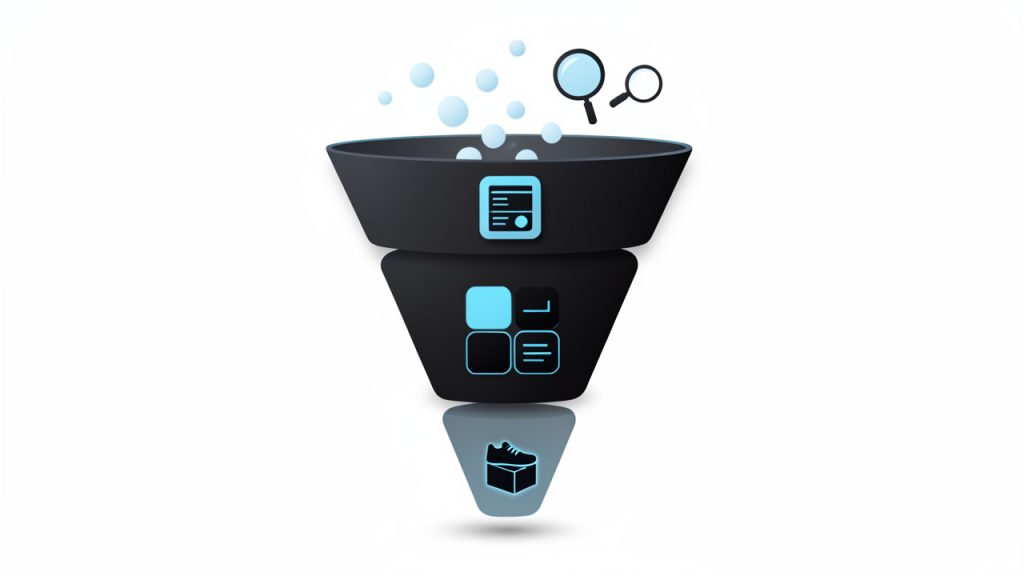
    A funnel-style illustration mapping buyer intent to page types: top (informational queries) → guides/blogs, middle (commercial investigation) → category/collection pages, bottom (transactional intent) → product pages. Show examples of queries at each stage (e.g., 'best running shoes for flat feet' → category/guide; 'Nike Air Zoom Pegasus 38' → product).

    For example, someone searching for “best running shoes for flat feet” is still evaluating options. Someone searching for a specific product name is much closer to buying. Your store should have pages designed for both searches, but the page type and content must match the intent. That alignment is one of the biggest ranking factors many stores overlook.

    Site Architecture and Crawlability

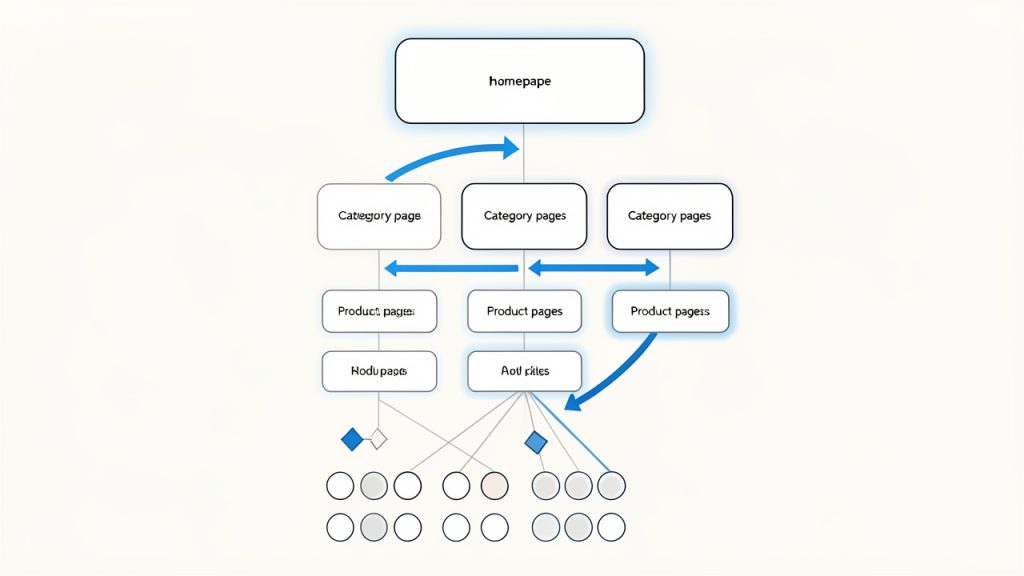
    A strong ecommerce site architecture helps both users and search engines, and crawlability is a key factor in that design. Ideally, your important pages should be reachable within a few clicks from the homepage. Categories should be logical, subcategories should be clear, and URLs should reflect that hierarchy in a simple, readable way.

    Poor structure creates crawl waste. Search engines may spend time on filtered URLs, duplicate pages, or low-value variations instead of your core money pages. This is a common issue on platforms with faceted navigation, where every filter combination can generate a unique URL.

    The goal is not to eliminate filters, because filters improve usability. The goal is to control how search engines interact with them. That often means deciding which filtered pages deserve indexing and which should remain crawlable but not indexable, or blocked when appropriate. This is where technical SEO becomes especially important in ecommerce.

    A clear site architecture diagram showing homepage > category > subcategory > product pages, with faceted/filtered URLs branching off. Include a visual cue for 'important pages within a few clicks' and highlight crawl paths (arrows) to show crawlability.

    On-Page Optimization for Category and Product Pages

    Category pages are often the unsung heroes of ecommerce SEO. They tend to target valuable high-intent keywords and can rank for a wide range of related searches. Yet many stores treat them as simple product grids with almost no context.

    A good category page has a clear title, helpful introductory copy, descriptive headings, optimized metadata, and strong internal links. It should explain what the category offers without overwhelming the user with unnecessary text. The trick is balancing search relevance with shopping usability.

    Product pages need their own level of care. Manufacturer descriptions copied across dozens of stores rarely perform well. Unique product copy, detailed specifications, use cases, FAQs, reviews, and trust signals help a product page stand out. Search engines prefer pages that add value, and shoppers do too.

    Technical SEO for Online Stores

    Technical SEO is often where ecommerce sites either scale well or break under complexity. Page speed, mobile usability, crawl management, structured data, canonical tags, and indexation control all have a direct impact on visibility.

    Large stores often suffer from duplicate content because of product variants, sorting parameters, printer-friendly pages, and multiple URLs leading to similar content. Canonicalization helps signal which version should be treated as primary. Without it, ranking signals can become diluted across duplicates.

    Structured data is another important piece. Product schema, review markup, availability, price, and breadcrumb data can help search engines understand your pages more clearly. In some cases, this can improve how listings appear in search results, making them more attractive to click.

    Content That Supports Product Discovery

    Content marketing still matters in ecommerce, but it has to support the buying journey. Random blog posts with no connection to your products rarely move the needle. Content should bridge the gap between informational searches and commercial pages.

    Buying guides, comparison pages, sizing help, care instructions, gift guides, and “best for” content are all useful formats. These assets can attract top-of-funnel traffic while naturally linking users toward categories and products. They also help answer objections before a customer reaches checkout.

    A useful way to think about content is this: every question a shopper asks before buying is a search opportunity. If your store answers those questions better than competitors, you increase both traffic and trust.

    Internal Linking and Topical Relevance

    Internal links help distribute authority across your site and guide both users and crawlers toward important pages. In ecommerce, internal linking is often underused outside of navigation menus and breadcrumbs.

    Contextual links from guides to categories, from categories to subcategories, and from related products to complementary items can strengthen relevance. This also helps users continue their shopping journey naturally. The best internal linking does not feel forced. It feels like helpful merchandising.

    Topical relevance also matters at the site level. If your store consistently covers a product niche in depth, your pages can reinforce one another. Search engines look for patterns of expertise, not just isolated pages. A tightly themed store with well-connected content often performs better than a scattered one.

    User Experience, Trust, and Conversion Signals

    SEO does not end at rankings. If visitors land on your pages and leave immediately, your traffic will not become revenue. Search optimization for ecommerce works best when it is paired with clear usability and trust.

    Fast load times, clean mobile design, obvious calls to action, transparent shipping information, return policies, and customer reviews all influence whether visitors stay and buy. While not every conversion factor is a direct ranking signal, better user experience often supports better engagement, stronger retention, and more brand searches over time.

    Search engines increasingly reward pages that satisfy users. If your page answers the query, loads quickly, and makes the next step easy, you are not just optimizing for algorithms. You are optimizing for outcomes.

    Common Ecommerce SEO Priorities by Page Type

    Page Type Primary SEO Goal Typical Keyword Intent Main Optimization Focus
    Homepage Brand visibility Navigational, branded Brand messaging, internal links, core categories
    Category Page Rank for commercial terms Commercial investigation Titles, headings, intro copy, filters, internal links
    Product Page Rank for specific product searches Transactional Unique descriptions, schema, reviews, images
    Blog/Guide Page Capture informational traffic Informational Search intent match, depth, linking to products
    Collection or Seasonal Page Capture timely demand Commercial, seasonal Freshness, promotional relevance, discoverability

    How to Get Started With Ecommerce SEO

    Getting started can feel overwhelming because online stores have so many moving parts. The best approach is not to optimize everything at once. Start with the pages and issues most likely to affect revenue and visibility.

    Begin With an SEO Audit

    An ecommerce SEO audit gives you a baseline. It should assess crawlability, indexation, site structure, page speed, duplicate content, metadata quality, internal linking, and content depth. You are looking for constraints that stop good pages from performing.

    Often, the highest-impact fixes are not glamorous. You may discover that important category pages are buried too deep, duplicate product variants are being indexed, or title tags are autogenerated poorly. These issues can suppress performance across the whole site, even if your products are strong.

    A proper audit also helps prioritize. Not every issue deserves immediate action. Focus first on problems that affect key commercial pages and overall site accessibility.

    Map Keywords to the Right Pages

    Once you understand the state of the site, map target search terms to specific pages. This step prevents keyword cannibalization, where multiple pages compete for the same query and weaken each other.

    Your broad commercial phrases should usually map to category pages. Highly specific product terms belong on product pages. Informational queries belong in guides, FAQs, or blog content. This mapping process creates strategic clarity and makes future content decisions easier.

    A simple content-to-keyword map can save months of confusion. Instead of publishing pages at random, you build with intent.

    Improve Core Commercial Pages First

    If you only have limited time, start with the pages closest to revenue. That usually means top category pages, best-selling product pages, and high-margin collections.

    Rewrite thin category intros with useful, concise copy. Improve product descriptions so they are unique and persuasive. Add missing metadata, optimize headings, and strengthen internal links from related pages. These changes are often more profitable than publishing large volumes of new content right away.

    For smaller stores, this focused improvement approach is especially effective. You do not need hundreds of pages to see movement. You need the right pages to be clearly better than they are today.

    Build Supporting Content Around Buyer Questions

    After your core pages are in better shape, create supporting content based on real customer questions. Search query data, customer support logs, reviews, and competitor research can reveal what shoppers want to know before they buy.

    A strong guide can rank for informational terms and funnel readers toward products naturally. For example, a store selling ergonomic office products might publish content on choosing the right desk height, comparing chair materials, or setting up a home workspace. That content should lead into relevant categories and products without feeling forced.

    This approach helps your site capture more search demand while building trust. It also gives you more linking opportunities across the store.

    Track the Metrics That Matter

    Traffic alone is not enough. In ecommerce, SEO success should be tied to commercial outcomes. Rankings, organic sessions, click-through rate, index coverage, and page-level visibility all matter, but so do conversion rate, revenue, and assisted conversions from organic search.

    If a page gains traffic but drives no sales, the issue may be intent mismatch, weak page content, or poor user experience. If impressions rise but clicks do not, your titles and descriptions may need work. The data tells a story, but only if you look beyond top-line traffic.

    A useful starting point is to monitor:

    1. Organic traffic by page type
    2. Rankings for category and product terms
    3. Conversion rate from organic visitors
    4. Revenue influenced by organic search

    A Practical Starting Sequence

    Stage What to Do First Why It Matters
    Audit Review technical health and indexation Prevents hidden issues from limiting growth
    Structure Improve categories, navigation, and URLs Helps users and search engines find key pages
    On-page Optimize titles, headings, copy, and metadata Increases relevance and click potential
    Content Publish guides and supporting articles Expands keyword reach and supports conversions
    Measurement Track rankings, traffic, and revenue Shows what is working and what needs adjustment

    Conclusion

    Ecommerce SEO is both a visibility strategy and a growth system. It helps the right shoppers find the right pages at the right time, whether they are comparing options, researching a purchase, or ready to buy now. The strongest results usually come from getting the fundamentals right first: structure, crawlability, keyword intent, page quality, and internal linking.

    If you want to improve ecommerce search performance, start with your most important commercial pages and the technical issues that may be holding them back. Then build outward with supporting content and a clear measurement process. The next step is simple: audit your store, choose your top priority category pages, and begin optimizing them one by one.