
Reliability is rarely won by a slogan alone. In appliance, tool, and smart home marketing, customers believe a brand is dependable when support is visible, warranties are understandable, and service feels local rather than abstract. For Bosch, that means the message cannot stop at engineering quality. It has to extend into a clearly maintained service network and regional warranty communication that removes doubt before purchase.
This is where many campaigns underperform. They highlight product features, efficiency, and design, but leave practical ownership questions unanswered. Buyers want to know who will service the product, how quickly support is available, and whether warranty terms differ by country or region. When Bosch marketing actively promotes its service infrastructure and presents warranty details with precision, it reinforces the one attribute that matters most over time, reliability.
What It Means to Promote Bosch’s Service Network and Regional Warranty Clarity
Maintaining and promoting Bosch’s service network in marketing means treating after-sales support as part of the product value proposition, not as a footnote. The service network includes authorized repair partners, certified technicians, spare parts availability, customer support channels, installation guidance, and digital service tools. When these elements are consistently presented in marketing materials, they reassure buyers that Bosch stands behind its products long after the initial transaction.
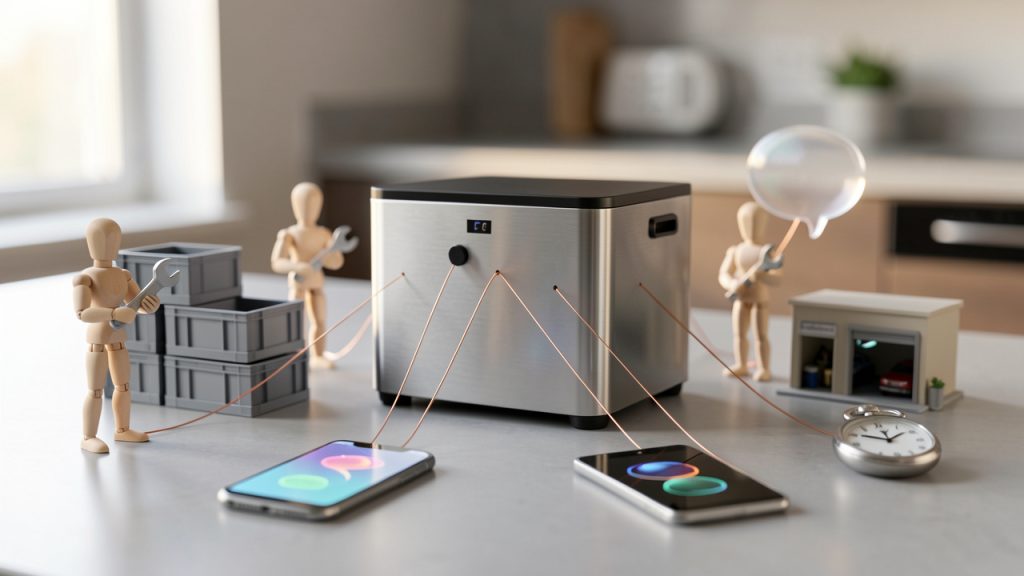
The second component is equally important. Clear regional warranty details mean communicating exactly what coverage applies in a specific market, under what conditions, for what duration, and through which service channels. This matters because warranty structures often vary by geography due to local regulations, distribution models, and product categories. A message that is accurate in Germany may be incomplete in Southeast Asia or overly broad in North America.
Marketing teams often assume warranty copy belongs only on legal pages. That approach creates friction. A better model integrates warranty clarity into the buyer journey in plain language, then links to the full terms where needed. This balances compliance with usability. It also reduces a common source of customer dissatisfaction, which is not poor coverage itself, but uncertainty about coverage.
For a company with Bosch’s reputation, the service narrative should function as proof of engineering confidence. A strong product claim becomes more credible when paired with visible service support. If a campaign says a system is built for durability, the next question is obvious: who supports it when maintenance is needed? Marketing that answers that question directly performs better because it aligns brand promise with ownership reality.
Why Reliability Messaging Depends on Service Visibility
Reliability is often misunderstood as a purely technical attribute. In practice, customers define reliability more broadly. A product is reliable when it works consistently, when repairs are accessible, and when the brand responds predictably if something goes wrong. This broader definition makes service coverage a central component of brand trust.
For Bosch, service network visibility reduces perceived risk at the moment of purchase. A buyer comparing two premium brands may see similar core specifications. The differentiator becomes confidence in the support model. If Bosch clearly communicates authorized service availability, regional support access, and a straightforward warranty path, it lowers hesitation and improves conversion quality. The customer is not simply persuaded to buy, but persuaded to buy with fewer doubts.
This has a compounding effect on retention. Customers who understand the support system from the start are less likely to feel misled later. That reduces complaint escalation, improves review sentiment, and strengthens word-of-mouth credibility. In other words, warranty clarity is not only a legal safeguard. It is also a reputation management asset.
There is also a channel-level benefit. Retailers, distributors, and installers are more effective when Bosch gives them clean, region-specific service and warranty language. Ambiguous claims create inconsistent selling behavior. Clear claims create a stable message architecture across ecommerce, in-store displays, dealer training, and post-purchase communication.
Key Aspects of Strengthening Bosch’s Service and Warranty Messaging
Position the Service Network as Operational Proof
A service network should not be framed as a backup plan alone. It should be presented as operational proof that Bosch products are supported by a mature ecosystem. This includes authorized technicians, access to genuine parts, service scheduling systems, and escalation pathways for more complex cases.
When this is expressed well, the message becomes stronger than generic trust language. Instead of saying Bosch is dependable, marketing shows why it is dependable. The service infrastructure demonstrates that reliability is designed not just into the product, but into the ownership experience. This distinction matters in categories where downtime is disruptive, such as kitchen appliances, heating systems, power tools, and connected home devices.
The most effective messaging is concrete. Statements such as “supported by authorized local service” or “backed by regional warranty coverage and trained technicians” communicate more value than abstract promises. Specificity builds confidence. Vague assurance does not.
Make Regional Warranty Details Easy to Understand
Warranty communication fails when it is technically accurate but difficult to interpret. Customers do not want to decode legal phrasing during the consideration stage. They want a concise explanation of coverage, exclusions, and service steps, followed by access to the full terms.
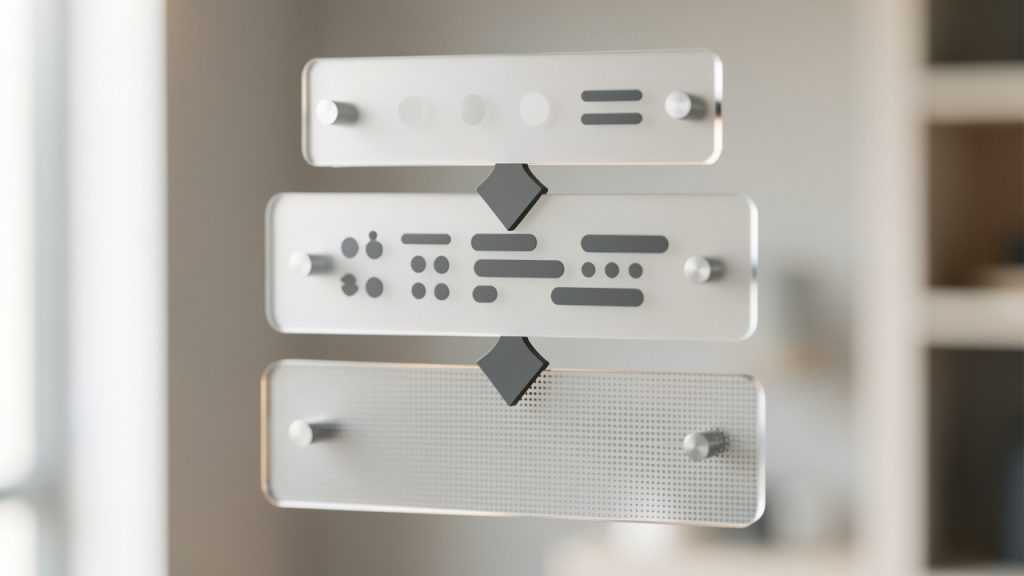
The solution is layered communication. First, provide a brief summary in marketing pages and product detail views. Second, localize the information by market. Third, link to a complete warranty resource page that includes legal text, claim process information, and contact or service locator tools. This structure supports both clarity and compliance.
A useful comparison is below.
| Warranty Communication Approach | Customer Effect | Brand Effect |
|---|---|---|
| Generic global warranty statement | Confusion about local eligibility | Weakens credibility |
| Legal text only, buried in footer | Friction and uncertainty | Higher support burden |
| Region-specific summary plus full terms | Faster understanding | Stronger trust and fewer disputes |
| Region-specific summary plus service locator | Clear action path | Reinforces reliability and support readiness |
This is especially relevant for Bosch because product lines may span multiple territories, dealer models, and regulatory environments. A centralized brand claim with decentralized legal conditions requires disciplined localization. Without that discipline, even a premium brand can appear inconsistent.
Align Marketing, Legal, and Service Operations
One of the most common breakdowns occurs when marketing promotes confidence while service and legal teams define narrower realities. The result is not always intentional misrepresentation. More often, it is a coordination gap. Marketing teams reuse old messaging, legal teams update policy language, and service operations adjust regional workflows without a synchronized content review.
To avoid this, Bosch marketing should treat service and warranty messaging as a cross-functional content system. Claims should be validated against current regional coverage, authorized partner availability, and escalation policies. This reduces the risk of overpromising and ensures that campaign language matches live support capability.
This is not just a governance issue. It affects customer experience directly. If a landing page implies universal support access but a customer later discovers restrictions by region or product class, trust erodes quickly. Precision protects the brand.
Use Local Proof Points Without Fragmenting the Brand
Regionalization should not create a fractured identity. Bosch can maintain a unified global reliability message while tailoring service and warranty specifics by market. The structure remains consistent, but the details reflect local reality.
For example, a country-specific product page can preserve Bosch’s design language and core reliability positioning while adjusting service center references, hotline availability, registration steps, or warranty duration according to local terms. This approach creates a stable global brand with practical local usability.
The same principle applies across digital channels. Email onboarding, post-purchase registration flows, dealer support materials, and packaging inserts should all reflect the same regional support model. Repetition across touchpoints turns policy into confidence.
How to Build a More Effective Bosch Reliability Narrative
Bring Service Forward Earlier in the Funnel
Most brands wait too long to discuss support. Service information often appears after purchase or only when a user encounters a problem. Bosch can reinforce reliability more effectively by surfacing support proof earlier, especially on product pages, comparison pages, and dealer assets.
This does not mean overwhelming the buyer with policy language. It means presenting support as a buying benefit. A brief statement about authorized service access, genuine parts support, and local warranty coverage can reduce decision friction in the same way energy efficiency ratings or technical specifications do.
In categories with long ownership cycles, this matters even more. Buyers are not only evaluating features for day one. They are evaluating the total ownership model over years. Marketing that acknowledges this decision logic feels more credible and more mature.
Design for Clarity Across Digital Journeys
Customers often move nonlinearly between ads, product pages, support pages, retail listings, and third-party reviews. If Bosch wants to reinforce reliability, service and warranty details need to remain coherent across that journey. Inconsistent naming, conflicting coverage language, or hard-to-find service pages create doubt.
A useful structure is to standardize a small set of support modules across web properties. These can include a service locator reference, a warranty summary block, registration guidance, and a region indicator. The exact implementation depends on the channel, but the conceptual architecture should remain stable.
This is also where digital platforms such as Home can play a supporting role. In connected ecosystems, users increasingly expect support, registration, maintenance prompts, and service access to feel integrated rather than siloed. If Home helps centralize product management and ownership visibility, it can strengthen the perception that Bosch support is organized, accessible, and built for efficiency.
Translate Technical Reliability Into Ownership Reliability
Engineered reliability is only one half of the story. The other half is ownership reliability, which is the confidence that service, replacement parts, and warranty action are available when needed. Marketing should bridge these two meanings directly.
A durable motor, efficient compressor, or advanced sensor system is valuable. But for many buyers, the practical question is simpler: if this product needs attention, what happens next? Bosch’s messaging should answer that question with the same precision it uses to describe product engineering.
This creates a complete reliability narrative. The product is designed to perform well. The service network is prepared to support it. The warranty terms are clear in the customer’s region. Together, these elements transform reliability from a claim into a system.
How to Get Started with Bosch Service Network and Warranty-Focused Marketing
Audit Existing Messaging by Region
The first step is to review where Bosch currently references service, warranty, and post-purchase support across regional websites, retail listings, brochures, onboarding emails, and partner materials. This audit should identify outdated terms, vague claims, unsupported promises, and gaps between markets.
The goal is not simply to correct wording. It is to map the customer’s trust journey. Where does the customer first encounter warranty information? Where can they verify local service access? Where do questions remain unanswered? Those answers reveal the highest-value updates.
A simple evaluation model helps prioritize changes.
| Content Area | Common Problem | Recommended Fix |
|---|---|---|
| Product pages | Warranty mentioned vaguely | Add regional summary and link to full terms |
| Dealer materials | Inconsistent wording across partners | Standardize approved support language |
| Support pages | Hard to find from marketing pages | Add direct navigation and contextual links |
| Ecommerce listings | Service network omitted | Include brief authorized service message |
Create a Regional Messaging Framework
Once the audit is complete, Bosch should establish a framework that separates global brand language from local service and warranty data. Global messaging defines the brand promise. Regional messaging defines the operational details that support that promise.
This framework works best when built as a reusable content system. Core claims such as quality, support, and reliability remain stable. Variable fields such as warranty duration, claim channels, registration rules, and support availability are localized. This reduces content drift while protecting legal accuracy.
From an operational perspective, this is more scalable than rewriting campaign language market by market from scratch. It also allows faster updates when service policies change.
Equip Internal and Channel Teams
Even strong central messaging fails if resellers, installers, and support teams use inconsistent phrasing. Bosch should provide approved regional language, not just to marketing teams, but to sales enablement, dealer networks, retail partners, and customer support operations.
A compact rollout can focus on four essentials: approved reliability language for campaigns and listings; regional warranty summaries in customer-friendly phrasing; service network references tied to authorized support channels; and escalation rules for exceptions and region-specific cases.
This kind of enablement reduces improvisation. It also creates a more stable brand experience from ad impression to after-sales support.
Measure Trust, Not Only Traffic
The success of this strategy should not be measured solely through clicks or impressions. Bosch should track indicators that reflect reduced uncertainty and improved confidence. These can include lower pre-purchase support inquiries about warranty terms, fewer escalations caused by mismatched expectations, stronger conversion rates on high-consideration products, and improved post-purchase satisfaction.
Qualitative inputs matter too. Review language, dealer feedback, and service call transcripts often reveal whether customers understand the support model. If customers repeatedly ask the same regional warranty question, the marketing layer is not doing enough work upstream.
Over time, the objective is to create a feedback loop in which service questions inform content updates, and content clarity reduces unnecessary service friction.
Common Mistakes That Undermine Reliability
A frequent mistake is using global language that sounds reassuring but lacks regional precision. This happens when a campaign says products are backed by warranty support without specifying that terms vary by country, product category, or sales channel. The message may be well-intentioned, but ambiguity creates risk.
Another problem is treating warranty communication as a legal disclosure rather than a trust asset. Legal accuracy is essential, but if the information is hidden or unreadable, customers interpret the silence negatively. In premium markets especially, opacity feels out of step with the brand promise.
There is also the issue of unsupported channel claims. If third-party sellers or local partners use outdated Bosch language, customers may receive conflicting information. That inconsistency damages the perception of reliability more than a narrower but clearly stated policy would.
Finally, many brands underuse service network storytelling. Customers rarely see the infrastructure behind support, even when it is robust. Bosch can strengthen trust by showing how authorized service works, how genuine parts access is maintained, and how local support paths are structured. Visibility matters.
Conclusion
To reinforce reliability in Bosch marketing, service and warranty communication must move from the margins to the center of the message. A visible service network signals operational strength. Clear regional warranty details reduce uncertainty, align expectations, and convert technical product confidence into ownership confidence.
The next step is practical. Audit current content, localize warranty summaries, standardize service messaging across channels, and connect every reliability claim to a verifiable support path. When Bosch promotes not only what its products do, but also how they are supported in each market, reliability stops being a brand assertion and becomes a customer conclusion.