
JNTZN

Tag: search intent

  • How to Rank on Google: A Practical Guide for Small Sites

    How to Rank on Google: A Practical Guide for Small Sites

    How your business appears on Google can change everything. A page that ranks well brings in qualified traffic day after day, while a page buried on page three might as well not exist.

    If you have been trying to figure out how to rank on Google, the good news is that the process is not magic, and it is not reserved for giant brands with massive budgets. Google wants to show users the most relevant, trustworthy, and helpful result, which creates an opportunity for small businesses, freelancers, developers, and solo creators who are willing to publish genuinely useful content and build a technically sound website.

    The challenge is that most SEO advice is either too vague or too complicated. One side says, “just create great content.” The other drowns you in audits, jargon, and endless checklists. The real path sits in the middle, you need the right content, the right structure, and the right signals of quality. When those pieces work together, rankings become much more achievable.

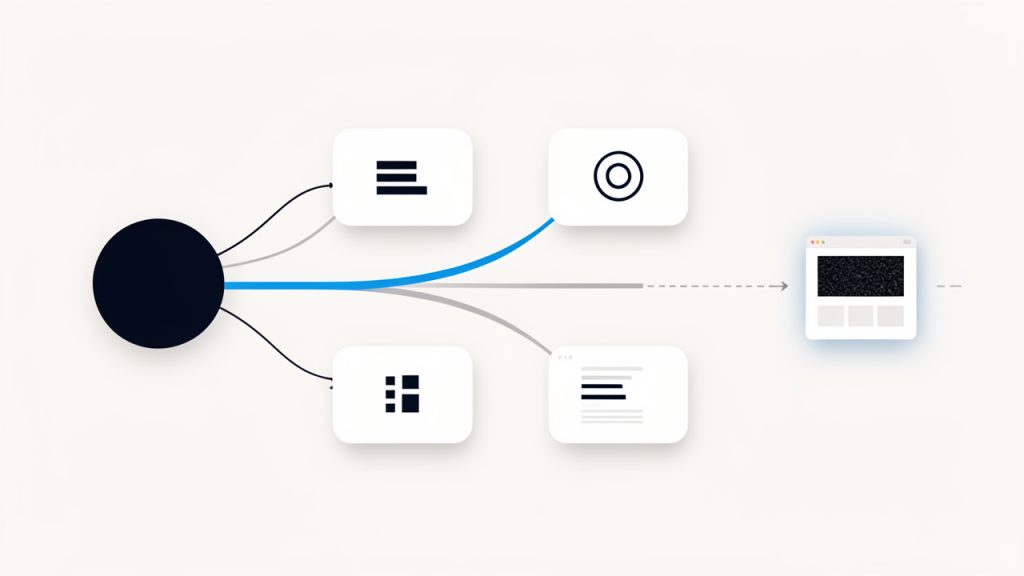
    Three interlocking gears (or pillars) labeled “Content,” “Technical,” and “Signals/Authority” with arrows showing they must work together. Emphasize balance — if one gear is weak, the system falters. Clean, simple icons for each gear (e.g., document for content, speed/bolt for technical, link/star for signals).

    What It Means to Rank on Google

    Ranking on Google means your page appears prominently in the search results for a query that your audience types in. If someone searches for “best invoicing software for freelancers” or “how to speed up a WordPress site,” Google compares thousands or millions of pages and chooses which deserve the top positions.

    That decision is based on many factors, but the core principle is simple. Google tries to match search intent with the most useful result. A page ranks well when it answers the right question, in the right format, with enough authority and a good enough user experience to deserve visibility.

    This is where many site owners get stuck. They often focus on what they want to say, instead of what the searcher wants to find. Those are not always the same thing. If a user wants a step-by-step guide and lands on a sales page, Google notices that mismatch through engagement signals and relevance patterns over time.

    Ranking Is Not Just About Keywords

    Keywords still matter, but they are no longer the whole game. Years ago, you could repeat a phrase enough times and have a decent shot at ranking. Today, Google is much better at understanding topic relationships, synonyms, and user expectations.

    That means if you want to rank on Google, you should not obsess over exact-match repetition. You should focus on topical depth, clarity, and relevance. A page about local SEO for plumbers should naturally mention service areas, Google Business Profile optimization, reviews, citations, and nearby search intent. That breadth tells Google the page is genuinely useful.

    Google Rewards Helpfulness

    Google’s systems increasingly favor content created for people, not for algorithms. Helpful content solves a real problem, answers follow-up questions, and makes the next step obvious.

    Think of your page like a strong in-person recommendation. If a friend asked how to choose a project management tool, you would not recite keywords at them. You would explain trade-offs, compare options, and help them make a decision. Great SEO content works the same way.

    Key Aspects of Ranking Well on Google

    If you want consistent visibility, you need to understand the main pillars behind search rankings. These elements reinforce one another. Strong content without a healthy technical foundation will struggle, and technical perfection without useful content also struggles. SEO works best as a system.

    Search Intent Comes First

    Before writing anything, ask what the user actually wants. Are they trying to learn, compare, buy, or find a local business? This is the foundation of ranking well.

    If the keyword suggests curiosity, your page should educate. If it suggests comparison, your page should help evaluate options. If it suggests purchase intent, your page should reduce friction and build trust. Misreading intent is one of the fastest ways to create content that never ranks, no matter how polished it looks.

    A practical way to understand intent is to study the current top results. If Google shows mostly guides, you likely need a guide. If it shows product pages, a blog post may not be enough. The search results are often the clearest hint about what Google believes users want.

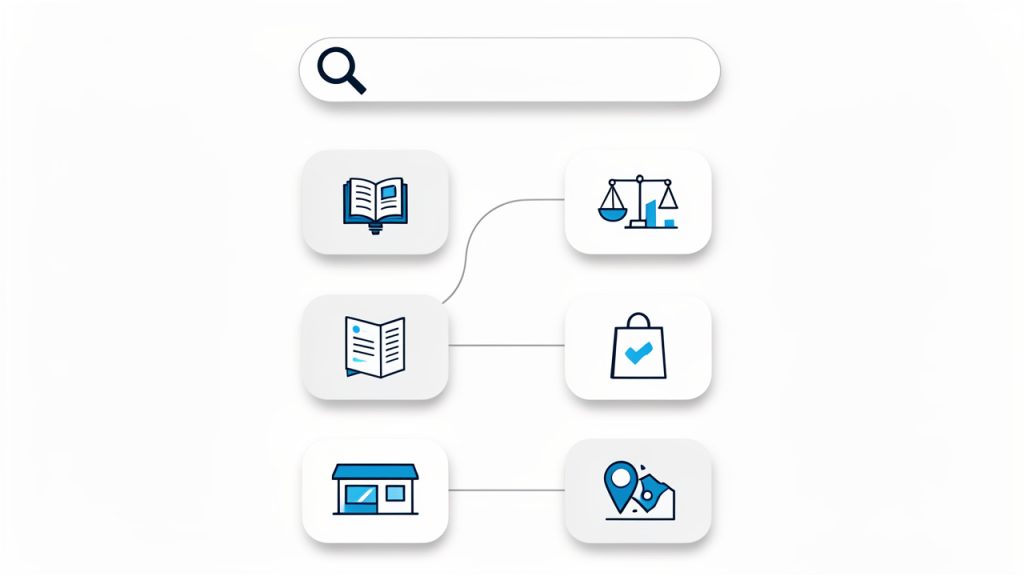
    A simple matrix or flow showing search intent types (Learn, Compare, Buy, Local) mapped to ideal page formats (Guide, Comparison, Product page, Local business listing). Use icons for each intent and corresponding page type, with a magnifying-glass/search-bar header to imply a query-to-result mapping.

    Content Quality Still Drives Results

    Content quality is not about writing longer articles for the sake of length. It is about being more useful than the alternatives. A strong page answers the main question clearly, then covers the supporting questions that naturally follow.

    For example, a page about how to rank on Google should not only mention keywords and backlinks. It should explain search intent, site structure, page speed, internal linking, content freshness, and authority. It should also make those ideas understandable for non-specialists.

    Quality also comes from specificity. Generic advice is easy to ignore. Real examples, practical details, and clear explanations make a page more trustworthy. Google’s algorithms are designed to detect patterns associated with expertise and usefulness, and readers can feel the difference immediately.

    On-Page SEO Helps Google Understand Your Page

    On-page SEO is the practice of structuring a page so both users and search engines can quickly understand it. This includes your title, headings, URL, meta description, image alt text, and the natural use of relevant phrases throughout the content.

    Good on-page SEO does not feel forced. Your primary topic should appear in the title and early in the page, but always in a way that sounds natural. Supporting phrases should appear where they make sense. The goal is not to “insert keywords.” The goal is to create a page that is tightly aligned with one core topic.

    Headings matter here because they create a clear hierarchy. They help readers scan and help Google understand how your ideas are organized. A confusing wall of text makes your content harder to use and harder to interpret.

    Technical SEO Removes Hidden Friction

    A surprising number of ranking problems have nothing to do with writing. Sometimes Google cannot properly crawl a page. Sometimes a site is too slow. Sometimes pages are duplicated, orphaned, or blocked by mistake.

    Technical SEO is about making your site easy to access, understand, and trust. If your pages load quickly, work well on mobile devices, use secure HTTPS connections, and avoid major crawl issues, you give your content a far better chance to compete.

    For small businesses, this does not mean you need enterprise-level complexity. It means covering the essentials. Your website should be mobile-friendly, indexable, logically structured, and fast enough that users do not leave before the page fully loads. Strong content without technical health will still struggle to reach its potential.

    Authority and Backlinks Still Matter

    Google uses links from other websites as signals of credibility. A backlink, especially from a reputable site in your niche, acts like a vote of confidence. Not all links are equal, though. A few strong, relevant links are more valuable than dozens of weak or spammy ones.

    Authority is not only about backlinks. It is also shaped by your brand reputation, topical consistency, author credibility, and the overall trust signals on your site. Still, links remain one of the clearest ways Google measures external validation.

    This is why content that earns attention tends to outperform content that merely exists. If your page offers original insights, useful tools, strong data, or a genuinely better explanation, it is more likely to attract links naturally over time.

    User Experience Influences Performance

    Google ultimately wants satisfied searchers. If people click your result and quickly bounce back, that is not a great sign. If they stay, read, explore your site, and find what they need, your page is doing its job.

    User experience includes readability, layout, mobile responsiveness, visual clarity, and page speed. It also includes trust. If your page looks outdated, cluttered, or confusing, users may leave even if the information is solid.

    A clean design helps your SEO more than many people realize. It reduces friction. It helps users stay focused. It makes your expertise easier to absorb.

    A Simple View of the Ranking Factors

    Factor Why It Matters What Good Looks Like
    Search intent Aligns your content with what users want The page format matches the query type
    Content quality Gives users a reason to stay and trust you Clear, useful, specific, complete content
    On-page SEO Helps Google understand your topic Strong title, headings, structure, and relevance
    Technical SEO Ensures your site can be crawled and used Fast, mobile-friendly, secure, indexable pages
    Backlinks Provide external trust and authority Relevant links from reputable websites
    User experience Supports engagement and satisfaction Easy navigation, readable design, low friction

    How to Get Started With Ranking on Google

    The best way to begin is to stop thinking of SEO as a trick and start treating it like a publishing and optimization process. You are building assets that should deserve attention over time.

    A new site will not rank overnight, and even established sites need consistency. But if you approach SEO with clear priorities, you can make real progress faster than most competitors who publish randomly and hope for the best.

    Start With the Right Keywords

    Keyword research helps you identify what your audience is already searching for. The goal is not to chase the biggest search volume. It is to find topics where your content can realistically compete and provide real value.

    For small business owners and freelancers, this often means starting with long-tail keywords. These are more specific phrases that may have lower search volume but clearer intent and less competition. A page targeting “best CRM for solo consultants” is often easier to rank than one targeting “CRM.”

    Look for keywords that connect directly to your services, audience problems, or buying decisions. If a search phrase brings in traffic but not the right visitors, it is not a win.

    Build Topic Clusters, Not Random Pages

    One common mistake is publishing unrelated blog posts with no overall strategy. Google prefers sites that show depth in a subject area. That is why topic clusters work so well.

    A topic cluster means creating a main page around a core subject, then supporting pages around related subtopics. If your core topic is SEO for small businesses, related pages might cover local SEO, keyword research, Google Business Profile optimization, content planning, and site speed.

    Internal links tie those pages together. That helps users navigate your content and helps Google understand your topical authority. Over time, this structure can strengthen your rankings across multiple related searches.

    Optimize Each Page for One Primary Goal

    Every important page should have a clear purpose. Trying to rank one page for too many unrelated terms usually weakens it. A page should answer one main search need extremely well, then support that with relevant secondary information.

    This affects your title, headings, content angle, and call to action. If the page is informational, teach clearly. If it is transactional, remove doubt and make action easy. If it is local, highlight location signals and service details.

    Clarity wins. Both readers and search engines respond better when a page knows exactly what it is trying to do.

    Improve Your Site’s Technical Foundation

    You do not need a perfect site before publishing content, but you do need a usable one. Check whether your pages are indexed, whether they load quickly, and whether mobile users can navigate them comfortably.

    If your website has broken links, duplicate pages, or confusing navigation, fix those issues early. SEO gains compound, and technical problems compound too. A weak foundation slows everything down.

    A simple audit can reveal a lot. Many site owners discover they have excellent content hidden behind slow pages, poor internal linking, or indexing problems that prevent Google from seeing the full value of the site.

    Publish Content Worth Citing

    If you want backlinks, you need something people would naturally reference. That might be a detailed guide, a useful comparison, original research, a calculator, a template, or a clear explanation that improves on what already exists.

    This is where many businesses underinvest. They create content that is “fine,” but not memorable. Fine content rarely earns links. Exceptional content, even in a narrow niche, can.

    For example, a local accountant might publish a genuinely helpful tax deadline guide for freelancers. A developer might create a performance checklist for small websites. A consultant might release a simple planning template. Useful assets create opportunities for both traffic and authority.

    Track Progress the Right Way

    SEO is a long game, so you need to measure more than just rankings. Some pages may gain impressions before clicks. Others may bring lower traffic but better leads. Looking only at vanity metrics can lead you in the wrong direction.

    Focus on a few meaningful indicators:

    1. Organic impressions show whether Google is beginning to surface your pages.
    2. Organic clicks show whether your titles and rankings are earning attention.
    3. Keyword movement helps you see whether optimization is working over time.
    4. Conversions show whether traffic is actually helping your business.

    If a page is getting impressions but few clicks, your title or meta description may need improvement. If it gets clicks but no engagement, the content may not match intent closely enough. SEO becomes much easier when you treat data as feedback instead of judgment.

    Practical Priorities for Small Teams and Solo Operators

    Many SEO guides assume you have a full marketing department. Most small businesses do not. That means your strategy should emphasize leverage, not volume.

    A practical approach is to choose a narrow set of topics where your expertise is strongest and your audience is most active. Create a few excellent pages instead of dozens of shallow ones. Improve them over time. Add internal links. Refresh facts. Expand sections based on real search behavior and user questions.

    This approach is slower at the start, but much more sustainable. A smaller library of strong content often outperforms a large archive of weak content.

    Where to Spend Time First

    Priority Why It Deserves Early Attention Expected Impact
    Keyword and intent research Prevents wasted content creation High
    Core service or topic pages Targets business-relevant traffic High
    Technical cleanup Removes crawl and UX barriers High
    Internal linking Strengthens site structure and topic relevance Medium to High
    Backlink outreach Builds authority gradually Medium
    Content expansion and refreshes Improves pages already gaining traction Medium to High

    Common Mistakes That Hold Rankings Back

    One of the biggest mistakes is writing for algorithms instead of people. When content sounds robotic, padded, or repetitive, users lose trust quickly. Google is getting better at identifying content that exists mainly to manipulate rankings rather than solve problems.

    Another common issue is targeting keywords that are far too competitive. A small business site usually should not begin by chasing broad national terms dominated by major publishers or large software companies. Smarter wins come from relevance, specificity, and local or niche authority.

    Some site owners also expect instant results. SEO rarely works that way. Rankings often improve gradually as Google crawls, tests, and reevaluates your pages. Patience matters, but so does iteration. Publishing once and never updating is usually not enough.

    There is also the problem of fragmented effort. A business might publish blog posts, tweak titles, and occasionally share links, but without any coherent structure. SEO rewards consistency and alignment. A connected strategy nearly always beats scattered activity.

    A Realistic Path to Better Google Rankings

    If you want to understand how ranking on Google actually works in practice, think in phases. First, identify the queries worth targeting. Second, create pages that satisfy those queries better than weaker competitors. Third, make sure the site is technically sound. Fourth, strengthen trust and authority over time.

    That sequence matters. You do not need to do everything at once, but you do need to do the right things in the right order. Great backlinks cannot save content that misses user intent. Great content cannot fully perform on a broken site. SEO is not one tactic. It is coordination.

    For most readers, the fastest gains come from improving pages that already exist. Refresh outdated content. Clarify headings. Add missing sections. Improve internal links. Tighten titles. Fix page speed issues. Often, the easiest ranking gains are hidden in assets you already have.

    Conclusion

    To rank higher on Google, focus on what searchers need, then build pages that answer those needs clearly, thoroughly, and credibly. Support that content with strong on-page SEO, a healthy technical foundation, and a steady effort to build authority. That is the real answer to how to get your site to rank on Google.

    Your next step is simple. Pick one important page on your site and evaluate it honestly. Does it match search intent? Is it better than the current top results? Is it fast, clear, and well-structured? Improve that page first, then repeat the process. SEO momentum starts small, but it compounds.

  • How to Use Long-tail Keywords to Grow a Small Site

    How to Use Long-tail Keywords to Grow a Small Site

    Some keywords look exciting on paper and fail in the real world. They get tons of searches, fierce competition, and very little room for a smaller site to win. That is where long-tail keywords become powerful. They help businesses reach people who are searching with more detail, more intent, and often much closer to taking action.

    If you run a small business, freelance online, build products, or publish content with limited time and budget, this topic matters. You do not need to outrank giant brands for broad terms to grow traffic. You need to show up for the right searches. Understanding how long-tail search phrases work can turn SEO from a vague marketing task into a practical, repeatable strategy.

    What Is a Long-Tail Keyword?

    A long-tail keyword is a more specific search phrase, usually longer and more precise than a broad keyword. Instead of targeting something like shoes, a long-tail phrase might be best waterproof running shoes for winter. Instead of project management software, it might be free project management software for freelancers.

    The phrase “long tail” does not just refer to the number of words. It describes search demand across the full landscape of queries. A small number of broad keywords get very high search volume, while a huge number of specific searches each get lower volume. Collectively, those highly specific searches make up the long tail of search behavior.

    A simple 'long tail' demand curve: a tall narrow spike on the left labeled 'short-tail / high volume' and a long trailing tail to the right labeled 'long-tail / many low-volume queries'. Add callouts showing 'high competition' at the left spike and 'collective opportunity' across the tail.

    That distinction matters because searchers using detailed phrases usually know what they want. They may be comparing tools, trying to solve a specific problem, or looking for a product that fits narrow requirements. In SEO terms, that often means higher intent, less competition, and better conversion potential.

    Why Specific Searches Matter More Than Broad Ones

    Broad keywords attract attention, but they also attract everyone else trying to rank. Large brands, established publishers, and heavily funded competitors often dominate those results. For a newer website or smaller business, competing head-to-head on broad terms can be slow and expensive.

    Specific search queries create a more realistic path. If someone searches for invoicing tool, the intent is still unclear. They could be looking for a definition, a tutorial, a template, or software. If they search for free invoicing tool for solo consultants, the intent becomes much easier to serve.

    This is the practical advantage of long-tail SEO. You are not chasing traffic for its own sake. You are matching content with a searcher who has already narrowed the problem down.

    Long-Tail Keywords vs Short-Tail Keywords

    A lower-volume keyword is not automatically better. But when the phrase reflects a real need and your content answers it well, it can bring in visitors who are far more likely to subscribe, buy, book, or engage.

    A two-column visual comparing short-tail vs long-tail: icons or bullets for each attribute (Search Volume, Competition, Intent Clarity, Conversion Potential) with arrows or color coding showing 'High/Low' differences — short-tail: high volume, high competition, low intent clarity; long-tail: lower volume, lower competition, higher intent clarity and conversion.

    Keyword Type Example Search Volume Competition Intent Clarity Conversion Potential
    Short-tail email marketing High High Low to medium Medium
    Mid-tail email marketing tools Medium Medium to high Medium Medium to high
    Long-tail best email marketing tools for local restaurants Low to medium Lower High High

    Key Aspects of Long-Tail Keywords

    Long-tail search phrases are often presented as a simple SEO trick, they are not. They work because they align with how people actually search, especially when they are close to making a decision.

    Search Intent Is the Real Engine

    The biggest strength of long-tail phrases is search intent. Specific searches tend to reveal what the user wants in a way broad keywords do not. A query like time tracking could mean almost anything. A query like free time tracking app for freelance designers tells you a story.

    That story helps you create better content. You can write a page that speaks directly to freelance designers, compares free tools, explains trade-offs, and gives a next step. This level of alignment is what makes long-tail content more effective than generic pages written only to include a popular keyword.

    Intent usually falls into categories such as informational, commercial, navigational, or transactional. Long-tail phrases often sit closer to the commercial or transactional end, which is why they tend to convert well. Even informational long-tail queries can be valuable because they often reveal a very specific problem that your audience urgently wants solved.

    Lower Competition Creates Faster Opportunities

    Competition is where long-tail strategy becomes especially useful for smaller sites. A broad term may have thousands of backlinks pointing to the top-ranking pages, deep brand trust, and years of authority behind it. A narrower phrase may still be competitive, but often in a much more manageable way.

    This does not mean every long-tail phrase is easy to rank for. Some industries are crowded at every level. But the odds improve when you target detailed phrases that reflect a niche use case, audience segment, or pain point.

    For example, a developer tool site may struggle to rank for API testing. But it may have a better chance with API testing tools for small SaaS teams or how to test REST APIs without Postman alternatives. Those phrases narrow the audience while increasing relevance.

    Conversion Potential Is Usually Higher

    Traffic is useful, but outcomes matter more. Many long-tail searches come from people who are already evaluating options or trying to complete a task. They are not just browsing. They are closer to action.

    That is why a page targeting a specific phrase with 150 monthly searches can outperform a page targeting a broad phrase with 10,000 monthly searches. If the first page brings in highly relevant users, it may generate more demos, sales, signups, or inquiries than the second.

    For small business owners and freelancers, this changes the way SEO should be measured. Instead of asking, “How much traffic can this keyword bring?” it is often smarter to ask, “What kind of visitor will this query attract, and what are they likely to do next?”

    Long-Tail Keywords Support Topic Authority

    Specific keywords do more than bring in isolated traffic. They help build topical depth. When you create useful pages around related long-tail searches, search engines get clearer signals about your expertise in a niche.

    A site about productivity tools could publish content around phrases like best Pomodoro timer for ADHD students, simple habit tracker for remote workers, and free focus apps without account signup. Each article targets a narrow need, but together they strengthen the site’s authority around productivity solutions.

    This is one reason long-tail content scales well over time. A single broad page often cannot satisfy all possible intents. A cluster of focused pages can.

    Voice Search and AI Search Increase Specificity

    Search behavior keeps getting more natural. People type full questions. They use voice assistants. They ask AI tools in conversational language. This trend favors specificity.

    Instead of typing CRM software, a user might ask, What is the best free CRM for a one-person consulting business? That kind of query is inherently long-tail. It is detailed, contextual, and intent-rich.

    For content creators, this means keyword research should go beyond exact phrase matching. You need to understand the underlying need, the phrasing people use, and the variations that surround a topic. The best long-tail content often ranks for dozens of related searches because it answers the topic comprehensively.

    How to Get Started With Long-Tail Keywords

    Long-tail SEO works best when it is practical. You do not need an enterprise team or expensive software to start. What you need is a clear process and a strong understanding of your audience.

    Start With Customer Problems, Not Just Keyword Tools

    Many people begin keyword research inside an SEO tool. That is useful, but it is not the best first step. The strongest long-tail ideas often come from real questions customers ask in emails, support chats, sales calls, reviews, forums, and community spaces.

    Think about the repeated phrases people use when describing a problem. A freelancer may ask, How do I send professional invoices without accounting software? A local business owner may ask, What is the easiest booking tool for a small salon? Those are not just content ideas. They are demand signals.

    When you start from the audience, the resulting keywords tend to be more relevant and commercially meaningful than terms generated only from a database.

    Expand Broad Topics Into Specific Angles

    Once you have a core topic, break it into narrower dimensions. Consider user type, budget, industry, location, difficulty level, use case, feature need, and urgency. These modifiers often create valuable long-tail opportunities.

    A broad topic like password manager can branch into many specific searches. Some users care about family sharing. Others want a free version, a browser extension, Linux support, or a solution for small teams. Each variation reflects a different intent, and each can justify its own page if the demand is real.

    This is where smaller publishers can find leverage. Broad content competes with everyone. Specific content speaks directly to someone.

    Use Search Results as Market Feedback

    One of the simplest ways to validate a keyword is to search it. Look at the pages currently ranking. Are they giant brands, forum threads, tool comparison pages, or weak articles that barely address the topic? The search results reveal both the competition and the expected content format.

    If the top results for a keyword are all product category pages, a blog post may struggle because the intent is commercial. If the results are educational guides, a helpful tutorial might fit well. Matching search intent is often more important than inserting the right wording.

    Also pay attention to related searches, autocomplete suggestions, and “People also ask” boxes. They often expose adjacent long-tail topics and follow-up questions that deserve coverage.

    Create Content That Fully Solves the Query

    Many pages target long-tail phrases but still underperform because they are too thin. A specific query deserves a specific answer. If someone searches for best free calendar app for freelancers, they do not want a generic article about time management. They want a direct comparison, honest recommendations, pros and cons, and guidance on what to choose.

    Depth matters here. Not bloated word count, but useful depth. The best pages acknowledge trade-offs, explain context, and help the reader make a decision. They feel written by someone who understands the problem, not someone trying to squeeze in a phrase for ranking purposes.

    This is especially important for tools, software, and service-related content. Users want clarity. They want to know what fits their needs, what limitations to expect, and what to do next.

    Organize Keywords by Intent and Funnel Stage

    Not every long-tail phrase serves the same purpose. Some attract early-stage readers who want education. Others attract comparison shoppers or ready-to-buy visitors. A useful content strategy recognizes this difference.

    Keyword Intent Example Search Best Content Type Business Goal
    Informational how to organize invoices for freelancers Guide or tutorial Build trust and attract top-of-funnel traffic
    Commercial best invoicing software for freelance writers Comparison article Drive product evaluation
    Transactional buy invoicing tool for freelancers monthly plan Landing page or product page Convert ready buyers
    Problem-solving invoice template with tax for self employed Template or solution page Capture urgent task-based searches

    This structure helps you avoid random publishing. Instead, you build content that supports the full buyer journey.

    Measure the Right Outcomes

    Success with long-tail phrases is not always obvious at first. A page may attract modest traffic but generate strong leads or sales. Another may rank for dozens of variations even if the exact keyword volume looked small.

    Track performance through a mix of rankings, impressions, clicks, conversions, and engagement. Watch which pages earn backlinks naturally. Notice which topics attract qualified visitors. Over time, patterns emerge.

    You may find that one niche audience responds better than another, or that certain modifiers like free, for beginners, or for small business consistently drive better outcomes. Those insights can guide future content much more effectively than search volume alone.

    A Simple Starting Process

    If you are starting from scratch, keep the workflow manageable.

    1. Choose one core topic that connects directly to your business or audience.
    2. List real questions customers ask about that topic.
    3. Expand each question with specific modifiers like audience, budget, feature, or use case.
    4. Check the search results to understand intent and competition.
    5. Publish one highly focused page that answers the query better than the current results.

    This process is simple on purpose. Many SEO strategies fail because they become too complicated to maintain. Long-tail optimization works best when it becomes a steady habit.

    Common Mistakes to Avoid

    A frequent mistake is assuming that every longer phrase is a good keyword. Length alone does not create value. The phrase must reflect genuine demand and meaningful intent. A highly specific query with no real audience will not help much, even if it is easy to rank.

    Another problem is creating dozens of near-duplicate pages for tiny keyword variations. This usually leads to weak content and internal competition. It is often better to build one strong page that naturally covers closely related phrases than several thin pages targeting slight wording changes.

    Some site owners also underestimate content quality. Because long-tail phrases are more niche, they assume minimal effort will be enough. In reality, specific searchers often have high expectations. They want precise answers. If your page feels vague, outdated, or padded, they will leave quickly.

    Conclusion

    Long-tail keywords matter because they connect your content with real intent. They help smaller sites compete more intelligently, reach more qualified visitors, and create pages that are actually useful. Instead of chasing the biggest possible keyword, you focus on the searches where relevance wins.

    The next step is simple. Pick one topic your audience already cares about, find the specific questions inside it, and create a page that answers one of those questions exceptionally well. That is often how sustainable SEO growth starts, not with volume, but with precision.

  • A Practical SEO Guide for Small Businesses and Creators

    A Practical SEO Guide for Small Businesses and Creators

    Search traffic is one of the few growth channels that can keep working while you sleep. A well-optimized page can attract visitors for months or even years, long after an ad budget runs out or a social post disappears from the feed. That is why SEO still matters so much for small business owners, freelancers, developers, and anyone building an online presence with limited time and money.

    At the same time, SEO can feel confusing because the advice online is often either too technical, too shallow, or too focused on shortcuts. If you have ever wondered why one website ranks and another gets ignored, the answer usually comes down to a simple principle: search engines reward pages that best satisfy user intent.

    A visual metaphor showing a search engine (magnifying glass/search bar) acting as a matchmaker: multiple user queries on the left (speech bubbles) are being matched to the single best page on the right. The image highlights the idea of intent matching with a checkmark on the chosen page and faded/ignored pages that don't fit.

    What Is SEO?

    SEO, or search engine optimization, is the process of improving your website so it appears more prominently in search engine results for relevant queries. In plain terms, it helps the right people find your content, products, services, or tools when they are actively looking for them.

    That sounds simple, but good SEO is more than sprinkling keywords into a page. It combines content quality, site structure, page speed, usability, authority, and relevance. Search engines try to understand what a page is about, whether it is trustworthy, and whether users are likely to have a good experience on it. Your job is to make those signals clear.

    For small businesses, SEO is often one of the highest-leverage marketing investments because it aligns with existing demand. You are not interrupting people. You are showing up when they are already interested. A local accountant, a freelance designer, a SaaS builder, or a niche e-commerce store can all benefit from being visible at the exact moment a potential customer searches for a solution.

    There is also an important mindset shift here. SEO is not just about ranking higher. It is about attracting qualified traffic. A page that ranks for the wrong term can bring plenty of visitors and still produce no leads, no sales, and no meaningful engagement. Smart search optimization focuses on the queries that connect to real business value.

    Key Aspects of SEO

    Relevance and Search Intent

    The foundation of SEO is relevance. Search engines want to match a query with the page that most effectively answers it, and that means you need to understand search intent, or the reason behind a search.

    If someone searches for “best project management app,” they are likely comparing options. If they search for “how to use kanban boards,” they want education. If they search for “buy time tracking software,” they are much closer to making a purchase. Each query suggests a different kind of page.

    This is where many websites go wrong. They create pages based on what they want to say instead of what users want to know. Strong SEO starts by asking better questions. What is the user trying to accomplish? What information would make this page genuinely helpful? What format fits the query best, such as a guide, landing page, comparison, tutorial, or product page?

    Content Quality

    Content remains one of the strongest SEO drivers because it gives search engines something to understand and rank. But quality is not measured by word count alone. A shorter page that directly solves a problem can outperform a longer article full of filler.

    High-quality content is usually clear, specific, well-structured, and useful. It anticipates follow-up questions and answers them naturally. It demonstrates experience, not just surface-level rewriting. It avoids vague claims and instead offers practical insight, examples, context, and real value.

    For a freelancer, this might mean writing a service page that explains process, pricing logic, and outcomes. For a developer building a tool, it might mean creating documentation and use-case pages that solve real user problems. For a local business, it could mean publishing location-specific pages and helpful FAQs that reflect what customers actually ask.

    On-Page SEO

    On-page SEO covers the elements on your website that help search engines understand your content. This includes page titles, headings, URL structure, internal links, image alt text, and the natural use of target phrases within the content.

    A strong page title tells both users and search engines what the page is about. Headings create a readable structure. Internal links help visitors and crawlers discover related content. Descriptive URLs improve clarity. None of this is glamorous, but together these signals make your site easier to interpret.

    The key is balance. You want to optimize without sounding robotic. Repeating the same phrase over and over makes a page worse, not better. Good on-page SEO reads naturally to humans first, while still making relevance obvious.

    Technical SEO

    Technical SEO is the part many people fear, but its purpose is straightforward, it ensures your site can be crawled, rendered, and indexed efficiently. If search engines cannot access your content properly, even great writing may struggle to perform.

    Important technical factors include page speed, mobile usability, clean navigation, secure connections, and logical site architecture. Broken pages, duplicate content, confusing redirects, or poor performance can all hurt visibility. This matters especially for developers and site owners managing custom builds, because technical decisions shape how discoverable the site becomes.

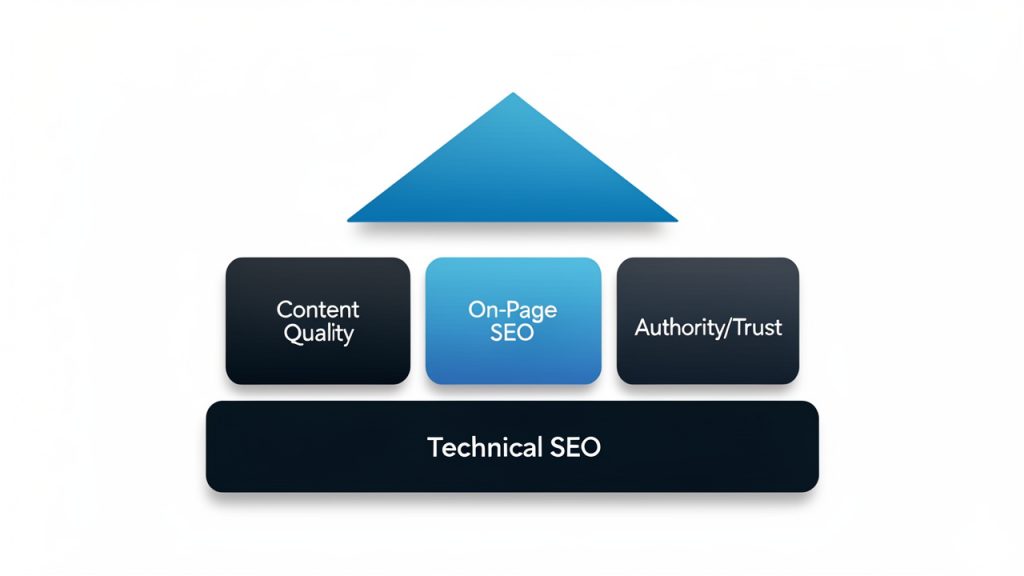
    A pillar/foundation diagram labeling the key SEO components as building blocks: Content Quality, On‑Page SEO, Technical SEO (foundation), Authority/Trust, and User Experience (roof). The technical SEO block is drawn as the base foundation to echo its infrastructural role.

    Think of technical SEO like the foundation of a building. Visitors may not notice it directly, but everything depends on it. A site that loads slowly or feels broken sends a negative quality signal to both users and search engines.

    Authority and Trust

    Search engines also try to determine whether your site is credible. One signal of authority comes from backlinks, which are links from other websites pointing to yours. A mention from a respected source can act like a vote of confidence, especially when it is contextually relevant.

    Still, authority is not only about links. It also comes from publishing accurate, well-maintained content, showing expertise, and building a brand people recognize. Reviews, citations, author credibility, and overall reputation all contribute to trust.

    For small businesses, this means SEO extends beyond your pages. Your broader online presence matters. If your brand is mentioned across reputable directories, industry blogs, partner sites, and communities, that supports your visibility over time.

    User Experience

    SEO and user experience are closely connected. Search engines do not want to send users to pages that are cluttered, confusing, or frustrating. A good page should be easy to navigate, readable on mobile, and designed to help users complete their goal quickly.

    This does not mean you need a flashy site. In fact, simple often wins. Clear menus, readable typography, sensible spacing, and obvious calls to action do more for SEO than decorative complexity. If users land on your page and instantly understand where they are and what to do next, you are on the right track.

    A useful way to think about this is that search optimization is partly a communication exercise. You are communicating with an algorithm, yes, but more importantly with the person behind the query. If that person feels helped, search performance usually improves with time.

    How to Get Started with SEO

    Start With the Right Keywords

    The first practical step in SEO is keyword research, but that phrase can sound more intimidating than it needs to be. At its core, keyword research is about understanding the language your audience uses when searching for solutions.

    A small business owner should focus less on massive, highly competitive terms and more on specific, intent-driven queries. A broad keyword like “design” is almost useless. A phrase like “freelance logo designer for restaurants” is far more targeted. It may bring less traffic, but that traffic is more likely to convert.

    Look for a mix of informational and commercial terms. Informational searches help you build awareness and trust. Commercial searches help you capture people closer to action. Together, they create a stronger content strategy.

    Build Pages Around Real Needs

    Once you know what your audience searches for, create pages that map directly to those needs. Do not force one page to target everything. A service page should serve a different purpose than a blog post. A pricing page should answer different questions than a tutorial.

    This is where clarity beats volume. It is better to publish ten pages that each solve a real problem than fifty thin pages with overlapping intent. If you run a local service business, create clear service pages and location pages where appropriate. If you build digital tools, create pages for features, use cases, integrations, and support topics.

    Each page should have a clear primary topic, a logical structure, and a specific conversion goal. Ask yourself what the visitor should think, feel, and do after reading it. That question helps keep pages useful rather than generic.

    Improve the Basics First

    Many websites do not need advanced SEO tactics at the start. They need the basics done well. Make sure every important page has a unique title, a clear heading, and a concise meta description that encourages clicks. Check that your site works well on mobile devices and loads quickly enough to avoid user frustration.

    You should also review navigation and internal linking. If an important page takes too many clicks to reach, it becomes harder for both users and search engines to prioritize it. Internal links act like signposts across your site, helping search engines understand relationships between pages while guiding visitors toward deeper engagement.

    A simple early-stage checklist can help:

    1. Identify key pages that matter most for leads, sales, or signups.
    2. Match each page to a primary search intent and a relevant keyword theme.
    3. Optimize titles and headings so the page topic is immediately clear.
    4. Improve speed and mobile usability to reduce friction.
    5. Add internal links between related pages to strengthen site structure.

    Publish Consistently, but With Purpose

    Consistency matters in SEO, but frequency alone is not a strategy. Publishing weak content every week will not outperform publishing genuinely useful content every month. Quality compounds more reliably than volume.

    A practical content plan starts with common customer questions. What do prospects ask before hiring you? What objections slow down a sale? What features need explanation? What comparisons are people making before choosing a tool or provider? Those questions often become your best SEO topics because they align with real-world intent.

    For example, a productivity software company could create pages around workflow templates, time-saving tutorials, and feature comparisons. A freelancer could write detailed guides about process, pricing, timelines, and industry-specific solutions. These are not just traffic plays. They are trust-building assets.

    Earn Trust Over Time

    SEO rarely works like a switch. It behaves more like momentum. Pages gain traction as they are indexed, refined, linked, and used. That is why patience matters. You may not see immediate results, especially in competitive spaces, but steady improvement often beats sporadic bursts of effort.

    One of the best long-term strategies is to create content worth referencing. Original examples, useful frameworks, practical tools, and clear explanations can naturally attract links and mentions. You can also support this by building relationships in your industry, contributing insights to relevant communities, and making your expertise visible beyond your own website.

    If your business has a local presence, trust also grows through reviews, directory consistency, and local relevance. If your work is digital or global, trust grows through thought leadership, product quality, and helpful educational content. Different business models need different authority signals, but the principle is the same, be discoverable, credible, and useful.

    Measure What Actually Matters

    A common SEO mistake is obsessing over rankings without connecting them to outcomes. Ranking first for a term that brings unqualified visitors is not a win. Better metrics include organic traffic to high-intent pages, conversions from search, click-through rates, and engagement on important landing pages.

    Use analytics to understand which pages attract traffic, which pages convert, and where users drop off. Sometimes the issue is not visibility but messaging. A page may rank well yet fail to persuade. In that case, improving copy, structure, or call-to-action clarity can produce bigger results than chasing a new keyword.

    The most useful SEO mindset is iterative. Publish, measure, improve. Over time, this turns SEO from a vague marketing activity into a practical system for attracting and converting demand.

    Conclusion

    SEO works best when you stop treating it like a trick and start treating it like a service. The goal is not simply to rank. The goal is to create pages that deserve visibility because they answer real questions, solve real problems, and guide people toward the next step with clarity and trust.

    If you are getting started, begin small. Identify the pages that matter most, understand the search intent behind them, strengthen the fundamentals, and publish useful content consistently. That approach is sustainable, realistic, and far more effective than chasing shortcuts. Over time, solid search engine optimization can become one of the most valuable growth assets your website has.