
A website can look polished, load reasonably fast, and still quietly lose traffic every month. That is what makes SEO tricky for small business owners and freelancers. The obvious problems are rarely the ones doing the most damage. More often, rankings slip because of a handful of technical issues, thin pages, weak internal linking, or missed opportunities that no one has reviewed in a structured way.
That is where an SEO audit checklist becomes useful. It turns a vague task into a practical process. Instead of guessing why your site is underperforming, you review the same critical areas search engines care about, identify what is broken, and prioritize the fixes that can actually move visibility, traffic, and conversions.
What Is an SEO Audit Checklist?
An SEO audit checklist is a structured framework for evaluating how well a website performs in search. It helps you review the technical health of the site, the quality of its content, the strength of its on-page optimization, and the authority signals that influence rankings. Think of it as a diagnostic tool for organic search performance.
Without a checklist, SEO audits tend to become messy and incomplete. You notice a few obvious issues, make a few changes, and assume the work is done. In reality, search performance depends on many connected factors. A page may have good content but poor crawlability. A site may load quickly on desktop but struggle on mobile. You might have strong blog posts that are buried because internal links are weak. A proper checklist prevents these blind spots.
For small businesses and independent site owners, this matters even more. You may not have an in-house SEO team or a large budget for premium tools. A good audit process helps you focus on what matters most, avoid wasted effort, and make steady improvements using accessible tools and clear priorities.
Why a Checklist Matters More Than a One-Time Review
SEO is not a one-and-done task. Search engines update their systems, competitors improve their pages, and your own site changes over time. New pages are added, old pages become outdated, plugins create conflicts, and redirects pile up. A checklist makes your audit repeatable, which means you can track patterns instead of reacting only when traffic drops.
It also improves decision-making. If you know your site has indexing issues, fixing title tags will not solve the real problem. If your pages are indexed but fail to rank, then content depth, search intent, and link signals may deserve more attention. The checklist creates order. That order makes your SEO work more efficient.
What a Good SEO Audit Should Reveal
A useful audit should answer a few practical questions. Can search engines crawl and index your site properly? Do your pages match the intent behind the keywords you target? Are there technical issues holding back performance? Is your site architecture helping users and bots understand your content? Are your strongest pages actually supported by internal links and relevant authority?
When you use an SEO site audit checklist well, the outcome is not just a list of problems. It is a map of what to fix first, what to monitor, and what to improve next.
Key Aspects of an SEO Audit Checklist
A complete SEO audit covers several layers of website performance. Some are technical and behind the scenes. Others are visible to users. The strongest audits do not treat these areas separately. They evaluate how each one affects the others.
Technical SEO Health
Technical SEO is the foundation. If search engines cannot reliably access, interpret, or index your pages, even excellent content will struggle. This part of the checklist starts with crawlability and indexability. You need to verify that important pages are discoverable, not blocked accidentally by robots rules, and not marked with noindex tags by mistake.
You should also review your XML sitemap and compare it against the pages you actually want indexed. Many sites include outdated URLs, redirected pages, or low-value content in their sitemaps. That creates noise. A clean sitemap helps search engines focus on the pages that matter.
Site speed is another major area. Slow pages hurt user experience and can reduce search visibility, especially on mobile. Core Web Vitals, server response times, image sizes, script bloat, and unnecessary third-party tools all belong in this review. A site does not need to be perfect, but it should not frustrate users before the page even loads.
HTTPS, mobile usability, redirect chains, broken links, duplicate pages, and canonical tags also deserve attention. These are not glamorous tasks, but they are the kind that quietly block performance for months when ignored.
On-Page Optimization
On-page SEO is where clarity meets intent. Every important page should have a clear primary topic, a useful title tag, a compelling meta description, a logical heading structure, and content that genuinely helps the searcher. This sounds basic, but many websites either over-optimize or under-explain.
A good on-page review checks whether the page aligns with the query it targets. If someone searches for a service, they likely want a clear service page, not a vague blog article. If they search for a tutorial, they need detailed instructions, not a sales page. The best SEO audit checklist includes a close look at search intent, because intent mismatch is one of the most common reasons a page fails to rank well.
Keyword use matters, but context matters more. You want relevant terms and natural language throughout the page, not awkward repetition. Strong on-page SEO helps search engines understand the page while making the content easier for humans to scan and trust.
Content Quality and Relevance
Content audits often reveal a surprising problem. Many sites do not suffer from too little content. They suffer from too much weak content. Thin posts, near-duplicate service pages, outdated advice, and pages with no clear purpose can dilute site quality and waste crawl budget.
This part of your website audit should evaluate whether each key page is useful, current, specific, and better than what already ranks. Ask whether the page demonstrates expertise, answers real questions, and provides enough depth to satisfy a visitor without forcing them to search again.
You should also look for content gaps. These are topics your audience cares about that your site barely covers, or does not cover at all. Content gaps often represent the easiest growth opportunities because they align with actual demand. If competitors rank for useful comparison pages, local landing pages, or how-to resources that you have never created, your audit should surface that quickly.
Internal Linking and Site Structure
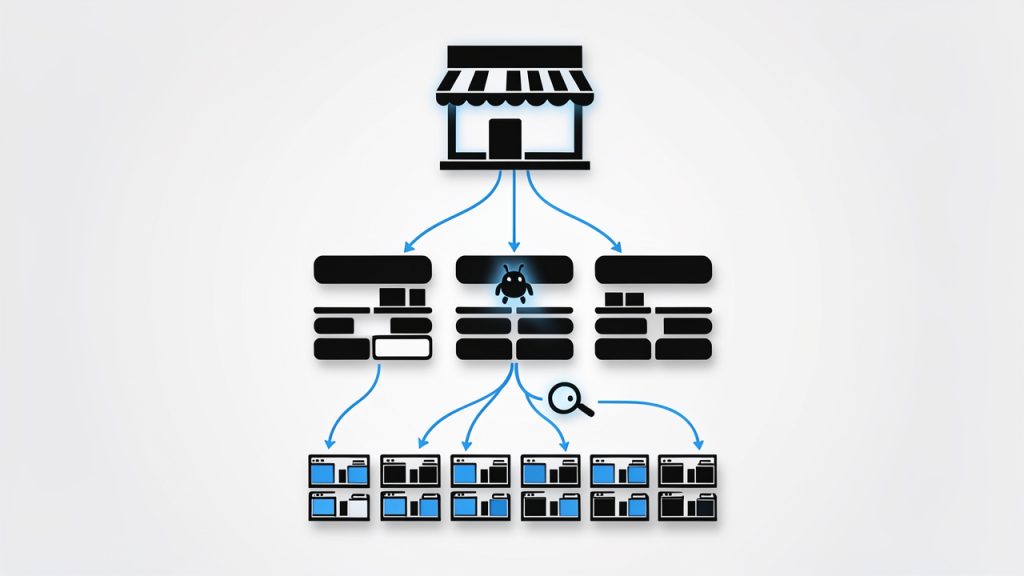
Internal linking is often underestimated because it feels less exciting than backlinks or content creation. In practice, it is one of the easiest ways to improve discoverability and distribute authority across your site. A strong audit reviews whether important pages are linked from relevant pages, whether anchor text is descriptive, and whether users can move naturally from broad topics to specific ones.
Site structure matters for the same reason. If a valuable page takes five clicks to reach, it signals low importance. If related content is scattered without logical grouping, both users and search engines have a harder time understanding topical relationships. Clear architecture improves crawling, usability, and topical authority at the same time.
This is especially important for small business websites with services, locations, and blog content. Pages should support one another. A service page should link to relevant FAQs, case studies, and location pages where appropriate. Blog posts should not exist in isolation. They should feed authority back into your commercial pages.
Backlinks and Off-Page Signals
No SEO audit checklist is complete without reviewing off-page authority. Backlinks still matter because they act as trust and relevance signals. But the goal is not to chase random links. It is to understand the quality, relevance, and balance of your existing link profile.
An audit should check whether your site has links from credible, topically related websites, whether important pages attract links or remain unsupported, and whether there are toxic or spammy patterns that may deserve investigation. For local businesses, citations and directory consistency can also influence visibility, especially in map-based results.
If your competitors consistently outrank you despite similar content, off-page strength may be the difference. That does not always mean you need hundreds of links. Sometimes you simply need a smarter strategy around partnerships, digital PR, testimonials, resource pages, or link-worthy content assets.
User Experience and Conversion Readiness
SEO is not only about rankings. It is about what happens after the click. If users land on your site and bounce because the page is cluttered, confusing, or untrustworthy, that weakens the value of your traffic. A thorough audit reviews user experience alongside search performance.
Check whether pages are easy to read on mobile, whether the main action is obvious, and whether trust signals are present. Reviews, credentials, contact information, policies, and helpful design all influence how users engage. Good SEO brings visitors in. Good experience gives those visitors a reason to stay and convert.
The strongest sites do not separate SEO from usability. They treat them as partners. That mindset usually leads to better rankings because the site is built for real people first.
A Practical View of What to Check

| Audit Area | What You Review | Why It Matters |
|---|---|---|
| Technical SEO | Crawlability, indexing, speed, mobile usability, HTTPS, redirects | Ensures search engines can access and trust your pages |
| On-Page SEO | Titles, headings, metadata, keyword alignment, search intent | Helps pages communicate relevance clearly |
| Content | Depth, freshness, uniqueness, topic coverage, content gaps | Improves usefulness and topical authority |
| Internal Linking | Navigation, contextual links, anchor text, page hierarchy | Distributes authority and improves discoverability |
| Off-Page SEO | Backlinks, citations, referring domains, brand mentions | Strengthens authority and trust |
| UX and Conversion | Readability, layout, calls to action, mobile experience | Turns traffic into meaningful business results |
How to Get Started With an SEO Audit Checklist
Starting an audit can feel overwhelming because there are so many moving parts. The easiest way to avoid paralysis is to begin with a simple workflow. You do not need enterprise software to make progress. In many cases, a combination of free tools, analytics data, and a careful manual review is enough to uncover major issues.
Before you begin, gather the basics. That includes access to your analytics platform, search performance data, a crawl tool if available, and a spreadsheet or document where you can track findings. The goal is not just to spot issues. The goal is to record them in a way that helps you take action later.
Start With the Pages That Matter Most
Do not audit every page with the same intensity. Begin with the pages that drive revenue, leads, or strategic traffic. For a local service business, that might be your homepage, service pages, and location pages. For a content-driven site, it might be your top landing pages and highest-potential articles. This keeps the process practical.
A common mistake is spending hours tweaking low-value pages while major commercial pages remain weak. Your audit should reflect business value, not just page count. A five-page review of the right pages can produce more growth than a fifty-page review of pages that barely matter.
Review Performance Before You Review Problems
Before changing anything, look at the numbers. Which pages already bring impressions but few clicks? Which pages rank on page two or three? Which pages have traffic but low engagement? These patterns help you find the most promising opportunities.
For example, a page with many impressions and a low click-through rate may need a stronger title and meta description. A page ranking in positions 8 to 15 might benefit from content expansion, internal links, or better alignment with search intent. Data tells you where effort is most likely to pay off.
Run Through the Audit in a Logical Order
A clean sequence makes the work easier. In most cases, you should move from technical foundations to content quality to authority signals. That prevents you from polishing pages that search engines cannot properly access or index in the first place.
A simple order looks like this:
- Check indexing and crawlability
- Review site speed and mobile performance
- Audit titles, headings, and page intent
- Evaluate content quality and gaps
- Improve internal linking and structure
- Assess backlinks and external trust signals

This order is practical because it starts with access and visibility, then moves into relevance and authority.
Prioritize Fixes by Impact, Not by Convenience
Once you have findings, resist the urge to fix only the easiest items. Some small improvements are worth doing, but not all fixes carry equal value. Changing a few meta descriptions may help. Fixing accidental noindex tags on key service pages may help far more.
A useful way to prioritize is to sort issues into three groups:
| Priority Level | What It Includes | Typical Impact |
|---|---|---|
| High Priority | Indexing issues, broken key pages, severe speed problems, intent mismatch on important pages | Directly affects rankings, traffic, and conversions |
| Medium Priority | Thin content, weak internal links, missing metadata, duplicate elements | Improves performance and clarity over time |
| Low Priority | Minor formatting issues, small image tweaks, low-value page refinements | Helpful, but less urgent |
This approach keeps your audit from turning into a long list of disconnected tasks. It gives you a roadmap.
Use Free and Accessible Tools Wisely
For the audience trying to work efficiently, this matters. You do not need to buy every premium SEO platform at the start. Search Console, analytics tools, page speed tools, browser inspections, and limited free crawlers can already reveal a lot. What matters more is knowing how to interpret what you find.
A speed report, for instance, is only useful if you connect it to user experience and rankings. A crawl report is only useful if you distinguish between critical errors and harmless noise. Tools support the checklist. They do not replace judgment.
Turn the Audit Into an Ongoing Habit
The most effective audit is the one you repeat. A site changes constantly, even when you are not actively redesigning it. Plugins update, content ages, links break, competitors improve, and new search opportunities emerge. Running a light monthly review and a deeper quarterly audit is often enough for small to midsize websites.
Over time, this habit creates momentum. You stop treating SEO as emergency repair and start treating it as routine maintenance with measurable gains. That shift alone can dramatically improve consistency.
Conclusion
A strong SEO audit checklist gives structure to one of the most important, and most often neglected, parts of website growth. It helps you move past guesswork and evaluate the real drivers of organic performance, from technical health and content quality to internal linking, authority, and user experience.
The best next step is simple. Pick your most important pages, run a focused audit, and document what you find. Fix the issues that block visibility first, then improve the pages that already show potential. SEO rewards consistency. A clear checklist makes that consistency possible.