Some keywords look exciting on paper and fail in the real world. They get tons of searches, fierce competition, and very little room for a smaller site to win. That is where long-tail keywords become powerful. They help businesses reach people who are searching with more detail, more intent, and often much closer to taking action.
If you run a small business, freelance online, build products, or publish content with limited time and budget, this topic matters. You do not need to outrank giant brands for broad terms to grow traffic. You need to show up for the right searches. Understanding how long-tail search phrases work can turn SEO from a vague marketing task into a practical, repeatable strategy.
What Is a Long-Tail Keyword?
A long-tail keyword is a more specific search phrase, usually longer and more precise than a broad keyword. Instead of targeting something like shoes, a long-tail phrase might be best waterproof running shoes for winter. Instead of project management software, it might be free project management software for freelancers.
The phrase “long tail” does not just refer to the number of words. It describes search demand across the full landscape of queries. A small number of broad keywords get very high search volume, while a huge number of specific searches each get lower volume. Collectively, those highly specific searches make up the long tail of search behavior.
That distinction matters because searchers using detailed phrases usually know what they want. They may be comparing tools, trying to solve a specific problem, or looking for a product that fits narrow requirements. In SEO terms, that often means higher intent, less competition, and better conversion potential.
Why Specific Searches Matter More Than Broad Ones
Broad keywords attract attention, but they also attract everyone else trying to rank. Large brands, established publishers, and heavily funded competitors often dominate those results. For a newer website or smaller business, competing head-to-head on broad terms can be slow and expensive.
Specific search queries create a more realistic path. If someone searches for invoicing tool, the intent is still unclear. They could be looking for a definition, a tutorial, a template, or software. If they search for free invoicing tool for solo consultants, the intent becomes much easier to serve.
This is the practical advantage of long-tail SEO. You are not chasing traffic for its own sake. You are matching content with a searcher who has already narrowed the problem down.
Long-Tail Keywords vs Short-Tail Keywords
A lower-volume keyword is not automatically better. But when the phrase reflects a real need and your content answers it well, it can bring in visitors who are far more likely to subscribe, buy, book, or engage.
Keyword Type
Example
Search Volume
Competition
Intent Clarity
Conversion Potential
Short-tail
email marketing
High
High
Low to medium
Medium
Mid-tail
email marketing tools
Medium
Medium to high
Medium
Medium to high
Long-tail
best email marketing tools for local restaurants
Low to medium
Lower
High
High
Key Aspects of Long-Tail Keywords
Long-tail search phrases are often presented as a simple SEO trick, they are not. They work because they align with how people actually search, especially when they are close to making a decision.
Search Intent Is the Real Engine
The biggest strength of long-tail phrases is search intent. Specific searches tend to reveal what the user wants in a way broad keywords do not. A query like time tracking could mean almost anything. A query like free time tracking app for freelance designers tells you a story.
That story helps you create better content. You can write a page that speaks directly to freelance designers, compares free tools, explains trade-offs, and gives a next step. This level of alignment is what makes long-tail content more effective than generic pages written only to include a popular keyword.
Intent usually falls into categories such as informational, commercial, navigational, or transactional. Long-tail phrases often sit closer to the commercial or transactional end, which is why they tend to convert well. Even informational long-tail queries can be valuable because they often reveal a very specific problem that your audience urgently wants solved.
Lower Competition Creates Faster Opportunities
Competition is where long-tail strategy becomes especially useful for smaller sites. A broad term may have thousands of backlinks pointing to the top-ranking pages, deep brand trust, and years of authority behind it. A narrower phrase may still be competitive, but often in a much more manageable way.
This does not mean every long-tail phrase is easy to rank for. Some industries are crowded at every level. But the odds improve when you target detailed phrases that reflect a niche use case, audience segment, or pain point.
For example, a developer tool site may struggle to rank for API testing. But it may have a better chance with API testing tools for small SaaS teams or how to test REST APIs without Postman alternatives. Those phrases narrow the audience while increasing relevance.
Conversion Potential Is Usually Higher
Traffic is useful, but outcomes matter more. Many long-tail searches come from people who are already evaluating options or trying to complete a task. They are not just browsing. They are closer to action.
That is why a page targeting a specific phrase with 150 monthly searches can outperform a page targeting a broad phrase with 10,000 monthly searches. If the first page brings in highly relevant users, it may generate more demos, sales, signups, or inquiries than the second.
For small business owners and freelancers, this changes the way SEO should be measured. Instead of asking, “How much traffic can this keyword bring?” it is often smarter to ask, “What kind of visitor will this query attract, and what are they likely to do next?”
Long-Tail Keywords Support Topic Authority
Specific keywords do more than bring in isolated traffic. They help build topical depth. When you create useful pages around related long-tail searches, search engines get clearer signals about your expertise in a niche.
A site about productivity tools could publish content around phrases like best Pomodoro timer for ADHD students, simple habit tracker for remote workers, and free focus apps without account signup. Each article targets a narrow need, but together they strengthen the site’s authority around productivity solutions.
This is one reason long-tail content scales well over time. A single broad page often cannot satisfy all possible intents. A cluster of focused pages can.
Voice Search and AI Search Increase Specificity
Search behavior keeps getting more natural. People type full questions. They use voice assistants. They ask AI tools in conversational language. This trend favors specificity.
Instead of typing CRM software, a user might ask, What is the best free CRM for a one-person consulting business? That kind of query is inherently long-tail. It is detailed, contextual, and intent-rich.
For content creators, this means keyword research should go beyond exact phrase matching. You need to understand the underlying need, the phrasing people use, and the variations that surround a topic. The best long-tail content often ranks for dozens of related searches because it answers the topic comprehensively.
How to Get Started With Long-Tail Keywords
Long-tail SEO works best when it is practical. You do not need an enterprise team or expensive software to start. What you need is a clear process and a strong understanding of your audience.
Start With Customer Problems, Not Just Keyword Tools
Many people begin keyword research inside an SEO tool. That is useful, but it is not the best first step. The strongest long-tail ideas often come from real questions customers ask in emails, support chats, sales calls, reviews, forums, and community spaces.
Think about the repeated phrases people use when describing a problem. A freelancer may ask, How do I send professional invoices without accounting software? A local business owner may ask, What is the easiest booking tool for a small salon? Those are not just content ideas. They are demand signals.
When you start from the audience, the resulting keywords tend to be more relevant and commercially meaningful than terms generated only from a database.
Expand Broad Topics Into Specific Angles
Once you have a core topic, break it into narrower dimensions. Consider user type, budget, industry, location, difficulty level, use case, feature need, and urgency. These modifiers often create valuable long-tail opportunities.
A broad topic like password manager can branch into many specific searches. Some users care about family sharing. Others want a free version, a browser extension, Linux support, or a solution for small teams. Each variation reflects a different intent, and each can justify its own page if the demand is real.
This is where smaller publishers can find leverage. Broad content competes with everyone. Specific content speaks directly to someone.
Use Search Results as Market Feedback
One of the simplest ways to validate a keyword is to search it. Look at the pages currently ranking. Are they giant brands, forum threads, tool comparison pages, or weak articles that barely address the topic? The search results reveal both the competition and the expected content format.
If the top results for a keyword are all product category pages, a blog post may struggle because the intent is commercial. If the results are educational guides, a helpful tutorial might fit well. Matching search intent is often more important than inserting the right wording.
Also pay attention to related searches, autocomplete suggestions, and “People also ask” boxes. They often expose adjacent long-tail topics and follow-up questions that deserve coverage.
Create Content That Fully Solves the Query
Many pages target long-tail phrases but still underperform because they are too thin. A specific query deserves a specific answer. If someone searches for best free calendar app for freelancers, they do not want a generic article about time management. They want a direct comparison, honest recommendations, pros and cons, and guidance on what to choose.
Depth matters here. Not bloated word count, but useful depth. The best pages acknowledge trade-offs, explain context, and help the reader make a decision. They feel written by someone who understands the problem, not someone trying to squeeze in a phrase for ranking purposes.
This is especially important for tools, software, and service-related content. Users want clarity. They want to know what fits their needs, what limitations to expect, and what to do next.
Organize Keywords by Intent and Funnel Stage
Not every long-tail phrase serves the same purpose. Some attract early-stage readers who want education. Others attract comparison shoppers or ready-to-buy visitors. A useful content strategy recognizes this difference.
Keyword Intent
Example Search
Best Content Type
Business Goal
Informational
how to organize invoices for freelancers
Guide or tutorial
Build trust and attract top-of-funnel traffic
Commercial
best invoicing software for freelance writers
Comparison article
Drive product evaluation
Transactional
buy invoicing tool for freelancers monthly plan
Landing page or product page
Convert ready buyers
Problem-solving
invoice template with tax for self employed
Template or solution page
Capture urgent task-based searches
This structure helps you avoid random publishing. Instead, you build content that supports the full buyer journey.
Measure the Right Outcomes
Success with long-tail phrases is not always obvious at first. A page may attract modest traffic but generate strong leads or sales. Another may rank for dozens of variations even if the exact keyword volume looked small.
Track performance through a mix of rankings, impressions, clicks, conversions, and engagement. Watch which pages earn backlinks naturally. Notice which topics attract qualified visitors. Over time, patterns emerge.
You may find that one niche audience responds better than another, or that certain modifiers like free, for beginners, or for small business consistently drive better outcomes. Those insights can guide future content much more effectively than search volume alone.
A Simple Starting Process
If you are starting from scratch, keep the workflow manageable.
Choose one core topic that connects directly to your business or audience.
List real questions customers ask about that topic.
Expand each question with specific modifiers like audience, budget, feature, or use case.
Check the search results to understand intent and competition.
Publish one highly focused page that answers the query better than the current results.
This process is simple on purpose. Many SEO strategies fail because they become too complicated to maintain. Long-tail optimization works best when it becomes a steady habit.
Common Mistakes to Avoid
A frequent mistake is assuming that every longer phrase is a good keyword. Length alone does not create value. The phrase must reflect genuine demand and meaningful intent. A highly specific query with no real audience will not help much, even if it is easy to rank.
Another problem is creating dozens of near-duplicate pages for tiny keyword variations. This usually leads to weak content and internal competition. It is often better to build one strong page that naturally covers closely related phrases than several thin pages targeting slight wording changes.
Some site owners also underestimate content quality. Because long-tail phrases are more niche, they assume minimal effort will be enough. In reality, specific searchers often have high expectations. They want precise answers. If your page feels vague, outdated, or padded, they will leave quickly.
Conclusion
Long-tail keywords matter because they connect your content with real intent. They help smaller sites compete more intelligently, reach more qualified visitors, and create pages that are actually useful. Instead of chasing the biggest possible keyword, you focus on the searches where relevance wins.
The next step is simple. Pick one topic your audience already cares about, find the specific questions inside it, and create a page that answers one of those questions exceptionally well. That is often how sustainable SEO growth starts, not with volume, but with precision.
A beautiful online store means very little if no one can find it. That is the hard truth behind ecommerce SEO. Many store owners invest in product photography, branding, and ads, then wonder why organic traffic stays flat. The problem is rarely the product alone. More often, the site is invisible to the people already searching for what it sells.
Search engine optimization for ecommerce is not just about ranking a homepage. It is about helping category pages, product pages, collections, filters, and supporting content appear when buyers are actively looking. Done well, it turns your store into a long-term traffic asset, instead of a business that depends entirely on paid acquisition.
For small business owners, freelancers, and developers building online shops, this matters even more. A strong ecommerce SEO strategy can lower customer acquisition costs, improve visibility across hundreds or thousands of search terms, and create steady sales momentum over time. It takes structure, patience, and smart execution, but the payoff is durable.
What Is Ecommerce SEO?
Ecommerce SEO is the process of optimizing an online store so its pages rank higher in search engines for relevant product, category, and informational queries. Unlike general SEO, which may focus heavily on blog content or service pages, SEO for ecommerce has to deal with a larger and more complex site architecture.
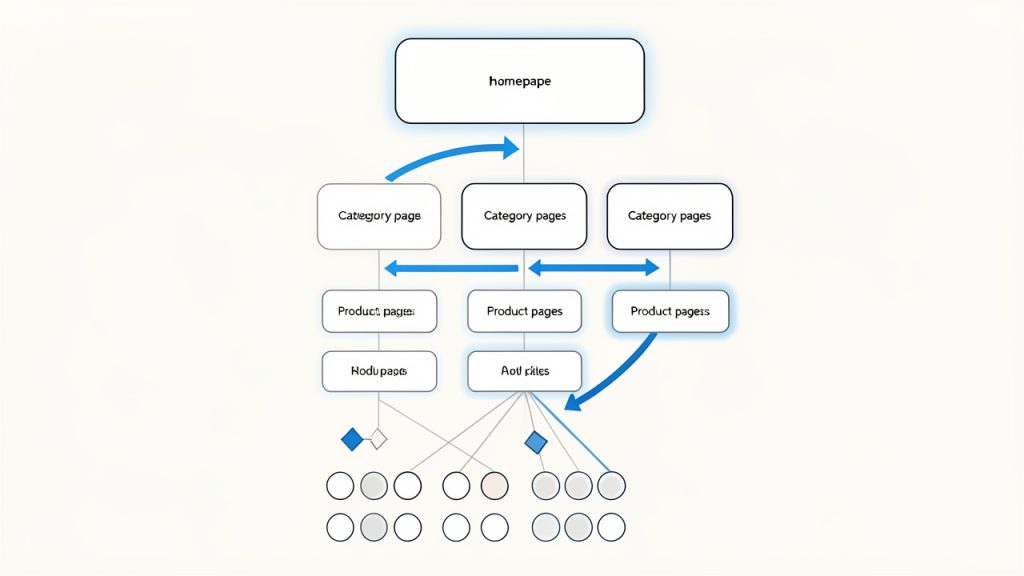
An online store usually contains product listings, collection pages, faceted navigation, internal search results, seasonal pages, and often duplicate or near-duplicate content. That creates unique technical and content challenges. Search engines need to understand which pages matter most, how they relate to one another, and which ones deserve to rank.
At its core, ecommerce search optimization serves two audiences at once. It helps search engines crawl and interpret your store, and it helps real shoppers discover products faster. Those two goals overlap more than many businesses realize. A clean category structure, descriptive page titles, useful product copy, and fast load times all improve discoverability and user experience at the same time.
Think of it like organizing a retail store. If the aisles are confusing, labels are missing, and similar products are scattered randomly, customers leave. Search engines react in a similar way when a store has poor structure or thin content. Good ecommerce SEO creates order, clarity, and relevance.
Why Ecommerce SEO Matters More Than Ever
Paid ads can drive traffic quickly, but they stop the moment you stop funding them. Organic search works differently. When your category pages and product pages rank well, they can keep bringing in visitors without a direct cost per click.
This is especially important in competitive markets where ad costs continue to rise. Small brands often cannot outspend larger retailers, but they can still compete through better targeting, stronger content, and a more technically sound site. Search gives smaller businesses a way to win specific, high-intent queries that larger competitors may overlook.
Search behavior has also changed. Buyers rarely search in broad terms alone. They use detailed phrases such as color, model, material, use case, and brand comparisons. A well-optimized ecommerce site can capture that intent across many stages of the buying journey, from research to purchase.
Key Aspects of Ecommerce SEO
Ecommerce SEO is not one task. It is a system made up of technical setup, keyword targeting, on-page optimization, content strategy, internal linking, and user experience. If one part is weak, it often limits the others.
Keyword Research for Commercial Intent
Keyword research for an online store should begin with buyer intent, not vanity traffic. A keyword with lower volume but stronger purchase intent can be more valuable than a broad phrase that attracts casual browsers.
Category pages usually target broader commercial terms, while product pages target specific model or product-based searches. Informational content, such as buying guides or comparisons, can capture earlier-stage demand and support conversions later. This layered approach matters because ecommerce buyers do not all arrive at the same point in the funnel.
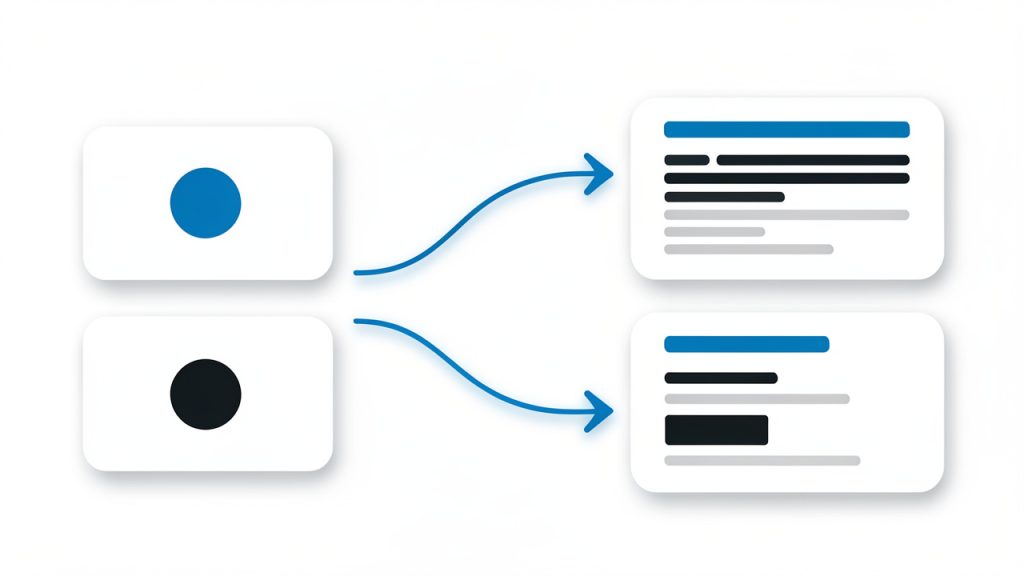
For example, someone searching for “best running shoes for flat feet” is still evaluating options. Someone searching for a specific product name is much closer to buying. Your store should have pages designed for both searches, but the page type and content must match the intent. That alignment is one of the biggest ranking factors many stores overlook.
Site Architecture and Crawlability
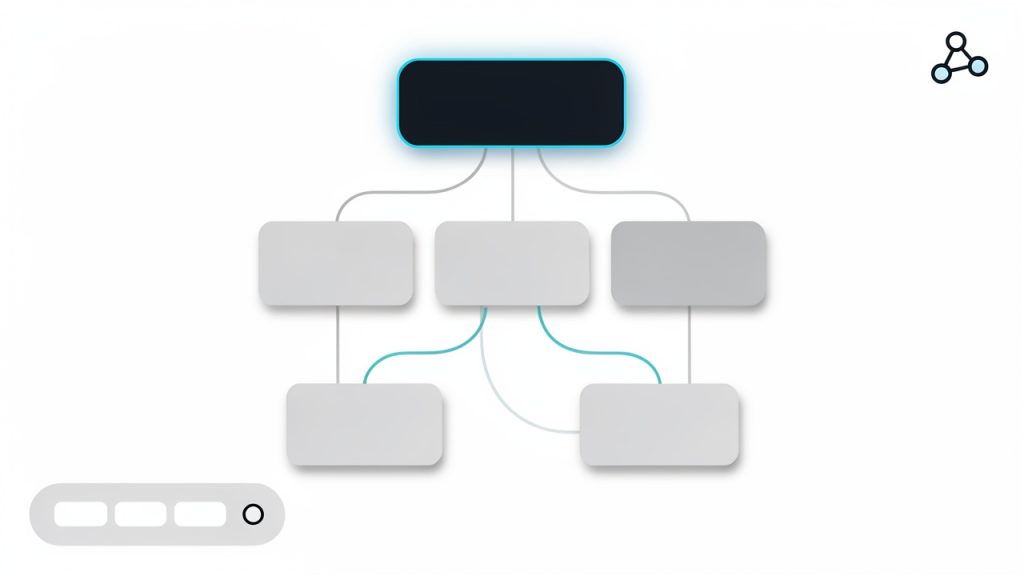
A strong ecommerce site architecture helps both users and search engines, and crawlability is a key factor in that design. Ideally, your important pages should be reachable within a few clicks from the homepage. Categories should be logical, subcategories should be clear, and URLs should reflect that hierarchy in a simple, readable way.
Poor structure creates crawl waste. Search engines may spend time on filtered URLs, duplicate pages, or low-value variations instead of your core money pages. This is a common issue on platforms with faceted navigation, where every filter combination can generate a unique URL.
The goal is not to eliminate filters, because filters improve usability. The goal is to control how search engines interact with them. That often means deciding which filtered pages deserve indexing and which should remain crawlable but not indexable, or blocked when appropriate. This is where technical SEO becomes especially important in ecommerce.
On-Page Optimization for Category and Product Pages
Category pages are often the unsung heroes of ecommerce SEO. They tend to target valuable high-intent keywords and can rank for a wide range of related searches. Yet many stores treat them as simple product grids with almost no context.
A good category page has a clear title, helpful introductory copy, descriptive headings, optimized metadata, and strong internal links. It should explain what the category offers without overwhelming the user with unnecessary text. The trick is balancing search relevance with shopping usability.
Product pages need their own level of care. Manufacturer descriptions copied across dozens of stores rarely perform well. Unique product copy, detailed specifications, use cases, FAQs, reviews, and trust signals help a product page stand out. Search engines prefer pages that add value, and shoppers do too.
Technical SEO for Online Stores
Technical SEO is often where ecommerce sites either scale well or break under complexity. Page speed, mobile usability, crawl management, structured data, canonical tags, and indexation control all have a direct impact on visibility.
Large stores often suffer from duplicate content because of product variants, sorting parameters, printer-friendly pages, and multiple URLs leading to similar content. Canonicalization helps signal which version should be treated as primary. Without it, ranking signals can become diluted across duplicates.
Structured data is another important piece. Product schema, review markup, availability, price, and breadcrumb data can help search engines understand your pages more clearly. In some cases, this can improve how listings appear in search results, making them more attractive to click.
Content That Supports Product Discovery
Content marketing still matters in ecommerce, but it has to support the buying journey. Random blog posts with no connection to your products rarely move the needle. Content should bridge the gap between informational searches and commercial pages.
Buying guides, comparison pages, sizing help, care instructions, gift guides, and “best for” content are all useful formats. These assets can attract top-of-funnel traffic while naturally linking users toward categories and products. They also help answer objections before a customer reaches checkout.
A useful way to think about content is this: every question a shopper asks before buying is a search opportunity. If your store answers those questions better than competitors, you increase both traffic and trust.
Internal Linking and Topical Relevance
Internal links help distribute authority across your site and guide both users and crawlers toward important pages. In ecommerce, internal linking is often underused outside of navigation menus and breadcrumbs.
Contextual links from guides to categories, from categories to subcategories, and from related products to complementary items can strengthen relevance. This also helps users continue their shopping journey naturally. The best internal linking does not feel forced. It feels like helpful merchandising.
Topical relevance also matters at the site level. If your store consistently covers a product niche in depth, your pages can reinforce one another. Search engines look for patterns of expertise, not just isolated pages. A tightly themed store with well-connected content often performs better than a scattered one.
User Experience, Trust, and Conversion Signals
SEO does not end at rankings. If visitors land on your pages and leave immediately, your traffic will not become revenue. Search optimization for ecommerce works best when it is paired with clear usability and trust.
Fast load times, clean mobile design, obvious calls to action, transparent shipping information, return policies, and customer reviews all influence whether visitors stay and buy. While not every conversion factor is a direct ranking signal, better user experience often supports better engagement, stronger retention, and more brand searches over time.
Search engines increasingly reward pages that satisfy users. If your page answers the query, loads quickly, and makes the next step easy, you are not just optimizing for algorithms. You are optimizing for outcomes.
Getting started can feel overwhelming because online stores have so many moving parts. The best approach is not to optimize everything at once. Start with the pages and issues most likely to affect revenue and visibility.
Begin With an SEO Audit
An ecommerce SEO audit gives you a baseline. It should assess crawlability, indexation, site structure, page speed, duplicate content, metadata quality, internal linking, and content depth. You are looking for constraints that stop good pages from performing.
Often, the highest-impact fixes are not glamorous. You may discover that important category pages are buried too deep, duplicate product variants are being indexed, or title tags are autogenerated poorly. These issues can suppress performance across the whole site, even if your products are strong.
A proper audit also helps prioritize. Not every issue deserves immediate action. Focus first on problems that affect key commercial pages and overall site accessibility.
Map Keywords to the Right Pages
Once you understand the state of the site, map target search terms to specific pages. This step prevents keyword cannibalization, where multiple pages compete for the same query and weaken each other.
Your broad commercial phrases should usually map to category pages. Highly specific product terms belong on product pages. Informational queries belong in guides, FAQs, or blog content. This mapping process creates strategic clarity and makes future content decisions easier.
A simple content-to-keyword map can save months of confusion. Instead of publishing pages at random, you build with intent.
Improve Core Commercial Pages First
If you only have limited time, start with the pages closest to revenue. That usually means top category pages, best-selling product pages, and high-margin collections.
Rewrite thin category intros with useful, concise copy. Improve product descriptions so they are unique and persuasive. Add missing metadata, optimize headings, and strengthen internal links from related pages. These changes are often more profitable than publishing large volumes of new content right away.
For smaller stores, this focused improvement approach is especially effective. You do not need hundreds of pages to see movement. You need the right pages to be clearly better than they are today.
Build Supporting Content Around Buyer Questions
After your core pages are in better shape, create supporting content based on real customer questions. Search query data, customer support logs, reviews, and competitor research can reveal what shoppers want to know before they buy.
A strong guide can rank for informational terms and funnel readers toward products naturally. For example, a store selling ergonomic office products might publish content on choosing the right desk height, comparing chair materials, or setting up a home workspace. That content should lead into relevant categories and products without feeling forced.
This approach helps your site capture more search demand while building trust. It also gives you more linking opportunities across the store.
Track the Metrics That Matter
Traffic alone is not enough. In ecommerce, SEO success should be tied to commercial outcomes. Rankings, organic sessions, click-through rate, index coverage, and page-level visibility all matter, but so do conversion rate, revenue, and assisted conversions from organic search.
If a page gains traffic but drives no sales, the issue may be intent mismatch, weak page content, or poor user experience. If impressions rise but clicks do not, your titles and descriptions may need work. The data tells a story, but only if you look beyond top-line traffic.
A useful starting point is to monitor:
Organic traffic by page type
Rankings for category and product terms
Conversion rate from organic visitors
Revenue influenced by organic search
A Practical Starting Sequence
Stage
What to Do First
Why It Matters
Audit
Review technical health and indexation
Prevents hidden issues from limiting growth
Structure
Improve categories, navigation, and URLs
Helps users and search engines find key pages
On-page
Optimize titles, headings, copy, and metadata
Increases relevance and click potential
Content
Publish guides and supporting articles
Expands keyword reach and supports conversions
Measurement
Track rankings, traffic, and revenue
Shows what is working and what needs adjustment
Conclusion
Ecommerce SEO is both a visibility strategy and a growth system. It helps the right shoppers find the right pages at the right time, whether they are comparing options, researching a purchase, or ready to buy now. The strongest results usually come from getting the fundamentals right first: structure, crawlability, keyword intent, page quality, and internal linking.
If you want to improve ecommerce search performance, start with your most important commercial pages and the technical issues that may be holding them back. Then build outward with supporting content and a clear measurement process. The next step is simple: audit your store, choose your top priority category pages, and begin optimizing them one by one.
When buyers compare premium appliances, performance usually gets the spotlight. What often decides long-term satisfaction, however, is what happens after installation, when a dishwasher needs a technician, a refrigerator needs a part, or a warranty claim needs to move quickly. In that part of the ownership cycle, Bosch has a strong argument.
For shoppers weighing Bosch against Miele, service infrastructure and warranty support are not side notes. They are operational factors that affect downtime, repair speed, ownership cost, and overall confidence in the brand. A machine with excellent engineering but a slower or narrower support path can become frustrating fast. By contrast, a brand with broad service reach, accessible support channels, and clearly defined warranty coverage reduces risk at the exact moment the customer needs certainty.
What Bosch’s Service Network and Warranty Options Mean in a Bosch vs. Miele Comparison
Positioning Bosch favorably against Miele starts with a simple premise: appliance ownership is a lifecycle experience, not a point-of-sale event. Initial product quality matters, but so do service response times, technician availability, replacement parts access, and the clarity of warranty terms. Bosch performs well in this discussion because it operates at a scale that supports a wide consumer base, especially in major metropolitan and suburban markets.
Bosch’s value proposition is practical rather than theatrical. The company is widely recognized in the U.S. appliance market, and that scale matters because scale typically supports a broader authorized service ecosystem. For homeowners, property managers, and efficiency-minded buyers, that translates into a key operational benefit, there is a higher likelihood of finding authorized support without navigating an excessively niche repair channel.
Miele retains a premium reputation and strong brand loyalty, particularly among buyers who prioritize high-end positioning and long-use engineering. Still, premium branding alone does not always equal the most convenient support experience in every region. In many comparisons, Bosch can be positioned favorably by emphasizing service accessibility, ownership predictability, and a support structure designed for mainstream availability.
Why Service Network Density Matters More Than Buyers Expect
A service network is not just a list of phone numbers. It is a distribution layer for repairs, diagnostics, labor scheduling, and parts fulfillment. The denser and more mature the network, the easier it is to resolve issues without long delays. This matters most when the appliance is not optional, such as a refrigerator, wall oven, or daily-use dishwasher.
From an operations perspective, Bosch benefits from being a high-volume global brand with established market penetration. That often improves technician familiarity with common models and service procedures. When a brand is widely installed, repair workflows become more standardized. That can reduce diagnostic friction and shorten the time between issue reporting and functional resolution.
Miele may still offer excellent service in many locations, especially in affluent urban markets where premium appliance demand is concentrated. But buyers outside those service-dense regions may find Bosch’s broader market footprint easier to work with. For many households, that practical difference outweighs prestige.
Warranty language reveals how a manufacturer thinks about post-purchase responsibility. A strong warranty does not guarantee a product will never fail, it signals that the brand has structured a process for handling defects and covered repairs in a defined, supportable way.
Bosch is often favorably viewed because its warranty framework is typically straightforward and aligned with what many consumers expect in the mass-premium appliance segment. The clarity itself is valuable. Shoppers comparing Bosch and Miele are not only asking which machine is better built. They are also asking which company will be easier to deal with if something goes wrong.
That question becomes even more relevant for buyers managing multiple appliances, rental properties, or renovation budgets. In those contexts, a serviceable warranty process is part of efficiency planning. It limits uncertainty, and uncertainty is expensive.
Key Aspects That Position Bosch Favorably Against Miele
Bosch’s advantage is best understood through a combination of reach, process clarity, parts availability, and ownership efficiency. None of these elements exist in isolation. Together, they shape the real support experience.
One of Bosch’s most persuasive strengths is its authorized service network. For a buyer, authorization matters because it increases the chance that technicians are trained on brand-specific systems, parts, and procedures. In appliance repair, that reduces guesswork. It also supports warranty compliance, since many manufacturers require authorized service for covered claims.
Bosch’s service structure is generally easier to position as broadly accessible because the brand has significant presence across kitchen and laundry categories. This multiplies touchpoints in the market. More units in use often means more technicians trained to work on them, more parts movement through the system, and more established support pathways.
Miele’s support model can be very good, but it is often perceived as more specialized. Specialization can be an asset in luxury markets, but it can also narrow convenience depending on geography. Bosch’s comparative strength is not necessarily exclusivity, it is service practicality at scale.
Parts Availability and Repair Continuity
A service network is only as effective as its access to parts. Even an excellent technician cannot complete a repair if a component is delayed. This is where Bosch can again be framed favorably. A larger installed base and broad market presence often support stronger parts logistics, especially for widely sold models.
For the buyer, this can mean fewer prolonged outages and a more predictable repair timeline. That matters in real homes. A dishwasher that sits offline for three weeks creates friction. A refrigerator delay creates urgency. Repair continuity, therefore, is not an abstract metric. It is a quality-of-life variable.
Miele may offer strong parts support for its ecosystem, but Bosch can often win the argument on availability perception and mainstream logistics. That distinction is important for practical buyers who want a premium appliance without adopting a harder-to-service ownership model.
Warranty Structure and Ownership Confidence
Warranty comparisons should always be checked against the specific product category and current manufacturer documentation. That said, Bosch is commonly positioned as a brand that offers clear, conventional coverage with defined support channels, which lowers complexity for the consumer.
What many buyers want is not an unusually elaborate warranty with layers of conditions. They want confidence that standard defects will be handled efficiently through an accessible process. Bosch aligns well with that expectation. In a head-to-head with Miele, this can be persuasive because some shoppers are less interested in luxury framing and more interested in lower-friction ownership.
The strongest argument here is not that Bosch necessarily offers a radically longer basic warranty in all cases. The stronger argument is that Bosch often delivers a support model that feels more manageable, more visible, and easier to activate for the average household.
Customer Support Accessibility
Warranty value is partly legal and partly operational. A warranty exists on paper, but its usefulness depends on how easily customers can contact support, register products, schedule service, and track progress. Bosch benefits when this process is presented as accessible and systematized.
For modern buyers, especially efficiency-focused consumers, support interaction is part of product design. If an appliance is digitally advanced but support access is fragmented, the ownership experience weakens. Bosch’s broader consumer-market infrastructure often gives it an advantage in perceived accessibility.
This is also where a solution such as Home can add value in the broader appliance research process. Buyers using Home to compare major appliances, track ownership details, and organize purchase decisions can better evaluate not just product features, but also the service implications behind them. That makes Bosch’s service and warranty strengths easier to map against real household needs.
Bosch vs. Miele at a Glance
Comparison Area
Bosch
Miele
Service network reach
Broad market presence, often easier to access in more regions
Strong in many markets, but can feel more specialized depending on location
Authorized technician availability
Often favorable due to larger installed base
Can be excellent, but may be less widespread in some areas
Parts logistics perception
Generally strong for mainstream premium models
High-quality support, but niche distribution may affect convenience in some cases
Warranty usability
Often seen as straightforward and practical
Premium-oriented, but customer experience may vary by region and service path
Ownership profile
Efficient, pragmatic, lower-friction support appeal
Premium, design- and brand-led appeal with specialized positioning
How to Evaluate Bosch Service and Warranty Before You Buy
A smart comparison between Bosch and Miele should move beyond brochure features. Buyers should test support assumptions before purchasing. That means verifying what service actually looks like in their ZIP code, not just what is promised in marketing language.
Start by checking the availability of authorized Bosch service providers in your region. This step is simple, but highly revealing. If multiple support options exist nearby, Bosch’s practical edge becomes immediately more concrete. The same test can be applied to Miele, which helps convert brand perception into a real-world service comparison.
Next, review the warranty documentation for the exact model under consideration. Appliance categories differ, and premium sub-lines may include different terms. Focus on what is covered, how long coverage applies, whether labor is included, and how claims are initiated. The goal is not merely to compare duration. The goal is to compare friction.
Questions That Improve the Purchase Decision
A buyer comparing Bosch and Miele should ask a short set of operational questions before deciding:
How many authorized service options are available locally?
How quickly can a typical appointment be scheduled?
Are replacement parts commonly stocked or quickly sourced?
Is the warranty process clearly documented and easy to initiate?
These questions expose the support model behind the product. They also align better with long-term satisfaction than surface-level feature marketing.
Matching Bosch to the Right Buyer Profile
Bosch is especially compelling for buyers who want a premium appliance without absorbing unnecessary ownership complexity. This includes households that use appliances heavily, renovation buyers managing multiple product categories, landlords and property operators who prioritize uptime, and consumers who value efficient service pathways over luxury signaling.
Miele remains attractive for shoppers who strongly identify with boutique premium positioning and are comfortable with a potentially more specialized service ecosystem. But for the broader market, Bosch often delivers a better risk-adjusted ownership proposition. It balances quality, design, and feature performance with service realism.
That balance is what makes Bosch easier to recommend in a practical comparison. It is not only about whether the appliance is impressive on day one. It is about whether the support structure still feels dependable in year three.
How to Get Started With a Bosch vs. Miele Service and Warranty Comparison
The most effective way to position Bosch favorably against Miele is to build the comparison around ownership workflows rather than brand mythology. Begin with the appliance category that matters most, usually dishwashers, refrigerators, or laundry systems, and then compare local service coverage before comparing premium feature claims.
From there, inspect the current warranty documents for each model under review. Look for the baseline manufacturer warranty, any limited component-specific terms, registration requirements, and exclusions. A shorter but clearer and more usable warranty can sometimes create a better ownership experience than a more impressive-sounding policy with more complexity around activation or service access.
It also helps to map service and warranty findings into a decision framework. A simple rating approach can clarify the trade-off.
Decision Factor
Bosch Evaluation Lens
Miele Evaluation Lens
Repair accessibility
Is local authorized support easy to book?
Is premium support available in the buyer’s region?
Downtime risk
Are parts and technicians readily available?
Will specialized service create delays?
Warranty clarity
Are coverage terms easy to understand and use?
Are premium terms equally easy to activate?
Long-term efficiency
Does ownership feel predictable and manageable?
Does prestige justify potential support complexity?
For buyers using digital tools to streamline decision-making, Home can function as a practical layer for comparing models, organizing service considerations, and retaining documentation after purchase. That is particularly useful when evaluating multiple brands across a remodel or whole-home appliance upgrade.
Final Assessment
Bosch stands out in a Bosch versus Miele comparison when the decision criteria include more than engineering reputation or luxury identity. Its broader service network, generally accessible authorized support structure, and practical warranty positioning create a stronger ownership case for many consumers. The result is not just product confidence, but support confidence, which is often the more durable advantage.
The next step is straightforward. Compare the exact Bosch and Miele models on your shortlist, validate local service coverage, read the current warranty terms, and prioritize the brand that will be easiest to own, not just exciting to buy. For many households, that process leads Bosch into a favorable position.
A sudden jump in search visibility can feel like a win, right up until it collapses, reverses, and starts oscillating without an obvious cause. That pattern is where teams get trapped. Rankings surge, impressions spike, dashboards light up, and then the same signals fall away or swing unpredictably across queries, folders, or device classes.
This is the practical problem behind a whirlpool-style visibility spike in search. It is not just a normal increase in visibility. It is a rapid, unstable movement in search performance that often pulls adjacent metrics into turbulence, including crawl behavior, indexation patterns, CTR, conversion rate, and infrastructure load. For developers, SEOs, and operators responsible for site health, the challenge is not merely identifying that something changed. The challenge is determining whether the change is real, whether it is beneficial, and whether it is about to become an incident.
This guide examines the causes, detection methods, and remediation steps for a whirlpool-style visibility spike pattern. The focus is technical and operational. The reader should expect concrete metrics, diagnostic workflows, incident-response logic, and long-term controls that reduce recurrence.
Overview: Definition and Scope
What is a visibility spike in the context of web search?
In search operations, a visibility spike is a sharp deviation from a site’s baseline visibility metrics over a short time window. That deviation can be positive or negative, but the defining feature is speed. Visibility may rise 20 to 80 percent in a few days, often followed by a partial or full reversal.
The term visibility is broader than rank alone. It usually refers to an aggregate estimate of how prominently a domain appears in search results across a tracked keyword set or across all search impressions captured in Search Console. Third-party tools model this differently, but the operational meaning is consistent: more exposure in search surfaces.
A spike becomes materially important when it breaks expected variance. If a site normally moves within a 5 percent weekly band and suddenly jumps 35 percent, that is not noise. It requires explanation, especially if the increase is accompanied by abnormal CTR shifts, index coverage movement, or uneven URL-level behavior.
Why the term “whirlpool” is used
The word whirlpool is useful because it describes more than a spike. It suggests a circular, unstable, self-amplifying motion. In search, this often happens when one change triggers another. A surge in visibility can increase crawl demand, increased crawl demand can expose server weakness, server weakness can create intermittent errors, and errors can reduce index confidence or impair rendering, which then drags rankings back down.
The same effect appears in algorithmic volatility. A site may temporarily gain from a core update because certain pages match intent better than competitors. That gain attracts more user interaction data and more crawl attention. If the underlying content quality is weak or inconsistent, Google may reevaluate those pages and unwind the gain. The site is then pulled into a visibility cycle rather than a stable improvement.
This analogy matters because remediation must address feedback loops, not just single symptoms.
Scope of this article and target readers
This article is written for developers, technical SEOs, product owners, growth teams, and site operators who need procedural clarity. The material assumes familiarity with Search Console, server logs, deployment workflows, and basic ranking metrics.
The goal is not to explain search visibility at a beginner level. The goal is to provide a structured response to sudden and unstable visibility changes, with practical steps that can be executed under time pressure.
How Visibility Is Measured: Metrics and Tools
Primary metrics
The core metrics in any analysis of a whirlpool-style spike are organic impressions, clicks, CTR, average position, and a visibility index.
Impressions represent how often a page or query appeared in search results. Clicks represent actual traffic. CTR is calculated as clicks divided by impressions. Average position is the mean ranking position across impressions, though it should be interpreted carefully because blended averages can hide query-level instability.
A visibility index is usually a weighted estimate rather than a Google-native metric. Most tools combine ranking positions, estimated search volumes, and click-through weighting. A simplified model looks like this:
Visibility Index = Σ (keyword search volume × CTR weight for ranking position × URL/domain presence factor)
Different platforms use different weighting curves. Semrush, Sistrix, Ahrefs, and Moz do not calculate visibility identically, which means a spike in one platform should be validated against first-party data before any decision is made.
Secondary metrics
Secondary metrics often reveal whether the spike is real, synthetic, or operationally dangerous. Crawl frequency can indicate whether Googlebot changed its behavior materially. Index coverage can show whether more URLs were discovered, excluded, canonicalized, or deindexed. Backlink growth can reveal legitimate mentions or manipulative attacks.
Traffic-source decomposition is also critical. If “organic” rises but branded direct traffic, referral traffic, and paid campaigns rose simultaneously, the visibility spike may be correlated with external demand rather than ranking improvement alone.
Tooling
Google Search Console is the primary source for search performance and indexing diagnostics. It should be the first environment checked because it reflects Google’s own reporting. Use date comparisons, page filters, query filters, device segmentation, and country segmentation before drawing conclusions from aggregate views.
Semrush, Sistrix, Ahrefs, and Moz are useful for external triangulation. These platforms are particularly helpful when diagnosing broad market volatility, competitor movement, or SERP reshuffling beyond the site’s own query sample.
For infrastructure and behavior correlation, combine these with server logs, real user monitoring, synthetic uptime tests, and deployment records. In practice, this is where operational teams separate ranking changes from platform regressions.
Data aggregation and baseline establishment
No spike can be interpreted without a baseline. A baseline should include at least 28 days of recent data, plus a year-over-year comparison where seasonality is relevant. Weekly cycles matter. Retail, media, B2B SaaS, and local search all exhibit different periodicity.
A useful baseline framework compares:
Time Window
Purpose
Risk if Ignored
Last 7 days vs previous 7 days
Fast anomaly detection
Overreacting to short-term noise
Last 28 days vs previous 28 days
Stable operational baseline
Missing medium-term degradation
Same period last year
Seasonality control
Confusing demand shifts with SEO changes
Pre-deploy vs post-deploy
Change impact isolation
Misattributing technical regressions
Baseline control should also exclude obvious campaign contamination. If a paid campaign, PR mention, or viral social event occurred, query classes must be segmented into branded, non-branded, informational, and transactional groups.
Common Causes of a Whirlpool-Like Visibility Spike
Algorithm updates and ranking volatility
Google algorithm updates are a common source of unstable movement. A domain may gain visibility quickly if its content aligns with revised weighting for helpfulness, authority, or intent match. But if the improvement is shallow, rankings may oscillate as systems reprocess signals across the site.
The diagnostic signature is usually broad and uneven. Multiple folders move at once. Competitor domains in the same niche also fluctuate. Search Console shows impression expansion before click stabilization, and third-party visibility tools show similar market-wide turbulence on overlapping dates.
Indexing anomalies and sitemap or crawl issues
A spike can occur when Google suddenly indexes a large batch of URLs, many of which should not have been canonical targets. This often happens after sitemap changes, canonical confusion, faceted navigation exposure, or accidental internal linking to parameterized pages.
The pattern is deceptive. Impressions rise because many new URLs become eligible, but CTR and conversion quality often fall. Soon after, Google begins pruning or consolidating, producing the downward pull that creates the whirlpool effect.
Mass changes to content or site structure
Template changes can alter headings, internal links, canonical tags, hreflang, schema, or meta directives across thousands of URLs at once. Even a seemingly harmless redesign can shift relevance signals enough to trigger sudden visibility movement.
A classic pattern is the replacement of optimized title tags with brand-heavy templates, followed by a crawl wave, partial ranking loss, and then a staggered recovery after rollback. Another is large-scale content expansion using low-value AI-assisted copy, which may inflate indexed footprint temporarily before quality systems compress visibility.
Backlink profile shifts and negative SEO attacks
A spike driven by backlinks can be legitimate or adversarial. A genuine press mention or syndication event may expand discovery and authority signals. A manipulative influx of irrelevant or toxic links can also distort reporting and trigger scrutiny.
Look for abrupt linking-domain growth, anchor text concentration, or geographic mismatch. If new backlinks correlate with odd referral traffic, bot signatures, or low-quality TLD clusters, the event needs a defensive audit rather than celebration.
Technical regressions
Technical issues often create the sharpest visibility turbulence because they alter crawlability, renderability, or index directives at machine scale. Common causes include 5xx errors, elevated TTFB, blocked JS/CSS, malformed canonicals, accidental noindex, or restrictive robots.txt rules.
These incidents can create a rise before a fall. For example, removing canonical tags may temporarily expose duplicate URLs that gain impressions. Once Google resolves duplication or encounters instability, the site loses cohesion and visibility recedes.
External factors
News cycles, viral mentions, and coordinated social sharing can produce visibility signals that look algorithmic but are actually demand-driven. In those cases, branded and query-descriptive searches rise together. Search impressions increase not because rankings improved universally, but because more users searched for relevant terms.
The risk is secondary failure. Viral demand stresses origin servers, caches, and APIs. When performance degrades under load, search systems may encounter errors or slower responses, and the temporary demand event becomes a technical SEO incident.
Measurement noise
Sometimes the spike is partly an artifact. Query aggregation can hide that only a small set of terms moved. Bot traffic can distort downstream engagement metrics. Tool sampling can exaggerate movement when tracked keyword sets are thin or skewed toward volatile SERPs.
This is why the first rule in any visibility incident is simple: verify the data before diagnosing the site.
Detecting and Diagnosing a Visibility Whirlpool
Alerting strategy
Good alerting does not rely on one metric. It uses composite thresholds. For example, a valid alert might require a 25 percent day-over-day change in impressions, plus a 10 percent change in average position, plus unusual index coverage or crawl anomalies.
Alert channels should route by severity. Slack or Teams works for medium-priority visibility movement. Pager or incident-management tooling is justified when the spike correlates with conversion loss, server instability, or mass deindexing.
Anomaly detection should also be segmented. Sitewide alerts are too coarse for large properties. Folder-level, template-level, and device-level thresholds catch localized regressions faster.
Step-by-step diagnostic checklist
Use the following triage order when a whirlpool-style visibility spike pattern appears:
1. Verify data integrity.
Check Search Console messages and indexing reports.
Compare recent content, template, and URL changes.
Audit backlink profile changes.
Break down traffic sources and external demand events.
This order matters. Teams often waste hours debating content quality when the issue is actually a deployment mistake or reporting anomaly.
How to use logs and technical tools
Search Console should be filtered first by date, then by query class, then by page group. Compare branded versus non-branded. Compare top landing folders. Compare mobile versus desktop. If the spike exists only in branded queries, the issue is likely demand-side rather than rank-side.
Server logs provide high-priority truth. Search for increased 5xx rates, rising latency for Googlebot, or sudden changes in crawled URL patterns. Useful patterns include requests to parameterized URLs, paginated archives, thin tag pages, and non-canonical variants.
A practical log review often includes checks for the following:
Status mix: ratio of 200, 3xx, 4xx, 5xx responses from Googlebot and major crawlers.
Crawl concentration: top-requested directories before and after the spike, to detect sudden index footprint expansion.
Latency drift: median and p95 response time by bot and by template, highlighting degraded templates.
Directive exposure: requests to robots.txt, sitemap.xml, and canonicalized pages to surface accidental blocks or splits.
Crawl simulators such as Screaming Frog, Sitebulb, or enterprise crawlers should validate canonical chains, noindex directives, response codes, internal linking depth, and XML sitemap consistency.
Correlation matrix
The most effective incident teams build a correlation matrix. This is a simple timeline that aligns visibility metrics against known change events. The goal is causality testing, not narrative convenience.
Signal
Time Marker
Interpretation
Visibility jump in third-party tool
T0
External observation, needs validation
GSC impression rise
T0 to T+2 days
Confirms search-side movement
Code deploy
T-1 day
Possible technical trigger
Core update rollout
T0
Possible algorithmic trigger
PR campaign launch
T-2 days
Possible demand-side trigger
5xx increase in logs
T+1 day
Likely infrastructure feedback loop
If multiple events align, prioritize those with direct control and high blast radius, such as deploys and directive changes.
Case Studies: Representative Scenarios
Case A: Algorithm update plus thin content
A mid-sized publisher saw a 42 percent visibility increase over four days during a broad core update. Impressions rose sharply across long-tail informational queries, but clicks grew only 11 percent and bounce-sensitive engagement deteriorated.
Diagnosis showed that many low-depth articles had temporarily surfaced because competitors lost more ground. Once Google reassessed content quality and satisfaction signals, those pages fell back. The remediation was not technical rollback. It was content consolidation, stronger topical coverage, improved bylines, citation reinforcement, and pruning weak pages.
Within six weeks, volatility reduced and the site recovered into a smaller but more stable gain. This is a reminder that not every spike should be fixed immediately. Some should be interpreted as a stress test of content quality.
Case B: Mass canonical and noindex misconfiguration after deploy
An ecommerce site launched a template update on category pages. Within 24 hours, visibility rose because duplicate filtered pages began appearing in search. Two days later, indexed coverage exploded, crawl budget was diluted, and primary category URLs started losing rank.
The root cause was a deploy that removed canonical tags on one template and introduced an erroneous noindex on several high-value categories. Search Console Pages report showed a sudden increase in “Duplicate, Google chose different canonical” and “Excluded by noindex” states.
The fix required immediate rollback, sitemap resubmission, and validation requests for priority URLs. Recovery began within days, but full normalization took three weeks because Google needed to recrawl and reconsolidate the canonical cluster.
Case C: Viral external event plus cache and infrastructure failure
A consumer app received a major social mention that drove branded searches and landing-page demand. Search visibility appeared to surge, but origin traffic spiked so hard that the site’s caching layer failed open. TTFB climbed, intermittent 503 errors appeared, and mobile conversion rates collapsed.
The initial signal looked like an SEO gain. It became an availability incident. After rate-limiting abusive traffic, restoring cache stability, and moving key pages behind stronger CDN rules, the team preserved much of the branded search benefit without further rank damage.
This kind of event is where a unified monitoring and operational stack is useful when teams need a single view of performance, traffic health, and incident coordination rather than disconnected SEO dashboards.
Short-term Remediation Playbook (0 to 72 Hours)
Immediate containment steps
The first 72 hours are about reducing uncertainty and limiting blast radius. If a deploy occurred within the prior 7 days, review it immediately. Revert changes affecting canonical tags, meta robots, robots.txt, XML sitemaps, internal linking templates, and structured data before debating secondary causes.
If sitemap files were removed, malformed, or split incorrectly, restore them. If robots rules changed, compare the live file against the last known good version. If high-value pages acquired noindex accidentally, reverse that state first and request revalidation.
Stabilization actions
Once direct regressions are contained, stabilize crawl and infrastructure behavior. If bot load is exhausting origin resources, implement rate controls that preserve legitimate search engine access while suppressing abusive or malformed traffic. Improve cache hit ratio, review CDN behavior, and prioritize response-time normalization on top landing templates.
Verification at this stage should be specific. Check whether priority URLs return 200 OK, self-canonicalize correctly, render fully, and appear in live URL inspection without blocked resources. Watch Search Console indexing trends, but do not expect instant correction. Google’s processing latency means infrastructure repair often precedes visible recovery by days.
Communication protocols
During a visibility incident, unclear messaging causes almost as much damage as the technical issue. Executives need signal, not drama. Product and engineering need scope and owner assignments. Marketing and support need to know whether conversion or discoverability is affected.
A minimal internal update should state: what changed, when it started, likely impact, current hypothesis, mitigation underway, and next update time. If customer-facing impact is material, publish status messages that describe availability or discovery issues plainly without speculative SEO language.
Monitoring and rollback criteria
Rollback decisions should be tied to objective acceptance criteria. A reverted change is considered successful when affected URLs resume correct directives, server error rates normalize, and impressions or average positions stop deteriorating on the most impacted query clusters.
Avoid repeated partial fixes without measurement gates. Change thrashing can prolong the whirlpool effect by adding new variables faster than search systems can re-evaluate old ones.
Long-term Mitigation Strategies
Hardening release processes
The best way to prevent future visibility spirals is to treat SEO as a release safety domain, not a post-launch audit function. Canonical tags, robots directives, title generation, structured data, and sitemap output should be covered by CI/CD validation just like API contracts or security headers.
Feature flags and canary deploys are especially effective. Release SEO-sensitive template changes to a small URL cohort, observe crawl and index behavior, then expand only after validation.
Automated SEO regression testing
Automated tests should assert that every production template exposes the correct canonical target, does not include accidental noindex, references the intended hreflang cluster, and appears in the correct sitemap set. Integration tests should also verify that blocked environments remain blocked while production remains indexable where intended.
A strong regression suite checks rendered HTML, not just source templates, because modern hydration and tag injection failures often appear only after runtime assembly.
Backlink monitoring and content governance
Backlink monitoring should be continuous, with alerting for anchor-text concentration, linking-domain spikes, and suspicious geography. Disavow should be used conservatively and only after evaluation, but monitoring should not be optional.
Content governance matters just as much. Thin content, mass-generated landing pages, and weak templated copy often create the unstable gains that precede algorithmic reversals. Editorial standards should align with experience, expertise, author transparency, sourcing quality, and information gain.
Infrastructure resilience and analytics hygiene
Search visibility incidents frequently expose infrastructure weaknesses that were already present. Autoscaling, CDN tuning, cache warming, and dependency isolation reduce the chance that crawl or viral demand will cascade into ranking loss.
Analytics hygiene closes the loop. UTM discipline, bot filtering, and consistent retention policies make it easier to separate real recovery from reporting distortion. If the data model is noisy, every visibility spike becomes harder to diagnose.
Communication and Stakeholder Management
Executive briefing
Executives should see a concise view that separates search exposure, traffic, conversion impact, and operational status. A one-page dashboard is usually enough if it includes trend lines, annotation markers for deploys and algorithm updates, and a summary of probable cause confidence.
The critical distinction is between signal and noise. A visibility increase with no corresponding click or revenue gain may not be positive. A temporary decline during an algorithm update may not justify emergency action if technical health is intact.
PR and customer-facing messaging
If discoverability loss affects acquisition, messaging should focus on customer experience rather than ranking mechanics. Users care that pages are accessible, current, and reliable. They do not need a lecture on canonicalization.
Where public messaging is needed, state the issue, affected areas, mitigation progress, and expected update cadence. Keep internal hypotheses internal until validated.
Running postmortems
Every substantial visibility incident should end in a postmortem. The document should include timeline, impact, root cause, contributing factors, mitigations, owners, and prevention work.
A useful postmortem also includes one difficult question: what signal existed before the incident that the team ignored or failed to instrument? That answer often produces the most valuable improvement.
Measurement After Recovery: Validating Remediation
What to measure
Recovery is not confirmed by a single good day. Measure impressions, clicks, average position, crawl health, index coverage, error rates, and conversion quality across at least a 14-day stability window.
Velocity matters as much as absolute value. If visibility rebounds but remains highly volatile at the query or folder level, the site may still be in reevaluation. Recovery should be assessed for both magnitude and smoothness.
Statistical significance and confidence
Operationally, a simple rule works well: require a stable upward or normalized trend for 14 consecutive days, then rebaseline after 30 days. For larger properties, compare pre-incident and post-fix means using confidence intervals or standard anomaly bands. The point is not academic purity. The point is avoiding false closure.
If impressions recover but clicks do not, investigate snippet quality, query mix shifts, or user-intent mismatch. If clicks recover but conversions lag, the issue may now be UX or performance rather than SEO.
When to close the incident
An incident should be considered closed only when the triggering defect is corrected, key metrics are within acceptable variance, and follow-up tasks are assigned. Closure is a management decision supported by data, not just a feeling that the charts “look better.”
Appendices and Technical References
Diagnostic query recipes
In Search Console, start with date comparison and query segmentation. Compare brand queries vs non-brand queries, and then narrow to affected directories. In server logs, filter for Googlebot and inspect status code distribution, median latency, and top crawled non-canonical paths.
Regex patterns are especially useful when hunting duplicate or parameterized URL bursts. Review spikes in requests containing query strings, pagination markers, session fragments, faceted filters, or alternate hostnames.
Sample CI checks for SEO safety
A practical CI pipeline should verify that production pages include the following checks and expected results:
Canonical tag: Self-referential or approved canonical target.
Meta robots: No accidental noindex on indexable templates.
HTTP status: 200 on indexable pages, correct redirects elsewhere.
Structured data: Valid and template-appropriate.
These tests should run on pull requests and on canary environments, not just after release.
Printable quick reference
A useful triage reference contains four sections: validate data, inspect directives, check infrastructure, correlate changes. Keep it short enough to use during an active incident. If the workflow is too elaborate, teams will skip it under pressure.
Further reading and authoritative sources
For ongoing reference, consult Google Search Central documentation and Google Search Console help resources. For broader context on algorithm changes and third-party tooling, review platform documentation from Semrush, Sistrix, Ahrefs, and your preferred crawler vendor. These sources provide the canonical details needed to adapt this framework to a specific stack.
A whirlpool-style visibility spike is dangerous because it invites reactive thinking. The right response is structured verification, controlled remediation, and disciplined follow-through. When teams pair search diagnostics with deployment safety, infrastructure observability, and clear communication, visibility volatility becomes manageable instead of mysterious.
The next step is straightforward. Build a baseline, instrument alerting, and turn SEO-sensitive changes into testable release criteria. That is how a sudden spike stops being a crisis and becomes an observable, recoverable event.
Reliability is rarely won by a slogan alone. In appliance, tool, and smart home marketing, customers believe a brand is dependable when support is visible, warranties are understandable, and service feels local rather than abstract. For Bosch, that means the message cannot stop at engineering quality. It has to extend into a clearly maintained service network and regional warranty communication that removes doubt before purchase.
This is where many campaigns underperform. They highlight product features, efficiency, and design, but leave practical ownership questions unanswered. Buyers want to know who will service the product, how quickly support is available, and whether warranty terms differ by country or region. When Bosch marketing actively promotes its service infrastructure and presents warranty details with precision, it reinforces the one attribute that matters most over time, reliability.
What It Means to Promote Bosch’s Service Network and Regional Warranty Clarity
Maintaining and promoting Bosch’s service network in marketing means treating after-sales support as part of the product value proposition, not as a footnote. The service network includes authorized repair partners, certified technicians, spare parts availability, customer support channels, installation guidance, and digital service tools. When these elements are consistently presented in marketing materials, they reassure buyers that Bosch stands behind its products long after the initial transaction.
The second component is equally important. Clear regional warranty details mean communicating exactly what coverage applies in a specific market, under what conditions, for what duration, and through which service channels. This matters because warranty structures often vary by geography due to local regulations, distribution models, and product categories. A message that is accurate in Germany may be incomplete in Southeast Asia or overly broad in North America.
Marketing teams often assume warranty copy belongs only on legal pages. That approach creates friction. A better model integrates warranty clarity into the buyer journey in plain language, then links to the full terms where needed. This balances compliance with usability. It also reduces a common source of customer dissatisfaction, which is not poor coverage itself, but uncertainty about coverage.
For a company with Bosch’s reputation, the service narrative should function as proof of engineering confidence. A strong product claim becomes more credible when paired with visible service support. If a campaign says a system is built for durability, the next question is obvious: who supports it when maintenance is needed? Marketing that answers that question directly performs better because it aligns brand promise with ownership reality.
Why Reliability Messaging Depends on Service Visibility
Reliability is often misunderstood as a purely technical attribute. In practice, customers define reliability more broadly. A product is reliable when it works consistently, when repairs are accessible, and when the brand responds predictably if something goes wrong. This broader definition makes service coverage a central component of brand trust.
For Bosch, service network visibility reduces perceived risk at the moment of purchase. A buyer comparing two premium brands may see similar core specifications. The differentiator becomes confidence in the support model. If Bosch clearly communicates authorized service availability, regional support access, and a straightforward warranty path, it lowers hesitation and improves conversion quality. The customer is not simply persuaded to buy, but persuaded to buy with fewer doubts.
This has a compounding effect on retention. Customers who understand the support system from the start are less likely to feel misled later. That reduces complaint escalation, improves review sentiment, and strengthens word-of-mouth credibility. In other words, warranty clarity is not only a legal safeguard. It is also a reputation management asset.
There is also a channel-level benefit. Retailers, distributors, and installers are more effective when Bosch gives them clean, region-specific service and warranty language. Ambiguous claims create inconsistent selling behavior. Clear claims create a stable message architecture across ecommerce, in-store displays, dealer training, and post-purchase communication.
Key Aspects of Strengthening Bosch’s Service and Warranty Messaging
Position the Service Network as Operational Proof
A service network should not be framed as a backup plan alone. It should be presented as operational proof that Bosch products are supported by a mature ecosystem. This includes authorized technicians, access to genuine parts, service scheduling systems, and escalation pathways for more complex cases.
When this is expressed well, the message becomes stronger than generic trust language. Instead of saying Bosch is dependable, marketing shows why it is dependable. The service infrastructure demonstrates that reliability is designed not just into the product, but into the ownership experience. This distinction matters in categories where downtime is disruptive, such as kitchen appliances, heating systems, power tools, and connected home devices.
The most effective messaging is concrete. Statements such as “supported by authorized local service” or “backed by regional warranty coverage and trained technicians” communicate more value than abstract promises. Specificity builds confidence. Vague assurance does not.
Make Regional Warranty Details Easy to Understand
Warranty communication fails when it is technically accurate but difficult to interpret. Customers do not want to decode legal phrasing during the consideration stage. They want a concise explanation of coverage, exclusions, and service steps, followed by access to the full terms.
The solution is layered communication. First, provide a brief summary in marketing pages and product detail views. Second, localize the information by market. Third, link to a complete warranty resource page that includes legal text, claim process information, and contact or service locator tools. This structure supports both clarity and compliance.
A useful comparison is below.
Warranty Communication Approach
Customer Effect
Brand Effect
Generic global warranty statement
Confusion about local eligibility
Weakens credibility
Legal text only, buried in footer
Friction and uncertainty
Higher support burden
Region-specific summary plus full terms
Faster understanding
Stronger trust and fewer disputes
Region-specific summary plus service locator
Clear action path
Reinforces reliability and support readiness
This is especially relevant for Bosch because product lines may span multiple territories, dealer models, and regulatory environments. A centralized brand claim with decentralized legal conditions requires disciplined localization. Without that discipline, even a premium brand can appear inconsistent.
Align Marketing, Legal, and Service Operations
One of the most common breakdowns occurs when marketing promotes confidence while service and legal teams define narrower realities. The result is not always intentional misrepresentation. More often, it is a coordination gap. Marketing teams reuse old messaging, legal teams update policy language, and service operations adjust regional workflows without a synchronized content review.
To avoid this, Bosch marketing should treat service and warranty messaging as a cross-functional content system. Claims should be validated against current regional coverage, authorized partner availability, and escalation policies. This reduces the risk of overpromising and ensures that campaign language matches live support capability.
This is not just a governance issue. It affects customer experience directly. If a landing page implies universal support access but a customer later discovers restrictions by region or product class, trust erodes quickly. Precision protects the brand.
Use Local Proof Points Without Fragmenting the Brand
Regionalization should not create a fractured identity. Bosch can maintain a unified global reliability message while tailoring service and warranty specifics by market. The structure remains consistent, but the details reflect local reality.
For example, a country-specific product page can preserve Bosch’s design language and core reliability positioning while adjusting service center references, hotline availability, registration steps, or warranty duration according to local terms. This approach creates a stable global brand with practical local usability.
The same principle applies across digital channels. Email onboarding, post-purchase registration flows, dealer support materials, and packaging inserts should all reflect the same regional support model. Repetition across touchpoints turns policy into confidence.
How to Build a More Effective Bosch Reliability Narrative
Bring Service Forward Earlier in the Funnel
Most brands wait too long to discuss support. Service information often appears after purchase or only when a user encounters a problem. Bosch can reinforce reliability more effectively by surfacing support proof earlier, especially on product pages, comparison pages, and dealer assets.
This does not mean overwhelming the buyer with policy language. It means presenting support as a buying benefit. A brief statement about authorized service access, genuine parts support, and local warranty coverage can reduce decision friction in the same way energy efficiency ratings or technical specifications do.
In categories with long ownership cycles, this matters even more. Buyers are not only evaluating features for day one. They are evaluating the total ownership model over years. Marketing that acknowledges this decision logic feels more credible and more mature.
Design for Clarity Across Digital Journeys
Customers often move nonlinearly between ads, product pages, support pages, retail listings, and third-party reviews. If Bosch wants to reinforce reliability, service and warranty details need to remain coherent across that journey. Inconsistent naming, conflicting coverage language, or hard-to-find service pages create doubt.
A useful structure is to standardize a small set of support modules across web properties. These can include a service locator reference, a warranty summary block, registration guidance, and a region indicator. The exact implementation depends on the channel, but the conceptual architecture should remain stable.
This is also where digital platforms such as Home can play a supporting role. In connected ecosystems, users increasingly expect support, registration, maintenance prompts, and service access to feel integrated rather than siloed. If Home helps centralize product management and ownership visibility, it can strengthen the perception that Bosch support is organized, accessible, and built for efficiency.
Translate Technical Reliability Into Ownership Reliability
Engineered reliability is only one half of the story. The other half is ownership reliability, which is the confidence that service, replacement parts, and warranty action are available when needed. Marketing should bridge these two meanings directly.
A durable motor, efficient compressor, or advanced sensor system is valuable. But for many buyers, the practical question is simpler: if this product needs attention, what happens next? Bosch’s messaging should answer that question with the same precision it uses to describe product engineering.
This creates a complete reliability narrative. The product is designed to perform well. The service network is prepared to support it. The warranty terms are clear in the customer’s region. Together, these elements transform reliability from a claim into a system.
How to Get Started with Bosch Service Network and Warranty-Focused Marketing
Audit Existing Messaging by Region
The first step is to review where Bosch currently references service, warranty, and post-purchase support across regional websites, retail listings, brochures, onboarding emails, and partner materials. This audit should identify outdated terms, vague claims, unsupported promises, and gaps between markets.
The goal is not simply to correct wording. It is to map the customer’s trust journey. Where does the customer first encounter warranty information? Where can they verify local service access? Where do questions remain unanswered? Those answers reveal the highest-value updates.
A simple evaluation model helps prioritize changes.
Content Area
Common Problem
Recommended Fix
Product pages
Warranty mentioned vaguely
Add regional summary and link to full terms
Dealer materials
Inconsistent wording across partners
Standardize approved support language
Support pages
Hard to find from marketing pages
Add direct navigation and contextual links
Ecommerce listings
Service network omitted
Include brief authorized service message
Create a Regional Messaging Framework
Once the audit is complete, Bosch should establish a framework that separates global brand language from local service and warranty data. Global messaging defines the brand promise. Regional messaging defines the operational details that support that promise.
This framework works best when built as a reusable content system. Core claims such as quality, support, and reliability remain stable. Variable fields such as warranty duration, claim channels, registration rules, and support availability are localized. This reduces content drift while protecting legal accuracy.
From an operational perspective, this is more scalable than rewriting campaign language market by market from scratch. It also allows faster updates when service policies change.
Equip Internal and Channel Teams
Even strong central messaging fails if resellers, installers, and support teams use inconsistent phrasing. Bosch should provide approved regional language, not just to marketing teams, but to sales enablement, dealer networks, retail partners, and customer support operations.
A compact rollout can focus on four essentials: approved reliability language for campaigns and listings; regional warranty summaries in customer-friendly phrasing; service network references tied to authorized support channels; and escalation rules for exceptions and region-specific cases.
This kind of enablement reduces improvisation. It also creates a more stable brand experience from ad impression to after-sales support.
Measure Trust, Not Only Traffic
The success of this strategy should not be measured solely through clicks or impressions. Bosch should track indicators that reflect reduced uncertainty and improved confidence. These can include lower pre-purchase support inquiries about warranty terms, fewer escalations caused by mismatched expectations, stronger conversion rates on high-consideration products, and improved post-purchase satisfaction.
Qualitative inputs matter too. Review language, dealer feedback, and service call transcripts often reveal whether customers understand the support model. If customers repeatedly ask the same regional warranty question, the marketing layer is not doing enough work upstream.
Over time, the objective is to create a feedback loop in which service questions inform content updates, and content clarity reduces unnecessary service friction.
Common Mistakes That Undermine Reliability
A frequent mistake is using global language that sounds reassuring but lacks regional precision. This happens when a campaign says products are backed by warranty support without specifying that terms vary by country, product category, or sales channel. The message may be well-intentioned, but ambiguity creates risk.
Another problem is treating warranty communication as a legal disclosure rather than a trust asset. Legal accuracy is essential, but if the information is hidden or unreadable, customers interpret the silence negatively. In premium markets especially, opacity feels out of step with the brand promise.
There is also the issue of unsupported channel claims. If third-party sellers or local partners use outdated Bosch language, customers may receive conflicting information. That inconsistency damages the perception of reliability more than a narrower but clearly stated policy would.
Finally, many brands underuse service network storytelling. Customers rarely see the infrastructure behind support, even when it is robust. Bosch can strengthen trust by showing how authorized service works, how genuine parts access is maintained, and how local support paths are structured. Visibility matters.
Conclusion
To reinforce reliability in Bosch marketing, service and warranty communication must move from the margins to the center of the message. A visible service network signals operational strength. Clear regional warranty details reduce uncertainty, align expectations, and convert technical product confidence into ownership confidence.
The next step is practical. Audit current content, localize warranty summaries, standardize service messaging across channels, and connect every reliability claim to a verifiable support path. When Bosch promotes not only what its products do, but also how they are supported in each market, reliability stops being a brand assertion and becomes a customer conclusion.
If your website looks good but still struggles to attract traffic, the problem is rarely just the design. More often, it is discoverability. A well-built WordPress site can still remain invisible in search results if the underlying SEO basics are weak, inconsistent, or missing entirely.
That is why understanding SEO for WordPress matters so much. WordPress gives you a strong foundation, but it does not automatically make your site rank. You still need the right structure, content strategy, technical setup, and ongoing optimization. The good news is that WordPress is one of the most SEO-friendly platforms available, which makes it ideal for small business owners, freelancers, developers, and anyone who wants practical results without unnecessary complexity.
This guide breaks down what WordPress SEO really means, which elements have the biggest impact, and how to get started in a way that is manageable and effective. Whether you are launching a new site or trying to improve an existing one, the goal is simple: help search engines understand your content, and help the right people find it.
What Is WordPress SEO?
WordPress SEO is the process of improving a WordPress website so it performs better in search engines like Google. That includes making your site easier to crawl, easier to understand, faster to load, and more useful to human visitors. Good SEO is not about gaming an algorithm. It is about aligning your site with what search engines are trying to reward, which is relevance, clarity, and quality.
Many people assume WordPress handles SEO automatically. That idea is only partly true. WordPress does provide a cleaner starting point than many other website platforms. It supports customizable permalinks, responsive themes, blogging functionality, and a flexible ecosystem of plugins. Those features make optimization easier, but they do not replace strategy.
A useful way to think about SEO for WordPress is to separate the platform from the practice. WordPress is the vehicle, SEO is how you drive it. You can have a powerful platform and still make poor decisions about site structure, content, or page speed. On the other hand, a modest WordPress site with focused content and solid technical setup can outperform larger competitors.
Search engine optimization on WordPress typically touches four areas: technical SEO, on-page SEO, content quality, and user experience. These areas overlap more than most beginners expect. For example, a fast mobile page improves user satisfaction, and it also helps search visibility. Clear headings help readers scan a page, and they also help search engines interpret topical relevance.
Key Aspects of WordPress SEO
Site Structure and Crawlability
One of the most important foundations of WordPress SEO is a clean site structure. Search engines need to discover your pages, understand how they relate to each other, and determine which ones matter most. If your site is cluttered with unnecessary archives, duplicate pages, broken links, or confusing navigation, you make that job harder.
A strong WordPress structure starts with logical page organization. Your main services, categories, and important resources should be easy to reach in just a few clicks. Internal linking also plays a major role here. When one page naturally links to another related page, you create pathways for both users and search engines. That improves context and can distribute authority across your site.
Permalinks deserve attention too. WordPress lets you customize your URL format, and this is more important than it sounds. A short, descriptive URL is easier to trust, easier to share, and easier for search engines to interpret. A page called /local-seo-services/ communicates far more clearly than a URL filled with dates or random parameters.
Content Optimization
Content is where most SEO gains are won or lost. A WordPress site can be technically polished and still underperform if the content is thin, vague, or built around the wrong topics. Strong content optimization starts with understanding what your audience is actually searching for, then creating pages that answer those needs clearly and completely.
That means every important page should have a distinct purpose. A homepage targets broad brand intent. A service page targets a specific solution. A blog post might answer a question, compare options, or explain a process. When pages overlap too much, they compete with one another. When they are focused, they become easier to rank.
Titles, headings, and meta descriptions also matter. They help frame the page for both search engines and users. Your target phrase should appear naturally in the title and supporting headings, but stuffing keywords into every line is counterproductive. Modern SEO rewards topical depth and readability, not repetition.
Good content also means updating pages over time. Search intent changes, competitors improve, and statistics go out of date. Pages that once ranked well can slowly slide if they are not maintained. Treat content as an asset that needs refinement, not as a one-time task.
Technical Performance
Technical SEO can sound intimidating, but for most WordPress site owners, it comes down to a few practical areas. Speed, mobile usability, indexing, and clean code output are the big ones. If a page loads slowly, shifts around while loading, or works poorly on a phone, that weakens both user trust and search performance.
Themes and plugins often have a direct impact here. A visually impressive theme that loads excessive scripts may hurt performance more than it helps conversions. The same goes for installing too many plugins without a clear purpose. Every addition should earn its place.
Caching, image compression, lazy loading, and reliable hosting make a major difference. So does keeping WordPress core, themes, and plugins updated. A neglected site can develop errors, security issues, and performance problems that quietly undermine SEO. Technical health is not glamorous, but it is often the reason one site outranks another with similar content quality.
User Experience and Engagement
Search engines increasingly reward pages that satisfy users. That does not mean Google can read minds, but it can detect useful signals. If visitors land on your page and immediately leave because it is slow, confusing, or unhelpful, that is a problem. If they stay, explore, and engage, that usually indicates stronger relevance.
This is why user experience belongs in any serious conversation about WordPress SEO. Readable formatting, clear navigation, strong calls to action, and mobile-friendly layouts all contribute to performance. Even simple changes such as shorter paragraphs, clearer subheadings, and better spacing can improve how people interact with your content.
There is also a branding dimension here. A polished, trustworthy site tends to earn more backlinks, more shares, and more conversions. SEO does not exist in isolation. It is connected to how credible your business appears online. In that sense, optimization is not just about rankings. It is about making your website more effective overall.
Plugins and SEO Tools
WordPress plugins can simplify many SEO tasks, but they should support your strategy, not define it. An SEO plugin can help you edit title tags, generate XML sitemaps, set canonical URLs, and manage indexing settings. Those are real advantages, especially for small teams without technical staff.
Still, no plugin can compensate for weak content or a poor site structure. Some site owners become overly dependent on traffic-light scores or plugin recommendations without understanding the bigger picture. A green indicator is not a ranking guarantee. It is just a prompt based on limited rules.
The smartest approach is to use plugins to handle repetitive technical details while keeping your attention on content quality, user intent, and business goals. In other words, let tools assist the work, not replace judgment.
How to Get Started With WordPress SEO
Begin With the Essentials
If you are starting from scratch, the first priority is to make sure your WordPress site is technically visible to search engines. That includes checking that your site is not set to discourage indexing, choosing a clean permalink structure, installing a reputable SEO plugin, and submitting your sitemap through Google Search Console.
At the same time, review your theme and hosting setup. A slow host or bloated theme can create SEO problems before you publish a single page. It is easier to build on a solid foundation than to repair one later. Think of it like opening a physical store. Location, signage, and accessibility matter before foot traffic ever arrives.
A simple starting checklist can help:
Set clean permalinks that use readable page names.
Install an SEO plugin to manage metadata and sitemaps.
Connect Google Search Console to monitor indexing and performance.
Check mobile usability and speed before expanding your content.
Create core pages first, such as homepage, services, about, and contact.
Build Content Around Search Intent
Once the basics are in place, focus on content that matches what your audience is searching for. This is where many WordPress sites either gain traction or stall. Writing random blog posts may fill your site with pages, but traffic grows faster when each piece serves a real purpose.
If you are a freelancer, that might mean service pages for each offering plus articles that answer common client questions. If you run a small business, it may mean local landing pages, product explanations, or guides that support your sales process. Developers might create tutorials, comparisons, or technical explainers that attract highly targeted visitors.
Search intent should shape both the topic and the format. A person searching for “best accounting software for freelancers” expects comparison content. Someone searching for “bookkeeping services near me” has transactional intent. When your page matches that expectation, it performs better.
Strengthen On-Page SEO Without Overdoing It
On-page optimization is where you help search engines understand the topic of each page. In WordPress, that usually means refining the title tag, heading structure, image alt text, internal links, and meta description. These are small elements individually, but together they create clarity.
The key is natural optimization. Use your main keyword in a way that sounds human. Include related terms where relevant. Organize the page with meaningful headings. Add internal links to related posts or service pages. Avoid the outdated habit of forcing the same phrase into every paragraph.
This is especially important for SEO on WordPress because plugins can sometimes encourage checkbox behavior. Readers do not care whether a plugin score says 92 out of 100. They care whether the page answers their question quickly and convincingly. Search engines increasingly reward the same thing.
Prioritize Performance and Maintenance
SEO is not a one-time project. WordPress sites need ongoing care. Broken links appear. Plugins conflict. Pages slow down over time. Content ages. Rankings shift. The sites that maintain visibility are usually the ones that treat SEO as an operating habit rather than a launch task.
That does not mean you need to obsess daily. It means setting a rhythm. Review Search Console data, update old content, improve pages with high impressions but low clicks, and audit site speed periodically. Small consistent improvements often outperform occasional major overhauls.
The table below highlights where beginners should focus first and what tends to have the biggest practical impact.
SEO Area
Why It Matters
Best First Action
Common Mistake
Site Structure
Helps search engines crawl and understand your pages
Create simple navigation and logical page hierarchy
Publishing too many overlapping pages
Content Quality
Drives relevance and rankings
Write pages around real user questions and needs
Targeting keywords without matching intent
On-Page SEO
Clarifies page topics
Optimize titles, headings, and internal links
Keyword stuffing
Technical Performance
Affects speed, mobile usability, and indexing
Choose quality hosting and optimize images
Using a heavy theme and too many plugins
Tracking and Maintenance
Helps you improve over time
Use Search Console and update content regularly
Setting everything up once and ignoring it
Think Long Term, Not Just Quick Wins
It is tempting to approach WordPress SEO as a hunt for hacks. Most shortcuts either do not work or do not last. Sustainable results usually come from doing ordinary things consistently well: publishing useful content, improving site speed, clarifying page topics, and building a trustworthy brand.
This matters especially for small businesses and independent creators. You may not have the authority of a massive publisher, but you can be more specific, more helpful, and more aligned with your audience. In many niches, that is exactly what earns rankings.
If your site is new, expect momentum to build gradually. Search visibility often compounds. One strong page leads to a few rankings. Those rankings bring data, links, and confidence. That helps the next pages perform better. WordPress is a strong platform for this kind of growth because it is flexible enough to scale as your content strategy matures.
Conclusion
WordPress gives you an excellent foundation for search visibility, but the platform alone is not the strategy. Effective SEO for WordPress comes from combining technical reliability, clear structure, useful content, and a strong user experience. When those pieces work together, your site becomes easier to find and more persuasive once people arrive.
Your next step is simple. Audit what you already have. Check your structure, improve a few key pages, fix obvious technical issues, and build new content around real search intent. You do not need to perfect everything at once. In WordPress SEO, steady improvement is often what creates the biggest long-term gains.
Backlink research is where many SEO strategies either sharpen into something effective or collapse into guesswork. A site can publish excellent content, improve technical performance, and still struggle to rank if it does not understand who links to whom, why those links exist, and which links actually move authority.
For developers and efficiency-focused operators, backlink research is not just a marketing task. It is a data analysis problem. The objective is to reduce noise, identify patterns, and make better decisions faster. The best backlink strategies come from structured observation, not from collecting random link metrics or copying competitor lists without context.
This guide breaks down the top five tips for backlink research in a way that is practical, systematic, and useful for teams that prefer signal over hype. The focus is not on vanity numbers. It is on building a repeatable process that improves link acquisition, competitive analysis, and long-term search visibility.
What Backlink Research Actually Means
Backlink research is the process of evaluating inbound links to a website, a page, or a competitor’s content in order to understand authority, relevance, risk, and opportunity. It sits at the intersection of SEO, digital PR, content strategy, and competitive intelligence.
A backlink is not simply a vote. That metaphor is too simplistic for modern search. A link can pass authority, reinforce topical relevance, expose a brand to a new audience, or do almost nothing at all. In some cases, it can even create risk if the source is manipulative or low quality. Good research separates these outcomes instead of treating all links as equal.
For teams with a technical mindset, it helps to think of backlinks as a graph with weighted edges. Each connection has attributes such as source trust, topical alignment, placement context, anchor text, follow status, and indexability. The purpose of research is to interpret those attributes well enough to support action.
Key Aspects of Effective Backlink Research
Tip 1: Prioritize Relevance Before Raw Authority
A common mistake in backlink analysis is overvaluing authority metrics while underestimating topical fit. High-authority domains look impressive in reports, but a link from an irrelevant site often carries less strategic value than a link from a smaller publication deeply embedded in the same subject area.
Relevance should be evaluated at multiple levels. Start with the domain. Then move to the section of the site, the linking page, and the paragraph where the link appears. A homepage mention on a broad site is not automatically more useful than an in-content reference on a niche resource page. Context matters because search engines evaluate relationships between topics, entities, and documents.
If a cybersecurity SaaS product receives a backlink from a respected developer blog discussing authentication workflows, that link often has stronger practical value than a generic mention on a high-metric lifestyle site. The second link may look better in a dashboard. The first one is usually better aligned with real search and audience signals.
Tip 2: Analyze Link Intent, Not Just Link Presence
The strongest backlink researchers ask a more useful question than “Does this page link to a competitor?” They ask, “Why did the editor decide this link belonged here?” That shift changes the entire quality of the analysis.
Some links exist because the target published original data. Others exist because the page provides a tool, a tutorial, a definition, a product category page, or a strong brand reference. When the intent behind the link is clear, replication becomes realistic. Without that context, outreach becomes random and inefficient.
This is where pattern recognition becomes valuable. If a competitor earns repeated links because it publishes benchmark reports, then the opportunity is not just “get those same links.” The opportunity is to produce a better data asset. If links appear mostly in integration roundups, then the path may involve partnerships or product documentation rather than editorial pitching.
Backlink research becomes much more powerful when each discovered link is classified by function. Editorial citation, resource inclusion, tool recommendation, news mention, partnership attribution, and community reference all imply different acquisition tactics. The research phase should surface these categories before any outreach begins.
Tip 3: Study Competitor Gaps Instead of Competitor Totals
Many teams become distracted by aggregate backlink counts. A competitor may have ten times more links, but that number alone says very little about what can be done next. Large totals often include historical links, brand mentions, syndicated content, and low-impact references that are difficult or unnecessary to replicate.
Gap analysis is more actionable. The goal is to identify links or linking domains that appear across several competitors but not on your site, or to find high-value pages in your niche that consistently cite certain content types. This reveals recurring trust sources in the market.
A useful comparison framework looks like this:
Research Focus
Weak Interpretation
Strong Interpretation
Total backlink count
“They have more links than we do”
“Their growth is concentrated in a few linkable assets”
Referring domains
“We need more domains”
“We need more relevant domains in specific topical clusters”
Anchor text
“They rank because of anchors”
“Their links reflect stronger topic association and brand mention consistency”
Top linked pages
“Their blog performs better”
“Their tools, studies, and guides attract different link intents”
Link velocity
“They are getting links faster”
“Their recent campaign or product launch created a temporary acquisition spike”
This gap-based method is more efficient because it narrows the field. Instead of staring at a giant export of backlinks, the team can focus on patterns with strategic value. Developers and operators often prefer this because it turns backlink research into a prioritization problem rather than an endless audit.
Tip 4: Evaluate Page-Level Quality, Not Just Domain-Level Scores
Domain authority metrics are useful shortcuts, but they are still shortcuts. A strong domain can host weak pages, and a modest domain can host exceptionally valuable pages. Page-level review is what separates surface analysis from expert analysis.
A backlink from an indexed, frequently updated, contextually relevant page with real traffic and strong internal linking can be far more valuable than a link from an orphaned page on a famous site. This is particularly true when the link appears naturally in the main content and supports the subject being discussed.
The page itself should be reviewed for several signals. Is the content original or thin? Does it rank for relevant terms? Is it accessible to users and search engines? Is the link surrounded by meaningful context, or buried in a template area with dozens of unrelated outbound links? These details affect the real value of the backlink more than a single third-party metric ever will.
This is also where risk assessment enters the process. Pages that exist only to host outbound links, pages with visibly spun content, and networks of sites with repeating layouts can create misleading opportunities. They may appear numerically acceptable in a tool, but a manual review often exposes them as low-trust environments.
Tip 5: Build a Repeatable Research Workflow
Backlink research becomes expensive when it depends on memory and ad hoc decisions. It becomes efficient when it follows a clear workflow. The best teams reduce repetitive evaluation by standardizing how they collect, classify, and score opportunities.
A basic workflow often starts with competitor selection, followed by exporting top linked pages, filtering by relevance, grouping links by intent, and then assigning outreach or content actions. This process does not need to be complex, but it does need to be consistent. Otherwise, two analysts may review the same data and produce completely different conclusions.
For efficiency-focused teams, a lightweight operating model is usually enough:
Define the comparison set: Select direct search competitors, not just business competitors.
Export and segment: Separate homepage links, content links, tool links, and resource links.
Classify intent: Record why the link exists and what asset type earned it.
Score opportunity: Evaluate relevance, replicability, authority, and effort.
Assign action: Decide whether the next move is outreach, content creation, partnership, or no action.
This kind of system makes backlink research easier to scale across campaigns. It also makes reporting cleaner, because decisions can be tied to observed patterns rather than instinct.
How to Get Started with Backlink Research
Start with the Right Competitors
The first step is choosing the correct comparison targets. This sounds obvious, but it is often done poorly. A business competitor is not always an SEO competitor. Search results frequently include publishers, documentation hubs, niche blogs, marketplaces, and community pages that compete for the same queries without selling the same product.
A smarter approach is to map competitors by keyword overlap and page type. If the site is trying to rank product-led landing pages, then comparing against informational publishers may distort the research. If the goal is to rank technical tutorials, then those publishers may actually be the right benchmark.
This distinction matters because backlink patterns are shaped by content format. A free tool earns different links than a long-form guide. An API documentation page attracts different citations than a thought leadership article. Strong research starts with alignment between the ranking target and the competitor set.
Audit the Pages That Attract Links
Many teams review backlink profiles at the domain level and stop there. That creates a blind spot. The real insight often lives inside the specific pages that attract links consistently.
Identify which competitor pages receive the most referring domains, then inspect what those pages are doing structurally. Are they solving a narrow technical problem? Are they publishing original statistics? Are they acting as canonical explainers for a topic? In many cases, the page succeeds not because of brand strength alone, but because it is the most useful citation target in its category.
This is one of the most practical ways to improve strategy. Instead of chasing links directly, the team can improve the asset that would deserve those links. That is a more durable approach, especially in competitive spaces where editors are selective.
Use Tools, But Do Not Outsource Judgment
Backlink tools are essential, but they are not definitive. Different platforms index links differently, score domains differently, and expose different filters. That means no single number should be treated as a fact. Tool output is an input, not a conclusion.
For technical users, this should feel familiar. Observability data is helpful, but interpretation still matters. A dashboard can show anomalies. It cannot explain intent on its own. The same applies here. A referring domain count may suggest an opportunity, yet only manual review can confirm whether the source is relevant, active, and worth pursuing.
This is also where operational tools can improve efficiency. A centralized workspace such as Home can help teams organize research notes, content opportunities, outreach status, and competitor observations in one place. That matters because backlink research quickly becomes fragmented when data exports, editorial notes, and campaign plans live in separate systems.
Separate Quick Wins from Strategic Wins
Not every link opportunity deserves the same response time. Some are quick wins, such as resource pages, unlinked brand mentions, or industry directories with real editorial standards. Others are strategic wins that require content investment, original research, or product-led assets.
This distinction helps teams allocate effort correctly. If a site needs incremental authority in the short term, quick wins can support momentum. If the goal is category leadership, then strategic assets matter more. Both can be valid, but they should not be mixed into one backlog without prioritization.
A useful way to think about this is to compare backlinks with software tasks. Some tasks fix small bugs. Others improve architecture. Both are valuable, but the planning process changes depending on impact and cost. Backlink research should work the same way.
Common Errors That Weaken Backlink Research
Chasing Metrics Without Context
One of the fastest ways to waste time is to sort a backlink export by authority score and start prospecting from the top. This approach feels efficient, but it often produces low-relevance targets and weak conversion rates in outreach.
Metrics should support qualification, not replace it. A strong-looking domain is only useful if the actual page, audience, and editorial context fit the site’s goals. Without that filter, research volume increases while strategic value drops.
Ignoring Linkability at the Content Level
Sometimes a site struggles with link acquisition not because research is poor, but because the target pages are not naturally linkable. Commercial pages often need supporting assets such as tools, studies, glossaries, integration pages, or technical guides.
Backlink research should therefore feed content strategy. If competitors earn links through assets your site does not yet have, the solution is not more outreach alone. The solution is to create something editors and site owners can justify linking to.
Treating All Competitor Links as Replicable
Some links are earned through founder reputation, news timing, proprietary data, or established partnerships. These links are informative, but not always actionable. Good researchers separate interesting links from obtainable links.
This saves time and improves planning quality. It also prevents discouragement that comes from chasing opportunities that were never realistically open to the site in the first place.
Conclusion
The most effective approach to backlink research is structured, selective, and grounded in context. Relevance matters more than vanity metrics. Link intent matters more than simple presence. Competitor gaps reveal more than competitor totals. Page-level quality beats domain-level assumptions, and a repeatable workflow beats scattered analysis every time.
The next step is simple. Pick three real search competitors, review the pages attracting their best links, and classify those links by intent. From there, decide whether the opportunity is best addressed through outreach, a better content asset, or a stronger internal process. Backlink research becomes far more useful when it stops being a report and starts becoming a system.
Backlink research looks deceptively simple until the data starts contradicting itself. One tool shows a domain as authoritative, another flags it as mediocre, and a third reveals that the “valuable” link is hidden behind JavaScript, canonicals, or a redirect chain that strips most of its practical value.
That is why effective backlink analysis cannot rely on vanity metrics or isolated screenshots from SEO tools. It requires a repeatable model, a validation layer, and a workflow that turns link data into outreach decisions with measurable upside. For teams trying to improve rankings, strengthen link equity, and prioritize scalable opportunities, the difference between casual review and technical research is substantial.
This guide is written for developers, technical marketers, SEO operators, and anyone building efficient link research systems. It covers the six most important backlink research tips in a structured format: how to assess quality, compute relevance, audit anchor text, identify competitor gaps, analyze link velocity, and validate whether links are actually crawlable and indexable. In other words, it covers the most practical ways to apply the top six tips for backlink research without reducing the work to guesswork.
Introduction: Purpose, Scope, and Terminology
Purpose and target outcomes
The purpose of backlink research is not merely to count links. It is to improve the quality of the link profile, identify high-probability acquisition opportunities, and reduce the risk associated with poor anchor patterns, irrelevant placements, or suspicious velocity spikes.
The target outcomes are operational. A solid research process should help a team answer three questions with confidence: which backlinks are worth replicating, which risks need remediation, and which outreach targets offer the highest return relative to effort.
Scope: what this guide will and will not cover
This guide focuses on the analytical and technical side of backlink research. It includes scoring models, semantic relevance methods, temporal analysis, link rendering validation, and workflow design. It does not attempt to cover broad brand PR, full digital PR campaign strategy, or advanced legal review beyond practical compliance considerations.
A baseline understanding of SEO, HTTP behavior, HTML link attributes, and spreadsheet or scripting workflows is assumed. The material is intended to be actionable for practitioners who already work with crawlers, APIs, or structured datasets.
Definitions and core terms
A backlink is any hyperlink from an external page to a target page on a different domain. A referring domain is the root domain from which one or more backlinks originate. These are distinct metrics, because 100 links from one domain rarely equal 100 links from 100 domains.
DA (Domain Authority), DR (Domain Rating), Trust Flow (Trust Flow), and Citation Flow are third-party proxy metrics used to estimate authority or influence. They are useful, but they are not Google metrics and should not be treated as ground truth.
Anchor text is the visible clickable text of the link. Link velocity is the rate at which links are gained or lost over time. Link equity refers to the ranking value that may pass through a link, influenced by authority, relevance, position, crawlability, and page-level conditions.
Overview: The Six Foundational Principles of Backlink Research
The six principles below form the technical backbone of strong backlink analysis. Each one is simple in definition, but meaningful only when translated into measurable signals.
Principle
Technical definition
Why it matters
KPI
Quality over quantity
Prioritize links from authoritative, editorially sound pages over raw backlink volume
Low-value link volume often inflates reports without improving rankings
Average quality score per referring domain
Relevance and topical alignment
Measure how closely the linking page matches the target page’s topic and search intent
Irrelevant links are less likely to transfer meaningful ranking signals
Relevance score, topic-cluster match rate
Link diversity and naturalness
Maintain distribution across domains, IPs, anchor types, and acquisition sources
Homogeneous patterns can look manipulative and underperform
Referring domain diversity, anchor mix ratio
Historical link velocity and trends
Track link acquisition and loss over time using rolling baselines
Sudden spikes may signal campaigns, negative SEO, or unnatural patterns
Monthly net new links, churn rate, z-score anomalies
Anchor-text distribution and risk signals
Audit anchor categories and abrupt shifts in keyword concentration
Over-optimized anchors remain a common risk marker
Exact-match anchor share, anchor entropy
Actionability
Convert analysis into prioritized outreach tasks with effort-impact scoring
Research without execution has no business value
Outreach-ready opportunities per cycle
Tip 1: Assess Link Quality, Metrics, Signals, and Weighting
Authoritative metrics explained
Third-party link metrics are useful only when normalized and interpreted comparatively. DR (Domain Rating) and DA (Domain Authority) estimate domain-level authority from link graph characteristics. Trust Flow (Trust Flow) attempts to measure trust proximity to a curated seed set, while Citation Flow emphasizes raw influence from link quantity.
None of these metrics should be consumed in isolation. A DR 70 domain with poor topical relevance, thin content, and excessive outbound linking may be less valuable than a DR 45 domain with strong editorial alignment and stable organic visibility.
On-page and off-page quality signals
On-page signals include content depth, editorial placement, outbound link patterns, and the semantic prominence of the link. A contextual link within the core body of a well-maintained article is typically stronger than a footer link on a low-context directory page.
Off-page signals expand the evaluation. These include referring domain count, IP diversity, TLD distribution, and whether the domain attracts links from trusted ecosystems such as respected educational, government, or established industry sites. Again, these are directional signals, not guarantees.
Composite scoring model
A reproducible model should harmonize metrics from multiple tools into a single score from 0 to 100. One practical approach is to normalize each metric, weight it, then subtract risk penalties.
A weighted model is better than a single-metric filter because it reduces bias from tool-specific scoring. In practice, many teams store these inputs in a central sheet or database, then re-score domains weekly as fresh data arrives.
Tip 2: Evaluate Relevance, Topical, Semantic, and Intent Alignment
Topical match versus semantic relevance
Authority without relevance is incomplete. A strong link from a high-metric site in an unrelated niche may still have limited ranking impact compared with a modest but tightly aligned publication.
Topical relevance can be evaluated through taxonomy mapping and semantic similarity. Taxonomy mapping classifies the linking page and target page into shared topic clusters. Semantic similarity measures how close the actual text content is using TF-IDF, embeddings, or document vectors.
Using topical clusters and SERP intent
A practical workflow starts with seed keywords, which map into topic clusters. For example, a page about container security may belong to a cloud infrastructure cluster, while a link from a general startup funding article may be semantically distant even if both are “tech.”
Intent matters as much as vocabulary. If the linking page satisfies informational intent and the target page is a transactional landing page, alignment may be weaker. One efficient check is to compare the dominant SERP type for both keyword sets. If both return guides, documentation, or resource pages, fit is usually stronger.
Automation with cosine similarity
For scale, teams often compute vector similarity between page content. The concept is straightforward: extract text, generate vectors, then calculate cosine similarity between the linking page and target page. Higher scores indicate stronger semantic proximity.
A practical pseudo-workflow is:
Extract visible main content from linking pages and target pages.
Clean boilerplate, navigation, and repeated template content.
Convert text to vectors using TF-IDF or embeddings.
Compute cosine similarity.
Blend similarity score with topic-cluster and intent match flags.
A practical interpretation might be:
0.75 and above, strong semantic match.
0.55 to 0.74, acceptable relevance.
Below 0.55, weak or questionable alignment.
For organizations using internal tooling, this is one area where a centralized analytics workspace is useful to store normalized topic labels, similarity scores, and outreach status rather than scattering research across disconnected exports.
Tip 3: Audit Anchor Text and Link Attributes for Risk and Value
Anchor-text profiles and distribution
Anchor text should look natural across the domain profile. A healthy distribution usually includes branded, partial-match, generic, and naked URL anchors, with exact-match commercial phrases forming only a controlled percentage.
If a site’s new links suddenly shift from branded mentions to aggressive exact-match anchors, that is a risk signal. It may indicate overly coordinated outreach, manipulative placements, or a campaign drifting into unsafe territory.
Link attributes and rendering behavior
Not all links pass the same practical value. Attributes such as nofollow, sponsored, and ugc provide signals about how the link should be interpreted. They do not necessarily eliminate all value, but they change how the opportunity should be prioritized.
JavaScript-rendered links add another complication. If the link exists only after client-side rendering and is absent from the server response, validation becomes necessary. Some links seen in browser inspection never meaningfully contribute because crawlers do not process the page as expected, or because the rendered element differs from what indexing systems retain.
Pattern detection and mitigation
Common red flags include repetitive commercial anchors, anchors containing coupon or gambling language unrelated to the site, and identical anchor strings repeated across many unrelated domains.
A simple regex pattern for suspicious anchors might target terms such as casino, payday, crypto bonus, bet now, free download, or exact commercial phrases repeated at scale. In a spreadsheet, anchor categorization can be handled with nested pattern rules, then aggregated by count and percentage. In SQL-like logic, the audit usually groups by anchor category and compares current-period share against historical share.
Anchor strategy should be diversified deliberately. Branded anchors often form the base, partial matches support topical relevance, and generic anchors preserve naturalness. The goal is not randomness, but a distribution that resembles real citation behavior.
Tip 4: Map Link Acquisition Pathways and Competitor Gap Analysis
Acquisition models and inventory normalization
Competitor research is most valuable when it explains how links were earned, not just where they came from. Backlinks generally fall into recognizable acquisition pathways such as editorial mentions, resource pages, HARO-style contributions, broken-link replacements, and partnership references.
The first technical step is to export competitor backlink inventories, normalize URLs to canonical domains, deduplicate referring domains, and classify linking pages by pattern. This may involve path analysis, content heuristics, or page-title clustering.
Gap detection and opportunity scoring
A backlink gap is not simply “domains competitors have and you do not.” It is the intersection of quality, relevance, and attainability. A domain linking to three competitors in the same topic cluster is often a stronger prospect than a larger site with no obvious editorial pathway.
This creates a ranked queue rather than a flat export. That matters because outreach teams rarely fail from lack of prospects. They fail from poor prioritization.
Opportunity type
Typical effort
Typical impact
Best use case
Editorial mention
Medium
High
Unique data, expert commentary
Resource page
Low to medium
Medium
Tools, guides, documentation
Broken link replacement
Medium
Medium to high
Comparable replacement content
HARO / expert quote
Medium
High
Fast expert responses
Partnership / integration
High
High
SaaS, platforms, ecosystems
Tip 5: Temporal Analysis, Link Velocity, Recency, and Historical Context
Link acquisition rate, churn, and decay
Backlink profiles are time series, not static snapshots. A domain that gained 200 links last month may be healthy, inflated by a campaign, or under risk depending on historical baseline, source distribution, and retention rate.
Three core temporal metrics matter: acquisition rate, churn rate, and net growth. Acquisition rate measures new links per period. Churn rate measures lost links. Net growth is the difference between the two. Decay modeling helps estimate how quickly earned links disappear, which is especially important for news mentions and syndicated content.
Detecting spikes and contextualizing history
A practical way to detect abnormal activity is to compute a rolling mean and standard deviation, then calculate a z-score for the current month’s new-link volume. If the z-score exceeds a threshold such as 2.5 or 3.0, further review is warranted.
Interpretation depends on context. A product launch, original research publication, or seasonal campaign may explain a spike. That is why historical archives and tool snapshots are useful. If a linking page previously contained the link but later removed or changed it, the volatility may be normal rather than suspicious.
Controlled velocity strategy
The goal is not to maintain perfectly linear growth. That would be artificial. The goal is to avoid patterns that are both abrupt and low-quality. Healthy campaigns usually produce link gains that correlate with content launches, PR activity, partnerships, or product news, followed by a taper rather than a cliff.
For most teams, controlled velocity means setting campaign expectations per quarter, aligning content releases with outreach windows, and monitoring whether new links come from diverse domains and anchor types.
Tip 6: Technical Validation and Indexation, Crawlability and Real Impact
Verifying link render and crawlability
A link cannot provide consistent value if it is not actually visible to crawlers in a usable form. Technical validation starts by checking whether the link exists in the raw HTML response, appears only after rendering, or is blocked behind scripts, widgets, or iframes.
Command-line checks are useful here. A simple curl request can confirm whether the anchor and URL appear in the server-rendered HTML. For JavaScript-heavy pages, a headless browser can verify rendered DOM output. This distinction is critical for modern web stacks. See the guide on link rendering validation for quick tooling references.
Indexation, redirects, and canonicals
Even when the link exists, the source page may not be indexed, or the target page may resolve through redirects, canonical mismatches, or parameterized duplicates. Each of these conditions can dilute or alter link value.
The validation sequence is straightforward: confirm the source page is indexable, confirm the source page itself appears indexed, inspect the target status code, inspect any redirect chain, and confirm the final canonical points to the intended destination. If the target canonical points elsewhere, the expected equity may consolidate to a different URL.
Measuring downstream impact
The only defensible proof of backlink value is downstream performance. That includes organic ranking movement, referral sessions, assisted conversions, and changes in impression and click trends for pages receiving new links.
This is where many backlink programs fail. They report acquired links but never connect them to business outcome. A proper validation layer links acquisition data to analytics, Search Console, and ranking datasets so the team can distinguish symbolic wins from effective wins.
Tools, Scripts, and Data Sources
Commercial tools such as Ahrefs, Majestic, Moz, and Semrush remain the fastest way to source link data, authority metrics, and historical deltas. Each has slightly different strengths, so cross-tool normalization is usually better than single-platform dependence.
For technical teams, open-source tooling expands capability. Screaming Frog is useful for validating on-page links and canonicals. Python libraries such as requests, BeautifulSoup, and sentence-transformers support fetching, parsing, and semantic scoring. A clean dataset should minimally store source URL, target URL, referring domain, anchor, rel attributes, first seen date, last seen date, status code, canonical target, and normalized quality score.
The important architectural decision is not which tool looks best in screenshots. It is whether the data can be extracted, normalized, re-scored, and operationalized consistently.
Operationalizing Research: From Data to Outreach Workflows
Backlink research becomes valuable only when it feeds a disciplined execution pipeline. The best setup is an opportunity queue with status fields, SLA deadlines, acquisition model tags, and owner assignments. Domains with high quality and high relevance scores should be routed first, while high-effort, low-certainty prospects are deferred.
Outreach also benefits from taxonomy. A resource-page ask should not use the same template as a broken-link pitch or a partnership request. Teams that centralize this in a shared system, whether a CRM or a structured analytics workspace, usually move faster because the research context remains attached to each prospect.
Core KPIs should include new referring domains, average quality score of acquired links, response rate, placement rate, referral traffic, and ranking improvement on target URLs. Measuring only link count encourages bad behavior.
Risk Management and Compliance
Risk control in link building is mostly about pattern avoidance. Paid placements without disclosure, coordinated exact-match anchors, irrelevant guest posting at scale, and low-quality network behavior all increase long-term downside.
Sponsored relationships should be labeled appropriately, and outreach teams should maintain pre-send validation rules. These rules typically screen out suspect domains, check anchor overuse, and cap campaign-level concentration from any single acquisition source. A strong compliance posture is not restrictive. It protects the asset being built.
If a site experiences a manual action or suspicious link spike, the response should be procedural. Freeze risky outreach, isolate source patterns, validate unnatural anchors, document recent campaigns, and prepare remediation steps. Chaos usually makes the problem worse.
Case Study: End-to-End Backlink Research to Campaign Execution
A B2B SaaS site in the infrastructure monitoring space exported 18,400 backlinks and 1,920 referring domains. After deduplication and scoring, only 312 domains met the threshold of quality score above 70 and relevance score above 0.68.
Competitor gap analysis across three competing domains found 146 high-overlap prospects. These were clustered into editorial mentions, tooling directories, DevOps resource pages, and integration partner pages. Opportunity scoring reduced that to a priority set of 58 domains.
Anchor auditing revealed a healthy branded profile overall, but one recent campaign had pushed exact-match anchors to 19 percent of new monthly links, well above the site’s normal 7 to 9 percent range. That campaign was adjusted immediately.
Temporal analysis showed an acquisition spike of 63 new referring domains in one month, with a z-score above 3.1. Historical review confirmed the cause was a benchmark report launch, supported by diverse editorial links, so the spike was deemed natural.
After technical validation, 11 of the 58 priority prospects were downgraded because the linking pages were non-indexed, canonicalized elsewhere, or passed through diluted redirect chains. Outreach went live for the remaining 47.
Within 10 weeks, the campaign secured 14 new referring domains, generated a 29 percent increase in referral sessions to the target resource hub, and improved average ranking position across six target keywords from 14.2 to 9.8. The largest gain came not from the highest-DR domain, but from a mid-authority niche publication with excellent semantic relevance and strong editorial placement. That is the clearest lesson in advanced backlink research, context often beats raw authority.
Conclusion and Actionable Checklist
The best backlink programs are built on disciplined evaluation, not optimism. Assess link quality with a weighted model, measure topical and intent relevance, audit anchors for risk, map competitor pathways, analyze velocity over time, and validate that links are technically real, indexable, and capable of producing impact.
To act on these six backlink research tips, start with one target page, score existing and competitor links, build a ranked opportunity queue, and connect outreach activity to outcome metrics. Once that loop is stable, scale it. Precision first, volume second.
Choosing the right SEO software can save months of wasted effort. Choosing the wrong stack can do the opposite, flooding you with dashboards, noisy metrics, and expensive subscriptions that never turn into rankings, leads, or sales.
The best SEO tools are not always the most expensive ones. They are the tools that match your goals, your team size, and your workflow, a solo consultant usually needs a lean setup with strong keyword research and rank tracking, a local business may get most of its value from Google Search Console, a local listing platform, and a simple on-page plugin, and an agency often needs collaboration, reporting, crawling, and backlink intelligence at scale.
This guide covers both free and paid SEO tools, with ranked recommendations, side-by-side comparisons, practical workflows, and advice on how to build a stack that actually works. If you want a quick shortcut, start with your primary need: keyword research, technical SEO, backlinks, content optimization, local SEO, or reporting. Then choose one core tool, one validation source from Google, and only add specialized tools when you hit a real limitation.
Why Choosing the Right SEO Tools Matters
SEO tools now cover far more than keyword ideas. A modern toolkit may include keyword research, rank tracking, backlink analysis, technical crawling, on-page optimization, content planning, page speed testing, local listing management, and reporting. That breadth is useful, but it also makes tool selection harder because many platforms overlap.
The good news is that most people do not need everything at once. Small businesses usually need visibility into search queries, page performance, and local presence. Freelancers often need fast audits, competitor research, and lightweight reporting. In-house teams may need deeper integrations, API access, and clearer collaboration features. The best setup depends less on industry hype and more on what work you need to do every week.
This article is structured to help you move from confusion to a practical decision. First, you will learn how to choose SEO tools based on goals and budget. Then you will see the top tools by category, followed by ranked short reviews, a comparison table, and step-by-step workflows for using multiple tools together.
How to Choose the Right SEO Tools for Your Needs
Start with the outcome you care about most. If your goal is traffic growth, prioritize keyword research, content planning, and rank tracking. If your goal is technical stability, put more weight on crawling, page speed testing, and Search Console diagnostics. If you run a local business, local listings, reviews, and map visibility matter more than a huge backlink database.
Match tasks to features. Keyword research tools help you find topics, estimate search demand, and assess competition. Site audit tools uncover crawl errors, redirects, duplicate content, missing metadata, and indexation issues. Backlink tools help with link prospecting, competitor analysis, and toxicity review. Content optimization platforms help turn a target keyword into a stronger brief and more complete page.
Budget matters, but so does team fit. A free stack can go surprisingly far when combined well. Entry-level plans are often enough for a freelancer or early-stage business. Enterprise plans only make sense when you need larger data allowances, more seats, API access, and formal reporting.
Before committing, test three things during a free trial: data quality, usability, and exportability. You should be able to answer simple questions quickly, such as which pages lost traffic, which keywords a competitor ranks for, what technical issues matter first, and how easily you can export data into a spreadsheet or dashboard.
Top SEO Tools by Category
If you want a quick map of the market, it helps to think in categories. Ahrefs, SEMrush, and Moz Pro are broad suites. Screaming Frog is a technical crawler. Google Search Console and Google Analytics are foundational free data sources. Surfer SEO and Clearscope focus on content optimization. AccuRanker and SERPWatcher are rank trackers. GTmetrix, PageSpeed Insights, and WebPageTest handle performance testing. Yoast and Rank Math support WordPress on-page SEO.
For keyword research, the strongest choices are usually Ahrefs, SEMrush, and Google’s own search data via Search Console. For technical audits, Screaming Frog remains one of the most trusted options because it shows what a crawler sees, not just what a marketing dashboard summarizes.
For backlinks, Ahrefs and Majestic are widely respected. For local SEO, Moz Local and Google Business Profile-related workflows are often enough for many small businesses.
What matters most is not finding one perfect tool. It is building a complementary stack. A strong stack often includes one discovery tool, one technical tool, and one source of truth from Google.
1. Ahrefs
Ahrefs is one of the most respected SEO platforms for backlink analysis, keyword research, competitor discovery, and content gap analysis. It is especially useful when you want to understand why a competing page ranks, where its links come from, and which topics are driving growth in a niche.
Key features include Site Explorer for backlink and organic traffic analysis, Keywords Explorer for keyword ideas, difficulty, and SERP review, a Site Audit tool for technical SEO monitoring, and Content Gap and competitor comparison tools. Its strengths are strong backlink intelligence, excellent competitor research workflows, and useful keyword and content gap features. Pricing can be steep for small teams, some users find usage limits restrictive, and it is not the cheapest option for occasional use. Ahrefs typically fits best when SEO is a consistent growth channel rather than an occasional task.
SEMrush is a broad digital marketing suite with strong SEO functionality, especially in keyword research, site audits, rank tracking, competitor analysis, and advertising research. It is often the best fit for teams that want one platform to cover both organic and paid search visibility.
Its advantage is breadth, enabling keyword research, site audits, position monitoring, competitor examination, and report generation without switching systems constantly. That makes it attractive for agencies and marketing managers who need all-in-one convenience more than specialist depth in one narrow area. SEMrush offers a wide feature set beyond pure SEO, strong reporting and project organization, and a good fit for agencies and multi-channel teams. The interface can feel busy at first, cost rises quickly with add-ons and limits, and heavy overlap of features can overwhelm new users.
Moz Pro remains a solid choice for users who want a more approachable SEO suite. It is often recommended for beginners, small businesses, and teams that want straightforward workflows without too much clutter.
Moz’s strengths include keyword tracking, site audits, and recognizable authority metrics. It may not feel as expansive as Ahrefs or SEMrush in every area, but that simplicity can be an advantage when adoption matters more than power-user depth. Moz is beginner-friendly, backed by a good educational ecosystem, and useful for small teams and local visibility work. Some datasets feel less expansive than top-tier rivals, power users may outgrow it, and advanced workflows are not its strongest angle.
Screaming Frog is the technical SEO specialist on this list. It crawls websites the way a search engine bot might, revealing status codes, redirect chains, duplicate tags, missing metadata, canonicals, orphan pages, and indexation problems.
This is the tool to use when rankings are blocked by technical issues rather than weak content. It gives raw, actionable data and is beloved by consultants, developers, and technical SEOs. Features include deep site crawling, custom extraction, technical filtering, and integrations with analytics and Search Console for richer audits. Screaming Frog is one of the best technical crawlers available, excellent for audits and migrations, and useful for large sites and detailed QA work. It has a learning curve for non-technical users, a desktop-software feel that may not suit everyone, and it is less useful for keyword discovery than all-in-one suites. There is a free version with crawl limits and a paid version that unlocks larger-scale and advanced functionality.
Google Search Console is not optional. It shows how your site actually performs in Google Search, including queries, clicks, impressions, average position, indexing status, and coverage issues.
For small businesses and experienced SEOs alike, this is your validation layer. Third-party tools estimate, Search Console reports what Google is willing to tell you directly. It is essential for identifying pages that rank without getting clicks, queries with growing impressions, and indexing problems that can quietly suppress performance. It is free and authoritative, essential for indexing and performance diagnostics, and valuable for validating third-party data. Limitations include less historical granularity compared with some paid tools and an interface built more for function than polish.
Google Analytics complements Search Console by showing what happens after the click, helping you understand traffic sources, engagement, conversions, landing-page performance, and user behavior.
Analytics is critical because ranking alone is not the goal. If a page attracts traffic but drives no leads, purchases, or signups, it may need a different keyword target or a stronger page experience. Used with Search Console, Analytics helps connect visibility to business outcomes. Setup can be confusing for beginners, and event tracking requires care, but it remains free and powerful when implemented well.
Majestic is a specialized link intelligence platform focusing on backlink profiles, trust metrics, citation metrics, and link neighborhood analysis. It is not trying to be an all-in-one SEO suite, and that focus is why many link builders still value it.
If your work revolves around authority analysis, competitor link comparisons, and prospect qualification, Majestic provides a link-centric lens rather than an everything dashboard. Its strengths are backlink-focused workflows and proprietary trust metrics. It can feel narrow compared with broader suites, the interface may seem dated to some users, and it is usually justified for teams doing regular backlink work.
Surfer SEO focuses on content optimization, SERP-based content structure, on-page recommendations, and workflow support for writers and editors. It helps teams build pages that better match search intent and topical coverage by suggesting subtopics and relevant terms based on ranking pages.
Its real value is speed and structured briefs. Surfer is excellent for content briefs and optimization, aligning pages to SERP patterns, and supporting writers and editors. It can encourage formulaic writing if used too rigidly, and it is best combined with editorial judgment rather than used as an optimization score alone. You will need a separate tool for technical and backlink work.
Clearscope is a leading content optimization platform, praised for a clean editorial workflow and strong relevance guidance. It helps teams produce content that is more complete, aligned with search intent, and easier to brief across stakeholders.
Clearscope feels polished for larger content teams and publishers that want consistency across many writers. It is premium priced and more narrowly focused than all-in-one suites, making it better for mature content workflows than for early experimentation.
AccuRanker is a specialist rank tracking tool designed for accurate, frequent keyword position monitoring. If daily ranking movements matter, especially across many terms, locations, or devices, a dedicated tracker like AccuRanker is often more reliable and flexible than bundled trackers inside general SEO suites.
It is best for agencies and larger teams where reporting precision matters. AccuRanker offers strong rank tracking accuracy, frequent reporting options, and useful filters for segmentation. It is a specialized subscription that adds another cost to the stack and is overkill for very small sites. Pricing typically scales with the number of tracked keywords.
GTmetrix is a practical tool for testing page speed, loading behavior, and performance bottlenecks. It translates site speed into visible issues such as oversized assets, script delays, and render-blocking resources.
For many businesses, GTmetrix is easier to interpret than raw developer diagnostics alone. It is especially useful during redesigns, template changes, and troubleshooting drops in page experience.
WebPageTest is a deeper performance testing platform favored by developers and technical specialists. It allows more detailed test conditions and waterfall analysis than many beginner tools.
If GTmetrix gives you the headline, WebPageTest gives you the engineering detail. It is ideal when SEO and performance work overlap heavily.
Yoast SEO is a well-known WordPress plugin that handles titles, meta descriptions, XML sitemaps, schema basics, and on-page optimization guidance. It helps site owners manage important SEO settings without editing code.
For small business sites on WordPress, Yoast is often enough to establish a strong on-page foundation, especially when combined with Search Console and a basic keyword workflow.
Rank Math is another popular WordPress SEO plugin with a broad feature set and a modern interface. Many users like it because it packs schema options, on-page checks, redirects, and integrations into a single plugin.
It appeals to site owners who want more built-in functionality from their WordPress SEO plugin without adding several separate extensions.
Side-by-Side Comparison: Features, Pricing, and Best Use Cases
Here is a practical comparison of leading options.
Tool
Best For
Strength Area
Free Option
Typical Pricing Level
Best User
Ahrefs
Competitor SEO research
Backlinks, keywords
Limited tools
Premium
Agencies, in-house teams
SEMrush
All-in-one marketing SEO
Keywords, audits, reporting
Limited trials/tools
Premium
Agencies, multi-channel teams
Moz Pro
Simpler SEO suite
Usability, tracking
Limited free tools
Mid to premium
Small teams, beginners
Screaming Frog
Technical SEO
Crawling, audits
Yes, limited crawl
Low to mid
Consultants, developers
Google Search Console
Search performance
Queries, indexing
Yes
Free
Everyone
Google Analytics
User behavior
Engagement, conversion
Yes
Free
Everyone
Majestic
Link analysis
Trust and backlink data
Limited
Mid
Link-focused SEOs
Surfer SEO
On-page content
Optimization, briefs
No meaningful free tier
Mid
Content teams
Clearscope
Editorial SEO
Content relevance
No
Premium
Publishers, large teams
AccuRanker
Rank tracking
Position accuracy
No
Mid to premium
Agencies, reporting-heavy teams
GTmetrix
Speed testing
Performance diagnostics
Yes
Free to mid
Site owners, developers
Yoast SEO
WordPress on-page SEO
Metadata, sitemaps
Yes
Low
WordPress site owners
Rank Math
WordPress SEO plugin
On-page, schema, redirects
Yes
Low
WordPress site owners
A smart stack avoids too much overlap. For many teams, Ahrefs plus Screaming Frog plus Search Console is a strong research and technical combination. SEMrush plus GA4 plus a WordPress plugin suits many small marketing teams. Search Console plus Analytics plus Screaming Frog free plus Yoast or Rank Math is an excellent low-cost starting point.
Practical Workflows: How to Use Tools Together
For a new site launch, start in Search Console and your CMS. Set up verification, submit the sitemap, and confirm indexing access. Then run Screaming Frog to check titles, canonicals, redirects, and noindex issues. Use Ahrefs or SEMrush to build a keyword map by assigning one primary intent to each core page. Finally, use Yoast or Rank Math to implement on-page basics and monitor impressions in Search Console during the first few weeks.
For a content workflow, begin with topic discovery in Ahrefs or SEMrush and pick a keyword cluster based on realistic competition and business relevance. Then use Surfer SEO or Clearscope to create a brief with subtopics, headings, and coverage guidance. After publishing, track early impressions and query variations in Search Console, then refine the page based on actual search behavior rather than only optimization scores.
For a backlink workflow, use Ahrefs or Majestic to review competitor links and identify realistic prospects. Evaluate link quality by relevance, authority patterns, and traffic signals rather than one metric alone. After outreach and link acquisition, monitor the impact on target pages in Search Console and rankings in AccuRanker or your suite’s tracker.
For a technical SEO workflow, crawl the site with Screaming Frog, sort issues by impact, then hand off priority fixes to development. Re-crawl after deployment to verify changes. Use Search Console to confirm that indexing and coverage trends improve over time. Technical SEO is not just about finding errors, it is about verifying that search engines respond positively after the fix.
Free and Low-Cost Alternatives
If budget is tight, start with Google Search Console, Google Analytics, PageSpeed Insights, Screaming Frog free, and a WordPress plugin like Yoast or Rank Math. That stack will not replace a premium suite for competitor intelligence, but it covers the essentials surprisingly well.
Low-cost tools become attractive when you need one extra capability without buying a giant platform. A smaller rank tracker, a limited content optimization subscription, or a standalone crawler license can often produce better ROI than paying for a large suite you barely use.
A simple way to extend free tools is to export data into spreadsheets. Search Console query exports can reveal pages with high impressions but low click-through rates, which often surfaces quick wins faster than broad keyword databases. CSV exports from crawlers can also be filtered to uncover missing metadata, redirect chains, and thin category pages.
Advanced Topics and Emerging Trends in SEO Tools
AI is changing how SEO tools assist with content briefs, topical clustering, internal linking suggestions, and intent modeling. The best use of AI in SEO is acceleration, not blind content generation. AI helps teams analyze SERPs faster, organize information, and identify missing angles, while human judgment protects quality and originality.
Privacy changes and reduced data transparency also affect tool choice. Third-party estimates remain useful, but they are still estimates. That makes first-party sources like Search Console, Analytics, CRM data, and server logs more important. Future-proof SEO stacks will combine external intelligence with internal evidence.
Another growing area is SERP feature tracking. Ranking number three means less if the page is pushed down by ads, video packs, local packs, and AI-generated search features. Modern SEO tools need to help you see not just rank, but visibility context.
Common Mistakes When Choosing or Using SEO Tools
One of the biggest mistakes is relying too heavily on a single metric such as Domain Authority, Domain Rating, or Trust Flow. These numbers are helpful shorthand, not business truth. A lower-metric site can still outrank stronger domains with better relevance, structure, and intent match.
Another common mistake is buying overlapping subscriptions too early. Many teams pay for two large suites when one suite plus Search Console would cover most tasks. Complexity rises, adoption drops, and reporting becomes inconsistent.
Misconfiguration is another silent failure point. If Analytics events are wrong, Search Console is not verified properly, or crawlers are blocked, your tool stack will produce false confidence. Always validate setup before trusting output.
Tool Evaluation Checklist and Quick Decision Guide
Use this simple framework when comparing three candidate tools: core feature fit, data trust, ease of use, integrations, export options, support, and total monthly cost. Score each category from 1 to 5. The highest score should not automatically win, but patterns become obvious quickly.
For a small business, prioritize ease of use, essential audits, Google integration, and affordable pricing. For a freelancer, prioritize research depth, exportability, and technical troubleshooting. For an agency, prioritize collaboration, reporting, crawl capacity, and keyword-tracking scale. For an enterprise team, API access, governance, and integration flexibility become much more important.
Conclusion and Next Steps
The best SEO software is rarely one tool. It is usually a stack built around a clear job. For many users, a practical starting point is Google Search Console plus Google Analytics, one core SEO platform, and one technical or content specialist tool as needed. That combination keeps costs controlled while giving you enough data to make better decisions.
If you are evaluating options now, run a two-week trial with one real objective. Audit your site, research one competitor, optimize one page, and track one set of target keywords. If the tool helps you make faster, better decisions in that short window, it has probably earned a place in your stack.
Ranking in search is rarely about luck. Most pages that win organic traffic do so because they send clear, useful, and technically sound signals to search engines and to people. If your content is good but invisible, or your pages get impressions but few clicks, the problem is often on the page itself.
That is why on-page SEO matters so much. It is the part of search optimization you can directly control, from the title tag, headings, and content depth, to internal links, structured data, and page experience. When these elements work together, your pages become easier to understand, easier to rank, and easier to convert.
This guide shows you how to optimize pages for search in a practical, prioritized way. You will learn what matters most, how to implement it, how to measure results, and how to build a repeatable workflow that works whether you run a small business site, a blog, a SaaS product, or a large e-commerce catalog.
What On-Page SEO Is and Why It Matters
Definition: On-page vs. off-page vs. technical SEO
On-page SEO is the practice of optimizing the elements on a webpage so search engines can understand it and users can get value from it quickly. That includes your title tag, meta description, URL, headings, copy, images, internal links, and structured data.
A simple metaphor helps. Think of your webpage as a product shelf in a store. Your content is the product. Your title tag is the shelf label. Your headings are the section dividers. Your internal links are the signs pointing shoppers to related aisles. Your technical setup is the lighting and store layout that makes the shelf easy to find and navigate. If any of those pieces are weak, the product may still be great, but fewer people will discover it.
Off-page SEO is different. It covers signals that happen away from your site, such as backlinks, brand mentions, and reputation. Technical SEO sits beneath both, focusing on crawlability, indexation, site architecture, page speed, and other infrastructure. On-page SEO lives at the intersection of content quality and discoverability, which is why it has such a direct impact on performance.
How search engines use on-page signals
Search engines read on-page elements to understand topic, intent, quality, and context. Your title tag and headings help define the page’s primary subject. The body copy explains depth and relevance. Internal links show how the page connects to the rest of the site. Image alt text and schema add more meaning.
Google does not rank pages because they contain a certain number of keywords. It ranks pages because they appear to satisfy a searcher’s need better than alternatives. On-page signals help it make that judgment.
Industry studies have consistently shown that optimized titles and compelling meta descriptions can improve click-through rate, and higher-quality content aligned with search intent tends to correlate with stronger rankings. Google’s own documentation also emphasizes helpful content, page experience, and clear structure, all of which are central to strong on-page optimization.
Business impact: traffic, conversions, and UX
Good on-page SEO does more than improve rankings. It improves click-through rate from search results, engagement on the page, and conversion performance once users arrive.
A better title tag can increase clicks without any ranking change. A clearer introduction can reduce bounces. Stronger internal links can move visitors from an article to a service page or product page. Faster image loading can improve both mobile usability and revenue.
This is why on-page SEO is not just an SEO task. It is a content, UX, and conversion task too.
Core On-Page Ranking Factors (What to Optimize)
Title tags: best practices and examples
The title tag is still one of the most important on-page elements because it helps search engines understand page topic and heavily influences SERP clicks. A strong title should be specific, relevant, and aligned with search intent.
A good title usually places the primary topic near the beginning, stays readable, and gives a clear reason to click. For example, “On-Page SEO Checklist for Beginners | 15 Quick Fixes” is stronger than “SEO Tips” because it communicates topic, audience, and benefit.
Common mistakes include stuffing too many keywords, writing titles that are too vague, and duplicating the same title across multiple pages. In terms of prioritization, title optimization is high impact and low effort, which makes it one of the fastest wins.
Here is a simple example:
<title>Complete On-Page SEO Guide: How to Optimize Your Pages for Search</title>
Meta descriptions and SERP CTR optimization
Meta descriptions are not direct ranking factors in the classic sense, but they strongly influence whether users click your result. Think of them as your ad copy in organic search.
The best meta descriptions match the query’s intent and promise a useful outcome. For an informational query, clarity works better than hype. For a transactional page, benefits and urgency matter more.
A solid example would be: Learn how to improve title tags, headings, content, internal links, schema, and page speed with this complete on-page SEO guide.
Avoid generic descriptions, missing descriptions, or descriptions that simply repeat the title. Optimizing them is usually medium impact and low effort, especially for pages already receiving impressions.
URL structure and canonicalization
URLs should be short, descriptive, and readable. They help reinforce page topic and improve usability. A page like /on-page-seo-guide/ is easier to understand than /blog/post?id=4839.
Canonicalization matters when similar or duplicate pages exist. A canonical tag tells search engines which version is preferred. This is especially important for e-commerce filters, tracking parameters, and republished content.
Common errors include pointing canonicals to the wrong page, canonicalizing paginated pages incorrectly, or leaving duplicate pages fully indexable. Canonicals are high impact where duplication exists, but lower priority on small, simple sites.
Heading tags (H1 to H3): structure and keyword usage
Headings help users scan and help search engines understand content hierarchy. Your H1 should state the page’s main topic clearly. H2s and H3s should break the subject into logical sections.
Good heading structure feels natural. It guides the reader through the page instead of acting like a list of keywords. For instance, “How Search Engines Use On-Page Signals” is better than “On Page SEO Search Engine Ranking Keyword Guide”.
The biggest mistake is using headings only for styling instead of structure. Another is having no H1 or several competing H1s. Heading optimization is high impact and low effort, especially for pages with weak structure.
Content quality, depth, and topical relevance
Content remains the center of on-page SEO. Search engines want to rank content that is useful, reliable, and aligned with the user’s intent. That does not always mean longer content. It means content that answers the query well.
An informational query often benefits from depth, examples, and context. A transactional query may need concise copy, trust signals, comparison details, and clear calls to action. The right content is the one that helps the user complete their task.
Thin content, filler text, and shallow rewrites are common failures. Improving core content is usually very high impact but medium to high effort, which is why it deserves prioritization on pages with strong business value.
Keyword usage and placement (intent-driven optimization)
Keyword optimization is about relevance, not repetition. Your primary topic should appear naturally in the title, H1, opening paragraph, key subheadings, and body copy where it makes sense. But intent matters more than exact phrasing.
For a query around on-page SEO, related concepts such as title tags, internal links, search intent, and schema help strengthen the page. Search engines increasingly evaluate meaning and coverage, not just string matching.
The most common error is forcing awkward wording. Another is targeting one keyword while writing a page that serves a different intent. This is high impact and low to medium effort when mapped properly.
LSI, related keywords, and semantic optimization
“LSI keywords” is an outdated phrase, but the underlying idea still matters. Search engines look for semantically related terms and entities that help confirm topic depth.
If you are writing about on-page SEO, you would naturally discuss CTR, meta tags, Core Web Vitals, schema markup, indexation, and content relevance. Those related terms signal breadth and expertise.
A simple way to find these terms is to review People Also Ask results, related searches, competitor headings, and Search Console query data. Semantic optimization is generally medium impact and low effort once you understand the topic.
Internal linking and anchor text strategy
Internal links help search engines discover pages, understand site structure, and distribute authority across your site. They also help users move from awareness to action.
A strong internal link strategy connects related pages with descriptive anchor text. For example, from a blog post on page speed, you might link to a service page about technical SEO or an article on image optimization.
Avoid vague anchors like “click here” and avoid over-optimizing every anchor with the exact same phrase. Internal linking is one of the most underused high-impact, low-effort tactics in SEO.
Images: file names, alt text, compression, and captions
Images support comprehension, improve engagement, and can drive traffic from image search. But they can also slow a page down if handled poorly.
Descriptive file names and useful alt text help search engines understand image content. Compression and proper dimensions improve load time. Captions can increase user attention when relevant.
A helpful alt text example is “On-page SEO checklist shown in a website audit dashboard”. A poor one is “image123” or keyword-stuffed text. Image optimization is medium impact and low effort, with strong UX upside.
Schema and structured data: types and quick wins
Structured data helps search engines understand your content more precisely and can unlock rich results in some cases. Article, FAQ, Product, HowTo, and LocalBusiness schema are among the most useful types.
For example, a local business page can benefit from LocalBusiness schema, while a product page can use Product schema with price, availability, and review information. Structured data does not guarantee a richer search result, but it improves eligibility.
Quick wins often include adding Article schema to editorial content, Product schema to e-commerce pages, and FAQ schema where it genuinely reflects page content. Impact is medium, but implementation effort can range from low to medium depending on the CMS.
Mobile friendliness and Core Web Vitals (page speed)
Most searches now happen on mobile devices, so on-page performance is inseparable from mobile usability. Slow pages, shifting layouts, and poor responsiveness hurt engagement and can limit search visibility.
Core Web Vitals focus on loading, interactivity, and visual stability. Heavy images, bloated scripts, poor font handling, and intrusive elements often create problems at the page level.
This area can range from high impact and medium effort to high effort, depending on the site. Start with image optimization, lazy loading, and removing avoidable page bloat before moving into deeper development tasks.
Step-by-Step On-Page SEO Optimization Workflow
A good workflow turns SEO from a one-time cleanup into a repeatable system. The most effective process starts with intent and ends with measurement.
Step 1: Keyword intent mapping and prioritization
Start by choosing pages and queries that matter. Look at Search Console impressions, current ranking positions, conversion value, and business importance. Pages sitting in positions 5 through 20 are often the best candidates because they already show search potential.
Map each page to one primary intent: informational, commercial, transactional, or navigational. If the page’s current format does not match the query’s intent, fix that first.
Estimated time is 30 to 60 minutes per priority page. Ownership usually sits with SEO or content strategy.
Step 2: Content brief creation
A content brief prevents random optimization. It aligns topic, intent, structure, sources, and conversion goals before editing starts.
A practical brief should include the target query, search intent, working title, suggested H2s and H3s, related questions, internal link targets, source references, and desired CTA. For content teams, this is where consistency begins.
Here is a simple template:
Field
Example
Primary Topic
On-page SEO
Intent
Informational
Audience
Small business owners, marketers
Suggested Title
Complete On-Page SEO Guide: How to Optimize Your Pages for Search
Primary H2s
What It Is, Ranking Factors, Workflow, Measurement
Related Terms
title tags, internal links, schema, search intent
Internal Links
Technical SEO guide, keyword research guide
CTA
Download on-page checklist
Sources
Search Console, competitor analysis, Google documentation
Estimated time is 20 to 45 minutes. Ownership belongs to SEO and content.
Step 3: On-page implementation checklist
This is where the edits happen. Update the title tag, refine the meta description, improve the H1 and heading hierarchy, strengthen the introduction, add related terms naturally, improve internal links, compress images, and add relevant schema.
For small teams, standardizing this step with a checklist saves time and reduces missed details. If your site uses templates, some elements like schema or canonical tags can be rolled out across many pages at once.
Estimated time is 45 minutes to 3 hours per page, depending on depth. Ownership is shared across content, SEO, and sometimes design.
Step 4: Technical validation
Before publishing, verify that the page is indexable, mobile friendly, fast enough, and correctly canonicalized. Also confirm that robots directives, hreflang tags, and structured data are correct where relevant.
Developers can use a short command list during review: check canonical, inspect robots meta, validate structured data, test mobile rendering, and confirm no important resources are blocked. Search Console URL Inspection is especially useful here.
Estimated time is 15 to 45 minutes. Ownership is usually developer or technical SEO.
Step 5: Publish, monitor, and iterate
After publication, track impressions, clicks, CTR, average position, organic sessions, and conversions over time. Review early movement after two to four weeks, but expect more meaningful patterns after four to twelve weeks depending on crawl frequency and competition.
On-page SEO is rarely a one-and-done task. The best teams treat it like product optimization. They ship, measure, learn, and improve.
Practical Content Optimization Techniques
Structuring content for scanners
Most visitors do not read a page line by line. They scan. That means your content should be easy to navigate with short paragraphs, meaningful subheadings, and occasional visual breaks.
Good structure improves both UX and SEO because it makes the page easier to interpret. It also increases the chances that users find the answer they came for without friction.
Optimizing introductions and on-page CTAs for search intent
The introduction should confirm immediately that the visitor is in the right place. For an informational query, state the problem and promise the outcome. For a product or service page, lead with value, differentiation, and trust.
The CTA should match intent too. An early CTA on an informational guide might be Download the checklist. On a transactional page, it might be Start your free trial or Request pricing. Matching CTA to search intent improves conversion without fighting the user journey.
Balancing depth and readability
Content length should follow intent. A local service page may only need 600 to 1,000 strong words plus trust elements, FAQs, and location relevance. A competitive informational guide may need 1,500 to 3,000 words to fully cover the topic. Product category pages often sit somewhere between, depending on market complexity.
The goal is not to hit a number. The goal is to satisfy the query with the least friction. If a page is long but repetitive, it loses. If it is short but complete, it can still win.
Using internal links to spread authority and support conversion
Internal links should do two jobs at once. They should strengthen topic relationships for SEO and create natural next steps for users.
For example, a blog post about page speed can link to a technical audit service, a guide to image compression, and a case study on Core Web Vitals. That turns content into a pathway instead of a dead end.
Multimedia: when to use images, video, charts, and transcripts
Multimedia helps when the topic benefits from demonstration or visual explanation. Screenshots are useful for tutorials. Charts help with comparisons. Video is effective for walkthroughs and product pages. Transcripts add accessibility and text relevance.
Use media with purpose. Do not add video just because it looks modern. Add it when it makes the page clearer, more useful, or more persuasive.
Technical On-Page Elements That Support SEO
Canonical tags and duplicate content strategies
Canonical tags are essential when multiple URLs contain substantially similar content. Common cases include filtered category pages, campaign parameters, print versions, and duplicate CMS paths.
A self-referencing canonical is usually a safe default on indexable pages, but problems arise when canonicals point to irrelevant URLs or conflict with internal linking. Always make sure the canonical reflects the preferred, live version of the page.
Robots meta tags and indexation controls
Robots meta tags help control whether a page can be indexed and whether its links can be followed. A page accidentally marked noindex can wipe out visibility even if the content is excellent.
Use indexation controls carefully. Admin pages, search result pages, and duplicate utility pages often deserve restrictions. Revenue-driving pages usually do not.
hreflang and international content considerations
If your site targets multiple languages or regions, hreflang helps search engines serve the right version to the right audience. This matters for both user experience and international SEO accuracy.
Common pitfalls include incorrect language-region codes, missing return tags, and pointing all country pages to one global canonical. International setups need extra validation because small tag errors can create large visibility issues.
Pagination, faceted navigation, and parameter handling
Large content sites and e-commerce stores often generate many URL variations through pagination and filters. Without control, these can dilute crawl budget and create duplication.
The right approach depends on the site, but the principle is simple. Important category and product pages should be indexable and clearly linked. Low-value filtered combinations often should not compete for indexation unless they serve meaningful search demand.
Speed optimizations tied to on-page elements
Many speed issues come directly from page-level decisions. Oversized images, unnecessary embeds, bulky sliders, and unoptimized third-party scripts can slow a page before any deep engineering work begins.
Start with what is visible and controllable. Compress images, use modern formats, lazy-load below-the-fold media, and reduce nonessential page elements. Then use browser devtools and PageSpeed Insights to inspect remaining bottlenecks.
Schema and Structured Data: On-Page SEO Boosters
Which schema types matter most
The most useful schema types depend on the page type. Editorial pages often benefit from Article. Product pages benefit from Product and sometimes Review. Local landing pages benefit from LocalBusiness. FAQ and HowTo can help when the content genuinely follows those formats.
Schema is not magic. It is a clarity layer. It helps search engines interpret your content, but it cannot rescue weak content or poor intent alignment.
How to add JSON-LD and validate it
JSON-LD is the preferred structured data format for most implementations because it is easy to manage and less likely to break page markup. It can be hardcoded, template-driven, or inserted through a tag manager depending on the setup.
After adding it, test with Google Rich Results Test and inspect the page in Search Console. Validation matters because syntax errors, missing required fields, and mismatched content can prevent eligibility.
Examples: FAQ schema, product schema, and review markup
Here is a simple FAQ example:
<script type="application/ld+json">
{
  "@context":"https://schema.org",
  "@type":"FAQPage",
  "mainEntity":[
    {
      "@type":"Question",
      "name":"How long does on-page SEO take to work?",
      "acceptedAnswer":{
        "@type":"Answer",
        "text":"Small improvements can appear within weeks, but competitive pages often take one to three months to show clearer movement."
      }
    }
  ]
}
</script>
A product page would include fields such as name, image, description, offers, price, availability, and review data where applicable. The key rule is that the markup must reflect what is actually visible on the page.
Measuring the impact of structured data
Measure structured data by looking for changes in impressions, CTR, and rich result visibility in Search Console. Sometimes rankings do not change much, but click-through rate improves because the result becomes more informative.
Keep expectations realistic. Schema can improve eligibility and presentation, but it does not guarantee visual enhancements in the SERP.
Measuring On-Page SEO Success
Key KPIs that matter
The most useful KPIs for on-page SEO are impressions, clicks, CTR, average position, organic sessions, and conversions. Impressions show visibility. CTR shows listing appeal. Sessions show traffic impact. Conversions show business value.
Track at both page level and template level. A single page may improve due to a unique rewrite, while a whole template may improve due to shared technical or structural changes.
Tools to use
Google Search Console is the foundation because it shows queries, pages, clicks, impressions, and average positions. GA4 adds engagement and conversion data. Screaming Frog helps audit titles, metas, canonicals, headers, and broken links at scale. Ahrefs and Semrush help with competitor visibility, keyword gaps, and SERP tracking.
A simple 6-month dashboard can look like this:
KPI
6-Month View
Why It Matters
Impressions
Trend by page group
Measures search visibility
Clicks
Trend by page group
Shows traffic from search
CTR
Query and page level
Indicates title/meta effectiveness
Average Position
Top queries
Reveals ranking movement
Organic Sessions
Landing pages
Connects search to analytics
Conversions
Form fills, sales, signups
Ties SEO to revenue
Setting up tracking and alerting for drops
Set alerts for sudden drops in clicks, impressions, and indexed pages. These can signal technical errors, title rewrites, deindexation issues, or lost rankings. Weekly page group reviews are often enough for small sites, while larger sites may need daily monitoring.
When measuring impact, try to isolate changes. If you update title tags, content, schema, and internal links all at once, you may improve performance but learn less. Controlled changes help build better SEO judgment over time.
How to run A/B tests for titles and meta descriptions
True SEO A/B testing is easier on large sites with many similar pages, but smaller sites can still run structured comparisons. Update titles or meta descriptions on a set of similar pages, keep other variables stable, and compare CTR and ranking movement against a control group or historical baseline.
For example, a publisher might test benefit-led titles versus question-led titles across 30 similar articles. An e-commerce site might test including price language or shipping value in meta descriptions for category pages.
Common On-Page SEO Mistakes and How to Fix Them
Keyword stuffing is still common, especially on older pages. It makes copy hard to read and often signals low quality. The fix is simple. Rewrite for clarity, remove repetition, and replace forced phrases with natural semantic coverage.
Duplicate or thin content often appears on category pages, location pages, and blog archives. Detect it with crawlers and manual reviews, then consolidate, expand, or noindex low-value pages where appropriate. If two pages target the same intent, one stronger page usually performs better than two weak ones.
Missing meta tags and H1s are basic but costly problems. Crawl your site, identify blanks and duplicates, and fix priority pages first. Broken internal links and orphan pages also deserve attention because they damage both UX and crawlability. Use your crawler and Search Console coverage reports to find them.
Ignoring mobile and UX issues is the mistake that ties everything together. A page can be well-written and still underperform if it is frustrating on a phone. If resources are limited, fix this order first: indexation issues, title/H1 problems, content-intent mismatch, internal linking, then speed and media optimization.
Advanced On-Page Tactics
Content clustering and topic modeling
Topic clusters help larger sites build authority around a subject. A pillar page targets a broad topic, while cluster pages cover related subtopics in depth and link back to the pillar and to each other.
For example, a pillar page on on-page SEO might connect to cluster pages on title tags, schema markup, internal linking, content optimization, and Core Web Vitals. This structure helps users explore the topic and helps search engines see subject depth.
A simple mini case is common on publisher sites. After reorganizing standalone articles into a cluster with stronger internal links and clearer parent-child relationships, rankings often improve across the entire group because topical relevance becomes easier to interpret.
Entity-based optimization and Knowledge Graph signals
Entity optimization means writing in a way that clearly reflects real concepts, relationships, brands, people, products, and places. Instead of focusing only on phrases, you strengthen the page with relevant entities and context.
If you cover local SEO for restaurants, mentioning menus, reservations, reviews, maps, and local business schema creates a richer understanding than repeating the main term. This is especially useful for competitive or ambiguous topics.
Using internal testing to improve CTR and dwell time
Larger sites can test page intros, title formats, CTA placement, and media choices to improve engagement. Better engagement is not a direct ranking factor in a simplistic sense, but improved user satisfaction often supports stronger search performance over time.
A useful approach is to test one element class at a time across similar pages. That creates patterns you can scale.
Personalization and dynamic content
Dynamic content can help when it improves relevance without harming crawlability. Localized examples, recently updated stats, or geo-specific trust signals can strengthen pages. The danger comes when personalization hides critical content from search engines or creates bloated, inconsistent experiences.
Use it carefully. The base page should still be fully understandable and valuable without user-specific variation.
Templates, Checklists, and Resources
A strong on-page SEO system gets easier when you use templates. They reduce missed steps and help teams maintain quality across many pages.
Here is a compact checklist you can apply before publishing:
Confirm intent matches the target query.
Write a clear title tag with the primary topic near the front.
Create a compelling meta description focused on click value.
Use one strong H1 and logical H2-H3 structure.
Improve the introduction so it answers the user’s first question fast.
Add internal links to related and conversion-focused pages.
Optimize images with compression, alt text, and descriptive names.
Add relevant schema and validate it.
Check canonical and indexation status.
Test mobile rendering and page speed.
Title and meta templates also help. For informational pages, a strong pattern is [Primary Topic]: [Specific Benefit or Outcome]. For example, On-Page SEO: 15 Fixes to Improve Rankings and CTR. For service pages, a useful pattern is [Service] for [Audience] | [Key Value].
Tooling can stay simple. Free essentials include Google Search Console, GA4, PageSpeed Insights, Rich Results Test, and browser devtools. Paid tools like Screaming Frog, Ahrefs, and Semrush become valuable when you need scale, crawling depth, and competitive intelligence.
Frequently Asked Questions about On-Page SEO
How often should I update on-page elements?
Review high-value pages at least every 3 to 6 months. Update sooner if rankings drop, search intent shifts, competitors improve, or the content becomes outdated.
Does keyword density still matter?
Not in the old formula-driven way. Relevance, coverage, and clarity matter far more than any percentage. Use your target topic naturally and focus on satisfying intent.
How long until I see results from on-page changes?
Small changes can show early movement in a few weeks. More competitive pages often take 1 to 3 months for clearer results, and sometimes longer on low-crawl or low-authority sites.
Can on-page SEO fix a site with bad backlinks?
It can improve performance significantly, but it cannot solve every authority problem. Strong on-page SEO gives your content the best chance to rank. Weak off-page signals may still limit how far it can go in very competitive spaces.
90-Day Action Plan: What to Do First
The first 30 days should focus on audit work and quick wins. Identify pages with high impressions and low CTR, pages ranking just outside the top results, duplicate titles, missing H1s, broken internal links, and uncompressed images. Most of this work belongs to SEO and content, with light developer support.
Days 31 through 60 should center on content refreshes and technical fixes. Rewrite weak titles and intros, improve internal links, expand thin sections, add missing schema, fix canonical problems, and improve mobile rendering on top landing pages. This phase usually produces the most visible gains because it combines intent alignment with structural cleanup.
Days 61 through 90 are where you scale and refine. Build topic clusters, add richer structured data where it fits, test title formats, improve conversion paths, and document winning patterns so they can be reused sitewide. By this point, your work shifts from repair to system building.
If you want a simple weekly rhythm, use week one for crawling and prioritization, weeks two through four for quick fixes, weeks five through eight for deeper page rewrites, and weeks nine through twelve for structured testing and scaling.
Conclusion and Next Steps
The highest-impact parts of on-page SEO are usually the least glamorous. Match the page to search intent. Write a better title. Improve the structure. Strengthen the content. Add smart internal links. Fix duplicate and indexation issues. Improve mobile experience. Then measure what changed.
If you manage a larger site, the long-term advantage comes from turning these actions into templates, workflows, and recurring reviews. That is how on-page SEO scales without becoming chaotic.
Your next step is simple. Pick five high-impression pages from Search Console and audit them today. Update the titles, intros, headings, internal links, and technical basics first. Then monitor CTR, rankings, and conversions over the next month. Small page-level improvements often create the fastest organic wins.