
JNTZN

Category: Uncategorized

  • How to Convert JPG Images to AVIF for Faster Websites

    How to Convert JPG Images to AVIF for Faster Websites

    If your website feels slower than it should, your image format might be the hidden culprit. Large JPG files are still everywhere, but they are not always the most efficient choice for modern websites, apps, and digital workflows.

    Converting JPG images to AVIF can dramatically reduce file size while preserving visual quality. That matters whether you run an online store, publish blog content, build web apps, or simply want faster-loading pages and leaner media files. For small business owners, freelancers, developers, and productivity-focused users, this is one of those simple upgrades that can pay off immediately.

    What Is JPG to AVIF?

    At its core, converting a JPG file into AVIF means changing a traditional image into a newer, more efficient format. JPG, or JPEG, has been the standard for years because it is widely supported and easy to use. AVIF is a newer format designed to deliver better compression, often with noticeably smaller file sizes at similar or better visual quality.

    Think of it like packing a suitcase more intelligently. A JPG gets the job done, but AVIF often fits the same contents into less space. That smaller footprint can reduce bandwidth usage, improve page speed, and make image-heavy websites feel much more responsive.

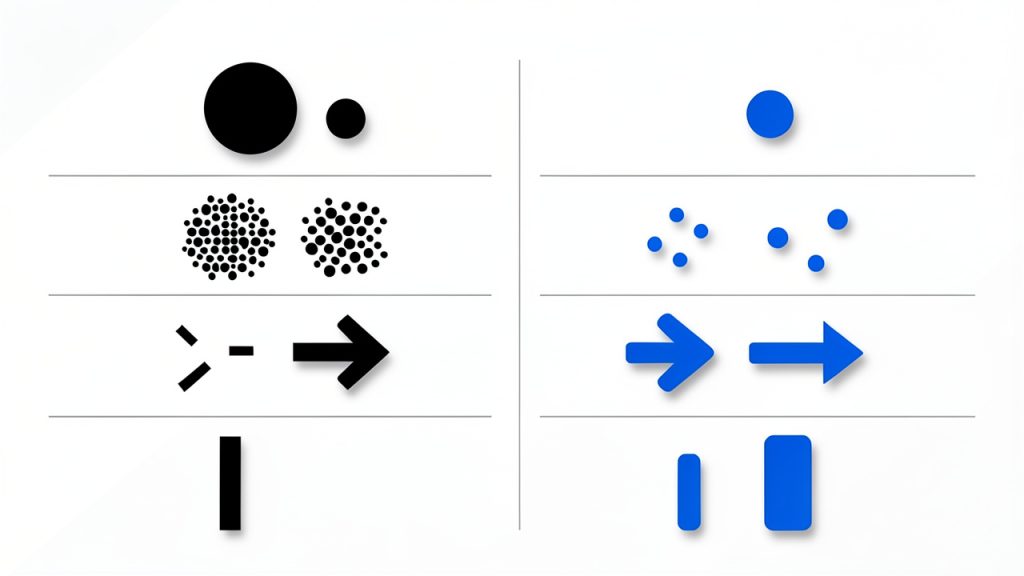
    Visual suitcase packing analogy: JPG bulky and overflowing, AVIF neatly packed, caption: Same content, less space

    AVIF stands for AV1 Image File Format. It is based on the AV1 video codec, which is known for efficient compression. In practical terms, that means AVIF can store rich image detail while keeping file sizes low. It also supports modern features such as transparency and high dynamic range, which gives it an edge in certain use cases.

    For many users, the reason to convert from JPG to AVIF is straightforward: faster delivery with less compromise. If you are managing web assets, sending image files online, or optimizing a site for SEO and performance, that matters.

    Key Aspects of JPG to AVIF

    Why people convert JPG images to AVIF

    The biggest reason is file size reduction. Smaller image files can improve load times, especially on mobile networks and slower connections. That directly affects user experience. It can also affect conversions, bounce rate, and search visibility, because speed is now part of how people judge a site and how search engines evaluate it.

    There is also a storage benefit. If you manage hundreds or thousands of images, even modest compression gains can translate into significant savings. That is helpful for e-commerce catalogs, portfolio sites, marketing teams, content publishers, and SaaS platforms that serve media at scale.

    Another important factor is quality retention. AVIF often performs better than JPG at lower file sizes, particularly in images with gradients, subtle color shifts, or detailed textures. The exact results depend on the source image and compression settings, but in many cases AVIF gives you a better balance between appearance and weight.

    JPG vs AVIF at a glance

    Feature-comparison infographic: JPG vs AVIF across compression efficiency, file size, transparency, HDR, and browser compatibility

    Feature JPG AVIF
    Compression efficiency Good Excellent
    File size Typically larger Typically smaller
    Image quality at low size Acceptable to good Often better
    Transparency support No Yes
    HDR support Limited Yes
    Browser compatibility Very broad Broad, but not universal in older environments
    Best use case Legacy compatibility Modern web optimization

    JPG remains useful because it works almost everywhere. AVIF is more future-focused. If maximum compatibility is your top priority, JPG still has a role. If performance and modern optimization matter more, AVIF is often the stronger option.

    The quality trade-off you should understand

    No image conversion is magic. When you convert a JPG into AVIF, the AVIF file can only work with the data already present in the JPG. If the original JPG was heavily compressed or visually degraded, converting it will not restore missing detail.

    That is why source quality matters. A high-quality JPG usually converts more successfully than a low-quality one. AVIF can preserve what is there very efficiently, but it cannot invent lost information. For the best results, start with the cleanest source image you have.

    You should also be aware that aggressive AVIF compression can go too far. While the format is powerful, very small file targets can still introduce artifacts, soften detail, or alter texture. The goal is not to create the smallest file possible. The goal is to create the smallest file that still looks right for the viewer.

    Where AVIF works best

    AVIF is especially effective for websites, landing pages, digital product interfaces, blog images, and online stores. In these environments, every kilobyte counts. Faster pages can improve engagement and help visitors stay focused instead of waiting for visuals to load.

    It is also useful in workflows where you serve multiple image sizes and want efficient delivery across desktop and mobile devices. Developers often prefer AVIF because it supports modern performance strategies without forcing a visible quality drop.

    That said, AVIF may not be ideal for every scenario. Some older software tools, legacy systems, and outdated browsers may not handle it well. If your audience includes users on older platforms, you may need a fallback format such as JPG or WebP.

    How to Get Started With JPG to AVIF

    Choose the right conversion method

    Most people start with an online JPG-to-AVIF converter. This is the easiest route because it requires no installation and usually works in a browser. You upload the JPG, select quality settings if available, convert the file, and download the result.

    This option is ideal for casual use, quick tasks, or small batches. It is especially attractive for freelancers and small businesses that want speed and simplicity without learning new software.

    If you handle images regularly, desktop software or automated workflows may be more efficient. Developers and teams working with large media libraries often prefer batch tools or build-process integration. That makes it easier to optimize images consistently without manual repetition.

    What to look for in a good converter

    Not all converters are equal. A useful tool should preserve visual quality, offer clear settings, and process files quickly. It should also be transparent about privacy, especially if you are uploading client assets, product photography, or branded media.

    A strong converter typically offers these essentials:

    1. Quality control, so you can balance appearance and file size
    2. Batch conversion, if you work with multiple images
    3. Secure handling, especially for business or client files
    4. Fast processing, so optimization does not become a bottleneck

    If a tool gives no control over output quality, the result can feel unpredictable. For serious use, that is a limitation worth avoiding.

    A simple workflow that works

    The easiest way to approach converting JPG files into AVIF is to test a few representative images first. Do not convert your entire library blindly. Pick one product photo, one banner, one blog image, and one detailed visual. Compare the AVIF outputs side by side with the originals.

    Pay attention to text clarity, edge sharpness, gradients, skin tones, and fine textures. Some images compress beautifully. Others need gentler settings. A short testing phase can save you from rolling out assets that are technically smaller but visually weaker.

    Once you find the right quality range, apply it consistently. This turns image optimization from a guessing game into a repeatable process. For businesses and creators, that kind of consistency matters just as much as raw compression.

    Best practices for websites and online content

    If you are using AVIF on a website, keep compatibility in mind. Many modern browsers support it, but a fallback strategy is still wise. That is especially true if your site serves a wide audience across devices and regions.

    You should also avoid uploading oversized source images just because AVIF compresses well. Compression is only one part of performance. Proper dimensions, responsive image delivery, and sensible quality settings still matter.

    Scenario Better choice Why
    Legacy system or universal compatibility needed JPG Safest support across older tools and browsers
    Modern website focused on speed AVIF Strong compression and lower bandwidth use
    Images need transparency AVIF Supports alpha transparency
    Quick social sharing with minimal workflow changes JPG Easier support across platforms
    Large content library with performance goals AVIF Better long-term optimization potential

    Common mistakes to avoid

    One common mistake is assuming every image should be converted automatically. Some visuals benefit greatly from AVIF, while others may show little improvement or require careful tuning. It is better to evaluate by use case than to treat all files the same.

    Another mistake is ignoring visual review. File size is measurable, but quality is contextual. An image that looks fine in a thumbnail may fall apart in a hero banner or full-width product view. Always check the image where it will actually be used.

    People also forget about workflow compatibility. If your CMS, design software, email platform, or client handoff process does not support AVIF smoothly, the best technical format may still create practical friction. Efficiency is not just about compression. It is also about how easily your team can use the result.

    Conclusion

    Converting JPG images to AVIF is one of the smartest low-effort upgrades for modern digital performance. It can reduce file size, improve loading speed, and help you serve cleaner, lighter media across websites and online platforms. For small businesses, freelancers, developers, and productivity-minded users, that makes AVIF well worth considering.

    The best next step is simple: take a few of your most-used JPG files and convert them to AVIF as a test. Compare file size, loading behavior, and visual quality in real use. Once you see what works for your images and audience, you can build a faster, more efficient workflow around it.

  • How to Create a New Manual Post That Delivers Quality

    How to Create a New Manual Post That Delivers Quality

    Posting online should be simple, but it rarely feels that way when every platform pushes automation, scheduling, and one-click publishing. For many small business owners, freelancers, developers, and productivity-focused users, there is still real value in creating a manual post by hand. It offers control, clarity, and a chance to shape each message with intention, instead of relying on presets or bulk workflows.

    That matters more than it may seem. A manually created post is often where quality shows up first, whether you are publishing a blog update, writing a forum entry, sharing a product announcement, or adding content to a CMS. When you slow down long enough to craft the post yourself, you usually catch weak wording, broken formatting, and missing context before your audience does.

    This guide breaks down what a manual post actually is, why it still matters, and how to use it effectively without turning your workflow into a time sink. If you want better content with fewer mistakes and more control over the final result, manual posting is worth understanding.

    What a manual post is

    A manual post is content created and published directly by a person, rather than generated, imported, duplicated, or automated by a tool. The phrase can apply across many platforms. In a website CMS, it may mean opening the editor and writing a fresh article from scratch. In social media, it can mean composing a post directly instead of pulling from a queue. In internal tools, forums, and marketplace systems, it often means entering content manually, field by field.

    The defining trait is not the platform, it is the method of creation. A manual post is intentional. Someone decides on the title, body, formatting, links, media, and publishing timing in real time. That gives the creator full editorial control, which is often the difference between content that feels generic and content that feels relevant.

    For businesses and independent professionals, this approach has a practical advantage. Manual posting reduces the risk of publishing something outdated, mistimed, or poorly matched to the audience. Automation is powerful, but it works best when paired with judgment. A hand-built post brings that judgment into the process from the start.

    Why the term matters in different contexts

    The meaning of a manually created post can shift slightly depending on where you encounter it. In blogging platforms, it usually refers to a newly created article or update entered directly into the editor. In ecommerce systems, it may mean manually adding an announcement, listing, or update without syncing from another source. In community platforms, it can mean a fresh discussion thread started by a user.

    That flexibility is important because many readers search for the phrase without a single platform in mind. They are often trying to understand whether they should create content manually or let software handle the process. The answer depends on the goal. If precision, timing, and message quality matter, manual posting remains the stronger option.

    Manual posting versus automated publishing

    Automated publishing is built for scale. It saves time, keeps calendars moving, and helps teams maintain consistency. A manual post is built for accuracy and relevance. It lets you adapt your wording to the moment, respond to recent changes, and tailor the message to a specific audience or channel.

    Neither approach is inherently better in every situation. The real distinction is in trade-offs. Automation improves speed, while manual posting improves oversight. If you are announcing a feature update, responding to customer feedback, or sharing a time-sensitive message, the manual route often produces better results.

    Manual Posting Versus Automated Publishing

    Key aspects of manual posting

    The value of a manually created post comes down to several core qualities. These are not just abstract benefits. They affect how your content performs, how your audience perceives you, and how much cleanup you need to do after publishing.

    Control over message and tone

    One of the strongest advantages of manual posting is editorial control. You decide exactly how the message sounds, what details to emphasize, and what action you want the reader to take. That control is especially useful for brands and professionals who care about voice, credibility, and nuance.

    A scheduled or templated post can sound efficient but flat. A manually written post can reflect current context, customer concerns, or industry changes. That makes it more likely to feel timely and human. Readers may not consciously think, “This was carefully written,” but they often respond better when a message feels direct and considered.

    Better accuracy and fewer publishing errors

    Errors tend to appear where workflows become too automatic. The wrong link, an old screenshot, an outdated CTA, or a title that no longer fits can all slip through when content is pushed live without review. A manually created post creates a natural checkpoint. Because the content is being assembled intentionally, the creator is more likely to verify the details before hitting publish.

    This matters for more than grammar. Accuracy affects trust. A single incorrect date or broken URL can weaken the impact of an otherwise good post. Manual creation gives you the chance to catch those issues while they are still small.

    Flexibility across platforms

    A manually created post adapts well to different environments. You can shorten it for social, expand it for a blog, or adjust the structure for a product page, community board, or email update. That flexibility is useful for users who work across multiple systems and do not want every message forced into the same template.

    For small teams especially, this can be more efficient than it sounds. Instead of fighting the limits of automation tools, you create the right version for the right channel. The work feels more direct because it is shaped around the audience rather than around the software.

    Stronger quality for high-value content

    Not every piece of content deserves deep manual effort, but high-impact posts usually do. A launch announcement, service update, pricing change, customer-facing clarification, or thought leadership post should not feel rushed. These are the moments when a manual post has the greatest value.

    Think of it like handwriting an important note instead of sending a generic form letter. The extra care changes how the message lands. In digital publishing, that care often shows up in tighter structure, clearer wording, and more useful context.

    Time cost and workflow considerations

    Manual posting is not perfect. It takes longer, requires attention, and can become inefficient if used for everything. If you publish high volumes of repetitive content, creating each post manually may slow your team down and introduce inconsistency.

    The smartest approach is usually selective. Use manual posting where message quality, precision, or timing matter most. Use automation for routine publishing where the stakes are lower. That balance helps you protect quality without overwhelming your workflow.

    Scenario Manual post Automated post
    Product or service announcement Best for accuracy and tone control Risk of sounding generic or outdated
    Routine promotional content Can be effective but time-intensive Best for scale and consistency
    Customer response or clarification Best for relevance and nuance Often too rigid
    Multi-channel campaign adaptation Strong if each version needs tailoring Useful if platforms need identical messaging
    Time-sensitive updates Best when human review is essential Helpful only if pre-approved carefully

    How to get started with manual posting

    Getting started with manual posting does not require a complicated system. What it does require is a simple process that protects clarity and reduces avoidable mistakes. The goal is not to make posting slower, the goal is to make it more deliberate.

    Start with purpose, not format

    Before writing anything, define what the post needs to accomplish. Are you informing, persuading, updating, explaining, or inviting action? Too many posts begin with the editor open and no clear objective. That usually leads to filler, vague openings, and weak calls to action.

    When your purpose is clear, decisions become easier. You know what tone to use, what details matter, and what the reader should remember. A strong manual post starts with a simple question, what should this post do for the audience right now?

    Build the core message first

    Once the purpose is clear, draft the main message in plain language. Avoid polishing too early. Focus on the substance first. What happened? Why does it matter? What should the reader do next? If you can answer those three questions clearly, the rest of the post becomes easier to shape.

    This approach is useful because manual posting can tempt people into over-editing the surface before the core idea is strong. Think of the post like a storefront sign. If the message is unclear from a distance, better decoration will not fix it.

    Use a simple publishing workflow

    A lightweight workflow keeps manual posting efficient. You do not need a complex editorial stack if the content is straightforward. In most cases, the process can stay simple.

    Simple Publishing Workflow

    A practical four-step routine works well for most small teams and solo creators:

    1. Define the goal of the post.
    2. Draft the message in plain, direct language.
    3. Review for accuracy, including links, dates, names, and formatting.
    4. Publish and monitor audience response or engagement.

    This kind of structure creates consistency without removing flexibility. It also helps prevent the common problem of treating every post like a one-off task with no quality check.

    Focus on readability and structure

    A manual post should be easy to scan and easy to understand. That means using clear headings where appropriate, short paragraphs, and a logical flow from opening to action. Readers often decide within seconds whether a post is worth their time. Dense formatting and vague openings make that decision easy in the wrong direction.

    Clarity also improves performance. Whether your audience is reading a blog article, platform announcement, or community update, they are more likely to engage when the structure helps them find meaning quickly. Good manual posting is not only about writing better, it is also about presenting information in a way that respects attention.

    Check context before publishing

    One of the biggest advantages of creating a post manually is that you can align it with the current moment. Use that advantage. Before publishing, ask whether anything has changed since the draft began. Has the timeline shifted? Has a feature changed? Has customer sentiment moved? Is the audience likely to interpret the message differently today than they would have yesterday?

    That final context check is where many manually written posts become noticeably stronger than automated ones. The content feels current because it is current. Even a small update to wording can make the difference between a post that feels canned and one that feels genuinely useful.

    Know when manual is the right choice

    Not every post needs to be manually created from scratch. The best candidates are posts with high visibility, sensitive information, changing details, or audience-specific nuance. If the content affects trust, understanding, or decision-making, manual creation is usually worth the extra effort.

    A helpful rule is to think in terms of risk. If publishing the wrong version would cause confusion, embarrassment, or missed opportunity, choose the manual route. If the message is routine and stable, automation may be perfectly fine.

    Conclusion

    A manual post is more than a basic publishing action, it is a deliberate way to create content with stronger accuracy, clearer intent, and better alignment with your audience. In a digital environment that often rewards speed over substance, manual posting remains one of the simplest ways to protect quality.

    If you want to get more value from it, start small. Use manual posting for your most important updates first, then build a repeatable process around what works. That next step gives you the best of both worlds, content that feels human and thoughtful, without making your workflow unnecessarily heavy.

  • How to Generate Useful Random Phone Numbers

    How to Generate Useful Random Phone Numbers

    A random phone number looks simple on the surface, just a string of digits. In practice, it sits at the intersection of testing, privacy, data quality, fraud prevention, and workflow automation. Developers use generated numbers to validate forms and mock user flows. Individuals use them to avoid exposing personal contact details in low-trust situations. Product teams use them to simulate onboarding, messaging, and account creation without contaminating production data.

    The problem is that not all generated numbers are useful, and many are not valid in any meaningful technical sense. A number can be random without being format-correct, region-aware, or safe to use in a real system. That distinction matters. If the goal is efficiency, the right approach is not simply producing digits at random, but generating phone-number data that matches the requirements of the system being tested or the privacy goal being pursued.

    What random phone numbers are

    Randomly generated phone numbers are synthetic numeric strings designed to resemble real telephone numbers. They are commonly used in software testing, QA workflows, form validation, sample datasets, and privacy-oriented scenarios where a real number should not be exposed. The phrase itself is broad, which is why context matters. A random number used in a UI mockup is very different from a number intended to pass backend validation in a telecom-aware application.

    At a technical level, a phone number usually contains structure. It may include a country code, national destination code, area code, carrier prefix, and subscriber number.

    A labeled anatomy diagram of a phone number showing its parts: country code, national destination code/area code, carrier prefix, and subscriber number. Include side-by-side examples of a local-format display and the normalized E.164 form for 2–3 regions (e.g., US, UK, India).

    True randomness, if applied without constraints, often creates invalid output. That is why practical generation methods tend to be rule-based randomization, not pure random digit assembly. In other words, the number is random inside a known format.

    This is the first distinction developers should keep in view. There is a difference between random-looking phone numbers and syntactically valid phone numbers. If a test suite only checks front-end length limits, any random digits may be sufficient. If a workflow includes SMS verification, country normalization, E.164 formatting, fraud checks, or telephony APIs, the generated data must align with stricter expectations.

    Why people seek generated phone numbers

    For many users, the motivation is speed. They need a placeholder now, not later. During prototyping, registration testing, or sample content creation, manually inventing numbers is tedious and error-prone. A generator removes friction and standardizes the process.

    There is also a privacy layer. People often want to avoid sharing a personal number when experimenting with a service, documenting a workflow, or creating non-production examples. In those situations, a generated phone number acts as a buffer between a real identity and a temporary task. That said, the distinction between a generated sample number and a working temporary number must remain clear. They are not interchangeable.

    Random does not always mean usable

    A sequence like 583-194-0021 may look plausible, but that does not mean it is assigned, callable, or accepted by modern systems. Validation engines often test more than digit count. They may inspect country-specific rules, reject impossible area codes, or normalize input into a canonical international format.

    For developers, this means a random number generator is only as useful as its constraints. For individuals, it means using synthetic phone numbers for the right purpose. If the task is filling mock content, a generated number is ideal. If the task requires receiving a call or text, random generation alone will not solve the problem.

    Key aspects of random phone numbers

    The most important aspect is format validity. A useful generated number should reflect the numbering plan of the region it is meant to represent. US numbers, UK numbers, and Indian numbers follow different conventions. Even within one country, there may be reserved ranges, non-geographic prefixes, or service-specific patterns. A tool that ignores these rules creates noise rather than efficiency.

    The second aspect is purpose alignment. A front-end engineer testing an input mask needs a different type of data than a growth team testing OTP flows. One needs presentation-level realism. The other may need integration-safe test values, documented fake ranges, or a sandbox-compatible pattern accepted by downstream services. If the intended use is not defined first, generated numbers often fail at the exact moment they are supposed to save time.

    A third consideration is privacy and compliance. Synthetic numbers are useful precisely because they avoid exposing real personal data. In many workflows, especially demos, QA environments, and internal training systems, using actual customer numbers creates unnecessary legal and security risk. Replacing them with generated values helps teams reduce accidental data exposure while preserving realistic dataset shape.

    Validity, deliverability, and ownership

    A Venn or layered diagram that distinguishes ‘random-looking’, ‘syntactically valid’, ‘deliverable’, and ‘assigned/owned’ numbers. Highlight example positions (e.g., a random digit string, a format-valid but unassigned number, a deliverable number not owned by test user, and a real assigned number).

    These three concepts are often conflated. A number can be format-valid but not deliverable. It can be deliverable but not assigned to the intended user. It can also be real and assigned, which makes generation dangerous if numbers are created carelessly and later contacted.

    That is why robust teams separate test data from contactable data. For non-production workflows, the safest approach is usually synthetic values that are structurally correct but never used for live outreach. If a business process requires real communication channels, then consent, ownership verification, and proper provisioning matter more than randomness.

    Regional formatting matters more than most people expect

    A phone number is not just a local string. Most modern systems convert input into a normalized representation, commonly E.164 format, so that international handling becomes predictable. The same visible number can be interpreted differently depending on region defaults, trunk prefixes, and user input conventions.

    This creates subtle bugs. A QA team may generate random local-format numbers that look correct in the interface but fail downstream because the backend expects country-qualified input. A support team may copy numbers into CRM records without normalization, creating duplicates and routing issues. In both cases, the problem is not randomness itself, but the absence of consistent formatting rules.

    Security and abuse prevention

    Randomly generated phone numbers also appear in discussions of anti-abuse systems. Fraud teams monitor suspicious signup activity, repeated use of disposable contact paths, and invalid number patterns. Poor-quality random inputs often trigger rate limits, verification failures, or account review processes.

    This matters for legitimate users too. If the goal is efficient testing, generated values should not resemble malicious traffic. Good hygiene includes using designated testing environments, clear data labeling, and known-safe sample ranges where available. Efficiency improves when test data is both realistic and predictable.

    Common use cases

    Use Case Suitable? Why
    UI mockups and design prototypes Yes Realism is needed, but live connectivity is not
    Form validation testing Yes Structured sample data helps test masks, length limits, and error states
    Demo databases and sample records Yes Synthetic contact data reduces privacy risk
    SMS OTP verification in production No A generated number alone cannot receive messages
    Live customer outreach No Ownership and consent are required
    QA in telecom-integrated sandbox environments Yes, with constraints Numbers must match the sandbox or provider’s accepted testing patterns

    How to get started with generated phone numbers

    The starting point is not generation, but specification. Define what the number needs to do. If it only needs to populate a mock profile card, the requirements are minimal. If it must survive validation logic, API ingestion, and data normalization, the requirements become more technical. A small amount of upfront clarity prevents hours of downstream cleanup.

    For most users, there are three baseline questions. What country or region should the number represent? Does it need to be merely plausible, or actually format-valid? Will it remain inside a test environment, or move through a workflow that touches external systems? These questions determine whether a simple generator is enough or whether a structured data tool is required.

    Choose the right level of realism

    The common mistake is overengineering or underengineering. A marketer building a landing page preview does not need telecom-grade validation. A developer writing integration tests usually does. The best approach is to match realism to the system boundary being tested.

    If the requirement is basic realism, generated numbers with recognizable formatting may be sufficient. If the requirement is application-safe realism, prefer values that align with official numbering structures and avoid accidental overlap with real user data. The more production-like the workflow becomes, the more important controlled test datasets become.

    Use structured test data, not just random digits

    Efficiency improves when phone-number generation is part of a broader test-data strategy. That means storing values consistently, labeling them by purpose, and preventing synthetic records from leaking into production communications. Teams that treat generated phone numbers as disposable one-off strings often create duplicate records, analytics pollution, and failed automations.

    A stronger setup uses documented conventions. For example, one pattern may be reserved for mock customer accounts, another for QA regression tests, and another for API contract testing. The exact convention depends on the organization, but the principle is stable: randomness should be controlled by policy.

    Build phone number handling into the workflow

    Developers benefit from placing generation at the same layer where validation and normalization happen. If a system stores only international format, generated numbers should be created or transformed into that format before insertion. If the front end displays localized formatting while the backend stores canonical values, tests should cover both representations.

    This is where a workflow platform such as Home can fit naturally. Instead of scattering phone-number generation across spreadsheets, ad hoc scripts, and test notes, teams can centralize how synthetic contact data is created, labeled, and routed through operational tasks. The benefit is not just convenience. It is consistency, traceability, and fewer avoidable mistakes.

    Practical setup checklist

    A simple implementation typically starts with a few requirements:

    1. Region selection: Define the country or locale the number should represent.
    2. Format rule: Decide whether local formatting or international formatting is required.
    3. Usage boundary: Keep generated numbers separate from production outreach flows.
    4. Data labeling: Mark synthetic records clearly in the database or workspace.

    These steps are small, but they eliminate most of the confusion around generated phone data.

    Mistakes to avoid

    One recurring mistake is assuming that any random-looking number is harmless. It may not be. If a number coincides with a real subscriber and is accidentally used in a live workflow, the result can be privacy complaints, failed trust signals, or regulatory exposure. Synthetic data should be handled with the same operational discipline as other test assets.

    Another mistake is ignoring normalization. Teams often generate values in human-readable format, then forget that downstream systems compare normalized strings. The result is duplicate detection failures, broken messaging logic, and inconsistent analytics. A generated number should not merely look right. It should behave correctly inside the stack.

    A third issue is tool fragmentation. One person uses a quick online generator, another copies values from old spreadsheets, and another hardcodes examples in documentation. Over time, no one knows which numbers are safe to reuse. Centralizing this process, even in a lightweight operational hub, improves reliability.

    Conclusion

    Generated phone numbers are useful because they solve real operational problems. They speed up testing, protect personal data, and make mock environments more realistic. Their value, however, depends on structure. The best results come from generated numbers that match the intended region, format, and workflow boundary, rather than from unrestricted random digits.

    For developers and efficiency-focused users, the next step is straightforward. Define the use case, apply formatting rules, and treat phone-number generation as part of a controlled data process. If the workflow spans teams or tools, centralizing it with a system like Home can reduce friction and keep synthetic contact data organized. The goal is not simply to create random phone numbers, but to create the right ones for the task.

  • How to Create and Publish a Manual Post

    How to Create and Publish a Manual Post

    A new manual post can be the simplest thing in your workflow, or the reason your publishing process feels slow, inconsistent, and harder than it should be. For small business owners, freelancers, developers, and productivity-focused teams, the phrase sounds straightforward. In practice, it often represents a very specific challenge, creating and publishing content by hand, with intention, without relying on full automation.

    That matters more than it seems. Manual posting gives you control over timing, wording, formatting, and context. It can help you avoid robotic content, catch mistakes before they go live, and tailor each update to a real audience. At the same time, it can become messy if there is no system behind it.

    If you are trying to understand what a manual post is, when a new manual post makes sense, and how to make the process efficient, this guide gives you a practical framework. The goal is not just to define the term, but to help you use manual posting in a way that supports speed, quality, and consistency.

    What Is a New Manual Post?

    At its core, a manual post is a piece of content created and published directly by a person, rather than generated, queued, or distributed entirely through automation. That content might be a blog post, social media update, marketplace listing, community announcement, changelog entry, or internal knowledge-base article. The common thread is simple, a human is actively writing, editing, and posting it.

    For many businesses, manual posting is still the default way to publish important updates. A freelancer may write a client-facing project update manually to make the tone more personal. A small ecommerce store may manually publish a product announcement to ensure pricing, images, and offers are accurate. A developer may create a manual release note because technical changes need precision and context that automation often misses.

    The word new matters here as well. It signals that this is not just an edit to existing content or a recycled template. It is a fresh post, created for a current purpose. That may sound obvious, but in content workflows, the difference between a truly new post and a duplicated or lightly modified one has real implications for search visibility, user trust, and brand credibility.

    A manual post is not automatically better than an automated one. It is better when the situation calls for judgment. If timing, nuance, compliance, branding, or audience sensitivity matter, a manual approach usually delivers stronger results.

    Key Aspects of a New Manual Post

    Control and accuracy

    One of the biggest advantages of creating a post manually is control. You decide the headline, the structure, the formatting, the call to action, and the exact moment the content goes live. That control is valuable when details matter, especially in customer-facing communication.

    Accuracy is often where manual posting proves its worth. Automated systems are useful, but they can publish outdated information, pull the wrong template field, or miss contextual issues. A manual process creates a natural review point. You can catch an expired offer, a broken link, a formatting issue, or wording that feels off before your audience sees it.

    For productivity-minded users, this can seem like extra effort. In reality, it is often preventive efficiency. Spending five more minutes before publishing can save hours of cleanup, customer confusion, or reputation repair later.

    Personalization and tone

    A manual post usually feels more human because a human wrote it. That is not just a branding preference, it affects engagement. Readers can often tell when content was created from a rigid template or published in bulk without much thought.

    When you create a manual post, you can adapt your message to the audience, platform, and moment. A LinkedIn post announcing a service update should not sound like a support article. A product launch email should not read like a tweet. Manual creation helps you shape tone with purpose.

    This is especially useful for small businesses and solo professionals. You may not have a large content team, but you do have the advantage of authenticity. A carefully written manual post can build trust in a way generic content rarely does.

    Flexibility across platforms

    The practical meaning of a manual post changes depending on where it appears. On a website, it may involve drafting, formatting, optimizing metadata, and publishing in a content management system. On social media, it may mean writing a platform-specific caption, attaching media, choosing the right tags, and posting at the right time.

    That flexibility is both a strength and a risk. It allows you to tailor content precisely, but it can also create inconsistency if there is no process. The same announcement can end up with different wording, mismatched visuals, or conflicting links across platforms if every post is handled ad hoc.

    The solution is not to eliminate manual work. It is to support it with a light structure. Think of manual posting like cooking without a meal kit. You have more freedom and usually better results, but only if you know the recipe and keep the ingredients organized.

    Time investment versus strategic value

    Manual posting takes time. There is no point pretending otherwise. If you publish frequently, the effort can add up quickly. That is why many teams swing hard toward scheduling tools, templates, and automation.

    Still, the right question is not whether manual posting takes time. The better question is whether the value of direct control outweighs the time required. For high-stakes content, the answer is often yes. For repetitive updates, the answer may be no.

    A useful way to think about it is to separate content into tiers. Important announcements, original thought leadership, sensitive updates, and client-specific communication often deserve a manual workflow. Routine reminders, evergreen reposts, and standardized notices may be better handled through templates or automation with review.

    A three-level tiered diagram (pyramid or stacked blocks) that maps content types to recommended approaches: Top—High-stakes (manual): launches, policy, client updates; Middle—Mixed: important recurring updates (template + manual); Bottom—Routine (automated): reminders, evergreen reposts. Include a short note about time vs value tradeoff.

    Note: Time investment is not uniformly bad. Allocate manual effort to high-value posts where context, accuracy, and tone materially affect outcomes, and automate where repeatability and scale matter.

    SEO and discoverability

    If your manual post lives on a website or blog, search visibility matters. A manually created post gives you the chance to optimize title structure, internal links, readability, keyword use, and metadata with more care than an automated pipeline might allow.

    That does not mean stuffing awkward phrases into the content. In fact, good SEO depends on the opposite. If you are targeting a phrase like a phrase such as “new manual post”, the content should use those terms naturally and in a way that makes sense to readers. Search engines increasingly reward clarity, relevance, and user value over mechanical repetition.

    Manual posting can support SEO because it encourages editorial judgment. You can identify what the reader actually needs, create a cleaner structure, and answer related questions in plain language. That often performs better than thin, mass-produced pages.

    How to Get Started With a New Manual Post

    Start with a clear purpose

    Before you write anything, define what the post is supposed to accomplish. That sounds basic, but it eliminates a surprising amount of wasted effort. A manual post without a clear objective usually turns into vague content that does not inform, persuade, or convert.

    Ask yourself whether the post is meant to announce, educate, sell, update, clarify, or invite action. A single post can do more than one of those things, but one primary goal should lead. When the purpose is clear, decisions about tone, structure, and length become much easier.

    For example, a business update post should prioritize clarity and timeliness. A promotional post should focus on benefits and a strong call to action. An educational article should answer questions with enough depth to be genuinely useful. Purpose shapes everything.

    Build a simple repeatable workflow

    You do not need a complicated content system to create good manual posts. You need a reliable one. Even a lightweight workflow can reduce friction and improve quality dramatically.

    A clean flowchart showing the simple repeatable workflow: Draft → Edit → Format → Review → Publish → Monitor. Each step is an icon with a one-line note (e.g., "Edit: clarity & tone", "Monitor: engagement signals").

    A practical manual posting process often includes these steps:

    1. Draft the message with one clear goal.
    2. Edit for clarity, tone, and accuracy.
    3. Format it for the platform where it will appear.
    4. Review links, visuals, dates, names, and calls to action.
    5. Publish at the most appropriate time.
    6. Monitor performance and feedback after posting.

    The reason this works is simple. It turns manual posting from a random act into a manageable routine. That is especially important for freelancers and small teams who switch between client work, operations, and marketing throughout the day.

    Use templates without sounding templated

    There is a common misconception that manual posting and templates are opposites. They are not. The smartest workflows combine both. A template can save time on structure while still leaving room for customization and human judgment.

    For instance, you might use a standard format for product updates, service announcements, or content summaries. The template handles recurring elements like title style, image size, metadata fields, or CTA placement. The actual message, however, is still written manually to match the moment.

    This balance matters. Too much structure makes every post feel interchangeable. Too little structure creates delays and inconsistency. The goal is guided flexibility, not rigid repetition.

    Focus on readability and platform fit

    A strong manual post is not just well written, it is well presented. That means short paragraphs, clear headings where appropriate, strong opening lines, and formatting that suits the platform.

    A website article can support more depth. A social post needs speed and punch. A community update should be easy to scan. A marketplace listing should prioritize clarity and trust. The same information may need to be expressed differently in each context.

    This is where manual effort pays off. You can shape the presentation to fit user behavior. People do not read a support update the same way they read a promotional caption. Matching the format to the platform improves engagement and reduces confusion.

    Measure what happens after publishing

    A manual post should not end when you hit publish. One of the most overlooked parts of a manual workflow is the feedback loop. If you never review performance, you are relying on guesswork.

    Look at the signals that matter most for the platform and purpose. On a blog post, that may be time on page, scroll depth, clicks, and conversions. On social media, it may be saves, comments, shares, or link clicks. For client communication, it may simply be response quality or reduced follow-up questions.

    You do not need enterprise analytics to learn from manual posts. Even basic observation can reveal patterns. You may notice that shorter intros perform better, certain headlines get more clicks, or posts published at specific times earn stronger engagement. Over time, those small insights turn manual posting into a smarter system.

    Common Challenges and How to Avoid Them

    One of the most common problems with manual posting is inconsistency. When content is created only when someone remembers or feels inspired, publishing becomes irregular. That hurts audience expectations and weakens overall momentum. The fix is not constant output, it is a realistic cadence you can maintain.

    Another issue is overediting. Because manual posts are hands-on, it is easy to spend too long polishing details that have little impact. Perfectionism can slow down publishing to the point where timely content loses relevance. The better standard is clear, accurate, and useful. If those three are in place, the post is usually ready.

    There is also the risk of fragmented messaging. When multiple people create manual posts without shared guidelines, the brand can start sounding inconsistent. A simple style guide helps. It does not need to be formal or complicated. Even a one-page reference with preferred tone, formatting rules, naming conventions, and CTA style can make a major difference.

    Aspect Manual Posting Automated Posting
    Control High, with direct human oversight Lower, depends on setup
    Speed at scale Slower for large volumes Faster for recurring content
    Personalization Strong, easier to tailor Limited unless deeply configured
    Error prevention Better for context-sensitive checks Better for repetitive consistency
    Best use case Important, nuanced, timely content Routine, repeatable distribution

    For most productivity-focused users, the best answer is not choosing one method exclusively. It is knowing when each one serves the goal.

    When a New Manual Post Makes the Most Sense

    A manual post is especially valuable when the content carries business, reputational, or relational weight. That includes service changes, product launches, client updates, sales announcements, policy clarifications, and original insights intended to build authority.

    It also makes sense when audience context matters. If your readers are responding to a trend, a recent event, or a current concern, a manually created post allows you to speak directly and appropriately. Automated content often lacks that awareness.

    For developers and technical teams, manual posts are useful when publishing release notes, outage explanations, setup instructions, or migration updates. Precision matters in those scenarios. One vague sentence can create support tickets, confusion, or implementation mistakes.

    For freelancers and service businesses, a manual post can function as a relationship tool. A short, carefully written update can remind clients and prospects that there is a real person behind the brand, paying attention and communicating with intention.

    Conclusion

    A new manual post is more than content published by hand. It is a deliberate choice to prioritize accuracy, control, tone, and context. In a world full of automation, that choice can be a competitive advantage when used well.

    The smartest approach is not to publish everything manually or automate everything blindly. It is to build a workflow where manual posting is reserved for the moments that deserve a human touch, then support that process with simple systems that keep it efficient.

    Your next step is practical, choose one type of content you publish regularly, define a clear manual posting workflow for it, and use that process for the next three posts. You will quickly see where manual effort adds value, where templates can save time, and how to create content that feels both efficient and genuinely human.

  • How to Create a New Manual Post That Connects

    How to Create a New Manual Post That Connects

    A new manual post can feel deceptively simple. You sit down, write the update, publish it, and move on. For small business owners, freelancers, developers, and productivity-focused teams, the way you create a post manually often says a lot about your workflow, your quality standards, and how well your message reaches the right people.

    That matters because not every post should be automated, templated, or pushed through a scheduling pipeline without human judgment. Sometimes the best-performing content is the one you craft intentionally, with clear timing, a specific audience in mind, and a message that responds to what is happening right now. A well-planned manual post gives you control, speed, and nuance that automated systems often likely miss.

    What Is a New Manual Post?

    A new manual post is content created and published directly by a person rather than generated, syndicated, or triggered automatically by a system. In practical terms, that usually means opening your platform of choice, writing the post yourself, adding any links or media, reviewing it, and then publishing it when you decide the timing is right.

    For many readers, this sounds obvious. After all, manual posting is how most people start. But once businesses begin using scheduling tools, content calendars, AI drafting assistants, social integrations, or CMS automations, the distinction becomes important. A manually created post is not just a piece of content, it is a deliberate action. It reflects a decision to prioritize context over convenience.

    That distinction is especially relevant for smaller teams. If you run a solo business, manage client work, or juggle multiple channels with limited time, knowing when to use a manually created post can improve both quality and performance. It allows you to respond to customer questions, comment on breaking developments, share a quick insight, or publish a timely announcement without waiting for a larger content workflow to catch up.

    Why manual posting still matters

    Automation is useful, but it is not always smarter. A manual post gives you room to adjust tone, clarify meaning, and react to real conditions. If a promotion changes, a product update needs immediate explanation, or a customer trend suddenly appears, publishing manually lets you address it while the topic is fresh.

    There is also a trust factor. Readers can often tell when content feels overly processed. A manual post tends to sound more human because it usually is more human. That can improve engagement, especially in channels where authenticity carries more weight than polished repetition.

    Where a new manual post is commonly used

    The idea applies across several environments. You might create a new manual post in a blog CMS, a company news section, a social media platform, a forum, a project workspace, or an internal knowledge hub. The core idea stays the same, even if the interface changes.

    For example, a freelancer may manually post a quick portfolio update after finishing a project. A developer tool company might publish a manual release note to clarify a bug fix. A local business could create a timely weekend announcement on social media. In each case, a person creates the post because the moment calls for clarity and control.

    Key Aspects of a New Manual Post

    The biggest strength of a manual post is intentionality. You are not just filling a slot in a publishing calendar. You are choosing what to say, how to say it, and when it should go live. That makes manual posting valuable for content that needs precision, emotion, urgency, or responsiveness.

    Control is another major advantage. When you publish manually, you can review the exact wording, check links, confirm formatting, and decide whether the message fits the current situation. This is especially useful when your audience expects relevance. A message that felt perfect yesterday might be poorly timed today. Manual posting gives you the final checkpoint.

    Quality over volume

    One of the most common mistakes in modern publishing is assuming that more content automatically produces better results. In reality, low-quality volume often creates noise. A strong manually published update can outperform several weak scheduled posts because it feels sharper, more timely, and more useful.

    Smaller teams often have an advantage here. You may not have the budget for a massive content operation, but you can still create thoughtful manual posts that speak directly to your audience. In many cases, that focus is more effective than trying to match the output of larger competitors.

    Speed with judgment

    Manual posting is often associated with slower workflows, but that is only partly true. It can actually be the fastest option when you need to publish immediately and do not want to navigate templates, approvals, or integrations. The key difference is that manual speed includes human judgment.

    That judgment matters. If a customer issue is spreading, an unclear announcement is circulating, or a trend affects your audience right now, a manual post allows you to respond quickly without sounding careless. It is the difference between reacting fast and reacting well.

    Platform context matters

    A new manual post should never be treated as generic content copied everywhere. The same update can work very differently depending on where it appears. A blog post may need structure and detail. A social post may need brevity and stronger emotional clarity. An internal team update may need clear action points and less branding language.

    This is why manual posting is valuable. It helps you shape the message to fit the platform rather than forcing one version everywhere. That usually leads to stronger results because the content feels native to the space where readers encounter it.

    The trade-off between manual and automated publishing

    Manual posting is powerful, but it is not perfect. It requires time, attention, and consistency. If every post is created from scratch with no process behind it, your workflow can become chaotic. Deadlines slip, messaging becomes uneven, and content may depend too heavily on whoever happens to be available.

    The better approach is balance. Use automation for repeatable, low-risk publishing tasks. Use manual posts for content that benefits from timeliness, sensitivity, personality, or strategic precision. This creates a system that is efficient without becoming robotic.

    A clean 3-column comparison graphic showing 'Manual posting', 'Scheduled posting', and 'Automated posting' with one-line bullets under each (best for / strength / limitation). Use simple icons for each column (hand/clock/gear) and a subtle header matching the blog style.

    Approach Best For Strength Limitation
    Manual posting Timely updates, announcements, nuanced communication High control and human judgment Requires more hands-on effort
    Scheduled posting Planned campaigns, evergreen content, recurring updates Efficient and consistent Less adaptable in real time
    Automated posting System-driven updates, syndication, routine publishing Saves time at scale Can feel generic or poorly timed

    How to Get Started With a New Manual Post

    Starting well is less about tools and more about clarity. Before creating a new manual post, decide what the post is trying to accomplish. Are you informing, promoting, clarifying, teaching, or responding? If you cannot answer that in one sentence, the post is probably not focused enough yet.

    Once the goal is clear, think about the audience. A manual post works best when it feels specific. That does not mean writing for only one person, but it does mean understanding what your readers care about in the moment. A productivity-minded audience may want quick, useful takeaways. A client audience may want reassurance and professionalism. A developer audience may want direct language and practical detail.

    Start with a simple posting framework

    You do not need a complicated process to create a strong manual post. A lightweight framework is usually enough:

    A simple left-to-right flow diagram of the lightweight posting framework: Define purpose → Choose platform → Write core message → Review for clarity & timing → Publish & monitor responses. Each step as a rounded box with a small icon and arrows between them.

    1. Define the purpose
    2. Choose the platform
    3. Write the core message
    4. Review for clarity and timing
    5. Publish and monitor responses

    This works because it reduces friction without sacrificing quality. You are not building an entire campaign. You are making one clear communication decision and executing it well.

    Write for clarity first

    Many manual posts fail because the writer tries to sound impressive instead of useful. Clear language wins. Readers should understand the point of the post almost immediately. That is true whether you are announcing a service update, sharing a tip, or publishing a short opinion.

    A good rule is to make the first few lines carry the main value. If the post is important, say why. If there is an action readers need to take, say what it is. If the update affects them directly, say how. Clarity creates trust, and trust improves engagement.

    Edit before you publish

    Because manual posts often happen quickly, editing is easy to skip. That is risky. Even a short review can catch weak phrasing, broken links, awkward formatting, or missing context. A post published manually still represents your brand, even if it took only five minutes to create.

    It helps to review the post from the reader’s point of view. Ask whether it is obvious what the post means, why it matters, and what happens next. If any of those answers feel vague, revise before publishing.

    Build a repeatable habit

    If manual posting is always reactive, it can become stressful. The smarter move is to create a habit around it. Keep a list of post ideas, common update formats, and audience questions worth answering. That way, when you need to publish a new manual post, you are not starting from zero.

    This is particularly useful for freelancers and small business owners who wear multiple hats. A little preparation makes manual publishing faster while preserving the flexibility that makes it valuable in the first place.

    Common situations where manual posting works best

    Some publishing moments are especially well suited to manual posts. These usually include:

    • Timely announcements: Changes, launches, limited offers, or urgent updates
    • Direct responses: Clarifications based on customer feedback or current events
    • Personal insights: Founder opinions, lessons learned, or behind-the-scenes commentary
    • Context-sensitive content: Posts that need careful tone and timing

    These are situations where rigid scheduling can actually weaken the message. Manual posting lets you communicate with better awareness of what is happening around the post, not just inside it.

    Conclusion

    A well-crafted manual post is more than a basic publishing task. It is a strategic way to communicate with precision, speed, and human judgment. For businesses and independent professionals who care about relevance and trust, that makes manual posting a practical advantage, not an outdated habit.

    If you want better results from your content, start by treating each new manual post as a chance to be useful, timely, and clear. Build a simple process, stay close to your audience, and publish with intention. That next post does not need to be bigger. It needs to be better.

  • How to Create a New Manual Post

    How to Create a New Manual Post

    Publishing should not feel like fighting your tools. Yet for many developers, operators, and efficiency-minded teams, that is exactly what happens when a workflow becomes over-automated, opaque, or fragile. A manual post, when designed deliberately, restores control. It introduces precision where automation can blur intent, and it creates a reliable fallback when integrations fail.

    A new manual post is not simply a post created by hand. In practical terms, it is a controlled publishing action executed directly by a user, usually with explicit inputs, clear review points, and minimal hidden logic. That makes it especially relevant for technical audiences who value auditability, reproducibility, and operational simplicity.

    This article examines what a new manual post actually means, why it still matters in modern workflows, and how to implement a clean process around it. The goal is not to romanticize manual work. The goal is to identify where manual posting adds leverage, where it introduces risk, and how to structure it so it remains efficient rather than chaotic.

    What Is a New Manual Post?

    A new manual post is a freshly created content entry, update, announcement, or publication that is initiated and completed directly by a person rather than by a scheduled automation, API trigger, or pipeline rule. The term can apply across systems, including CMS platforms, internal dashboards, social publishing tools, knowledge bases, and product update feeds.

    In a technical context, the distinction matters because a manual post changes the execution model. Automated publishing typically depends on event listeners, data transforms, queue handling, and external dependencies. A manual post bypasses much of that. The operator decides when the content is created, what data is included, and when it goes live.

    This gives the process a different set of properties. A manual post is usually more intentional, often easier to review before release, and less susceptible to silent failures caused by broken integrations. At the same time, it can become inconsistent if there is no template, no validation layer, and no operational standard.

    For developers and efficiency-focused teams, the newness of the manual post is important. It implies a fresh record with a defined purpose, not an ad hoc edit buried inside an old object. That makes it useful for traceable communication, one-off operational messages, urgent announcements, and content that requires human judgment before publication.

    Why the concept still matters

    Many teams assume automation is always the superior pattern. In reality, automation is only superior when the process is stable, the inputs are predictable, and the failure modes are well understood. In all other cases, manual execution can be the safer and faster option.

    A new manual post is often the correct choice when timing is sensitive, the content needs contextual nuance, or the source data has not been normalized well enough for automation. For example, a release note generated automatically from commit metadata may be fast, but it may not be readable. A manually created post can convert technical changes into language that users actually understand.

    This also matters in governance-heavy environments. Legal review, security incidents, compliance updates, and operational notices often require direct oversight. In those situations, a manual post is not a workaround. It is the control mechanism.

    Manual does not mean inefficient

    There is a common misconception that manual workflows are inherently wasteful. That is only true when the workflow is undefined. A structured manual posting system can be fast, repeatable, and low-risk.

    The key is to treat the post as an operational object with inputs, validation, ownership, and publishing criteria. Once that happens, a manual post stops being improvised labor and starts functioning like a lightweight, deterministic procedure.

    Key Aspects of a New Manual Post

    The value of a new manual post depends on how it is constructed. If the process is vague, the post becomes a source of inconsistency. If the process is explicit, it becomes a reliable unit of communication.

    Control and intentionality

    The strongest advantage of a manual post is direct control. The publisher chooses the exact content, ordering, tone, timing, and visibility. There is no need to reverse-engineer an automation rule or debug an integration to understand why something was published.

    That level of control is particularly useful when a message contains exceptions, edge cases, or human-sensitive framing. Developers know this pattern well from deployment workflows. Full automation is efficient until a release has special conditions. At that point, an explicit manual gate becomes the layer that prevents avoidable damage.

    Intentionality also improves quality. When a person creates the post with a clear purpose, the content is more likely to align with actual reader needs rather than just system output.

    Transparency and traceability

    A well-managed manual post is easier to audit than many low-visibility automated actions. The initiator is known. The input source is known. The time of publication is known. The rationale can be documented.

    This becomes valuable in environments where teams need to answer questions like: Who posted this? Why was it published now? Was it reviewed? What changed from the previous message? A manual workflow can support those questions more cleanly than a chain of hidden triggers.

    Transparency is also a usability advantage. When the process is visible, it is easier to train new team members, identify weak points, and improve throughput without losing control.

    Flexibility in edge-case workflows

    Automation performs best on common paths. Manual posting performs best on unusual ones. If a post needs custom formatting, selective disclosure, temporary overrides, or context-specific wording, a manual workflow handles that variability more gracefully.

    This is where many teams make a category error. They try to automate a process that is still evolving. The result is brittle logic, endless exceptions, and content that technically publishes but functionally misses the mark. A new manual post provides a low-friction alternative while the workflow matures.

    That does not mean manual should remain permanent in every case. It means manual execution is often the right intermediate architecture until the process has enough stability to justify automation.

    Risk profile and operational trade-offs

    Manual posting reduces some risks and introduces others. It reduces dependency risk because fewer systems are involved. It reduces transformation risk because the content is usually entered closer to its final form. It may also reduce reputational risk when human review catches language that automation would have published without context.

    But manual work introduces consistency risk. Different people may structure posts differently. Required fields may be skipped. Timing may vary. Small format errors can accumulate, especially when the process is frequent and lightly supervised.

    The practical solution is not to eliminate manual posting. It is to constrain it with standards. Templates, approval rules, field validation, and version tracking can preserve the benefits of manual control while minimizing the variance that makes manual systems hard to scale.

    Where a manual post fits best

    The following comparison clarifies when a newly created manual post is typically the right model:

    Scenario Manual Post Fit Why It Works
    Urgent operational announcement High Human judgment and immediate control are required
    Legal or compliance notice High Reviewability and precise wording matter
    Product launch with nuanced messaging High Messaging often needs context beyond raw source data
    Routine recurring update with stable inputs Medium Manual is workable, but automation may eventually be better
    High-volume system-generated notifications Low Automation is generally more scalable and consistent
    Experimental communication workflow High Manual execution allows fast iteration before formalization

    For teams using a workspace platform such as Home, this balance is especially relevant. A system like Home can centralize posting, ownership, and review without forcing every communication event into a fully automated pipeline. That preserves speed while keeping the workflow manageable.

    A two-column comparison infographic showing 'Automated Post' vs 'New Manual Post'. Left column lists traits of automation (event-driven, scalable, predictable inputs, brittle with exceptions). Right column lists traits of manual posts (user-initiated, intentional, reviewable, resilient to broken integrations). A small central row shows recommended use-cases (high-volume -> automation, urgent/nuanced/legal -> manual).

    How to Get Started With a New Manual Post

    Getting started does not require a complex framework. It requires a disciplined baseline. The objective is to make manual posting predictable enough that it remains efficient even as volume grows.

    A simple linear flow diagram (or swimlane) showing the manual post lifecycle: 'Define Objective' -> 'Standardize Input (Template)' -> 'Draft' -> 'Review/Approve' -> 'Publication Criteria Check' -> 'Publish & Assign Ownership' -> 'Trace/Follow-up'. Include small icons for each step (target, form, pencil, checkmark, gate, publish button, person).

    Define the posting objective first

    Before creating a new manual post, the team should define what the post is supposed to accomplish. This sounds obvious, but many inefficient workflows begin with content production before intent has been clarified.

    A post may exist to inform, to instruct, to record, to alert, or to prompt action. Each of those purposes changes the structure. An alert requires immediacy and clarity. A record requires completeness and traceability. An instructional post requires sequencing and reduced ambiguity.

    When the objective is explicit, the post becomes easier to write and easier for readers to consume. It also becomes easier to evaluate afterward. A post that had one job is much simpler to assess than a post trying to do five things poorly.

    Standardize the input structure

    The fastest manual workflows usually rely on a minimal template. The user should not have to invent the structure each time. A reusable pattern reduces cognitive overhead and increases consistency across contributors.

    A practical starter template can include the following:

    1. Title: A concise statement of the post’s purpose
    2. Context: Why the post exists now
    3. Core message: The information the reader must understand
    4. Action or status: What happens next, or what the reader should do

    This is enough structure to improve quality without making the process bureaucratic. For technical teams, the template can be extended with identifiers such as environment, release tag, incident reference, owner, or effective date.

    Build review into the workflow

    A manual post should not depend entirely on author confidence. A lightweight review step catches clarity issues, policy problems, and factual errors before publication.

    The review does not need to be heavy. In small teams, it may simply mean a second pair of eyes. In more formal environments, it may involve role-based approval depending on the topic. The key is proportionality. The more sensitive the content, the more structured the review should be.

    This is where tooling matters. In a coordinated environment such as Home, teams can reduce friction by keeping draft state, ownership, and approval visibility in one place. That is more efficient than spreading the process across chat messages, email, and undocumented verbal approvals.

    Establish clear publication criteria

    A new manual post should have a defined readiness threshold. Without one, teams publish too early, too late, or with incomplete information. Publication criteria act as a simple quality gate.

    Typical criteria include confirmed facts, validated formatting, assigned ownership, correct audience selection, and a final language check. For developer-centric teams, publication criteria may also include reference links, version labels, and environment accuracy.

    The point is not perfection. The point is operational consistency. A short, enforced standard prevents the “quick post” from becoming a recurring source of confusion.

    Start small, then optimize the frequency

    A common failure mode is overengineering the first manual posting workflow. Teams create extensive forms, redundant approvals, and excessive metadata before they understand actual usage. This slows adoption and encourages side-channel workarounds.

    A better approach is to start with a minimal process, observe where friction appears, and improve the workflow based on real behavior. If titles are inconsistent, add title guidance. If approvals are unclear, define approvers. If recurring posts follow the same pattern, convert part of the flow into a semi-automated template.

    This progression mirrors good software design. First establish the working path. Then remove ambiguity. Then optimize.

    Common mistakes to avoid

    Most manual posting problems are not caused by the fact that the workflow is manual. They come from missing process boundaries.

    The first mistake is treating each post as a one-off artifact. That approach prevents standardization and guarantees inconsistent quality. The second is skipping ownership. If nobody owns the post after publication, corrections, follow-ups, and questions become slow and fragmented.

    Another mistake is using manual posting as a permanent substitute for every scalable process. A new manual post is powerful, but it is not a universal answer. If the same task happens hundreds of times with stable inputs, automation may eventually be the better model. Manual posting should solve ambiguity, not institutionalize repetition without review.

    Conclusion

    A new manual post is best understood as a deliberate publishing unit with human control at its center. It matters because not every workflow should be automated, and not every message can be reduced to system output. In the right context, manual posting improves clarity, traceability, and operational safety.

    The practical next step is simple. Define a lightweight template, assign ownership, add a proportional review step, and publish through a tool that keeps the process visible. If the goal is to improve efficiency without losing control, platforms such as Home can help teams manage manual posting in a structured way while leaving room for future automation where it actually makes sense.

  • Creating a New Manual Post: A Practical Workflow

    Creating a New Manual Post: A Practical Workflow

    Manual posting remains one of the fastest ways to regain control when automation becomes noisy, brittle, or overly abstract. A new manual post workflow matters because many teams and solo operators need something simple, visible, and dependable. When publishing depends on layers of integrations, schedulers, and opaque rules, even a small mistake can become expensive.

    A well-structured approach to creating a thoughtful manual post solves a practical problem. It gives the publisher direct control over timing, content, formatting, and review. For developers and efficiency-focused users, that control is not old-fashioned, it is a form of operational clarity. Manual posting, when done correctly, becomes a deliberate process that reduces ambiguity and improves quality.

    What Is a New Manual Post?

    A manual post is a piece of content created, reviewed, and published directly by a user rather than being generated or deployed through an automated pipeline. The term applies across multiple environments, including content management systems, internal dashboards, knowledge bases, product update feeds, and social publishing interfaces. The defining attribute is the method, not the platform: a human initiates the post and controls each stage of publication.

    This distinction matters because manual posting introduces intentionality. In automated systems, content can inherit templates, metadata, and timing rules without sufficient scrutiny. A manual process forces inspection. The author sees the title, body, links, tags, attachments, and publish state as discrete inputs. That visibility often leads to fewer errors and stronger editorial alignment.

    For technical teams, the idea of a manual post is also comparable to a manual deployment. It is not always the fastest path in terms of raw volume, but it is often the safest path when precision matters. If the content is sensitive, time-bound, or tied to a product release, a manual entry can provide the confidence that no background rule has altered the intended output.

    In practical terms, a manual post typically includes direct interaction with the publishing interface. The user enters content into a form, selects categories or channels, optionally previews the result, and then publishes. That sounds basic, but the underlying value is high. Every field becomes auditable at the moment of creation.

    Key Aspects of a New Manual Post

    Direct control over content quality

    The first major advantage of a manual post is quality control at the point of entry. Instead of trusting a sync job or template engine to assemble the final message, the author validates the content in its finished form. This reduces formatting anomalies, broken internal references, accidental duplication, and incorrect metadata.

    That hands-on review is especially useful when content contains technical instructions, release notes, pricing updates, or legal language. In those scenarios, small differences matter. A missing character in a version number or a malformed link can create support overhead that far exceeds the time saved by automation. Manual posting acts as the final inspection layer before publication.

    Better context awareness

    A manual post is usually created with full awareness of current conditions. The author knows what else has been published, what the audience is seeing, and what should be emphasized now. Automated systems work from rules, humans work from context. That difference is substantial.

    For example, a product team may need to publish a quick update after an outage, a patch release, or a policy change. A manual process allows the message to reflect the real situation rather than a generic content pattern. The tone, structure, and timing can all be adapted without rewriting automation logic.

    Lower system dependency

    Manual posting reduces dependency on upstream services, connectors, and scheduling infrastructure. Every automated workflow introduces failure points, including API mismatches, expired credentials, queue delays, malformed payloads, and edge-case formatting issues.

    A manual post bypasses much of that complexity because the user works in the destination system directly. That can be inefficient for high-volume publishing, but it is efficient in a different sense. It lowers the probability of invisible failure. For teams that value reliability over throughput in certain workflows, this trade-off is often worthwhile.

    Improved accountability

    Another key aspect is clear ownership. When someone creates a post manually, the responsible party is usually obvious. That supports review, revision, and auditability. In organizations where multiple people contribute content, accountability can be more valuable than speed.

    This becomes even more relevant in environments with compliance requirements or cross-functional approvals. A manual process can preserve the chain of responsibility. The person who entered the copy, chose the category, and pressed publish can be identified without reconstructing an automation trail.

    Manual does not mean inefficient

    There is a common assumption that manual work is inherently slow and outdated. That is only partially true. Poorly designed manual workflows are inefficient. Well-designed ones are not. If the interface is streamlined, templates are sensible, and review standards are clear, a manual post can be completed quickly while still preserving quality.

    This is where tools and workflow design matter. Platforms such as Home can help centralize content tasks, reduce friction in navigation, and make manual publishing less fragmented. The value is not that they remove the human decision, the value is that they reduce the cost of making the right decision.

    How to Get Started with a New Manual Post

    Define the purpose before opening the editor

    The fastest way to create a poor manual post is to begin typing without a clear objective. Before touching the interface, the author should know what the post is supposed to do. Is it informing, announcing, documenting, correcting, or persuading? That purpose determines structure, tone, and the level of detail required.

    A useful mental model is to treat the post as an operational artifact rather than just content. Every post has an input, a target audience, and an expected outcome. If those are undefined, the manual process becomes guesswork. If they are defined, the process becomes efficient.

    Prepare the essential inputs

    A successful manual post usually depends on a small set of inputs being ready in advance. In most systems, the practical prerequisites are:

    1. Title: A clear, specific heading that reflects the post’s purpose.
    2. Body content: The main message, already reviewed for clarity and accuracy.
    3. Metadata: Tags, categories, publish date, author attribution, or status values.
    4. Linked assets: Images, attachments, URLs, or references needed by the post.

    Having these ready turns manual posting from a stop-start task into a controlled execution step. It also reduces the chance of publishing placeholders, partial text, or incorrect categorization.

    Use a repeatable creation sequence

    The most efficient way to handle a manual post is to follow the same sequence every time. Consistency removes cognitive overhead. The author no longer decides what to check next. The workflow itself provides order.

    A practical sequence starts with entering the title and body, then validating formatting, then adding metadata, then previewing the output, and finally publishing. In high-risk contexts, a peer review or approval state may sit between preview and publication. This sequence mirrors the logic of software release discipline. First create, then validate, then deploy.

    A clean linear workflow diagram showing the repeatable manual-post sequence

    Optimize for readability and retrieval

    Manual posts are often created under time pressure, which leads many authors to focus only on publication. That is short-sighted. A good post should not only be readable in the moment but also retrievable later. Searchability matters, especially in internal documentation systems and knowledge repositories.

    This means using precise titles, meaningful section breaks, and tags that reflect how users will look for the information. A vague title may feel fast to write, but it creates friction for everyone who needs to find the post later. The manual process is the ideal point to enforce this discipline because the author is still present and accountable.

    Check the post as a user would see it

    Preview is not a cosmetic step. It is a validation layer. When reviewing a manual post, the author should inspect it as if encountering it for the first time. The critical question is simple: does the post communicate correctly without requiring extra explanation?

    Formatting issues, missing links, broken hierarchy, and awkward spacing are easy to ignore in an editor view. They become obvious in preview or after publication. This is why strong manual workflows include a final user-perspective review. The post must not merely exist, it must function.

    Compare manual posting to automated publishing realistically

    The most useful way to decide whether to use manual posting is not through ideology, but through fit. Some tasks benefit from scale and automation, others benefit from direct oversight. The following comparison clarifies the difference:

    Aspect Manual Post Automated Publishing
    Control High, field-by-field validation Rule-based, less visible at publish time
    Speed at scale Lower for large volumes High for recurring or bulk tasks
    Error visibility Immediate to the author Often discovered after execution
    Context sensitivity Strong, human-led judgment Limited to configured logic
    Operational complexity Lower in simple cases Higher due to integrations and dependencies

    This comparison shows why a manual post remains relevant. It is not replacing automation in every case, it is providing a safer and often smarter path when context, accuracy, and accountability are the priority.

    A two-column infographic comparing Manual Post vs Automated Publishing across five attributes

    Build a lightweight standard operating procedure

    If manual posting is part of a recurring workflow, the process should be documented in a compact internal standard. Not a bloated policy document, but a short operating guide. This ensures that quality does not depend entirely on individual habits.

    That standard can define naming patterns, required metadata, review thresholds, and publication timing. Over time, this creates a predictable content system. The paradox is useful: a manual process becomes more efficient when it is standardized. Human control and procedural discipline work well together.

    Conclusion

    A manual post is more than a basic publishing action. It is a deliberate workflow for maintaining control, improving quality, and reducing the hidden risks that often accompany automation-heavy systems. For developers, operators, and efficiency-minded teams, manual posting remains valuable because it creates visibility at the exact moment when errors are easiest to prevent.

    The next step is straightforward. Review the systems where content is currently published, identify the moments where precision matters most, and introduce a clear manual posting workflow for those cases. If the current process feels scattered, a centralized environment such as Home can help simplify execution while keeping human oversight intact. The goal is not to avoid automation entirely, the goal is to use manual posting where it delivers the highest operational value.

  • Las mejores herramientas de SEO con IA para equipos y proyectos

    Las mejores herramientas de SEO con IA para equipos y proyectos

    Elegir mal una herramienta de SEO con IA no solo cuesta dinero. También cuesta tiempo, foco y oportunidades de crecimiento orgánico. Hoy el mercado está lleno de plataformas que prometen automatizar keywords, contenidos, auditorías y enlazado interno, pero no todas resuelven los mismos problemas ni sirven para el mismo perfil de usuario.

    Para desarrolladores, equipos de marketing y perfiles orientados a la eficiencia, el reto no consiste en encontrar una herramienta “inteligente”, sino en identificar qué sistema realmente reduce trabajo manual sin degradar la calidad estratégica. Esa distinción importa. Una plataforma puede generar cientos de sugerencias en segundos y, aun así, producir ruido, canibalización o contenido superficial.

    Esta guía analiza qué debe entenderse por las mejores herramientas de SEO con IA, qué criterios separan una solución útil de una moda pasajera y cómo empezar con un stack práctico según objetivos reales. La idea no es acumular software, sino construir un flujo de trabajo más rápido, medible y sostenible.

    Qué son las mejores herramientas de SEO con IA

    Hablar de las mejores herramientas de SEO con inteligencia artificial implica referirse a plataformas que aplican modelos de análisis, automatización y generación asistida para mejorar tareas clave del posicionamiento orgánico. Eso incluye investigación de palabras clave, análisis semántico, optimización on-page, detección de oportunidades de contenido, auditorías técnicas y, en algunos casos, generación de borradores o recomendaciones editoriales.

    La diferencia respecto a las suites SEO tradicionales está en la capa de interpretación. Una herramienta clásica suele mostrar datos. Una herramienta de SEO con IA intenta además inferir patrones, priorizar acciones y acelerar decisiones. No se limita a decir qué keywords existen, sino que propone agrupaciones temáticas, identifica intención de búsqueda, sugiere estructuras de contenido y, en los productos más maduros, ayuda a escalar procesos sin perder consistencia.

    Esto no significa que la IA sustituya la estrategia. En SEO, la calidad del resultado sigue dependiendo de señales fundamentales como la autoridad del dominio, arquitectura web, rendimiento técnico, enlazado interno y ajuste real a la intención del usuario. La IA funciona mejor como una capa de productividad y análisis, no como un reemplazo del criterio experto.

    Dónde aportan más valor

    El mayor valor aparece en tareas repetitivas y de alto volumen. Un ejemplo claro es el clustering de keywords, que al hacerse manualmente en proyectos medianos o grandes consume muchas horas y suele generar inconsistencias entre responsables. La IA puede agrupar consultas relacionadas, detectar entidades semánticas y sugerir jerarquías de páginas con mucha más velocidad.

    También destaca en entornos donde hay que producir o actualizar gran cantidad de contenido. En ese contexto, la IA permite identificar huecos temáticos, comparar una URL con competidores, resumir hallazgos SERP y proponer mejoras concretas. El ahorro operativo es real, especialmente cuando hay equipos pequeños gestionando sitios amplios.

    Qué no deberían hacer por sí solas

    Una de las confusiones más frecuentes consiste en delegar completamente la creación de contenido. Generar texto en masa sin supervisión editorial suele producir páginas genéricas, con baja diferenciación y escaso valor para el usuario. Google no penaliza la IA por sí misma, pero sí el contenido pobre, redundante o creado solo para manipular rankings.

    Por eso, cuando se evalúan herramientas SEO basadas en IA, la pregunta correcta no es si “escriben artículos”. La pregunta útil es si ayudan a crear mejor contenido, mejores decisiones y mejores prioridades. Si la herramienta solo acelera la publicación de piezas débiles, el problema no se resuelve, se amplifica.

    Aspectos clave para identificar una buena herramienta de SEO con IA

    No todas las plataformas con una capa de IA son equivalentes. Algunas están orientadas al análisis técnico, otras a contenido, otras a automatización de reporting. Elegir bien exige revisar criterios concretos, no solo promesas comerciales.

    Calidad de datos y profundidad del análisis

    La IA es tan útil como los datos que la alimentan. Si una plataforma trabaja con bases de palabras clave limitadas, métricas desactualizadas o lecturas superficiales de la SERP, sus recomendaciones serán poco fiables. Esto es especialmente importante para nichos con alta competencia o búsquedas long-tail, donde pequeñas diferencias en intención cambian por completo la estrategia.

    Una herramienta sólida debe combinar datos cuantitativos con contexto de búsqueda. No basta con mostrar volumen y dificultad. Conviene que interprete el tipo de resultado que domina en la SERP, la intención principal, el formato ganador y la viabilidad real de competir según el estado del sitio.

    Utilidad operativa, no solo automatización

    Muchas plataformas impresionan en la demo porque generan mucho output. Pero generar mucho no equivale a generar valor. Desde una perspectiva de eficiencia, una buena herramienta debe reducir pasos, evitar duplicidades y facilitar la ejecución.

    Por ejemplo, si una solución detecta oportunidades de contenido, pero obliga a exportar datos, limpiar hojas, reinterpretar clusters y reconstruir briefs fuera del sistema, su impacto operativo disminuye. En cambio, cuando la plataforma conecta descubrimiento, priorización y acción, el flujo de trabajo mejora de verdad.

    Integración con procesos técnicos y de contenido

    Para equipos con sensibilidad técnica, las integraciones importan tanto como las funciones. API, exportaciones limpias, conectores con Search Console, CMS, hojas de cálculo o herramientas de analítica pueden marcar la diferencia entre una utilidad aislada y un sistema realmente aprovechable.

    En proyectos donde colaboran SEO, desarrollo y contenidos, conviene que la plataforma permita trazabilidad. Esto incluye seguimiento de recomendaciones, estados de implementación y comparación entre hipótesis y resultados. Cuanto más fácil sea insertar la herramienta en el stack existente, más rentable será.

    Comparativa de herramientas destacadas

    No existe una única respuesta universal sobre cuáles son las mejores herramientas de SEO con IA. La elección depende del tipo de proyecto, del nivel técnico y del objetivo principal. Aun así, sí puede trazarse una clasificación práctica según fortalezas predominantes.

    Herramienta Enfoque principal Mejor para Fortalezas Limitaciones
    Semrush Suite SEO integral con funciones de IA Equipos que necesitan una plataforma todo en uno Investigación de keywords, análisis competitivo, contenido, auditorías Puede resultar extensa y costosa para necesidades simples
    Ahrefs Análisis de backlinks, keywords y contenido Usuarios orientados a investigación y competencia Base de datos potente, exploración de oportunidades, interfaz sólida Algunas funciones de IA no son el núcleo del producto
    Surfer SEO Optimización de contenido asistida por IA Equipos editoriales y content SEO Briefs, optimización semántica, análisis on-page Menor foco en SEO técnico profundo
    Frase Generación y estructuración de contenido SEO Creadores de contenido y pequeños equipos Research rápido, esquemas de contenido, resúmenes SERP Requiere revisión editorial exigente
    Clearscope Calidad semántica y relevancia editorial Marcas que priorizan contenido premium Muy útil para mejorar profundidad temática Precio elevado para proyectos pequeños
    MarketMuse Planificación de contenido y autoridad temática Estrategias content-first de gran escala Modelado temático y detección de gaps Curva de aprendizaje más alta
    Screaming Frog + capas IA externas Auditoría técnica con automatización complementaria SEOs técnicos y desarrolladores Rastreo avanzado, extracción, análisis profundo La IA no viene como propuesta editorial integrada
    Home Organización y eficiencia operativa con visión práctica Equipos que buscan centralizar trabajo y acelerar ejecución Simplifica procesos, mejora coordinación y reduce fricción Su valor depende de cómo se integre en el flujo real

    La tabla deja ver un patrón importante. Las mejores herramientas de SEO con IA no compiten todas en el mismo terreno. Semrush o Ahrefs funcionan como suites amplias. Surfer, Frase o Clearscope destacan más en contenido. Screaming Frog sigue siendo un referente técnico, aunque normalmente necesita complementos o procesos externos para sumar una capa de inteligencia automatizada.

    Diagrama comparativo de tipos de herramientas de SEO con IA

    En ese contexto, Home puede encajar bien cuando el cuello de botella no es solo el análisis, sino la ejecución diaria. Si el problema real del equipo es dispersión entre tareas, recomendaciones y seguimiento, una solución orientada a centralizar trabajo y mejorar eficiencia puede aportar más valor que otra plataforma con más dashboards pero menos operatividad.

    Herramientas de contenido frente a herramientas técnicas

    Conviene separar dos universos. El primero es el de las herramientas que usan IA para idear, estructurar y optimizar contenidos. El segundo es el de las plataformas que ayudan a analizar salud técnica, arquitectura, enlazado o rendimiento orgánico desde una lógica más analítica.

    El error habitual es intentar resolver ambas capas con una sola suscripción. En sitios pequeños puede ser suficiente. En proyectos de crecimiento serio, suele funcionar mejor una combinación. Una herramienta para investigación y auditoría, otra para contenido y una capa adicional para gestión operativa. Esa arquitectura es menos vistosa que la promesa de “todo en uno”, pero suele ser más robusta.

    Aspectos clave de las herramientas de SEO con IA

    Más allá de nombres concretos, hay varios componentes que deberían evaluarse antes de contratar cualquier plataforma.

    Investigación de keywords con intención de búsqueda

    Una buena herramienta debe ir más allá del volumen mensual. Lo importante es entender por qué busca el usuario, qué formato espera encontrar y qué nivel de profundidad exige la consulta. La IA ayuda a detectar estos matices, especialmente cuando analiza patrones SERP, entidades semánticas y agrupaciones por intención.

    Esto es útil para evitar errores clásicos, como intentar posicionar una guía informativa con una página transaccional o mezclar consultas que parecen similares pero responden a necesidades distintas. Una clasificación inteligente reduce canibalizaciones y mejora la arquitectura de contenidos.

    Optimización semántica y cobertura temática

    El SEO moderno ya no depende de repetir una keyword exacta. Importa la cobertura conceptual del tema, la claridad estructural y la capacidad de responder mejor que la competencia. Las herramientas con IA que trabajan bien esta capa ayudan a detectar subtemas faltantes, preguntas recurrentes y términos contextuales que fortalecen la relevancia de una URL.

    El beneficio no está solo en “meter más términos”. Está en construir piezas más completas y alineadas con la intención del usuario. Cuando se usa bien, la IA actúa como una segunda revisión editorial basada en patrones de búsqueda, no como un generador indiscriminado de texto.

    Automatización de auditorías y priorización

    En SEO técnico, uno de los mayores problemas no es detectar errores, sino decidir cuáles corregir primero. Hay sitios con miles de incidencias que no tienen el mismo impacto. La IA puede ayudar a priorizar según gravedad, frecuencia, dependencia y posible efecto sobre rendimiento orgánico.

    Para perfiles técnicos, esto tiene mucho valor. Reduce el tiempo invertido en triage y permite que desarrollo trabaje con una cola de tareas más lógica. La automatización, en este caso, no reemplaza la validación humana, pero sí mejora la asignación de recursos.

    Cómo empezar con herramientas de SEO con IA

    Empezar bien no significa contratar varias plataformas a la vez. Significa definir primero el problema operativo que se quiere resolver. El punto de partida cambia si el sitio tiene fallos técnicos graves, si falta estrategia de contenidos o si el equipo está saturado por procesos manuales.

    Flujo paso a paso para comenzar con herramientas de SEO con IA

    Paso 1, definir el caso de uso dominante

    Antes de evaluar software, conviene responder una pregunta simple: ¿qué consume hoy más tiempo o genera más pérdida de oportunidad? Si el problema es la investigación de keywords, la prioridad será una plataforma fuerte en datos y clustering. Si el bloqueo está en producción editorial, la mejor opción será una herramienta de briefs y optimización semántica. Si la fricción está en coordinación y seguimiento, una solución como Home puede tener más impacto inmediato.

    Esta fase evita compras impulsivas. Muchas herramientas parecen imprescindibles hasta que se analiza el flujo real de trabajo. En ese análisis suele verse que la empresa no necesita más datos, sino menos fricción.

    Paso 2, validar con un proceso pequeño y medible

    La adopción debería comenzar con un piloto. En lugar de rediseñar toda la operación, conviene elegir un grupo reducido de URLs, un clúster temático o una categoría concreta. Así puede medirse si la herramienta mejora velocidad, calidad de decisión o rendimiento.

    Los indicadores más útiles al inicio suelen ser los siguientes:

    1. Tiempo ahorrado en research, briefing o auditoría.
    2. Calidad de la priorización respecto al proceso manual previo.
    3. Impacto en producción de contenidos o implementación técnica.
    4. Mejora orgánica en impresiones, clics o posiciones tras aplicar recomendaciones.

    Con ese enfoque, la evaluación deja de ser subjetiva. La herramienta ya no se juzga por su interfaz o por el volumen de funciones, sino por su efecto en KPIs y en eficiencia real.

    Paso 3, mantener supervisión humana

    La IA acelera, el criterio decide. Este principio debería mantenerse siempre. Las sugerencias automáticas de keywords, entidades, títulos o mejoras semánticas necesitan revisión para asegurar adecuación de marca, precisión temática y consistencia editorial.

    En entornos técnicos ocurre lo mismo. Una recomendación automatizada sobre enlazado interno, canonicals o estructura puede ser útil, pero debe evaluarse dentro del contexto del sitio. La automatización sin control puede escalar errores igual de rápido que escalar aciertos.

    Errores habituales al elegir herramientas SEO con inteligencia artificial

    Uno de los errores más comunes es confundir generación de texto con estrategia SEO. Que una plataforma redacte rápido no implica que entienda negocio, intención ni diferenciación competitiva. Publicar más no siempre significa posicionar mejor.

    Otro error frecuente es sobredimensionar el stack. Muchas empresas contratan varias herramientas con funciones superpuestas y terminan pagando por redundancia. El resultado es más complejidad, no más rendimiento. En la práctica, un stack compacto y bien integrado suele ofrecer mejores resultados que una colección de plataformas infrautilizadas.

    También es habitual ignorar el coste de adopción. Una herramienta puede ser excelente, pero si requiere semanas de configuración, formación intensiva o procesos paralelos difíciles de mantener, su retorno se reduce. La eficiencia no depende solo de la potencia técnica, sino de la capacidad de uso continuado.

    Qué perfil de herramienta conviene según el tipo de usuario

    No todos los equipos buscan lo mismo, y esa diferencia debería guiar la selección.

    Perfil Necesidad principal Tipo de herramienta más adecuada
    Freelancer SEO Rapidez y cobertura amplia con coste controlado Suite integral o combo ligero de research + contenido
    Equipo editorial Briefs, optimización semántica y escalado de contenidos Herramientas centradas en contenido con IA
    Desarrolladores y SEO técnico Rastreo, auditoría, priorización y automatización Herramientas técnicas con integraciones y análisis profundo
    Startup o pyme Eficiencia operativa y foco en tareas de mayor impacto Soluciones simples, integrables y fáciles de adoptar
    Empresa con múltiples stakeholders Coordinación, ejecución y trazabilidad Plataformas que centralizan flujos, como Home, combinadas con una suite SEO

    Esta segmentación ayuda a evitar decisiones genéricas. Una agencia con necesidades de reporting, colaboración y auditoría no debería elegir igual que un creador de nicho o una startup de software con equipo técnico interno.

    Cómo construir un stack de SEO con IA sin sobrecargar el sistema

    La forma más sostenible de trabajar suele basarse en tres capas. La primera es una herramienta de datos e investigación. La segunda es una capa de contenido o análisis semántico. La tercera es una solución de ejecución y organización.

    Ese modelo permite separar claramente descubrimiento, decisión y acción. Además, facilita cambiar una pieza del stack sin rehacer toda la operación. Si el equipo ya dispone de una suite fuerte para investigación, puede tener más sentido añadir una plataforma de coordinación como Home antes que contratar otra suite similar.

    Para equipos orientados a eficiencia, esta arquitectura modular tiene una ventaja clara. Reduce duplicidades, mejora trazabilidad y hace más fácil justificar inversión. Cada herramienta cumple una función específica y puede medirse por resultados concretos.

    Conclusión

    Las mejores herramientas de SEO con IA no son necesariamente las que más funciones prometen, sino las que mejor encajan en un flujo de trabajo real. Una buena elección debe mejorar investigación, priorización, producción o ejecución, no solo añadir automatizaciones llamativas.

    Si el objetivo es crecer con menos fricción, el siguiente paso es auditar el proceso actual y detectar el cuello de botella dominante. A partir de ahí, se puede probar una herramienta centrada en datos, una orientada a contenido o una solución operativa como Home para conectar estrategia y ejecución. Cuando la IA se aplica con criterio, el resultado no es solo más velocidad. Es un SEO más claro, más escalable y mucho más útil.

  • Creating a New Manual Post for Precise Publishing

    Creating a New Manual Post for Precise Publishing

    Speed matters, but control matters more. In a world filled with automation, scheduled publishing, and one-click workflows, there are still moments when a manually created post is the right tool for the job. A new manual post gives the author direct control over timing, structure, formatting, and intent, which is often exactly what developers, operators, and efficiency-focused teams need.

    Automation vs Manual Post

    Automation optimizes for throughput, manual posting optimizes for intent, and neither is universally better. The right choice depends on the risk of mistakes, the complexity of the message, and the level of control required by the workflow.

    That is especially true when the content must be deliberate. Release notes, system updates, incident summaries, internal knowledge entries, and product announcements often benefit from a hands-on publishing process. Instead of relying on generated templates or automated triggers, a manual workflow creates space for validation, review, and precision.

    What Is a Manual Post?

    A manual post is a content entry created directly by a user rather than generated by an automation, imported from another system, or published through a scheduled pipeline. The phrase can apply across several environments, including CMS platforms, internal dashboards, knowledge bases, forums, developer portals, and productivity tools.

    The core concept is simple, but its value is often underestimated. A manual post is not just a basic entry form with a title and body. It is a controlled publishing event. The author chooses the structure, wording, metadata, attachments, and publication timing in a way that remains explicit and observable.

    For developers and operations-minded users, that distinction matters. Automated systems are excellent at scale, repetition, and consistency. Manual posting is better when the task requires judgment. If the content depends on context, needs human verification, or carries operational consequences, creating the post manually can reduce errors and improve clarity.

    A useful way to think about it is this: automation optimizes for throughput, while manual posting optimizes for intent. Neither is universally better. The right choice depends on the risk of mistakes, the complexity of the message, and the level of control required by the workflow.

    Where Manual Posting Fits in Modern Workflows

    A manually created post often appears in places where content has a direct operational function. Teams publish maintenance notices, deployment summaries, customer updates, policy revisions, or documentation patches by hand because those posts must reflect current conditions precisely.

    Manual Post Checkpoint

    In many systems, the act of creating a new manual post also acts as a checkpoint. It forces the author to confirm categories, tags, visibility rules, access permissions, and final wording. That pause can be more valuable than it looks, especially in environments where a small publication mistake has downstream effects.

    This is one reason manual posting remains relevant even in highly automated stacks. It is not a legacy habit. It is a control layer.

    Key Aspects of a New Manual Post

    Understanding a new manual post requires more than defining it. The practical value comes from its operational characteristics: control, accuracy, flexibility, and accountability.

    Direct Control Over Content and Timing

    The most immediate advantage of creating a post manually is direct control. The user decides what gets published, when it appears, and how it is formatted. There is no dependency on an external trigger, no waiting for a sync job, and no hidden automation logic altering the final output.

    This matters in time-sensitive scenarios. If a service status update needs to go live immediately, or an internal process change needs to be documented without delay, manual posting reduces the chain of dependencies. Fewer moving parts often means fewer failure points.

    That control also extends to tone and structure. Automated systems tend to favor consistency, which is useful until the message requires nuance. A manual post allows the author to adapt the content to the situation rather than forcing the situation into a rigid template.

    Higher Accuracy in Context-Sensitive Communication

    Manual posts are often more accurate when the topic involves exceptions, edge cases, or evolving conditions. A generated announcement may be technically correct at the time it is produced, but a human author can account for ambiguity, caveats, and context that automation cannot easily infer.

    For developers, this is familiar territory. Systems can validate syntax, but they cannot always validate meaning. The same principle applies to content. A new post created manually is valuable when semantic accuracy matters more than speed.

    This is particularly important for internal documentation and operational notices. If readers are making decisions based on the post, a manually reviewed and authored message can prevent misinterpretation. In practice, that translates into fewer follow-up questions, fewer corrections, and a lower chance of process drift.

    Better Fit for Review and Governance

    A manual posting process is easier to align with review rules, compliance requirements, and editorial governance. Because each post is explicitly authored, it is usually easier to inspect who created it, what changed, and when it was published.

    That visibility is useful in organizations where posts are not merely content assets but part of the operational record. Product teams, IT teams, legal reviewers, and support functions often need a publish flow that supports accountability. A manual post naturally supports that requirement because it begins with a conscious user action.

    This does not mean every manual workflow is automatically well-governed. It means the structure is more compatible with governance because the event is discrete and human-initiated. If the platform includes version history, draft states, approval checkpoints, or publication logs, the value becomes even stronger.

    Flexibility Without Full-System Complexity

    A new manual post is also attractive because it offers flexibility without requiring a large automation architecture. Not every team needs webhooks, queue processors, integration layers, and rules engines for publishing. In many cases, that stack introduces more overhead than value.

    A manual workflow is often sufficient when posting volume is moderate and content quality matters more than raw output. It can also serve as the fallback path when automation fails. Mature teams often keep both modes available: automated posting for routine events, and manual posting for exceptions, overrides, and critical communications.

    This hybrid approach is usually the most efficient. Automation handles repetition, manual posting handles judgment.

    Trade-Offs to Consider

    Manual posting is not perfect. It can be slower, more dependent on human discipline, and less scalable when volume increases. If multiple people create posts without a shared standard, formatting inconsistency and metadata errors can appear quickly.

    That is why the best manual systems are structured. They provide clear fields, validation rules, editorial guidance, and publishing constraints. A good interface reduces friction without removing control.

    The following comparison clarifies where manual posting tends to perform best:

    Workflow Type Best Use Case Strength Limitation
    Manual Post Creation High-importance updates, documentation changes, exceptions Precision and human judgment Slower at scale
    Automated Posting Repetitive updates, routine feeds, scheduled events Speed and consistency Weak contextual awareness
    Hybrid Workflow Mixed publishing environments Balance of control and efficiency Requires process design

    How to Get Started with a New Manual Post

    Starting with a new manual post should not mean starting without structure. The most effective setup is a lightweight process that preserves human control while minimizing avoidable friction.

    Define the Purpose Before the Platform

    Many teams begin with the tool, but the better starting point is the publishing intent. A manual post should exist for a reason. Is it meant to communicate an urgent update, document a change, share an insight, or create a permanent reference? The answer shapes everything that follows, from length to metadata to review requirements.

    Without that clarity, manual posting becomes inconsistent. One person writes a brief notice, another writes a long-form update, and neither uses the same categories or naming conventions. The result is a repository of posts that are technically published but operationally difficult to use.

    A useful baseline is to standardize four elements before authors begin: title pattern, audience, required fields, and publication criteria. This is enough structure to keep quality high without making the workflow heavy.

    Create a Repeatable Input Pattern

    A manual workflow becomes efficient when the inputs are predictable. Even if the post itself is written by hand, the author should know which elements are always required. That usually includes a clear title, summary, main body, tags or labels, visibility setting, and publication status.

    For efficiency-focused users, this is where systems thinking helps. A manual process does not have to be informal. In fact, the strongest manual publishing environments behave like well-designed forms. They reduce cognitive load by making decisions explicit and repeatable.

    If the platform supports templates, use them carefully. A template should provide structure, not force generic writing. It should accelerate the process while preserving room for context-specific detail.

    Start Small, Then Introduce Rules

    When implementing a new manual post workflow, it is better to begin with a narrow use case than to design for every scenario at once. Start with one content type, such as release updates or internal notices, and observe where authors hesitate or make mistakes.

    That observation phase matters. It reveals whether the issue is missing fields, unclear permissions, poor editor design, or weak review logic. Once the workflow is stable, additional rules can be added gradually. This may include approval steps, required tags, retention rules, or publishing windows.

    A compact onboarding model usually works best:

    1. Identify the post type that truly requires manual control.
    2. Define the minimum required fields for every new entry.
    3. Establish a review path if the content has operational impact.
    4. Measure errors and delays before expanding the workflow.

    This approach keeps the process practical. It also prevents overengineering, which is a common problem when teams try to make a manual workflow behave like a full automation platform.

    Choose a Tool That Supports Intentional Publishing

    The quality of a manual post is shaped by the interface used to create it. A good system should make drafting, editing, reviewing, and publishing straightforward. It should expose state clearly and avoid hidden behaviors that confuse authors.

    For teams that want efficiency without losing control, a platform like Home can be useful when it supports clear publishing states, lightweight templates, searchable archives, and role-aware permissions. The value is not simply that content can be entered manually. The value is that the system respects manual work as a first-class workflow rather than treating it as a fallback.

    That distinction matters for long-term adoption. If authors feel the manual path is awkward or underpowered, they will either avoid using it or publish with avoidable inconsistency. A platform designed for clarity turns manual posting into a reliable operational habit.

    Common Mistakes When Creating a New Manual Post

    The most common problem is not writing quality. It is process inconsistency. Teams often assume that because a post is manual, every detail can be improvised. That leads to vague titles, missing metadata, unclear ownership, and poor discoverability later.

    Another issue is treating manual posting as inherently slow. In reality, it is slow only when the workflow is undefined. A structured process with a clean interface can be fast enough for most high-value communication tasks.

    A third mistake is failing to distinguish between urgent and important posts. Not every manual post needs immediate publication. Some need careful review. Others need speed. If the workflow does not separate those cases, both quality and responsiveness suffer.

    Conclusion

    A new manual post remains a practical and often essential part of modern content operations. It offers direct control, stronger contextual accuracy, and better alignment with review, governance, and exception handling. For developers and efficiency-focused users, manual posting is not the opposite of optimization, it is a deliberate optimization for cases where judgment matters more than throughput.

    The most effective next step is to define one use case where manual publishing clearly outperforms automation, then build a lightweight, repeatable workflow around it. When the system is structured well, a manual post becomes more than a simple entry. It becomes a reliable mechanism for precise communication, operational clarity, and long-term content quality.