JNTZN

Tag: content publishing

  • Publish a New Manual Post: A Practical Guide

    Publishing quickly is easy. Publishing well is harder. That is why a new manual post still matters, even in a world filled with automation, templates, schedulers, and AI-assisted workflows.

    For small business owners, freelancers, developers, and productivity-focused users, the manual approach can feel slower at first. But it often produces better control, cleaner messaging, and fewer costly mistakes. When you create a post manually, you are making deliberate choices about timing, tone, format, and audience relevance, instead of handing those choices off to a system that may not understand your priorities.

    A post created by hand is not old-fashioned. In many cases, it is the most practical way to keep communication accurate and human. Whether you are publishing to a blog, a CMS, a forum, a project board, or a social platform, manual posting gives you a chance to review every detail before it goes live. That extra attention can protect your brand, improve clarity, and help your content perform better.

    What Is a New Manual Post?

    A new manual post is content that is created, formatted, reviewed, and published directly by a person rather than being auto-generated, auto-scheduled, or pulled from another system. The phrase can apply in several contexts, including blog publishing, website updates, CMS entries, community posts, marketplace listings, or internal company announcements.

    At its core, a manual post is about intentional publishing. You open the editor, write the content, choose the title, check the links, confirm the formatting, and hit publish yourself. That may sound simple, but it is a meaningful distinction. Automated systems are useful for scale, while manual posting is useful for precision.

    For many teams and solo professionals, a post made manually is the safer option when the information is sensitive, time-specific, or brand-critical. A product update, a pricing clarification, a client announcement, or a policy change often benefits from human review at every step. In those moments, accuracy matters more than speed.

    There is also a quality advantage. Manual posts tend to reflect current context better. They can respond to a live event, a customer question, a trend in your niche, or a specific issue inside your business. That responsiveness makes content feel more relevant, and relevance is what readers notice first.

    Key Aspects of a New Manual Post

    Control Over Message and Tone

    The strongest advantage of a post published manually is editorial control. You decide how direct, formal, helpful, or persuasive the message should be. That matters because tone is not cosmetic. It shapes trust.

    A freelancer writing a client update needs a different voice than a developer posting release notes. A local business announcing new hours needs a different tone than an online store introducing a seasonal offer. Manual posting allows you to match the message to the moment, instead of relying on a generic structure that may sound flat or out of place.

    This is especially important for businesses that depend on relationships. Readers can usually tell when content has been posted with care. Clear phrasing, thoughtful structure, and a natural voice all contribute to credibility.

    Accuracy and Reduced Risk

    Automation saves time, but it can also publish the wrong thing very efficiently. A manual workflow introduces a review step that reduces the chance of outdated details, broken formatting, missing links, or context errors.

    That review step is often where quality is won or lost. A post that looks fine in draft form may contain a typo in the headline, an incorrect price, or a sentence that becomes confusing once published on mobile. Manual posting creates space to catch those issues before readers do.

    For small businesses in particular, this matters more than many people realize. A single inaccurate post can create unnecessary customer support requests, damage confidence, or force a public correction. A few extra minutes spent reviewing a manual post can prevent hours of cleanup later.

    Better Fit for One-Off or Timely Content

    Not every post should be part of an automated content pipeline. Some messages are unique by nature. They depend on timing, nuance, and situational judgment.

    A manual post is ideal when the content is tied to a real-world moment. That might include an event announcement, an urgent service notice, a product availability update, or a personal commentary piece. These posts often need custom wording because they are not just filling a slot in a schedule. They are responding to something specific.

    That flexibility is valuable for productivity-minded users, too. Sometimes the fastest path is not building a system. Sometimes it is opening the editor, writing the message, and publishing it with confidence.

    Human Judgment Still Matters

    The case for manual posting is not really a case against tools. It is a case for using tools wisely. Templates, checklists, grammar assistants, and scheduling platforms can all improve workflow, but human judgment is still what makes a post effective.

    A person understands subtext. A person notices whether a sentence sounds too cold, too vague, or too promotional. A person can ask, “If I were the reader, would this make sense immediately?” That kind of judgment is difficult to automate well, especially when audience expectations change quickly.

    This is why many high-performing teams use a hybrid model. They automate repetitive tasks and keep final publishing decisions manual when quality matters most. That approach combines efficiency with oversight, which is often the smartest balance.

    SEO and Discoverability Considerations

    From an SEO perspective, a manually created post can be stronger because it is usually more focused. You can tailor the title, headings, internal links, and keyword usage to a clear intent rather than relying on a mass-produced format.

    If your goal is to rank for searches related to a new manual post, the wording should feel natural and useful. Search engines increasingly reward content that reads like it was written for people first. That means clarity, relevance, and topical depth all matter more than awkward repetition.

    A good manual post typically has a cleaner structure as well. You can refine headings, tighten the introduction, improve scannability, and remove filler before publishing. Those edits may seem small, but together they improve both user experience and search performance.

    How to Get Started with a New Manual Post

    Start With Purpose, Not Format

    Before writing a post manually, define the goal. Ask what the post needs to accomplish. Is it meant to inform, persuade, update, clarify, or drive action? The answer shapes everything that follows, from headline style to call to action.

    Many weak posts fail because they begin with format instead of purpose. Someone decides to “publish something” without deciding what the reader should understand or do afterward. Manual posting works best when the objective is clear from the beginning.

    Think of the post as a conversation with one specific person. A small business owner might picture a customer who needs reassurance. A freelancer might picture a prospect comparing service providers. A developer might picture a user looking for accurate implementation details. That mental clarity improves writing immediately.

    Build a Simple Manual Workflow

    You do not need a complicated system to publish consistently. You need a repeatable one. A basic workflow helps you move faster without sacrificing quality.

    A practical starting process looks like this:

    1. Define the goal: Decide what the post should achieve.
    2. Draft the message: Write clearly, with the audience in mind.
    3. Review details: Check facts, links, dates, formatting, and tone.
    4. Publish and verify: Confirm the live version looks correct on desktop and mobile.

    This kind of lightweight process is especially useful for solo operators and lean teams. It keeps the work organized without turning publishing into a bureaucratic task.

    Focus on Clarity First

    When creating a post manually, clarity should come before cleverness. Readers rarely reward vague language, overloaded introductions, or headlines that hide the point. They respond to content that tells them quickly why it matters.

    That means using direct wording, short paragraphs, and a logical structure. Put the most important information early. If there is an action the reader should take, state it plainly. If there is a deadline, include it where it cannot be missed.

    This is one reason manual posting remains effective. It encourages active editing. You are more likely to notice cluttered phrasing and remove it when you are handling the content yourself from draft to publication.

    Create a Practical Pre-Publish Check

    A manual process becomes much stronger when it includes a short review habit. Not a complex editorial framework, just a fast final check before publishing.

    Use these essentials:

    • Headline: Is it clear and accurate?
    • Details: Are names, dates, prices, and links correct?
    • Formatting: Does it read cleanly on screen?
    • Action: Is the next step obvious to the reader?

    This simple checkpoint is enough to catch most common publishing errors. Over time, it also trains you to write cleaner first drafts because you start anticipating the review process as you work.

    Know When Manual Is the Best Choice

    Not every piece of content needs to be posted by hand, but some absolutely should be. A useful way to decide is to compare the risk of error with the value of speed.

    Here is a practical comparison:

    Content Type Best Approach Why
    Routine evergreen updates Automated or scheduled Efficient when content changes little
    Product announcements Manual Accuracy and tone matter
    Time-sensitive service alerts Manual Requires context and careful wording
    Bulk promotional campaigns Automated with review Better for scale, but still needs oversight
    Personal brand posts Manual Human voice is a competitive advantage
    Internal knowledge base updates Mixed approach Depends on frequency and importance

    The point is not to choose one method forever. It is to use manual posting where it creates the most value.

    Improve With Each Post

    The real strength of a manual approach is that it teaches you. Every post gives feedback. You start seeing which headlines get attention, which structures keep readers engaged, and which messages create confusion.

    That learning loop is powerful. It turns publishing into a skill rather than a task. Over time, your posts become easier to write because you understand your audience better. You develop instincts for what to say, how much context to include, and where readers are likely to hesitate.

    For freelancers and small business owners, this can become a competitive edge. Better manual posts often lead to better communication overall, including proposals, landing pages, client emails, and product messaging.

    Conclusion

    A new manual post is more than content entered by hand. It is a deliberate publishing choice that prioritizes accuracy, relevance, and human judgment. In the right situations, manual posting leads to stronger messaging, fewer mistakes, and a better experience for the reader.

    If you want to get started, keep the process simple. Define the goal, write clearly, review carefully, and publish with intention. That habit alone can improve the quality of your content and the trust your audience places in it. The next step is straightforward: create your next post manually, pay attention to the results, and refine your workflow from there.

  • How to Create a New Manual Post

    How to Create a New Manual Post

    When a topic appears simple on the surface, it often hides the biggest source of confusion. That is exactly what happens with a new manual post. People hear the phrase and assume it refers to something obvious, but in practice it can mean different things depending on the workflow, platform, or business context. For small business owners, freelancers, developers, and productivity-focused users, that ambiguity quickly becomes a problem. If you do not define the process clearly, you waste time, duplicate work, and create avoidable errors.

    A well-planned manual post is often the fastest way to publish something with control and precision. It gives you the ability to decide what goes live, when it goes live, and how it appears without relying entirely on automation. That matters when you are handling updates, announcements, content publishing, product entries, or records that require a human eye. A new post created manually is not old-fashioned. In many cases, it is the most reliable option.

    What Is a New Manual Post?

    A visual that shows different types of 'new manual post'—icons for a blog article, product listing, social media update, forum thread, and CMS entry—arranged around a central label 'New Manual Post' to show the concept applies across platforms.

    A new manual post is, at its core, a piece of content or an entry created directly by a person rather than being generated automatically by software, synced from another system, or imported in bulk. The exact format may vary. In one environment, it could mean publishing a new blog post by hand. In another, it might refer to creating a product listing, a social update, a forum thread, or an entry inside a content management system without automation.

    The key idea is intentional human input. A manual post is built step by step, usually with decisions made in real time about title, structure, formatting, metadata, media, and timing. That level of control is valuable because automated tools are efficient, but they are not always accurate, context-aware, or brand-sensitive.

    For a small business, creating a new post manually can be the better choice when the message is nuanced. A product change, policy update, client announcement, or limited-time offer often needs a careful tone. Automation can publish quickly, but speed without judgment is risky. A manual workflow gives you room to review details before anything becomes public.

    This also matters for productivity-minded users. Manual posting is not just about typing things in by hand. It is about maintaining quality at the point of publication. If you think of your content system like a storefront, a manual post is the moment someone arranges the display carefully instead of unloading boxes onto the floor and hoping everything looks right.

    Key Aspects of a New Manual Post

    Control and Accuracy

    The biggest strength of a manually created post is control, you decide the wording, the formatting, the category, and the publishing details. That sounds basic, but it is often the difference between polished communication and something that feels rushed or inconsistent.

    Accuracy improves because a person is actively checking the content while creating it. When businesses depend too heavily on imports or templates, small mistakes can spread fast. A wrong date, broken link, outdated price, or mismatched headline can damage trust. A manual process gives you a checkpoint before publication.

    This is especially useful when the content has legal, financial, operational, or customer-facing importance. In those cases, a new post entered manually works as a quality filter. It may take slightly longer, but it reduces the cost of publishing the wrong thing.

    Flexibility Across Platforms

    One reason the phrase “new manual post” covers many scenarios is that it applies across many tools. Whether you use a website builder, a content management system, a database-backed dashboard, a marketplace portal, or a scheduling platform, the principle is the same. You are creating a fresh entry directly within the system.

    That flexibility makes manual posting relevant even in highly automated environments. Not every update belongs inside a pipeline. Sometimes a one-off item needs special wording, custom tagging, or immediate publication. A manual workflow handles exceptions well because it is designed for human decision-making, not rule-based repetition.

    Developers and technical teams also understand this distinction. Even in systems built around APIs and automation, there are moments when a manual entry is the safest and quickest route. For example, testing a new publishing flow, correcting an edge case, or verifying how a content type appears in production often starts with a manually created post.

    Quality Over Volume

    A manually published post usually favors quality over scale. That is not a limitation. It is a strategic choice. If your goal is to produce hundreds of entries at once, automation will almost always win. But if your goal is to publish something clear, credible, and properly formatted, manual work has real advantages.

    This becomes even more important for independent professionals and small teams. They do not always need more content. They need better content. A manually created post gives them the chance to think about audience intent, structure, readability, and action before hitting publish.

    In that sense, manual posting supports a more disciplined content process. It encourages review, consistency, and purpose. Instead of asking, “How fast can we push this out?” the better question becomes, “Is this ready to represent the business?”

    Human Judgment and Context

    Automation works best when the rules are stable. Manual posting works best when context matters. That distinction is worth understanding because many publishing mistakes happen when businesses use the wrong method for the wrong type of content.

    A human can notice tone, timing, and nuance in a way software often cannot. For instance, a promotional message may need softer wording during a sensitive news cycle. A product update may require clarification because customers could misinterpret a feature change. A service notice may need urgency without causing alarm. Those are judgment calls.

    A manually created post gives you space for that judgment. It turns publishing into an active editorial decision rather than a background process. That alone can improve both brand perception and internal confidence.

    How to Get Started With a New Manual Post

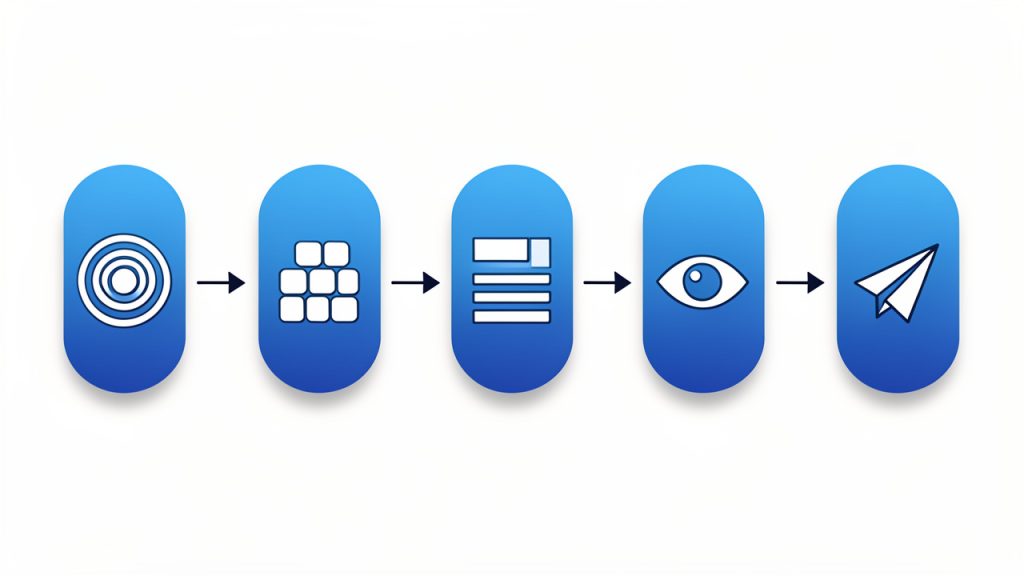
    A simple workflow diagram that shows the recommended manual-post process: 'Define purpose' → 'Gather inputs (title, message, media, category, approvals)' → 'Build for readability (headings, short paragraphs, CTA)' → 'Review' → 'Publish'.

    Start With Purpose, Not the Form

    Many people begin by opening the editor and filling in fields. That is understandable, but it leads to weak posts because the structure appears before the message. A better approach is to define the purpose first. Ask what the post needs to achieve. Is it informing, selling, updating, clarifying, documenting, or prompting action?

    Once the purpose is clear, the rest of the post becomes easier to shape. The title can be more specific. The body can stay focused. The call to action can match the reader’s next move. Without that clarity, even a manually created post can feel scattered.

    This step matters whether you are publishing a blog article, a shop listing, a knowledge base entry, or a platform update. The format may differ, but the principle is constant. A strong post starts with clear intent.

    Gather the Right Inputs Before Publishing

    Manual posting becomes inefficient when people build the content while searching for missing details. That is why preparation matters. Before creating a new post manually, make sure you have the essential inputs ready.

    A short checklist helps:

    • Title or working headline: A clear label you can refine.
    • Core message or objective: The single idea the post must convey.
    • Relevant links, files, or media: Images, downloads, or reference URLs.
    • Category, tags, or placement: Where the post belongs in your system.
    • Review notes or approval status: Any quick confirmations needed before publishing.

    This does not need to become a bureaucratic process. The point is to reduce interruptions. When all inputs are prepared, the act of posting becomes smoother and more accurate.

    For freelancers and solo operators, this step also protects focus. Constantly switching between tabs, assets, and draft notes is mentally expensive. A prepared manual post can be published in minutes. An unprepared one can consume an hour.

    Build the Post for Readability

    A new post should not just exist. It should be easy to scan, understand, and act on. That means strong headings, concise paragraphs, and logical flow. Readers rarely move through digital content in a perfectly linear way. They scan first, judge relevance second, and commit attention only if the content feels worth their time.

    That is why structure matters so much. A manual post gives you the chance to make better editorial choices. You can simplify the headline, tighten the opening, clarify the middle, and make the next step obvious. This is especially useful for businesses that publish information customers actually need, such as pricing updates, service notices, tutorials, FAQs, or announcements.

    Good readability is also a productivity gain. When a post is clearer, it generates fewer support questions, fewer misunderstandings, and fewer internal corrections. One carefully built post can save hours of follow-up.

    Review Before You Publish

    The manual nature of the post is not just about creation. It is also about review. Before publishing, check whether the post is accurate, complete, and aligned with its purpose. Look closely at the title, links, formatting, dates, and any visible calls to action.

    A practical way to think about this is to separate writing from checking. First create the content. Then review it as if you were the reader. This small shift changes what you notice. Errors that felt invisible during writing often become obvious during review.

    If multiple people are involved, even a lightweight approval process helps. One person can draft, another can confirm details. For small teams, that balance preserves speed without sacrificing quality.

    Choose Manual Posting When It Actually Makes Sense

    Not every entry should be manual. Some should absolutely be automated, scheduled, or imported. The smart approach is not to treat manual posting as universally better, but as better for specific situations.

    Manual posting is best for important updates, one-off content, and quality-sensitive entries where control and context awareness are priorities. Automated posting shines for repetitive tasks, scheduled campaigns, and large-volume publishing where speed and consistency matter. Bulk import works for large catalogs or archives, and template-based posting helps with recurring formats that need small edits.

    For small business owners and independent professionals, this often means using a hybrid workflow. Routine items can be templated or automated. High-visibility or sensitive content can be posted manually. That balance keeps operations efficient while protecting quality where it matters most.

    Conclusion

    A carefully created manual post is more than a simple entry made by hand. It is a deliberate publishing choice that gives you control, accuracy, flexibility, and editorial judgment. In a world full of automation, those strengths still matter, and in many cases, they matter more than ever.

    A practical next step is to review your current workflow and identify which kinds of posts truly benefit from human oversight. Then create a simple manual posting process for those cases. When the content is important, visible, or easy to get wrong, a careful manual post is not extra work. It is smart work.

    A well-planned manual post is often the fastest way to publish something with control and precision. It gives you the ability to decide what goes live, when it goes live, and how it appears.

  • New Manual Post: Designing Controlled, Auditable Manual Workflows

    New Manual Post sounds simple, but in practice it sits at the intersection of control, repeatability, and operational efficiency. For developers and efficiency-focused users, that combination matters. Automated systems are fast, but they are not always appropriate. A manual post workflow provides deterministic input, explicit review, and a narrower risk surface when precision matters more than throughput.

    Its real value is that it introduces intentional execution into an otherwise automated environment, which can improve quality, reduce accidental changes, and make sensitive publishing steps easier to audit. When teams need reliable checkpoints, manual posting becomes less of a fallback and more of a deliberate system design choice.

    What is New Manual Post?

    A New Manual Post refers to the creation and submission of a new entry, update, record, or publication through direct human action rather than through a scheduled job, API-triggered workflow, or automation pipeline. The exact implementation varies by platform, but the underlying pattern remains consistent. A user opens an interface, inputs content or data, applies required metadata, performs validation, and then publishes or saves.

    In technical environments, this can describe several distinct actions. It may refer to publishing a blog post in a CMS without a content automation pipeline. It may describe creating a record in an internal admin dashboard. It may also refer to manually posting updates to a knowledge base, support portal, moderation queue, or deployment log. The term is broad, but the operational meaning is stable: a new item is created through manual intervention.

    That distinction matters because manual creation changes the system’s behavior. Automated posts optimize for scale and consistency. Manual posts optimize for judgment and contextual awareness. A human can evaluate edge cases, account for timing, catch formatting anomalies, and recognize whether a post should exist at all. In environments where errors are expensive, that judgment layer is often worth the added time.

    Why the concept matters in modern workflows

    Many teams assume that efficiency means full automation. In reality, efficient systems are usually hybrid systems. They automate repetitive, low-risk steps and preserve manual control for critical decisions. A New Manual Post fits neatly into that model because it can function as a controlled insertion point inside a larger workflow.

    For example, a development team might automate draft generation, metadata suggestions, and validation checks, then require a human to manually create or approve the final post. That approach keeps productivity high while reducing the chance of publishing incorrect or incomplete information. The manual step is not inefficiency. It is a control boundary.

    This is especially useful where content, status updates, or records affect users directly. A mistaken product announcement, a malformed release note, or an incorrectly tagged documentation update can create downstream confusion that costs more than the time saved through automation. Manual posting introduces friction, but often the right kind of friction.

    Key Aspects of New Manual Post

    A New Manual Post workflow is defined by a few core characteristics: human initiation, explicit field entry, context-sensitive review, and direct publication control. These characteristics seem basic, but together they create a workflow pattern with distinct strengths and weaknesses.

    Human initiation is the first defining factor. Nothing happens until a person decides to create the post. That means the act itself is intentional, and that intentionality changes quality outcomes. Teams can align a post with current business conditions, product changes, or internal approvals without needing to redesign automation rules every time a new edge case appears.

    Explicit field entry is the second aspect. In a manual process, titles, tags, descriptions, attachments, references, and publishing settings are often entered or verified one by one. This slows things down slightly, but it also surfaces mistakes that automation can hide. A user noticing a missing category or malformed summary before publication is a common and valuable failure-prevention mechanism.

    Control and accuracy

    The strongest argument for New Manual Post is control. Manual workflows allow contributors to see exactly what is being submitted and in what state. This is particularly relevant for technical documentation, compliance updates, product notices, and any system where publication creates a durable record.

    Accuracy benefits from that visibility. A person reviewing a post can catch semantic issues that validation rules might miss. An automated system may confirm that a field is filled in, but it cannot always determine whether the content is misleading, outdated, or contextually inappropriate. Manual posting adds a layer of editorial or operational sense-checking that is difficult to encode in software.

    That is why many organizations preserve manual post paths even when they have mature automation stacks. They do not keep them because the automation is weak. They keep them because not every publishing decision can be reduced to rules.

    Speed versus reliability

    Manual posting is slower than automated posting, and that trade-off is real. If a team must publish thousands of low-risk records per hour, manual entry is the wrong mechanism. But where reliability is more important than raw throughput, the slower process often produces better outcomes.

    This trade-off resembles the difference between batch processing and supervised release management. Batch systems are excellent for volume. Supervised systems are better for exceptions, approvals, and sensitive outputs. A New Manual Post belongs to the second category. It works best when each post carries enough importance to justify direct attention.

    The practical question is not whether manual posting is slower. It is whether the cost of a bad post exceeds the cost of a slower one. In many cases, particularly in technical or customer-facing contexts, the answer is yes.

    Traceability and governance

    Another key aspect is governance. Manual workflows are easier to pair with role-based access, approval checkpoints, and audit trails. When a post is created manually, the responsible user, timestamp, revision state, and publishing action can be recorded with clarity. That is useful for internal accountability and often essential for regulated environments.

    This is also where platform design matters. A weak manual posting interface can make users inconsistent and error-prone. A strong one supports predictable input, visible status indicators, and structured validation. Tools such as Home can improve this layer by centralizing manual workflows in a cleaner operational environment, reducing friction without removing control.

    When manual posting is the better choice

    There is no universal rule, but certain conditions strongly favor a New Manual Post workflow. It is usually the better option when content is high-impact, when approval context changes frequently, or when the source data is too variable for safe automation.

    The table below summarizes the practical difference between manual and automated posting models.

    Factor New Manual Post Automated Post
    Initiation Human-triggered System-triggered
    Speed Lower Higher
    Context awareness Strong Limited to programmed logic
    Error prevention Better for semantic and judgment-based issues Better for repetitive structural consistency
    Scalability Limited by human capacity High
    Audit clarity Often stronger at action level Strong if logging is well implemented
    Best use case Sensitive, high-value, exception-based publishing High-volume, repeatable, low-risk tasks

    How to Get Started with New Manual Post

    Getting started with New Manual Post begins with clarifying what kind of post is being created, who is responsible for it, and what conditions must be satisfied before publication. Many manual workflows fail because they are treated as informal tasks. A reliable manual post process should still be structured, even if it is not automated.

    The first step is to define the object model. A post may be content, a release note, a support update, a knowledge entry, or an internal record. Once that is clear, the required fields become easier to standardize. Standardization is important because it reduces variation without removing human control. The goal is not to script the post completely, but to ensure that every manually created item meets a minimum quality threshold.

    A practical manual posting setup usually requires:

    1. A defined template, including mandatory fields and preferred formatting.
    2. A responsible owner, who creates or approves the post.
    3. A review rule, even if it is lightweight.
    4. A destination system, such as a CMS, internal admin dashboard, or unified workspace like Home.

    Establish a repeatable workflow

    A manual process becomes efficient only when it is repeatable. That means contributors should know where to start, what sequence to follow, and what validation to perform before publishing. Without that structure, manual posting becomes inconsistent and difficult to scale even at a small team level.

    A good starting workflow often follows a simple sequence. The contributor creates the post, completes required fields, reviews formatting and metadata, verifies timing and destination, and then publishes. If approval is required, the publication step is replaced with a handoff state. Making each stage explicit reduces ambiguity and cuts down on avoidable errors.

    The system interface matters here. If users need to switch between multiple tabs, documents, and dashboards just to create one post, manual work becomes unnecessarily expensive. Consolidated environments are more effective because they reduce context switching. That is one reason platforms like Home are valuable. They support efficiency not by forcing automation everywhere, but by making controlled manual actions faster and cleaner.

    Define validation before publication

    The most common weakness in a New Manual Post process is the absence of clear validation. People assume manual means self-explanatory. It rarely does. Even experienced users benefit from a short, consistent verification pass before final submission.

    Validation should focus on correctness, completeness, and destination integrity. Correctness means the content itself is accurate. Completeness means required fields, tags, references, and attachments are present. Destination integrity means the post is going to the right place, under the right visibility, at the right time. A manual post can be well written and still fail operationally if it is published in the wrong environment.

    Teams with frequent manual posting tasks often benefit from a lightweight checklist embedded directly in the interface. This is more effective than storing process documentation in a separate location that users forget to consult. The best validation is visible at the moment of action.

    Reduce friction without removing oversight

    The phrase “manual process” often suggests inefficiency, but that is usually a design problem rather than an inherent limitation. Manual posting becomes painful when interfaces are cluttered, field requirements are unclear, and users lack reusable patterns. Improve those three areas, and the process becomes much more efficient.

    Templates are the first lever. They allow users to start from a known-good structure rather than a blank screen. Sensible defaults are the second lever. If a category, visibility level, or status is usually the same, the system should prepopulate it while still allowing edits. Contextual prompts are the third lever. They remind users what matters at the point of execution rather than burying guidance in documentation.

    The objective is not to eliminate the manual step at all costs. The objective is to remove unnecessary effort while preserving human review where it creates value.

    Practical implementation considerations

    For developers, the term New Manual Post often raises an implementation question: how should a system support manual creation in a technically sound way? The answer usually involves interface design, permissions, auditability, and state management rather than complex algorithms.

    A well-designed manual post system should clearly separate draft, review, and published states. It should also maintain revision history and identify the actor responsible for each transition. This makes the workflow legible and helps teams debug process failures. If a bad post goes live, the question should not be “what happened?” but “which transition failed and why?”

    Permissions are equally important. Not every user who can draft should be able to publish. Not every user who can publish should be able to edit historical records. Manual systems become safer when these responsibilities are explicit. That applies whether the posting environment is a custom internal tool or a packaged platform.

    Manual posting in hybrid systems

    The most effective real-world architecture often combines manual and automated components. For instance, metadata might be suggested automatically, formatting may be validated by the system, and notification delivery can occur after publication without human involvement. The actual creation and release of the post, however, remains manual.

    This hybrid model gives teams the best of both approaches. Automation handles repetitive mechanics. People handle judgment, timing, and exception management. New Manual Post is therefore not the opposite of automation. It is often the human checkpoint inside an automated ecosystem.

    That framing is useful because it prevents false choices. Teams do not need to decide between full manual control and full automation. They can design for both, assigning each part of the workflow to the mechanism that handles it best.

    Conclusion

    New Manual Post is more than a basic publish action. It is a workflow pattern built around control, accuracy, and accountable execution. For developers and efficiency-minded teams, its relevance comes from the fact that not every task should be automated, especially when a post carries operational, customer-facing, or compliance risk.

    The next step is to evaluate where manual posting currently exists in the workflow, where it should exist, and where it creates unnecessary friction. If the process is critical, formalize it. If the interface is messy, simplify it. If the team is juggling too many tools, consider a centralized environment such as Home to make manual posting faster without sacrificing oversight.