JNTZN

Tag: favicon

  • How to Convert a PNG into a Sharp ICO Icon

    How to Convert a PNG into a Sharp ICO Icon

    A blurry or badly sized icon can make even a polished app, website, or desktop shortcut look unfinished. If you have a logo, symbol, or brand mark in PNG format and need it to work as an icon, converting a PNG into an ICO file is often the fastest way to get a clean, usable result.

    This matters more than many people think. Small business owners use icons for web favicons and branded shortcuts. Freelancers need them for client deliverables. Developers rely on ICO files for Windows applications, installers, and desktop tools. If you are looking for an easy way to turn a PNG into an ICO file, the good news is that the process is simple once you understand what actually changes during the conversion.

    What is converting a PNG to an ICO file?

    Converting a PNG into an ICO file means taking a standard image format and packaging it into a format designed specifically for icons. A PNG file is great for storing high-quality images with transparency. An ICO file, by contrast, is built for icon use, especially in Windows environments and sometimes for favicon compatibility in browsers and web projects.

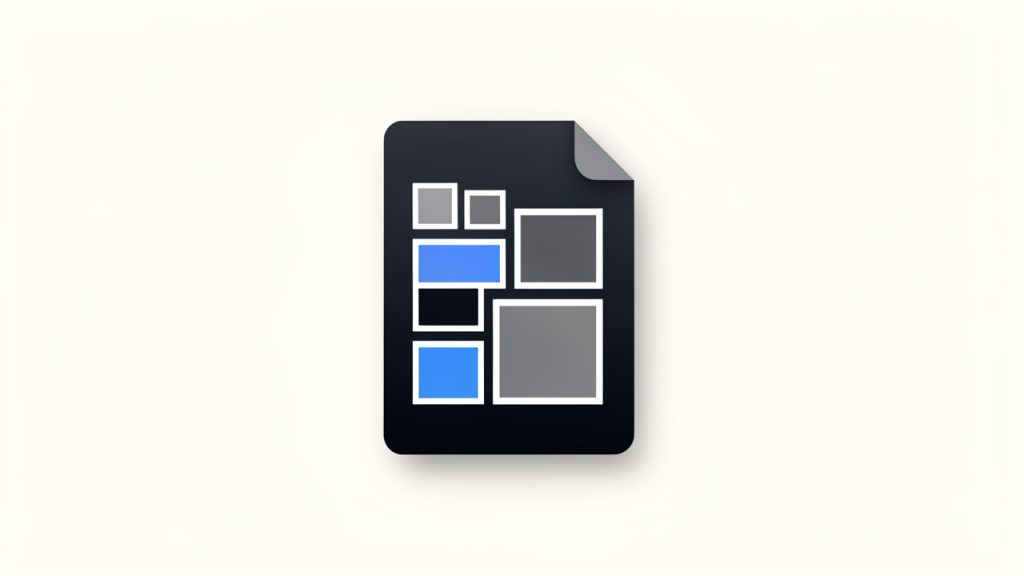
    The important difference is not just the file extension. An ICO file can contain multiple image sizes in one file, which allows the operating system or browser to display the icon clearly at different resolutions. That is why a proper icon can look sharp in a browser tab, a taskbar, a file explorer view, or a desktop shortcut, even though each of those contexts uses a different size.

    A single ICO file icon with a stack or grid of smaller images inside it, labeled with common sizes (16x16, 32x32, 48x48, 64x64, 128x128, 256x256) to show that one ICO can contain multiple embedded sizes.

    For many users, converting a PNG into an ICO file sounds like a basic file conversion. In reality, it is also a formatting and optimization step. You are not simply renaming an image. You are preparing it to function well as an icon, which means considering dimensions, transparency, sharpness, and how the design reads at very small sizes.

    Why ICO still matters

    Even though PNG is widely supported and often preferred for general graphics, ICO remains relevant because of how Windows and certain platforms handle icons. If you are creating a desktop application, a custom executable, an installer, or even a website that needs broad favicon support, the ICO format is often still expected.

    This is especially important for productivity-minded users who want their tools and assets to work without friction. An icon is a small detail, but it affects recognition, consistency, and professionalism. A clean ICO file helps your project look intentional from the first click.

    Common use cases

    A converted icon is useful in more places than most people realize. Web designers use ICO files for favicons. Software developers use them for application branding. Business owners use custom icons for internal tools, shortcuts, and branded resources.

    If you have a PNG logo, social profile image, or minimal symbol, you may already have everything needed to create an icon. The real task is making sure it converts in a way that preserves clarity, especially at small sizes where visual noise becomes a problem.

    Key aspects of converting a PNG into an ICO file

    The quality of an ICO file depends less on the converter itself and more on the source image and export choices. A great converter helps, but it cannot rescue a poor design. If your original PNG is overcrowded, low resolution, or lacks contrast, the final icon will struggle no matter which tool you use.

    That is why successful conversion starts with thinking like an icon designer. Icons are tiny, functional graphics. They need to be recognized quickly. A detailed logo that looks fantastic on a website header may become unreadable when reduced to 16×16 pixels.

    Size and resolution matter

    One of the biggest strengths of the ICO format is support for multiple embedded sizes. Common icon dimensions include 16×16, 32×32, 48×48, 64×64, 128×128, and 256×256. A good converter that creates ICO files from PNG images often lets you export several of these at once, which improves compatibility across devices and contexts.

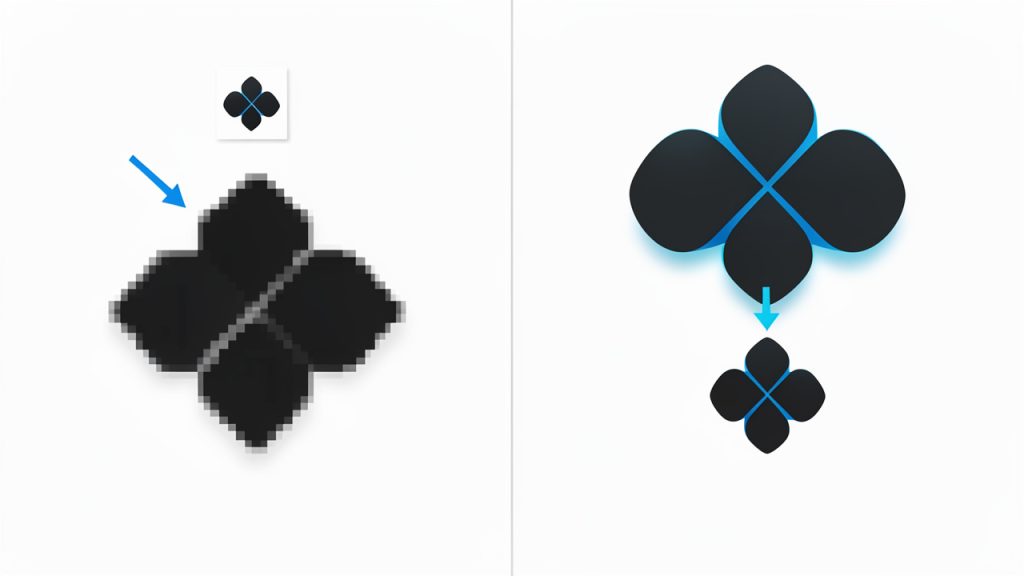
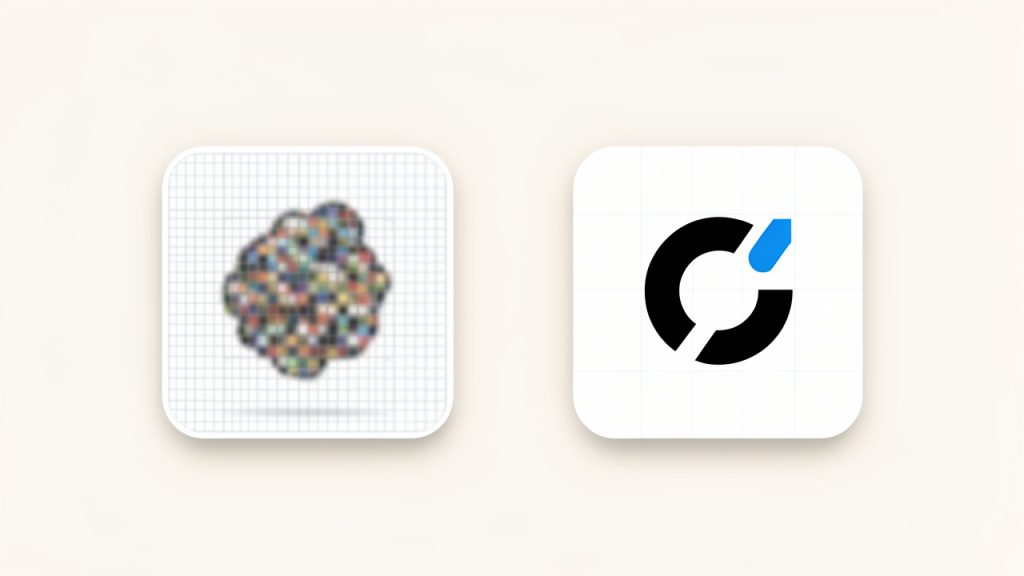
    If you start with a very small PNG and try to scale it up, the result can look soft or pixelated. It is usually better to begin with a larger, high-resolution PNG and let the converter generate smaller icon sizes from that source. This gives the file more visual information to work with and generally produces a cleaner result.

    Side-by-side comparison showing the same logo: left column uses a small low-resolution PNG scaled up (blurry/pixelated), right column uses a large high-resolution PNG scaled down (crisp). Include captions like "Start small and scale up -> blurry" and "Start large and scale down -> clean."

    Transparency is a major advantage

    PNG files are popular because they support transparent backgrounds, and this carries over well into ICO conversion. Transparency is crucial for modern icons because it allows the shape to sit naturally on different backgrounds without an ugly white box around it.

    That said, not all transparency behaves perfectly if the source image has rough edges, faint anti-aliasing, or poor contrast. Before conversion, it helps to inspect your PNG closely. A polished transparent edge can make the difference between an icon that looks crisp and one that appears messy.

    Simplicity wins at small sizes

    An icon is not a flyer. It is not a banner. It has a very small job, and it needs to do it fast. The best icon designs use simple shapes, strong contrast, and minimal text. In fact, text often performs badly in icons unless it is a single letter or an extremely bold abbreviation.

    Think of it like signage from across a room. If you cannot recognize the mark quickly, it is probably too complex. When converting a PNG into an ICO file, this design principle becomes even more important because the final file will likely be viewed in multiple reduced sizes.

    One file, multiple contexts

    The reason ICO is still so practical is that one file can serve many visual contexts. A browser may use one embedded size, while a Windows desktop shortcut uses another. This flexibility makes the format efficient, but it also means your design has to hold up under different viewing conditions.

    A strong icon looks consistent whether it is tiny in a browser tab or slightly larger in a taskbar. That consistency is what makes branding feel cohesive. It also reduces the need to manually create separate assets for every environment.

    Choosing the right tool

    Most users today convert a PNG into an ICO file with an online tool, and for good reason. Web-based converters are fast, free in many cases, and require no installation. That makes them especially attractive for freelancers, small teams, and anyone working on quick deliverables.

    Still, not all tools are equal. Some compress too aggressively. Others offer limited size options or strip useful quality settings. If privacy matters, such as when working with unreleased branding assets or client materials, an offline converter or design application may be the better option.

    The table below highlights the trade-offs between common approaches.

    Method Best For Strengths Limitations
    Online converter Quick one-off tasks Fast, easy, no install required May have file limits or privacy concerns
    Design software export Designers and brand teams Better control over sizing and visual quality Can take longer and may require paid software
    Developer toolchain App and software projects Easy to integrate into workflows Less ideal for non-technical users
    Desktop converter app Frequent offline use Good privacy, often supports batch processing Requires installation

    How to get started converting a PNG into an ICO file

    If you want a smooth result, treat conversion as a short workflow rather than a single button click. The process is still easy, but a little preparation helps you avoid the most common problems, such as fuzzy edges, unreadable details, or incorrect sizing.

    Start by reviewing the PNG you plan to use. Is it high resolution? Does it have a transparent background? Is the design still recognizable when shrunk dramatically? These questions matter because icons live in tiny spaces where every pixel counts.

    Prepare the PNG first

    Before you convert anything, clean up the source file. Remove unnecessary background areas and make sure the graphic is centered. If the image includes extra whitespace, the icon may appear visually smaller than intended once converted.

    You should also test how the PNG looks at reduced dimensions. Shrink it to a small preview and see whether the key shape still reads clearly. If not, simplify it before conversion. This is often the difference between a professional icon and one that feels improvised.

    Follow a simple conversion process

    For most users, the practical steps are straightforward:

    1. Choose a clean PNG with high resolution and transparency if possible.
    2. Upload it to a trusted online converter or open it in software that supports ICO export.
    3. Select multiple icon sizes if that option is available.
    4. Download and test the ICO file in the environment where it will be used.

    That final step matters. A file that looks fine in a preview window may behave differently once assigned to a shortcut, browser tab, or application. Testing saves time and avoids last-minute fixes.

    Best practices for better results

    A few practical habits can improve your icon quality immediately. Use a square image whenever possible, because icons are typically displayed in square dimensions. Keep the design centered and avoid thin lines that disappear at small sizes.

    It also helps to prioritize contrast and shape recognition over decorative detail. If your brand mark is intricate, consider making a simplified icon version rather than forcing the full logo into an ICO file. Many strong brands use a minimal symbol for icons and reserve the full logo for larger placements.

    Common mistakes to avoid

    One common mistake is assuming a large logo will automatically scale down well. It often does not. Another is using a JPG as the starting point, then converting that to PNG and finally to ICO. Since JPG does not support transparency and may introduce compression artifacts, this usually leads to lower-quality results.

    Users also run into issues when they export only one size. A single-dimension icon may work in one place but look poor elsewhere. Whenever possible, choose a conversion method that includes several sizes inside the ICO file.

    The table below shows frequent problems and how to solve them.

    Problem Likely Cause Better Approach
    Blurry icon Source PNG too small Start with a larger, sharper PNG
    White box around icon No real transparency Use a transparent PNG source
    Unreadable at small size Design too detailed Simplify the icon before converting
    Looks fine in one place, bad in another Only one size included Export an ICO with multiple sizes
    Soft or jagged edges Poor source quality or bad scaling Clean the PNG and test scaling first

    When an online converter is the best choice

    For many readers, an online converter that creates ICO files from PNG images is the most practical option. It is fast, accessible from any device, and usually free for basic use. If you only need a favicon or a desktop icon once in a while, this approach is hard to beat.

    The key is choosing a tool that is simple and trustworthy. Look for support for multiple icon sizes, transparent backgrounds, and straightforward downloads. If a site feels cluttered, confusing, or pushes aggressive ads and redirects, it is usually worth trying a different option.

    When you may need more control

    If you are preparing assets for a client project, software release, or branded product, you may want more than a quick conversion. In those cases, using design software or a dedicated desktop tool gives you better control over export settings, crisp edges, and file testing.

    Developers may also prefer a repeatable workflow, especially when shipping updates regularly. That does not make the process harder. It simply means the icon becomes part of a broader asset pipeline rather than a one-time task.

    Conclusion

    Turning a PNG into an ICO file is a small task with a visible impact. Done well, it gives your app, shortcut, website, or tool a cleaner and more professional presence. The core idea is simple, but the best results come from understanding that icon conversion is really about format, sizing, and clarity, not just changing a file extension.

    Your next step is straightforward. Start with the cleanest PNG you have, make sure it works visually at small sizes, then convert it into an ICO file that includes multiple dimensions. Test it where it will actually appear. That extra minute of care is what turns a basic image into an icon that looks sharp, polished, and ready to use.

  • How to Convert a JPG into a Professional ICO File

    How to Convert a JPG into a Professional ICO File

    A simple image file can quietly make your brand look polished, or make it look unfinished. If you have ever uploaded a logo, favicon, or app icon and realized the platform wants an ICO file instead of a JPG, you are not alone. This is one of those small technical tasks that seems trivial until it blocks a website launch, desktop shortcut, or software packaging workflow.

    Converting a JPG to an ICO file is usually easy, but doing it well takes a little more care than most people expect. The right dimensions, transparency, sharpness, and file quality all affect how your icon appears in browser tabs, Windows folders, shortcuts, and app interfaces. A rushed conversion can leave you with blurry edges, awkward backgrounds, or an icon that looks fine in one place and terrible in another.

    What Is Converting a JPG to an ICO File?

    A conversion from a JPEG image into an ICO file turns a photograph-style image into the icon format commonly used by Windows and often associated with website favicons and application icons. While a JPG is designed for photographs and general image sharing, an ICO file is built specifically to display small icons clearly across different sizes.

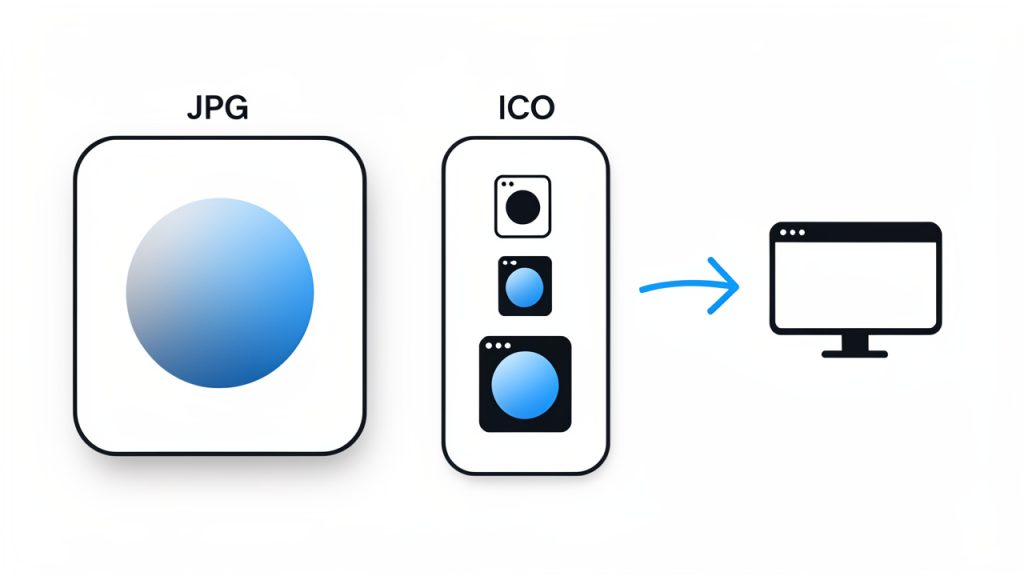
    An ICO file can contain multiple image sizes in one file, which allows the operating system or browser to choose the most appropriate version depending on where the icon is displayed. That is why a proper icon can still look crisp at 16×16 pixels and remain usable at 32×32 or 64×64.

    Side-by-side diagram showing a single JPG image on one side and an ICO file on the other containing multiple embedded icons at different pixel sizes (16x16, 32x32, 48x48, 64x64). Label the ICO variants and show an arrow indicating the OS/browser choosing the appropriate size.

    This difference matters more than it seems. A JPG usually contains a single flat image, often compressed in a way that sacrifices some fine detail. An ICO file, in contrast, is optimized for clarity at small dimensions. If the source image is too detailed, too rectangular, or lacks contrast, the final icon may be technically correct but visually weak.

    For small business owners and freelancers, this often comes up when setting up a favicon for a website, creating a branded desktop shortcut, or preparing assets for a Windows application. For developers, it may be part of the packaging process for software, browser extensions, or desktop tools. In all of these cases, the goal is the same: create a small, recognizable image that still works when scaled down dramatically.

    Key aspects of converting JPG images to ICO files

    File format differences matter

    A JPG is excellent for photos because it keeps file sizes low while preserving acceptable visual quality. The trade-off is that JPEG compression can introduce artifacts, especially around text, logos, and hard edges. Those imperfections become much more visible when the image is reduced to icon size.

    An ICO file serves a different purpose. It is designed for clarity at small dimensions, not for photographic realism. In practice, clean lines, strong contrast, and simple shapes perform far better than busy graphics. If your source image is a detailed banner or a full-color photograph, converting it directly into an icon may technically work, but the result often looks muddy and unreadable.

    Size and scalability are critical

    Most icons are viewed at very small sizes. A logo that looks sharp on a website header at 500 pixels wide may become impossible to recognize at 16×16. That is why resizing is not just a mechanical step, it is a design decision.

    A good icon usually starts with a simple, centered subject. If your JPG includes extra background space, long text, or multiple visual elements, the icon will likely lose impact. Cropping and simplifying the image before conversion often makes a bigger difference than the conversion tool itself.

    Comparison of two icons at tiny size (16x16): one produced from a detailed photo/logo that looks muddy and unreadable, and one from a simplified monogram/symbol that remains clear and recognizable. Include captions like 'Too detailed → unreadable' and 'Simple → recognisable'.

    The most common icon sizes include 16×16, 32×32, 48×48, and 64×64 pixels. Some tools let you generate several sizes in a single ICO file, which is usually the best option. This allows systems to choose the size they need rather than scaling one version up or down.

    If you are creating a favicon, your smallest size matters a lot. Fine details vanish quickly. Test whether the icon still looks recognizable at 16×16 before finalizing it. If it does not, the design likely needs to be simplified rather than merely resized.

    Transparency can be a hidden issue

    One of the biggest limitations of a JPG source file is that JPEG does not support transparency. If your original image has a white or colored background, that background will usually stay visible after conversion unless you edit the image first.

    This becomes especially noticeable when the icon is displayed against dark mode interfaces, colored browser themes, or custom desktop backgrounds. A white box around a logo can make an otherwise professional brand asset look unfinished. If transparency matters, it may be better to first edit the image in a format like PNG, remove the background, and then create the ICO file from that cleaner source.

    For users who only have a JPG available, this does not mean the project is doomed. It simply means expectations need to be realistic. Some icons work perfectly well with a solid background, especially if they are designed intentionally as square badges. Others need a transparent edge to blend naturally into their environment.

    Quality depends on the source image

    The phrase garbage in, garbage out applies here. A low-resolution JPG will not magically become a sharp icon because it has been converted to ICO. If the original image is blurry, heavily compressed, or poorly cropped, the final result will reflect those flaws.

    The best source images are usually high-resolution, square or near-square, and visually simple. Logos, initials, symbols, and bold marks convert well. Detailed flyers, photos of people, and full website screenshots do not. Think of an icon like a road sign. It needs to be understandable instantly, even from a distance, or in this case, at a tiny scale.

    Use case shapes the right output

    Not every icon is for the same environment. A favicon for a website has different practical needs than a Windows application icon. A browser tab icon needs to be recognizable at a glance and often appears at very small dimensions. A desktop application icon may appear in shortcuts, file explorers, taskbars, and installation files, sometimes at several sizes.

    For that reason, a smart JPG-to-ICO workflow considers where the icon will actually be used. If the file is for a website, prioritize simplicity and contrast. If it is for a software product, consider multiple sizes and how the icon will appear on both light and dark backgrounds.

    How to get started converting a JPG to an ICO file

    Start with the right image

    Before you use any converter, look at the JPG critically. Ask whether the image is truly suited to icon use. If it includes small text, busy textures, or multiple focal points, simplify it first. Often the best approach is to isolate the brand mark, monogram, or symbol rather than using the full logo lockup.

    If possible, crop the image into a square. Most icons display best in square proportions, and many conversion tools will otherwise force the image into a square area in ways that create awkward spacing or distortion. Centering the important visual element before conversion gives you much more predictable results.

    Choose an appropriate size

    Generate icon sizes that match common usage, such as 16×16, 32×32, 48×48, and 64×64. If your tool allows multiple embedded sizes in one ICO file, use that feature so systems can pick the best resolution.

    If you are creating a favicon, your smallest size matters a lot. Fine details vanish quickly, so simplify the design until it remains readable at 16×16.

    Use a reliable conversion tool

    Many online tools can convert a JPG to an ICO file in seconds. That convenience is useful, especially for freelancers or small teams who do not want to install extra software for a one-time task. Still, not all converters produce equally clean results. Some compress aggressively, some offer limited size options, and some do not preserve image quality as well as expected.

    When evaluating a tool, focus on whether it lets you control icon dimensions, generate multiple sizes, and preview the result. If the task is business-critical, such as preparing a branded favicon for a live website or packaging a software release, it is worth testing more than one tool and comparing outputs side by side.

    Follow a simple workflow

    For most users, the process is straightforward. Select a clean JPG image that is high-resolution and square if possible. Crop or simplify the image so the core visual remains clear at small sizes. Upload it to a converter that supports ICO output and size selection. Download and test the file in the environment where it will actually appear.

    Testing in context is often skipped, and it should not be. An icon that looks fine in a preview may appear too small, too soft, or too cluttered once placed in a browser tab or Windows shortcut. Real-world testing is part of the conversion process.

    Check the result in context

    A favicon should be tested in a browser tab, bookmark bar, and mobile browser if relevant. A desktop icon should be viewed on different background colors and at different scaling settings. Developers should also verify that the file is accepted by the build system, installer, or framework they are using.

    This context-based testing separates a merely converted file from a usable one. It is the difference between checking a box and creating an asset that actually supports brand recognition and usability.

    Common mistakes to avoid

    Here are predictable problems and better alternatives:

    • Using a detailed photo: Icon becomes blurry and unreadable, use a simple symbol, logo mark, or initial instead.
    • Starting with a low-resolution JPG: Final ICO looks soft or pixelated, use the highest-quality source available.
    • Ignoring background color: White or awkward box appears around icon, edit the background first or use a cleaner source image.
    • Using only one size: Icon scales poorly in different contexts, create an ICO with multiple size variants.

    Conclusion

    Converting a JPG to an ICO file is simple on the surface, but quality depends on more than just uploading and downloading. The source image, its clarity at small sizes, the presence or absence of transparency, and the intended use all shape whether the final icon looks professional or improvised.

    If you need an icon for a website, app, shortcut, or branded digital asset, start with the cleanest possible image and think like a designer, not just a file converter. A strong icon is small, clear, and instantly recognizable. Your next step is straightforward: choose your best source image, create the ICO file, and test it where your audience will actually see it.