JNTZN

Tag: OCR

  • How to Convert a PDF into Images

    A PDF that looks perfect on your screen can fall apart the moment you need it as an image. Text turns fuzzy, transparent backgrounds disappear, file sizes explode, or a multi-page document suddenly becomes a folder full of confusing filenames.

    If you have ever tried to turn a PDF into a shareable thumbnail, a slide image, a website asset, or an OCR-ready scan, you already know that a simple export is not always enough. If you have ever tried to turn a PDF into a shareable thumbnail, a slide image, a website asset, or an OCR-ready scan, you already know that a simple export is not always enough.

    The good news is that converting a PDF to an image is straightforward once you understand the trade-offs. The right format, the right DPI, and the right tool make the difference between a crisp, lightweight result and a blurry, oversized mess. Whether you are a small business owner preparing product sheets, a freelancer sending visual proofs, a developer building an automated workflow, or a productivity-minded user trying to streamline daily tasks, there is a practical path that fits.

    This guide explains how to convert a PDF into an image using online tools, desktop apps, command-line utilities, and developer libraries. It also covers image formats, quality settings, privacy concerns, batch processing, and troubleshooting so you can get the result you want the first time.

    Introduction: Why convert a PDF into an image?

    Converting a PDF into an image solves a surprisingly wide range of everyday problems. For websites, it is useful for generating page previews, thumbnails, and visual snippets that load quickly in browsers.

    For presentations and social sharing, an image is often easier to place, crop, or embed than a full PDF. Teams also convert pages from PDFs into images for annotation, approvals, or chat-based collaboration where image previews are more convenient than document attachments.

    There are also technical and archival reasons. Some users rasterize PDF pages for OCR workflows, especially when dealing with scans or inconsistent source files. Others need image outputs for print proofs, legacy systems, or software that accepts PNG, JPEG, or TIFF but not PDF. In legal, education, and operations workflows, converting selected pages into images can be a fast way to preserve visual appearance when layout matters more than editability.

    The catch is that conversion changes the nature of the file. A PDF can contain vector graphics, embedded fonts, transparency, layers, and multiple pages. An image is usually a flat raster snapshot. That means choices around format, resolution, and compression directly affect sharpness, color fidelity, transparency, and file size. Common mistakes include exporting at too low a DPI, choosing JPEG for line art, or forgetting that a 20-page PDF may become 20 separate files.

    You will also run into format choices quickly. JPEG is good for photos and smaller file sizes. PNG is better for screenshots, line art, and transparency. TIFF is common in archival and print workflows. WebP offers modern compression benefits for web use, while BMP is rarely the best option except in niche legacy environments. The right choice depends on how and where the image will be used.

    Understanding the technical differences: PDFs vs. raster images

    Vector vs. raster, what changes during conversion

    A PDF is more like a set of instructions than a photograph. It can say, “draw this letter in this font at this size,” or “place this line exactly here.” That is why text in a PDF often stays sharp no matter how far you zoom in. When you convert that same page to an image, those instructions are flattened into a grid of pixels.

    This matters most for text and diagrams. A clean vector chart in a PDF can look razor-sharp at any size. Once rasterized, its quality depends entirely on the resolution you choose during export. If you convert a page at 72 DPI, small text may look soft or jagged. At 300 DPI, that same page usually looks much better, especially for print or OCR.

    How resolution affects quality and file size

    DPI, or dots per inch, controls how much detail ends up in the image. Higher DPI means more pixels, which usually means better visual quality and larger files. Lower DPI keeps files small but can make text, logos, and thin lines look blurry.

    A practical way to think about it is this: 72 to 150 DPI is usually fine for web previews, email sharing, and on-screen viewing. 300 DPI is the standard safe choice for print and OCR. If the source PDF contains fine typography, engineering drawings, or detailed tables, going above 300 DPI can help, but file sizes increase fast.

    Color profiles, transparency, and compression artifacts

    Not all output issues are caused by DPI. Color profiles can shift how images appear across devices and printers. A PDF prepared for print may use CMYK color data, while many image workflows expect RGB. If the conversion tool handles color poorly, the result can look dull or off-brand.

    Transparency is another frequent surprise. PDFs can support transparent elements, but some image formats cannot preserve them well. PNG handles transparency reliably. JPEG does not, so transparent areas may become white or another flat background color.

    Compression also changes the result. JPEG uses lossy compression, which is efficient for photos but can create visible artifacts around text and edges. PNG and TIFF can preserve detail more cleanly, although often at the cost of larger files.

    Multi-page PDFs and output behavior

    A PDF can contain one page or one hundred. An image file usually represents a single page or frame. That is why most PDF-to-image workflows export each page as a separate file. If your PDF has ten pages, expect ten outputs unless your tool offers a contact sheet or combined image option.

    Naming matters here. Good tools automatically generate filenames like document-1.png, document-2.png, and so on. Poorly configured exports can overwrite earlier pages or create inconsistent numbering. For batch workflows, predictable naming is essential.

    Choose the right image format for your needs

    JPEG for photographs and smaller files

    JPEG is the best fit when your PDF pages contain photographs, gradients, or scanned imagery and you want smaller file sizes. It is widely supported, easy to share, and ideal for web previews where perfection is less important than speed.

    The trade-off is quality loss. Each time a JPEG is compressed, some detail disappears. That is usually acceptable for photo-heavy pages, but not great for text-heavy handouts, UI screenshots, or logos. If you choose JPEG, use moderate to high quality settings to reduce visible artifacts.

    PNG for text, line art, and transparency

    PNG is often the safest all-around option when clarity matters. It preserves sharp edges well, which makes it especially useful for screenshots, diagrams, invoices, forms, slide exports, and pages with transparent backgrounds.

    If your PDF contains simple graphics, black text on white backgrounds, or interface elements, PNG usually looks cleaner than JPEG. The downside is larger file sizes, especially for high-resolution pages with photographic content.

    TIFF for archival and print workflows

    TIFF is a strong choice for archival storage, publishing pipelines, and print production. It supports lossless compression and high quality, which makes it valuable when image integrity matters more than convenience.

    The cost is compatibility and size. TIFF files are often much larger than JPEG or PNG, and they are not as convenient for casual web sharing. For internal archives, print vendors, and document imaging systems, though, TIFF remains highly relevant.

    WebP and newer formats

    WebP is attractive for websites because it can deliver smaller files than JPEG and PNG while still maintaining good visual quality. If your main goal is faster page loads, WebP is worth considering.

    Support is now broad in modern browsers, but some older systems and workflows still prefer PNG or JPEG. For public-facing web assets, WebP is often a smart optimization step after conversion rather than the initial export format.

    When to use SVG or keep vector output

    Sometimes the best PDF to image workflow is not turning the content into a raster image at all. If the page is mostly vector art, icons, or simple illustrations, exporting to SVG can preserve sharpness and scalability. This is especially useful for logos, diagrams, and web graphics.

    If your end use accepts PDF directly, keeping the original format may still be the best decision. Converting to an image makes sense when compatibility, display, or workflow requirements demand it, not just because it seems simpler.

    Methods to convert PDF to image: tools and workflows

    There is no single best tool for every situation. The right method depends on your priorities: convenience, privacy, price, automation, or output control.

    Online converters

    Online converters are the fastest route for occasional tasks. You upload a file, choose PNG or JPEG, click convert, and download the output. For small, non-sensitive PDFs, this is hard to beat for convenience. Many users like these services because they work on any device and require no installation.

    The weakness is privacy. If your PDF contains contracts, invoices, client work, personal data, or internal documents, uploading it to a third-party service may be a bad idea. You also have limited control over rendering settings, color handling, and advanced export options.

    Desktop software

    Desktop tools give you more control and usually better privacy. Adobe Acrobat offers reliable export options and strong support for professional PDFs. Preview on macOS is quick and built in, making it a great lightweight option for Mac users. GIMP and IrfanView can help with opening and exporting PDFs, especially when you also want image editing or batch actions.

    For most small business and freelance workflows, desktop software is the sweet spot. It balances ease of use with output quality, and it keeps files local.

    Command-line tools

    For power users, ImageMagick, Ghostscript, and pdftoppm from Poppler are excellent. They offer precise control over DPI, file naming, page ranges, and automation. These tools are widely used in Linux environments, CI pipelines, server-side jobs, and batch processing scripts.

    The main barrier is usability. Command-line tools are fast and powerful, but they are less approachable if you are unfamiliar with terminal commands. Once configured, though, they are often the most efficient option.

    Programming libraries and APIs

    Developers integrating PDF to image conversion into apps often use Python libraries such as pdf2image and PyMuPDF, or Node tools such as pdf-poppler and pdfjs. These libraries are useful when conversion needs to happen in a web app, a backend service, or an internal automation process.

    An API-based approach also helps when you need scale, event-driven processing, or integration with storage, OCR, or document workflows. The trade-off is implementation effort and the need to manage rendering dependencies.

    Step-by-step how-tos

    Online converter workflow

    If you are using an online converter for a quick page export, follow this simple process:

    1. Upload the PDF to a reputable converter.
    2. Choose the output format, usually PNG for clarity or JPEG for smaller size.
    3. Set page range or select a single page if the tool supports it.
    4. Adjust quality or resolution settings when available.
    5. Download the output and verify text sharpness before sharing.

    For safety, avoid this method for sensitive documents unless the provider clearly states deletion timelines, encryption practices, and data retention limits.

    Adobe Acrobat export steps

    In Adobe Acrobat, open the PDF and choose the export option from the tools menu. Select Image as the export category, then choose JPEG, PNG, or TIFF. If settings are available, choose the desired resolution and color space before exporting. Acrobat generally handles fonts and layout well, so it is one of the more dependable options for client-facing materials.

    macOS Preview quick steps

    Preview can open a PDF page and export it as an image with very little friction. Open the PDF, navigate to the page you want, then use the export command and pick PNG or JPEG as the output format. For simple one-page extractions, it is fast and effective. For advanced multi-page export or batch processing, you will usually need a more specialized tool.

    ImageMagick example

    If you want command-line control, ImageMagick remains a popular choice. A common example is:

    magick -density 300 input.pdf output.png
    

    This command renders the PDF at 300 DPI before conversion. That density setting is important. Without it, the output may default to a lower resolution and appear blurry.

    For multi-page PDFs, ImageMagick typically creates separate files automatically, often with numbered suffixes. If you need only one page, you can specify the page index:

    magick -density 300 "input.pdf[0]" output-page1.png
    

    pdftoppm high-quality export examples

    Poppler’s pdftoppm is often preferred for reliable PDF rendering and speed. To export a PDF to PNG at 300 DPI, use:

    pdftoppm -png -r 300 input.pdf output
    

    This creates files like output-1.png, output-2.png, and so on. If you want only a specific page, add page limits:

    pdftoppm -png -r 300 -f 1 -singlefile input.pdf output-page1
    

    For JPEG output, switch the format flag:

    pdftoppm -jpeg -r 200 input.pdf output
    

    Python example with pdf2image

    For developers, pdf2image offers a practical Python route. First install the package and make sure Poppler is available on your system.

    from pdf2image import convert_from_path
    
    pages = convert_from_path("input.pdf", dpi=300)
    pages[0].save("page-1.png", "PNG")
    

    That handles a single page save after converting all pages. For a multi-page export:

    from pdf2image import convert_from_path
    
    pages = convert_from_path("input.pdf", dpi=300)
    
    for i, page in enumerate(pages, start=1):
        page.save(f"output-{i}.png", "PNG")
    

    This approach is useful in dashboards, upload pipelines, and automated document services where PDFs need to become images on demand.

    Optimizing output: quality, size, and accessibility

    A good conversion is not just about getting an image. It is about getting an image that is sharp enough, small enough, and usable enough for its final destination.

    For web use, 72 to 150 DPI is usually enough. For OCR and print, 300 DPI is the standard recommendation. If you go much higher without a clear reason, you often get larger files with little visible improvement. This is especially true for plain text documents destined for screens.

    Compression comes next. JPEG quality settings should be high enough to avoid ugly artifacts around letters and edges. PNG files can often be optimized after export with tools like pngquant, while JPEG files can be trimmed with jpegoptim. These tools reduce size without forcing a full re-render from the original PDF.

    pngquant --quality=65-85 --ext .png --force output.png
    
    jpegoptim --max=85 image.jpg
    

    Resizing is another simple win. If you converted a letter-size page at 300 DPI and only need a thumbnail for a website, the exported file is probably far larger than necessary. Reducing dimensions after conversion can dramatically improve load times.

    Accessibility is often overlooked. Once text becomes an image, screen readers cannot interpret it unless you add alt text where the image is published. If the original purpose of the PDF was to convey readable text, ask whether rasterizing is actually the right move. In many cases, keeping the PDF searchable or applying OCR is more accessible than flattening everything into pixels.

    Batch processing and automation strategies

    When you need to convert more than a few files, manual export becomes tedious fast. Batch processing saves time, but it also introduces consistency concerns around naming, logging, and error handling.

    A simple Bash loop with pdftoppm can process an entire folder of PDFs:

    for file in *.pdf; do
      base="${file%.pdf}"
      pdftoppm -png -r 300 "$file" "$base"
    done
    

    That script converts every PDF in the current directory into numbered PNG files. If you prefer ImageMagick, a similar loop works there too:

    for file in *.pdf; do
      base="${file%.pdf}"
      magick -density 300 "$file" "${base}.png"
    done
    

    For no-code automation, watch-folder workflows can be surprisingly effective. On macOS, Automator or Shortcuts can detect new PDFs in a folder and trigger conversion steps. In cloud workflows, Zapier and Make can move files between storage systems and APIs, though they are better for orchestration than heavy rendering.

    On servers, scaling means thinking about memory and concurrency. PDF rendering can be CPU-intensive, especially with high DPI settings or large batches. A queue-based architecture with worker limits is safer than trying to process everything at once. Logging should capture source filename, page count, output format, DPI, and conversion errors so failed jobs can be retried cleanly.

    Privacy, security, and legal considerations

    A PDF often contains more than visible text. It may include invoices, contracts, financials, IDs, signatures, or sensitive internal documents. Uploading that file to an online converter means trusting a third party not just with the visible content, but also with whatever metadata and retention practices sit behind the service.

    For confidential material, local tools are safer. Desktop software, self-hosted conversion tools, and server-side libraries keep the data within your environment. If cloud processing is unavoidable, check whether files are encrypted in transit, how long uploads are stored, whether deletion is automatic, and whether the provider uses files for training or analytics.

    Retention policies matter. Even reputable tools may keep files temporarily for processing or abuse prevention. If you work in regulated environments, that may be unacceptable. Secure deletion practices and internal handling policies should be part of your workflow, not an afterthought.

    There is also a legal dimension. Converting a PDF into an image does not remove copyright restrictions. If the source content is protected, you still need the right to reproduce, share, or publish it.

    Troubleshooting common problems

    Blurry or pixelated text

    This is the most common complaint, and the cause is usually low DPI. Re-export at 300 DPI if the image will be printed, OCR’d, or viewed closely. For web use, try 150 DPI first and inspect small text before settling. Also make sure you are using PNG rather than JPEG for text-heavy pages.

    Missing fonts or garbled characters

    If the source PDF does not embed fonts correctly, some converters may substitute or misrender text. Adobe Acrobat and Poppler-based tools often handle these cases better than lightweight converters. If possible, regenerate the original PDF with embedded fonts before converting.

    Large file sizes

    If the image is too big, reduce the DPI, resize the dimensions, or switch formats. Text-heavy pages often compress well as optimized PNGs. Photo-heavy pages are better suited to JPEG or WebP. Do not default to TIFF unless you truly need archival or print-grade output.

    Corrupted or unreadable output

    Sometimes the issue is the source PDF, not the export tool. Try opening the file in another renderer, re-saving the PDF, or printing it to a new PDF before converting. If one tool fails, test another. Different rendering engines interpret problematic PDFs differently.

    Tool recommendations: best options by use case

    Use Case Recommended Tool Platform Cost Why It Stands Out
    Quick one-off conversion CloudConvert Web Free/Paid Easy interface, flexible formats, good for occasional non-sensitive files
    Fast browser-based tasks Zamzar Web Free/Paid Simple workflow, broad file support
    Professional document export Adobe Acrobat Windows, macOS, Web Paid Strong rendering quality, dependable font handling, TIFF/JPEG export
    Mac-native quick export Preview macOS Free Built in, fast, ideal for simple page exports
    Free image editing after conversion GIMP Windows, macOS, Linux Free Useful if you need to tweak or crop output
    Lightweight Windows workflow IrfanView Windows Free Fast, practical, good for occasional desktop use
    Automation and scripting pdftoppm (Poppler) Windows, macOS, Linux Free Excellent rendering, clean multi-page export, batch friendly
    Flexible command-line rendering ImageMagick Windows, macOS, Linux Free Powerful for conversion pipelines and format control
    Python app integration pdf2image Cross-platform Free Straightforward API, popular for backend workflows
    Advanced Python rendering PyMuPDF Cross-platform Free/Paid options Fast, powerful, useful for extraction and rendering tasks
    Node-based conversion pdf-poppler Cross-platform Free Helpful for app automation in JavaScript environments

    If privacy is your top concern, prefer Preview, Adobe Acrobat, pdftoppm, or ImageMagick running locally. If speed and convenience matter most for a harmless file, a web converter can be perfectly adequate.

    Frequently asked questions

    Will converting a PDF into an image make text unsearchable?

    Yes, in most cases. Once the page is rasterized, the text becomes pixels rather than selectable characters. If searchability matters, keep the PDF or apply OCR after conversion.

    Can I convert back from image to PDF without quality loss?

    You can place the image into a new PDF, but that does not restore vector text or lost detail. The PDF will simply contain the image. If the original export was low quality, that loss remains.

    What DPI should I use for OCR?

    300 DPI is the standard recommendation for OCR. Lower resolutions can work for large, clean text, but 300 DPI gives OCR software a better chance of recognizing characters accurately.

    How do I keep vector graphics sharp?

    If possible, keep the content in PDF or export to SVG instead of a raster format. If you must create an image, use a high DPI and choose PNG or TIFF for cleaner edges.

    Conclusion and practical checklist

    A successful PDF to image workflow comes down to a few smart choices. First, pick the right format for the content. PNG for text and graphics, JPEG for photos, TIFF for archival, WebP for web optimization. Then choose the right DPI based on use case, usually 72 to 150 for web and 300 for print or OCR. Finally, use the right tool for the job: online for convenience, desktop for privacy and ease, command-line for automation, and libraries for app integration.

    If you want a simple rule of thumb, use PNG at 150 DPI for web graphics, JPEG at moderate quality for photo-heavy pages, and PNG or TIFF at 300 DPI for print, OCR, or records. After conversion, optimize the file, check text sharpness, and think about accessibility and privacy before publishing or sharing.

    For your next step, choose one workflow and test it on a real file you use often. If you need a quick result, start with Preview or an online converter. If you need repeatable quality or automation, move straight to Poppler, ImageMagick, or a Python library. The right setup can turn PDF to image conversion from an occasional annoyance into a fast, reliable part of your workflow.
  • How to Convert JPG Images to PDF — Easy Methods & Best Tools

    How to Convert JPG Images to PDF — Easy Methods & Best Tools

    A JPG can be opened almost anywhere, but it is often the wrong format when you need a document that looks polished, prints correctly, combines multiple pages, or stays intact when shared. That is why many people need to convert a JPG into a PDF, whether they are sending invoices, uploading application documents, archiving receipts, or turning phone snapshots into something more professional.

    The good news is that converting images to PDF is usually quick. In many cases, you do not even need to install anything. Windows, macOS, iPhone, iPad, and Android all offer built-in ways to save a JPG as a PDF, while online converters and desktop apps add batch processing, compression, OCR, and stronger editing controls.

    This guide covers the easiest ways to create a PDF from JPG files, the best tools for different needs, and the trade-offs that matter most, especially quality, privacy, file size, and convenience. If you only need a one-off conversion, there is a fast option for you. If you handle client documents, bulk image folders, or sensitive files, there is a better workflow for that too.

    Why Convert a JPG to a PDF?

    A JPG is ideal for a single image. A PDF is better when that image needs to behave like a document. That difference matters more than many users expect.

    For everyday work, PDFs solve several practical problems at once. They are easier to share in a professional context, more predictable when printed, and much better for bundling multiple pages into a single file. If you have ten receipt photos, a contract signature page, or a stack of scanned notes, sending them as separate image files is messy. Turning them into one PDF makes the result easier to open, store, annotate, and archive.

    PDF files also preserve layout more reliably across devices. A JPG can still be viewed almost anywhere, but it has no real concept of page order, document metadata, page size, or password protection. A PDF does. That is why PDFs are commonly preferred for forms, signed paperwork, reports, applications, invoices, and legal records.

    How JPG and PDF Differ

    A JPG, or JPEG, is an image format built for photographs and compressed graphics. It uses lossy compression, which means some image data is discarded to reduce file size. That is excellent for sharing photos quickly, but repeated saving can reduce clarity over time. A JPG is also usually a single image, not a true multi-page document.

    A PDF, by contrast, is a document container. It can hold one image or many images, along with text, metadata, fonts, annotations, links, and security settings. When you convert a JPG to a PDF, you are usually wrapping the image inside a document format rather than changing it into a text-editable file.

    That distinction explains a common misunderstanding. Converting a low-quality JPG into a PDF does not magically improve image sharpness. If the original image is blurry, the PDF will still be blurry. The best conversions preserve what you already have while giving you better structure, sharing, and output options.

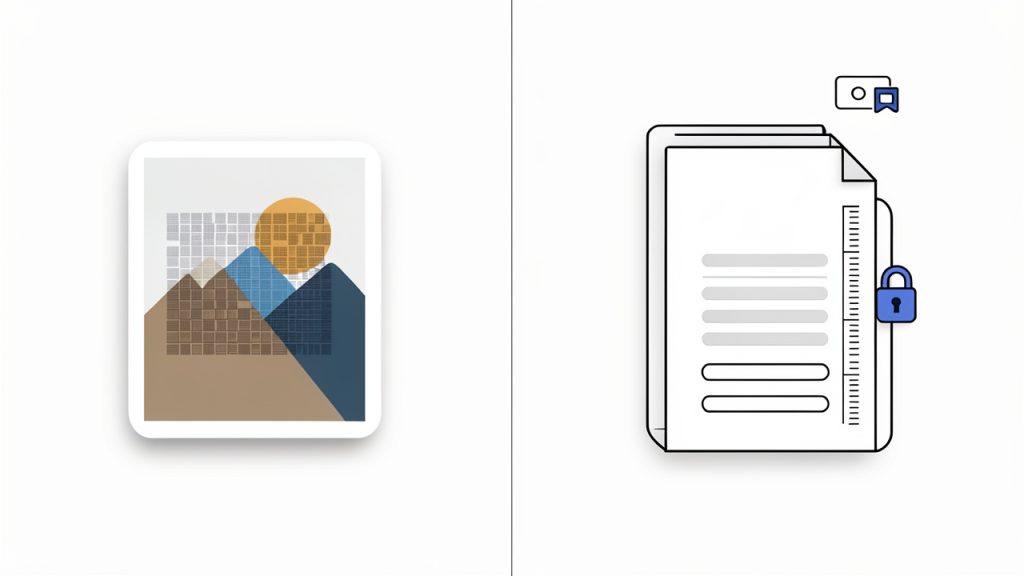
    Side-by-side illustration comparing a JPG (single floating photo) and a PDF (stack of pages in a document container with icons for metadata, password lock, and text layer). The JPG side shows lossy compression artifacts; the PDF side shows multiple pages, page size ruler, and a lock to indicate security.

    Fast Methods to Convert JPG to PDF

    If speed matters most, start with the tools already on your device. They are often enough for one-off tasks and basic multi-page PDFs.

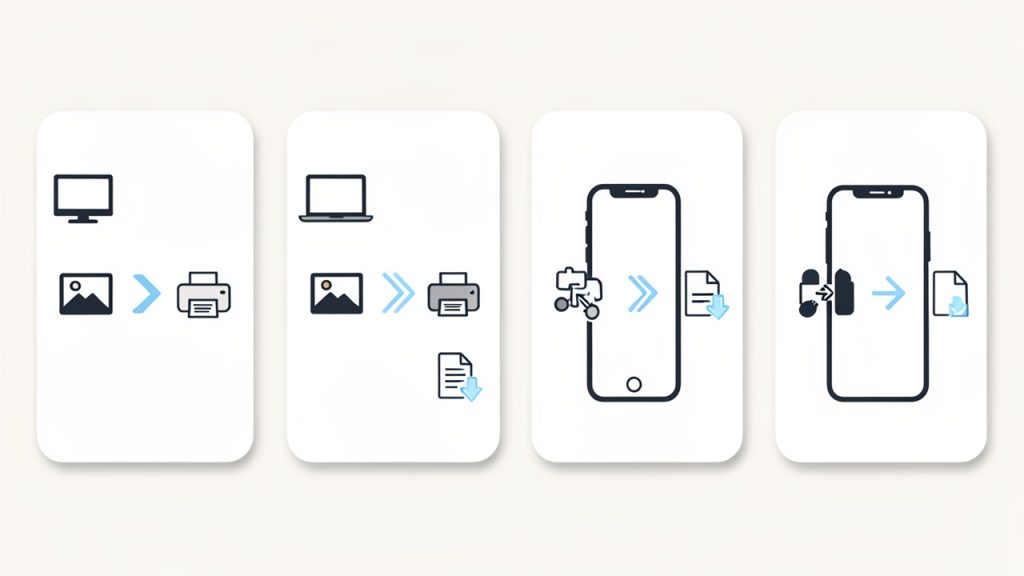
    A simple platform workflow graphic with four labeled panels/icons: Windows (Photos -> Print -> Microsoft Print to PDF), macOS Preview (Open in Preview -> Print -> Save as PDF), iPhone/iPad (Photos -> Share -> Print -> pinch-out -> Save), Android (Gallery/Photos -> Share/Print -> Save as PDF). Each panel shows the minimal tap/click sequence with small device icons.

    Windows 10 and Windows 11

    Windows includes Microsoft Print to PDF, which works with many image viewing apps. Open the JPG in Photos or another viewer, choose Print, then select Microsoft Print to PDF as the printer. After that, set paper size, quality, orientation, and fit options, then save the resulting PDF.

    If you want to combine multiple JPG files into one PDF, select all the images in File Explorer, right-click, and choose Print. Windows will let you arrange the images and output them into a single PDF file. Before saving, double-check page order. If filenames are inconsistent, Windows may sort them in an unexpected sequence.

    macOS Preview

    On a Mac, Preview is one of the easiest local tools for JPG-to-PDF conversion. Open one or more JPG files in Preview. If you are combining images, make sure the thumbnail sidebar is visible so you can drag pages into the correct order. Then choose File > Print, followed by Save as PDF from the PDF menu.

    Preview is especially useful for light cleanup. Before exporting, you can rotate pages, reorder them, or remove extras. For many users, that makes it a better option than uploading files to a website.

    iPhone and iPad

    On iPhone and iPad, you can turn a JPG into a PDF using the Share menu. In Photos, select the image, tap Share, then choose Print. On the print preview screen, pinch outward on the thumbnail preview. iOS will generate a PDF preview, which you can then share or save to Files.

    For multiple images, select them first in Photos, then repeat the same process. This method is slightly hidden, but it is reliable and does not require a third-party app. It is especially helpful when you need to send travel documents, receipts, or handwritten notes while away from your desk.

    Android

    Many Android devices support PDF creation through the Print option inside Google Photos, Files, or gallery apps. Open the image, tap Share or the menu icon, choose Print, then set Save as PDF as the destination. You can then save the file locally or upload it to cloud storage.

    The exact menu path varies by manufacturer, so Samsung, Pixel, and other Android phones may look slightly different. If your device supports selecting multiple images before printing, you can often combine them into a single PDF without extra software.

    Adobe Acrobat for More Control

    If you need professional output, Adobe Acrobat offers a cleaner workflow. You can create PDFs from images, combine many files into one document, reorder pages, compress large outputs, and apply OCR if the images contain text.

    This is the better choice when the PDF is going to a client, a court filing portal, a procurement system, or any environment where consistency matters. Acrobat is not the fastest tool for casual use, but it is one of the most complete.

    Best Free Online and Offline Tools for JPG-to-PDF Conversion

    Different users need different tools. Some want the fastest possible web converter. Others need offline privacy, batch processing, or mobile scanning. The options below cover the most useful choices.

    Quick Comparison

    Tool Best For Platform Free Option Batch Support OCR/Advanced Editing Privacy Fit
    Smallpdf Fast browser-based conversions Web Yes, limited Yes Limited on free tier Moderate
    ILovePDF Quick online workflows and file merging Web Yes Yes Some extra PDF tools Moderate
    PDFCandy Flexible free online PDF utilities Web/Desktop options Yes Varies Some editing tools Moderate
    Adobe Acrobat Pro Professional, secure, advanced workflows Desktop/Web Trial only Yes Strong High, especially local workflows
    Preview Free local conversion on Mac macOS Yes Yes Basic only High
    PDF24 Creator Free Windows desktop utility Windows Yes Yes Good utility set High
    Microsoft Lens Mobile scanning to PDF iOS/Android Yes Limited Strong scanning features Moderate to high
    Adobe Scan Clean mobile document capture iOS/Android Yes Limited OCR available Moderate
    CamScanner Mobile scanning and export iOS/Android Yes, often limited Limited Good scanning tools Moderate

    1. Smallpdf

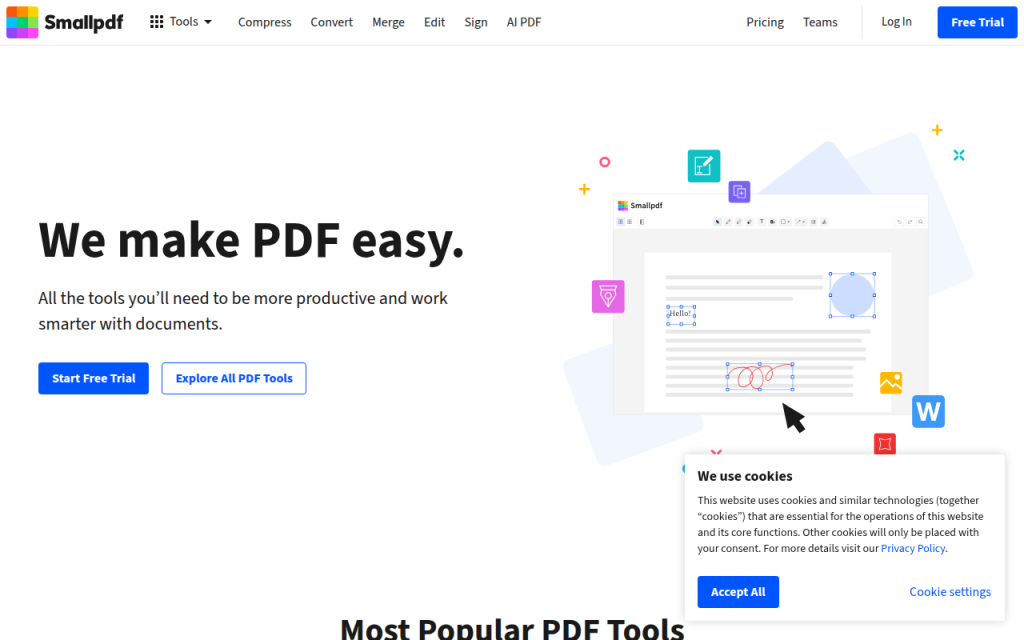
    Screenshot of smallpdf.com

    Smallpdf is one of the easiest ways to convert a JPG into a PDF online. The interface is simple, the upload flow is smooth, and it works well for users who want a quick result without learning new software. For freelancers, students, and small teams doing occasional conversions, it is often the fastest route from image to shareable document.

    Key features include browser-based conversion with drag-and-drop upload, support for multiple JPGs so you can combine images into one PDF, easy page reordering before export, and a range of adjacent PDF tools such as compression and merging. Its advantages are convenience and a clean interface; the drawbacks are free usage limits and limited suitability for confidential files unless you trust the service. Advanced features require a paid plan.

    Website: https://smallpdf.com

    2. ILovePDF

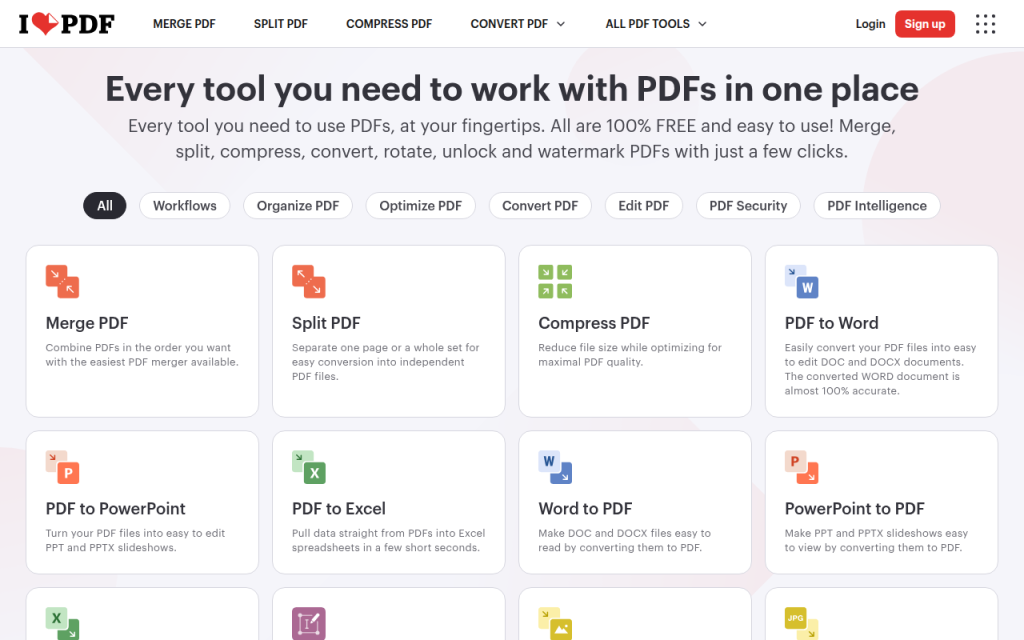
    Screenshot of ilovepdf.com

    ILovePDF combines a straightforward JPG-to-PDF converter with a broad toolkit for common document tasks. Upload one or more image files, choose orientation and page size, and convert. In addition to conversion, the platform offers merge, split, compress, and organize tools, and it integrates with cloud storage. It is a solid all-around option for small business owners who handle invoices, forms, and customer paperwork. Free limits apply for heavy use, and uploads may not be appropriate for highly sensitive documents without extra caution.

    Website: https://www.ilovepdf.com

    3. PDFCandy

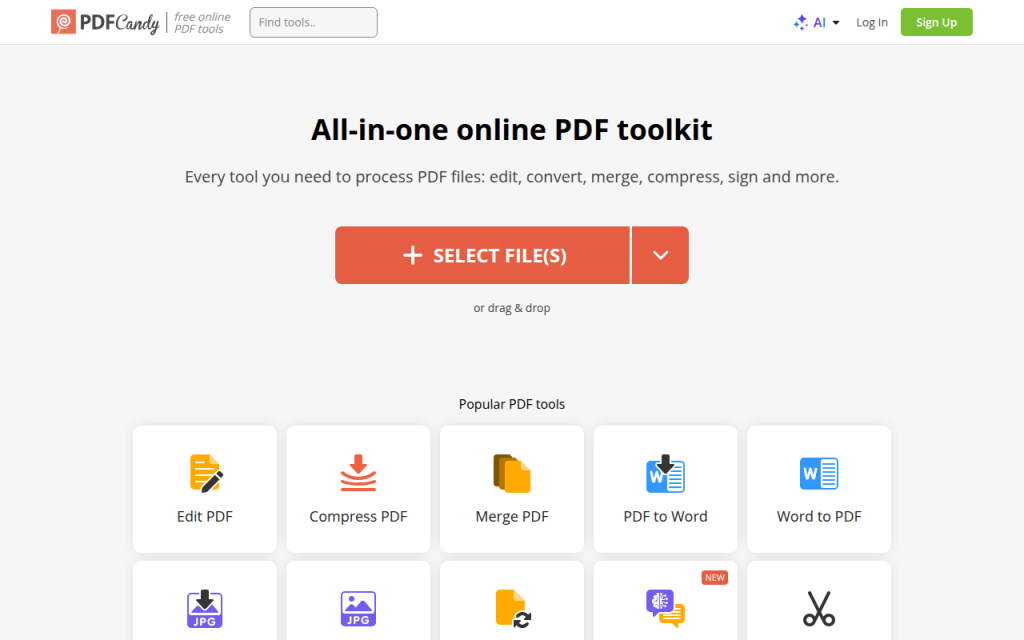
    Screenshot of pdfcandy.com

    PDFCandy is a flexible option for users who want more than a single conversion page. It offers image-to-PDF conversion alongside editing, compression, and other format conversion features, making it appealing for people who work across many file types. PDFCandy is useful when your workflow includes converting images one day, compressing PDFs the next, and extracting pages later on. It provides a wide feature set accessible through a simple browser workflow, with desktop options available in some cases. Performance depends on file size and browser, and privacy considerations apply to any online service.

    Website: https://pdfcandy.com

    4. Adobe Acrobat Pro

    Adobe Acrobat Pro is the professional benchmark for image-to-PDF conversion. It is not the lightest or cheapest option, but it is the tool people choose when the result needs to be dependable. If you regularly prepare client documents, submit paperwork to regulated systems, or need searchable PDFs with OCR, Acrobat earns its place.

    Its advantages are depth of capability: combine many images, optimize file size, run OCR, add passwords, edit page order, redact content, and export in various formats. The downsides are cost and complexity for casual users. Acrobat is usually sold as a subscription.

    Website: https://www.adobe.com

    5. Preview

    Preview is the unsung hero for Mac users. It is free, built in, and surprisingly capable for creating PDFs from JPG files. You can open images, arrange them visually, rotate or delete pages, and export everything into a single PDF without uploading anything. For privacy-conscious users, that local workflow is a major advantage. The main limitation is that Preview is macOS-only and does not provide advanced OCR or enterprise features.

    Website: https://www.apple.com/macos/preview

    6. PDF24 Creator

    PDF24 Creator is a strong free desktop option for Windows users who want offline control. It is particularly useful for batch conversions, merging files, and performing utility tasks without sending anything to the web. Think of it as a local PDF workstation: it is not as polished as Acrobat, but it covers common needs such as file assembly, compression, and document creation while keeping everything on your machine.

    The tool is free, works offline, and is ideal for repeated document tasks; the trade-off is a utilitarian interface and Windows-only availability.

    Website: https://tools.pdf24.org

    7. PDFsam

    PDFsam is known for splitting and merging PDFs and is useful in a JPG-to-PDF workflow when you need to organize and refine PDFs after creating them. If your images are already in PDF form, PDFsam helps you combine sets, reorder sections, and prepare cleaner final packages. It is a smart companion tool for larger workflows. There is a free basic version and paid editions for expanded capabilities.

    Website: https://pdfsam.org

    8. ImageMagick

    ImageMagick is a powerful choice for developers, IT teams, and power users who want scripted or repeatable conversion workflows. It is excellent when you need automation, server-side processing, or command-line control over many files at once. Use ImageMagick to automate repeated conversions, rename files systematically, or integrate image handling into scripts. The learning curve is steeper and PDF policy settings on some systems may require troubleshooting, but ImageMagick is open source and free.

    Website: https://imagemagick.org

    9. Microsoft Lens

    Screenshot of microsoft.com

    Microsoft Lens is one of the best mobile apps for turning photos into useful PDFs. It is especially strong for scanning documents, whiteboards, receipts, and notes rather than simply wrapping an existing photo into a PDF. Lens crops edges, improves readability, and integrates with Microsoft 365 workflows, which is helpful if you use Outlook, OneDrive, Word, or Teams. The app is free and works well for mobile professionals who need cloud handoff and decent scan quality.

    Website: https://www.microsoft.com

    10. Adobe Scan

    Adobe Scan is a polished mobile app for turning camera captures into PDFs quickly. It is particularly effective for receipts, contracts, handwritten notes, and other documents that need cleanup before export. The app offers good auto-detection, cropping, and OCR integration so scanned text can become searchable. Adobe Scan is free to start, with expanded capabilities tied to Adobe services.

    Website: https://www.adobe.com/acrobat/mobile/scanner-app.html

    11. CamScanner

    Screenshot of camscanner.com

    CamScanner is a popular mobile option for converting photographed documents into PDFs on the go. It provides enhancement filters, cropping tools, and a mobile-first convenience that suits freelancers, students, field staff, and small teams. It works best when the source is a physical page rather than an already clean digital image. Be aware of export limits, potential watermarks on free plans, and privacy terms before relying on any cloud-based scanning app for sensitive paperwork.

    Website: https://www.camscanner.com

    When to Use an Online Tool vs an Offline App

    Online converters are best when the job is simple, the files are not sensitive, and speed matters more than anything else. If you have two JPGs from a product manual or a non-confidential receipt, a browser-based tool is often the easiest answer.

    Offline tools are better when the images contain personal data, financial details, legal documents, medical information, contracts, or client records. They are also the smarter choice for batch jobs, recurring workflows, and anyone who wants predictable output without upload limits.

    A useful rule is simple: if you would hesitate to email the image openly, you should probably not upload it to a random converter either.

    Advanced Tips for Better PDF Results

    Quality problems usually begin before conversion. If the original JPG is small, heavily compressed, rotated incorrectly, or poorly lit, the resulting PDF will inherit those flaws. Check image resolution, orientation, and cropping before creating the PDF.

    For text-heavy images, OCR can be transformative. OCR, or optical character recognition, turns an image-based PDF into a searchable document so you can select text, search inside the file, and improve accessibility. Adobe Acrobat, Adobe Scan, and some other tools do this well, but accuracy depends on image clarity and contrast.

    Compression also deserves care. Aggressive compression reduces file size, but it can blur text and damage readability, especially with receipts, forms, and thin lines. For archival or print-ready documents, aim for moderate compression and test the output before sending.

    Privacy, Security, and Legal Considerations

    Privacy is a common blind spot. Web tools are safe enough for ordinary use, but not all services handle uploads the same way. Some delete files quickly; others retain them longer. Some process files server-side, while others use more privacy-friendly methods.

    Before uploading anything sensitive, read the provider’s privacy policy and retention terms. Look for automatic deletion, encryption in transit, account requirements, and whether files are used for service improvement or analytics. If you handle HR records, tax forms, ID documents, signed contracts, or health data, local processing is the safer route.

    If the PDF contains sensitive content, consider adding password protection or redacting information after conversion. Passwords restrict opening or editing, while redaction permanently removes visible and hidden sensitive content rather than simply covering it up.

    Troubleshooting Common JPG-to-PDF Problems

    If your PDF looks blurry, the most common cause is a low-resolution source image or excessive compression during export. Start with a higher-quality JPG, choose a larger paper size, or disable aggressive optimization. Scanned text should remain crisp enough to read at normal zoom; if it does not, fix the image quality first.

    If the page orientation is wrong, rotate the image before conversion when possible. Some systems interpret photo orientation based on EXIF metadata, which can produce surprises. Preview on macOS is especially good for correcting this before export. On Windows, checking the print preview carefully can save frustration.

    Large file sizes usually come from high-resolution photos, many pages, or minimal compression. If the file is too big to upload or email, run it through a trusted compression tool afterward and review the compressed result carefully, especially if the document contains fine print.

    If you cannot combine multiple images into one PDF, the issue is usually the workflow, not the files. On Windows, select all images together before printing to PDF. On Mac, open them in one Preview window and arrange them in the sidebar. In online tools, make sure multi-file upload is supported before converting.

    When to Use JPG vs PDF

    Use a JPG when the file is truly just an image, such as a product photo, social media graphic, or casual snapshot. It is lightweight, widely supported, and easy to insert into websites, slides, and chat messages.

    Use a PDF when the image needs to function like a document. That includes job applications, invoices, signed forms, proposals, receipts, scanned IDs, handouts, and archive files. If order, print consistency, professionalism, or security matters, PDF is usually the better choice.

    A helpful mental shortcut: if the recipient needs to view a picture, send a JPG. If they need to review a document, send a PDF.

    Recommended Workflows

    For a one-time personal conversion, use your device’s built-in tools first. They are fast, free, and private enough for ordinary needs. On Mac, use Preview. On Windows, use Print to PDF. On iPhone or Android, use the Print-to-PDF share flow.

    For business use, especially with repeated conversions, adopt a deliberate workflow: standardize filenames, check page order before export, compress only after reviewing readability, and keep a local copy of the original images. That reduces errors when you need to resend or revise the document later.

    For confidential files, stay offline whenever possible. Convert locally, apply OCR only if needed, add passwords when sharing, and use proper redaction tools if sensitive content must be removed. This is the safer path for legal, HR, finance, and healthcare-adjacent workflows.

    Appendix: Quick Reference for Power Users

    For advanced users, command-line tools can automate repeated conversions and bulk jobs. ImageMagick is a common choice, although configuration varies by system and some installations restrict PDF operations by default for security reasons.

    Common patterns include converting multiple JPG images into a single PDF via command-line tooling, then optimizing the resulting PDF with Ghostscript for compression. These tools are best suited to developers, IT admins, and anyone building repeatable automation rather than occasional manual conversions.

    The best way to convert a JPG into a PDF depends on what you care about most. If you want speed, use Smallpdf, ILovePDF, or your device’s built-in print features. If you want privacy and offline control, stick with Preview, PDF24 Creator, or Adobe Acrobat on desktop. If you want to capture paper documents from a phone, Microsoft Lens, Adobe Scan, and CamScanner are strong mobile options.

    The next step is simple. Pick the method that matches your situation, run a test conversion, and check three things before you send the file: clarity, page order, and file size. Those three checks prevent most problems and turn a quick image export into a document you can send with confidence.

  • Online Convert: Fast, Secure File Conversion for Workflows

    Online Convert: Fast, Secure File Conversion for Workflows

    Every day, people lose time to simple file problems. A client sends a HEIC image your laptop cannot preview. A supplier uploads a spreadsheet in the wrong format. A PDF is too large to email, a video will not play on mobile, or a document needs to become editable before a deadline. These are small blockers, but they add up fast.

    That is why Online convert tools have become a quiet productivity essential for small business owners, freelancers, developers, and anyone who works across devices and file types. Instead of installing heavy software for every format mismatch, you can use a browser-based tool to convert files in minutes. The appeal is obvious, less friction, lower cost, and faster turnaround.

    What makes online conversion especially useful is its range. It is not just about turning one file into another. It often includes compression, resizing, format cleanup, OCR, media adjustments, and basic optimization. For users who want free, easy-to-use online tools, this makes online convert services a practical part of a modern digital workflow.

    What is Online convert?

    Online convert refers to web-based tools that let you change one digital format into another without installing desktop software. In the simplest sense, you upload a file, choose the output format, adjust any settings if needed, and download the converted result. That could mean turning a Word document into PDF, a PNG into JPG, an MP4 into GIF, or a CSV into XLSX.

    The idea sounds basic, but the value is much bigger than the action itself. Format conversion solves compatibility problems between apps, devices, operating systems, and platforms. A freelancer might need to deliver a compressed PDF that opens cleanly on any device. A small business might need product photos resized and converted for faster website loading. A developer might need structured data transformed into a format that fits an API, database import, or reporting workflow.

    File conversion becomes the bridge that keeps work moving when formats do not naturally line up.

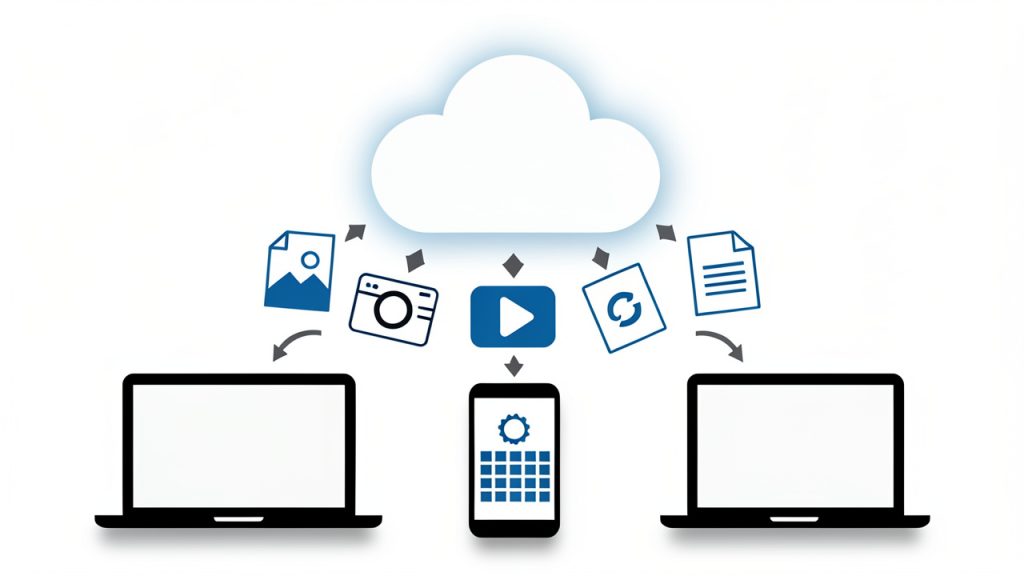
    A central 'online convert' cloud or bridge icon connecting a variety of file-type icons (PDF, DOCX, JPG/PNG, HEIC, MP4, GIF, CSV/XLSX, EPUB) and device icons (laptop, smartphone, tablet). Use arrows showing files flowing from devices into the cloud and back as converted formats — conveys 'file conversion as the bridge between apps, devices, and formats.'

    Another reason these tools have gained popularity is accessibility. Traditional conversion software can be expensive, complex, or device-specific. Browser-based tools lower that barrier. In many cases, a user can open a site, drag in a file, choose the target format, and finish the task in under five minutes. For people who prioritize speed and simplicity, that is a powerful advantage.

    Key Aspects of Online convert

    Format flexibility is the biggest strength

    One of the strongest reasons people rely on Online convert platforms is the broad variety of supported formats. Good services typically cover documents, images, audio, video, ebooks, archives, and sometimes fonts or data files. That means a single tool can solve many unrelated problems across a workday.

    This matters more than it first appears. If you run a small business, your tasks are rarely limited to one media type. You might prepare invoices, edit product images, compress promotional videos, and share presentations, all in the same week. Using separate software for each format creates friction. A flexible online converter reduces tool sprawl and shortens the gap between task and completion.

    Ease of use often determines real value

    A converter can support hundreds of file formats and still be frustrating if it is hard to use. The best online convert tools keep the workflow simple. You upload, select, adjust, and download. The interface is usually intuitive enough that even non-technical users can complete conversions without training.

    For freelancers and productivity-minded users, this simplicity is not just convenience. It is part of efficiency. When a task is small, the setup cost matters. If a conversion requires software installation, account creation, plugin troubleshooting, or a steep learning curve, the time saved disappears. A clean browser-based experience keeps attention on the work, not the tool.

    Conversion quality matters more than speed alone

    Fast conversion is useful, but accuracy and output quality are what separate a dependable tool from a disposable one. A poor image converter may reduce sharpness. A weak document converter may break formatting, tables, or embedded fonts. A low-quality video converter may produce files that technically work but look noticeably degraded.

    This is where context matters. If you are converting a rough draft for internal use, small quality loss may not matter. If you are submitting legal documents, sales materials, portfolio assets, or downloadable customer resources, quality becomes critical. Smart users do not judge online convert tools only by how fast they process a file. They also judge how well the result preserves layout, readability, metadata, and usability.

    Security and privacy should never be an afterthought

    Many people focus on convenience first, but security is one of the most important aspects of any online conversion tool. When you upload a file, you are often sending business data, client information, contracts, financial documents, or creative work to a third-party service. That creates a trust question.

    A reliable online convert platform should clearly explain file handling, deletion policies, encryption, and storage practices. If that information is missing or vague, caution is justified. For highly sensitive documents, local or offline tools may still be the better option. Convenience is valuable, but not at the cost of exposing confidential data.

    Free does not always mean unlimited

    Many users search for free online convert tools because they want quick results without buying software. That is reasonable, and many services do offer useful free plans. Still, free access usually comes with trade-offs. These may include file size limits, slower processing, daily conversion caps, fewer output options, or lower priority in the queue.

    That does not make free tools bad. In fact, for occasional use, they are often more than enough. But it is worth understanding the model. If your workflow depends on frequent or large-volume conversions, you may eventually need a premium option or a mix of tools. The smartest approach is to match the tool to the workload rather than assume all free converters will scale smoothly.

    Extra tools often provide hidden value

    Many online convert services now include more than pure format conversion. They may offer file compression, image resizing, OCR for scanned PDFs, metadata editing, trimming for media files, or quality presets for web and mobile use. These features matter because real-world conversion tasks rarely happen in isolation.

    Imagine you are preparing a brochure for email distribution. You may need to convert it to PDF, compress it, and ensure it opens cleanly on different devices. Or consider an ecommerce seller who needs to convert a product image, resize it for a marketplace, and reduce file weight for page speed. In both cases, the best tool is not only one that changes file type, but one that supports the full task.

    Different users benefit in different ways

    The value of Online convert depends on the user’s context. For a small business owner, it can reduce dependency on specialized software and help staff handle routine file tasks in-house. For freelancers, it can speed up delivery and improve compatibility with clients. For developers, it can assist with data transformation, asset preparation, and testing file behavior across systems.

    This is why online conversion is best understood not as a niche utility, but as a workflow layer. It removes friction at the edges of digital work. The better your files move between people, platforms, and devices, the smoother your operations become.

    How to Get Started with Online convert

    Start with a clear use case

    Before choosing a tool, identify what you actually need to convert and why. That sounds obvious, but many users start with the tool instead of the task. A person who only needs to convert invoices to PDF has different needs from someone transforming large video files or batch-processing product images.

    When you define the use case first, it becomes easier to choose the right online convert service. You can focus on supported formats, output quality, file size limits, privacy expectations, and any extra features required. This prevents wasted time and reduces the chance of choosing a tool that looks good on the surface but fails on the details.

    Test on a non-critical file first

    If you are using a new online converter, start with a sample file rather than an important client asset or final deliverable. This lets you check how the platform handles formatting, image quality, naming conventions, and download behavior before trusting it with mission-critical work.

    That test is especially important for documents with complex layouts, spreadsheets with formulas, and media files where quality loss can be subtle. A quick trial run can reveal whether the tool is dependable enough for your workflow. It is a small habit that prevents bigger mistakes later.

    Compare tools based on practical criteria

    Choosing an online convert platform is easier when you judge it by how it performs in everyday work, not just by its homepage claims.

    Criteria Why It Matters What to Look For
    Supported formats Determines whether the tool fits your tasks Common and specialized input/output types
    Output quality Affects professionalism and usability Good formatting retention, sharp media, stable files
    Ease of use Reduces time and frustration Simple upload flow, clear settings, fast downloads
    Security Protects sensitive information HTTPS, deletion policy, privacy transparency
    File limits Impacts larger or frequent jobs Reasonable size caps, batch support if needed
    Extra features Saves time on related tasks Compression, resize, OCR, optimization options

    This kind of comparison helps you think like a practical operator rather than a casual browser. For most users, the best online convert tool is the one that handles recurring tasks reliably, not the one with the longest feature list.

    Build a simple workflow around recurring conversions

    If you repeatedly convert the same types of files, create a lightweight process for it. Save source files in a consistent folder, name them clearly, and note the settings that produce the best output. Repetition creates opportunities for speed.

    For example, a freelancer sending client deliverables every Friday might standardize images to a specific size and format. A small business might convert all scanned receipts to PDF and compress them before cloud storage. A developer may regularly transform exported data into cleaner import formats. These routines reduce decision fatigue and prevent avoidable errors.

    Know when online tools are enough, and when they are not

    Online convert services are excellent for convenience, but they are not perfect for every scenario. If you are working with highly sensitive files, massive datasets, large video renders, or complex design documents that must preserve every detail, a dedicated desktop or enterprise solution may be more appropriate.

    That is not a weakness of online conversion. It is simply a matter of fit. Browser-based tools are strongest when speed, accessibility, and low setup matter most. Knowing where they shine helps you use them with confidence, rather than expecting them to solve every technical edge case.

    A simple getting-started process

    A simple four-step flow graphic: 1) Upload (arrow into cloud), 2) Select/Adjust settings (gear or sliders), 3) Convert/Process (spinning/processing icon), 4) Download & Inspect (download arrow and magnifying glass). Each step shown with a clear icon and short label to illustrate the getting-started process.

    1. Choose the file type you need to convert, such as PDF, JPG, MP4, DOCX, or CSV.
    2. Select a trusted online converter with clear privacy information and support for your format.
    3. Upload a test file and review any optional settings before processing.
    4. Download and inspect the result to confirm quality, formatting, and compatibility.
    5. Repeat with your real file once you are satisfied with the output.

    This basic process keeps risk low and helps you learn quickly. After one or two successful tasks, using an online convert tool usually becomes second nature.

    Conclusion

    Online convert is ultimately about reducing friction in digital work. It helps bridge the gaps between formats, devices, software, and user expectations. For small business owners, freelancers, developers, and productivity-focused users, that translates into faster turnaround, fewer software headaches, and smoother collaboration.

    The best next step is simple, identify one recurring file problem in your workflow and solve it with a reliable online conversion tool. Start small, test carefully, and pay attention to quality and privacy. Once you find a tool that fits, you will likely wonder how much time you used to lose on file issues that should have taken only minutes.