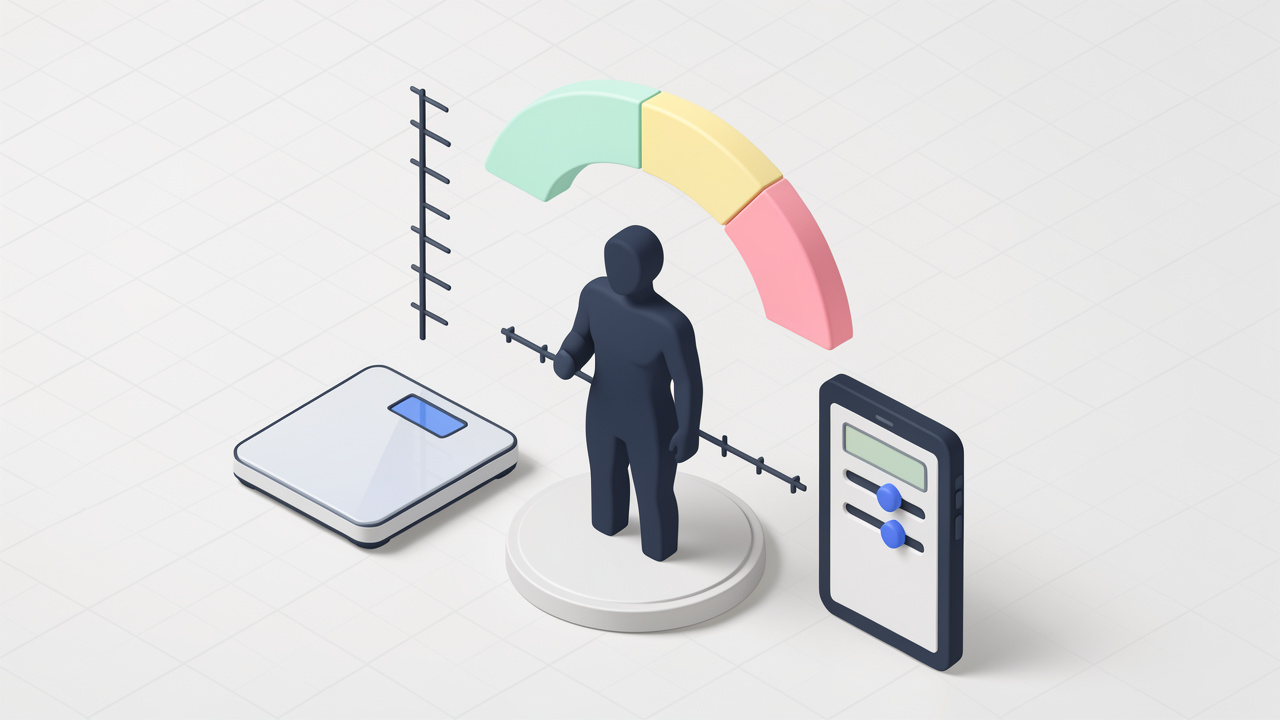
A BMI calculator is one of those deceptively simple tools that can answer a question many people quietly carry around: Am I in a healthy weight range for my height? In a few seconds, it turns two basic inputs, height and weight, into a number that offers a quick snapshot of body size relative to height. That speed and simplicity are exactly why BMI calculators remain so widely used online, in clinics, and in workplace wellness programs.
For busy people who prefer practical tools over complicated health jargon, a BMI calculator is appealing because it removes guesswork. You do not need lab tests, expensive apps, or wearable devices to use one. You just need accurate measurements and a basic understanding of what the result means, and just as importantly, what it does not mean.
What is a BMI calculator?
A BMI calculator is an online or offline tool that computes Body Mass Index, a numerical value derived from your weight and height. The purpose is to estimate whether your weight is proportionate to your height according to widely recognized categories. It is often used as a quick screening method rather than a full health diagnosis.
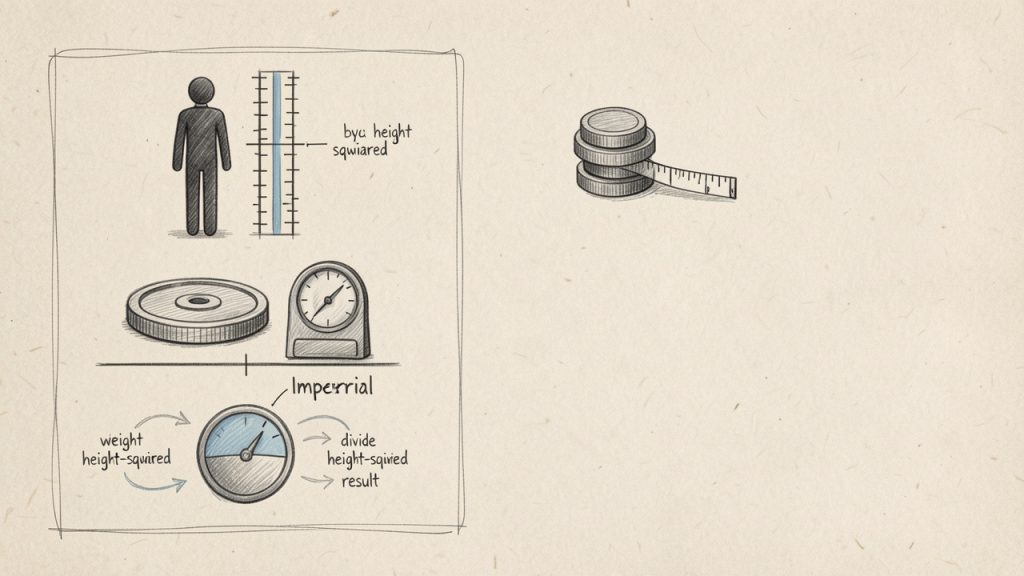
The formula behind BMI is straightforward. In metric units, BMI equals weight in kilograms divided by height in meters squared. In imperial units, the calculation adjusts for pounds and inches. Most online calculators handle the math automatically, which is why they are so popular with users who want an instant answer without manual conversion.
What makes a BMI calculator useful is not just the number itself, but the context around it. The result is usually grouped into standard ranges such as underweight, healthy weight, overweight, and obesity. These categories help people, healthcare providers, and wellness programs identify whether further attention may be needed.
That said, BMI is a screening tool, not a complete measure of health. It does not directly measure body fat, muscle mass, bone density, or where fat is stored in the body. A highly muscular person may register a high BMI without having excess body fat, while another person may fall into a so-called normal range and still have health risks that BMI alone cannot detect.
Why people use a BMI calculator
The biggest reason people use a BMI calculator is convenience. It gives immediate feedback and creates a starting point. If someone is beginning a health journey, reviewing workplace wellness goals, or tracking changes after lifestyle adjustments, BMI can serve as a baseline metric.
It is also common in broader health systems because it is standardized. That consistency allows doctors, researchers, and public health organizations to compare trends across large populations. For individuals, this standardization can be helpful, as long as the number is interpreted with common sense and not treated as the only indicator that matters.
Standard BMI categories
The most commonly used adult BMI categories are shown below.
BMI Range
Category
Below 18.5
Underweight
18.5 to 24.9
Healthy weight
25.0 to 29.9
Overweight
30.0 and above
Obesity
These ranges are widely recognized for adults, but they are not applied exactly the same way for children and teens. Younger age groups are typically assessed using age- and sex-specific percentile charts rather than adult BMI cutoffs.
Key aspects of BMI calculator
To use a BMI calculator well, it helps to understand both its strengths and limitations. On the positive side, BMI is simple, accessible, and fast. Those three qualities make it ideal for online tools aimed at users who want quick results without complexity. It is also useful for trend tracking. If your BMI changes over time alongside changes in diet, activity, or routine, that shift can help you spot progress or potential issues.
Another important aspect is accuracy of input. A BMI calculator is only as good as the numbers entered. Small mistakes in height or weight can change the result enough to move someone from one category to another. This is especially true for shorter individuals, where even minor height errors can noticeably affect the score.
BMI calculators also vary in how much context they provide. Some tools only display the number. Better calculators explain the category, offer unit switching between metric and imperial, and clarify that BMI is not a diagnosis. The best versions combine simplicity with useful interpretation, helping users avoid drawing overly dramatic conclusions from a single number.
BMI versus other health measurements
BMI is often more meaningful when paired with other indicators. For example, waist circumference can offer insight into abdominal fat, which is associated with higher metabolic risk. Body fat percentage can provide a more direct view of composition, although measuring it accurately usually requires specialized methods or devices.
Blood pressure, cholesterol, blood sugar, fitness level, sleep quality, and daily activity all add valuable context too. A person with a BMI in the healthy range but poor cardiovascular markers may still need lifestyle changes. Likewise, someone with a BMI above the standard range may be metabolically healthy and physically active.
This is why professionals often treat BMI as a first-pass filter. It is useful because it is easy. It is limited because health is more complex than one equation.
Who should be cautious when interpreting BMI
Certain groups should be especially careful not to overinterpret BMI results. Athletes and strength-trained individuals often carry more lean mass, which can push BMI upward without indicating poor health. Older adults may experience changes in body composition that BMI does not capture well. Pregnant individuals also require separate assessment methods, since normal weight changes during pregnancy do not fit standard BMI interpretation.
People from different ethnic backgrounds may also face different risk patterns at the same BMI levels. This does not make BMI useless, but it does mean context matters. A calculator can provide a useful signal, but it cannot replace individualized assessment.
Benefits and limitations at a glance
Aspect
Why It Helps
Where It Falls Short
Simplicity
Fast, easy to use, no special equipment
Can feel overly reductive
Accessibility
Free online tools are widely available
Quality of explanations varies
Standardization
Useful for broad comparisons and tracking
Does not reflect individual nuances well
Screening value
Good starting point for health conversations
Not a diagnosis or full risk profile
Ease of tracking
Helpful for monitoring general trends
Can be misleading if used alone
How to get started with a BMI calculator
If you want to use a BMI calculator effectively, start with clean data. Measure your weight under consistent conditions, ideally at the same time of day and with similar clothing. For height, avoid guessing. Even a rough estimate can distort the result more than people expect.
Once you have accurate numbers, enter them into a calculator that supports the units you prefer. Most modern tools allow either kilograms and meters or pounds and inches. After you receive the BMI result, look at both the number and the category, but stop short of assigning it too much power. It is a clue, not a verdict.
A practical way to approach BMI is to treat it as part of a broader personal dashboard. If your result is outside the healthy range, that may be a prompt to examine eating habits, movement, sleep, stress, and medical history. If your BMI falls within the healthy range, that is useful to know, but it should not automatically be taken as proof that everything else is optimal.
A simple way to use BMI in real life
Measure accurately: Use current, realistic height and weight values.
Calculate once, then track over time: Focus on trends instead of obsessing over daily changes.
Add context: Consider waist size, fitness, energy levels, and any existing health markers.
Act on patterns: If the number raises concerns, use it as a reason to seek better habits or medical advice.
This approach keeps the tool useful without turning it into a source of anxiety. Health metrics are most powerful when they guide action, not when they trigger self-judgment.
Choosing a good online BMI calculator
Not all calculators are equally helpful. A good BMI calculator should feel intuitive, load quickly, and explain the result in plain language. It should also clarify that BMI is intended for general screening, not definitive diagnosis.
For productivity-minded users, this matters more than it might seem. A clean, trustworthy tool saves time and reduces confusion. When a calculator is well designed, the user can move from input to insight without distractions, pop-ups, or vague explanations.
If you are using one regularly, it also helps to choose a calculator that works well on mobile. Many people check health metrics on the go, between meetings, during breaks, or while setting personal goals alongside work and family responsibilities. A fast, free tool fits naturally into that routine.
When to talk to a professional
There are times when a BMI result should lead to a deeper conversation. If the number is significantly above or below the usual range, or if it changes quickly without a clear reason, speaking with a healthcare professional is a smart next step. The same applies if you have symptoms such as fatigue, shortness of breath, persistent pain, or metabolic concerns.
A professional can interpret BMI alongside family history, medications, lab work, physical activity, and body composition. That fuller picture is where real health decisions should be made. The calculator opens the door. It should not be the final word.
Conclusion
A BMI calculator remains useful because it does one thing very well, it offers a quick, accessible estimate of whether your weight is proportionate to your height. For people who want a free, easy-to-use online tool, that simplicity is a major strength. It provides a starting point, helps track trends, and encourages more informed health conversations.
The smartest next step is to use BMI as one part of a bigger picture. Check your numbers accurately, review the result with context, and pair it with other markers that reflect your overall well-being. If something looks off, use that insight to make practical changes or get professional guidance. A good calculator gives you a number. A better approach turns that number into action.
A single typo can make a freelance proposal look careless, a client email sound rushed, or a landing page quietly lose trust. That is why so many people search for an online grammar checker free solution, not because they want perfect prose, but because they want a fast, reliable second pair of eyes before they hit publish or send.
The good news is that free grammar tools are genuinely useful now. The bad news is that they are not all useful in the same way. Some are better for email and day-to-day business writing. Some are stronger for style and readability. Others help multilingual users catch awkward phrasing that basic spellcheck misses. If you pick the wrong one, you may end up with lots of noisy suggestions and not much real improvement.
This guide compares the best free online grammar checkers, explains how they work, and shows you how to choose one based on your writing, privacy needs, and workflow. It also covers the part most roundup articles skip, namely where these tools fail, when a free plan is enough, and how to use them without blindly accepting every change.
What is an Online Grammar Checker and How Does It Work?
An online grammar checker is a web-based or app-based writing assistant that scans your text for grammar, punctuation, spelling, clarity, style, and sometimes tone. At a basic level, it looks for mistakes such as subject-verb disagreement, repeated words, missing commas, and misspellings. More advanced tools also flag wordiness, passive voice, awkward phrasing, and inconsistent tone.
That broad feature set is why free grammar tools have become popular with students, consultants, marketers, developers, and small business owners. They do more than spellcheck. A standard spellchecker might catch teh instead of the. A grammar checker may also suggest changing There is many reasons to There are many reasons, or point out that your should actually be you’re.
Definition and core functions
Most modern checkers focus on five core areas. The first is grammar, which covers sentence structure and agreement. The second is punctuation, such as commas, apostrophes, and capitalization. The third is spelling, including contextual spelling mistakes. The fourth is style, which includes clarity, concision, and readability. The fifth is tone, which tries to estimate whether your writing sounds formal, confident, friendly, or overly blunt.
Tone matters more than many people realize. If you write sales emails, support replies, proposals, or cover letters, grammar is only part of the job. The wording also needs to sound appropriate for the reader. Some AI-assisted tools now try to help with that, although their tone detection is still imperfect.
How modern checkers use rules, statistical models, and AI
Older grammar checkers relied heavily on rule-based systems, using hand-built language rules such as, “a singular subject usually takes a singular verb.” Rule-based tools are often transparent and good at catching predictable errors, but they can be rigid. Newer tools mix those rules with statistical language models and AI-based writing suggestions. In simple terms, the software does not just ask, “Does this break a grammar rule?” It also asks, “Does this phrase look unusual compared to how fluent writers usually write?” That combination is why modern tools catch more subtle issues than the grammar software of a decade ago.
AI is not infallible. It can overcorrect intentional phrasing, misunderstand industry jargon, and flatten creative voice. A grammar checker is best seen as a smart assistant, not a final editor.
Where they run
Free online grammar checkers now show up in several formats. The most common is the web editor, where you paste text into a browser and review suggestions. Many also offer browser extensions that work inside Gmail, LinkedIn, Google Docs, and other web apps. Some provide desktop apps, mobile keyboards, or integrations for Microsoft Word.
For productivity-minded users, integrations matter almost as much as accuracy. A good checker you never remember to open is less useful than a slightly less powerful one that works wherever you write.
Why Use a Free Online Grammar Checker? Benefits and Typical Use Cases
A free grammar checker saves time in a way manual proofreading rarely can. It scans instantly, flags obvious issues, and helps you clean up first drafts before you spend mental energy polishing. For busy professionals, that speed is often the main benefit.
There is also a consistency advantage. If you write lots of emails, support documentation, proposals, blog posts, or product copy, a grammar checker helps maintain a baseline level of quality. It catches errors you stop seeing because you are too close to the text.
Common benefits
The biggest benefit is simple, fewer avoidable mistakes. That matters whether you are a solo founder emailing leads or a developer writing documentation. Small errors do not always destroy credibility, but repeated errors chip away at it.
Another advantage is that these tools act like a lightweight editorial pass. They can spot duplicate words, long-winded sentences, and clunky transitions. Even when you reject the actual suggestion, the alert itself can help you notice where the sentence needs another look.
Use cases by audience
For students, free tools are helpful for drafts, essays, personal statements, and discussion posts. They can reduce surface-level mistakes, although they should not be trusted as the only check for academic writing.
For professionals and freelancers, free grammar checkers are especially useful for proposals, invoices, outreach emails, reports, and website copy. These are high-frequency writing tasks where speed matters.
For non-native English speakers, grammar checkers can be even more valuable. They often catch article usage, preposition choices, and awkward constructions that basic spellcheck misses. Tools with paraphrasing or rewrite suggestions can also help users sound more natural.
For content creators and marketers, the best tools do more than fix grammar. They improve readability and help adjust tone for a landing page, newsletter, social post, or blog article.
When a free tool is enough
A free grammar checker is usually enough if you mainly need basic grammar, punctuation, spelling, and light clarity improvements. That covers most short business writing, casual professional communication, and first-pass editing.
You may need a premium plan, or human editing, if you require advanced rewrites, plagiarism detection, deep style analysis, team features, or support for sensitive client content. Academic manuscripts, legal writing, investor documents, and brand-critical marketing copy often deserve more than a free automated check.
Top Free Online Grammar Checkers (Side-by-Side Overview)
The tools below are among the most widely used options for anyone searching for an online grammar checker free solution. Each one takes a slightly different approach. Some prioritize all-purpose correction. Others focus on readability, multilingual support, or rewrite assistance.
Quick comparison table
Tool
Best For
Free Plan Strengths
Main Limitations on Free Tier
Platforms
Grammarly
General business writing
Strong grammar, punctuation, browser support
Advanced style, tone rewrites, plagiarism gated
Web, browser, desktop, mobile
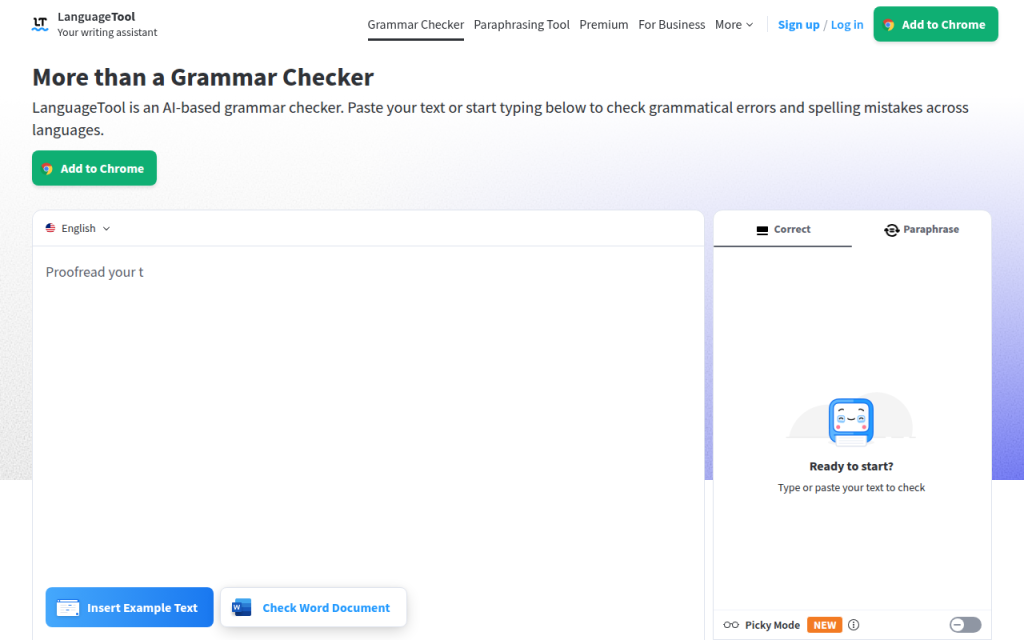
LanguageTool
Multilingual users, privacy-conscious users
Good grammar checks across multiple languages
Some advanced suggestions limited
Web, browser, desktop, mobile
QuillBot Grammar Checker
Quick cleanup and paraphrasing-adjacent workflows
Simple grammar correction, easy interface
Broader writing features split across tools
Web, browser extensions
ProWritingAid
Writers who want deeper analysis
Good reports and style guidance
Many advanced reports and usage limits
Web, browser, desktop, Word
Hemingway Editor
Readability and clarity
Great for simplifying dense writing
Not a true grammar-first checker
Web, desktop
Ginger
ESL users and sentence rewrites
Helpful corrections and rewrite support
Free tier can feel restricted
Web, desktop, mobile
1. Grammarly
Grammarly is still the default recommendation for many users because it balances ease of use, broad platform support, and solid free grammar checking. The free version is particularly good for catching everyday mistakes in emails, documents, and browser-based writing fields. If you live in Gmail, Google Docs, LinkedIn, or Slack, its extension is convenient.
Its biggest strength is accessibility. You do not have to change your writing process much. Grammarly meets you where you already work, then highlights issues in real time. For freelancers, consultants, and small teams, that frictionless experience is often more important than having the deepest editorial analysis.
Key features
Grammarly provides real-time grammar and spelling checks, a browser extension for web writing, and tone and clarity signals in many contexts. It also offers desktop and mobile apps so you can get suggestions across devices.
Pros and cons
Grammarly is very easy to start using, and its free tier covers general mistakes well. Integration across common writing platforms is excellent. On the downside, many advanced suggestions are locked behind premium, the tool can overflag stylistic choices, and privacy-sensitive users may want to review policies carefully.
The free plan is enough for basic correction, while premium features add advanced rewrites, vocabulary suggestions, and plagiarism checking.
LanguageTool is one of the strongest choices if you want a free grammar checker that supports multiple languages and offers a practical balance between usability and flexibility. It is especially appealing for international users, multilingual teams, and anyone writing in more than English alone.
It does not feel as tightly locked into one ecosystem. It works through a web editor, via extensions, and in several app environments. It also has a reputation for being a practical option for users who care about control and language coverage.
Key features
LanguageTool offers grammar and style checking in many languages, browser extensions and office integrations, a picky mode for stricter checks, and options that appeal to privacy-aware users.
Pros and cons
LanguageTool provides excellent multilingual support and useful style suggestions with flexible setup options. Some advanced recommendations are limited to paid plans, the interface can feel utilitarian compared to rivals, and not every suggestion is equally polished across languages.
Its free version is generous for everyday writing, while paid plans unlock fuller style suggestions and higher usage limits.
QuillBot is known more broadly for paraphrasing, but its grammar checker is a solid free option for users who want a quick browser-based cleanup tool. It is especially useful if your workflow already includes QuillBot’s rewriting or summarizing features.
For students, bloggers, and non-native speakers, QuillBot feels approachable. The interface is simple, and the tool focuses on fast corrections rather than overwhelming you with deep editorial reports. That makes it good for short drafts and quick revisions.
Key features
QuillBot provides fast, approachable grammar corrections with a simple interface and easy access to paraphrasing tools when you want rewrite options.
Pros and cons
QuillBot is quick to use and works well for fast fixes. Advanced writing help is spread across separate tools, and it is less comprehensive than some dedicated grammar-first options. It’s also less ideal for enterprise or workflow-heavy users.
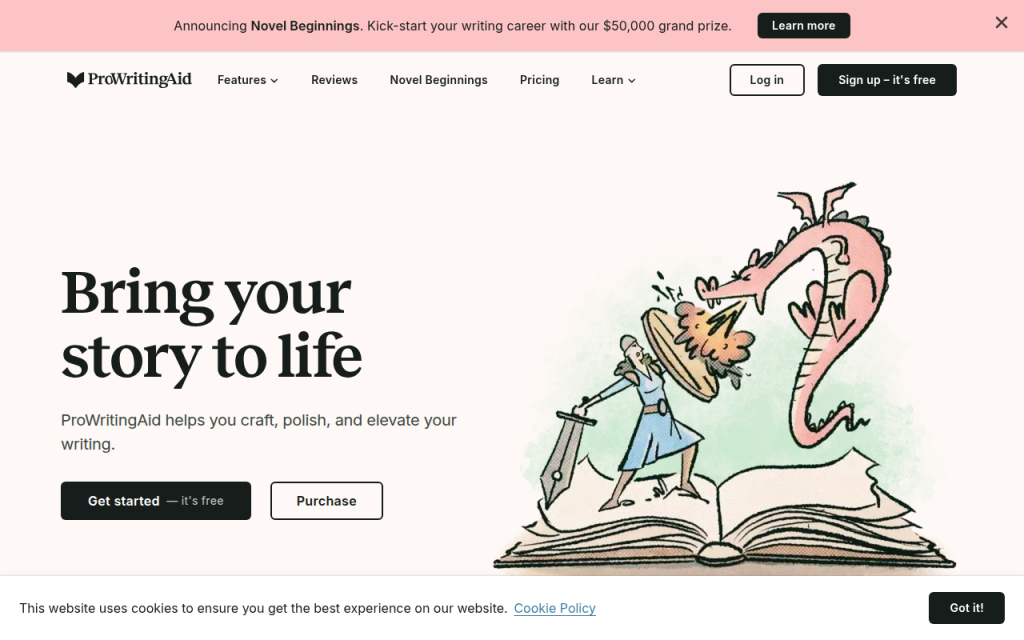
ProWritingAid is better thought of as a deeper writing analysis platform than a lightweight spellcheck replacement. Its free functionality can help everyday users, but it shines most with longer-form writers who want feedback on style, pacing, readability, repetition, and structure.
For fiction writers, bloggers, and long-form content marketers, this extra depth is valuable. Where some tools simply say “change this,” ProWritingAid helps you understand broader writing patterns. That said, its interface can feel more analytical than casual users need.
Key features
ProWritingAid delivers grammar and style reports, detailed writing analytics, and integrations for Word and browser workflows, making it useful for long-form editing.
Pros and cons
ProWritingAid is excellent for deeper style analysis and reporting, which suits serious writers and editors. It can feel heavy for simple email editing, free usage limits are noticeable, and there is a learning curve compared with simpler tools.
The free plan offers limited access, while premium expands the number of reports, integrations, and document support.
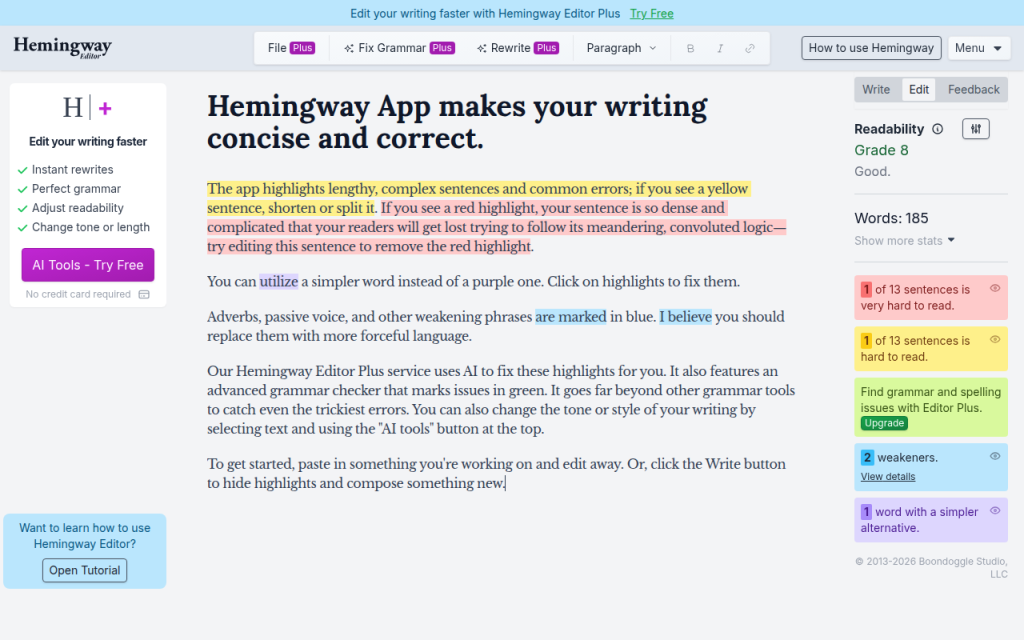
Hemingway is not the strongest pure grammar checker on this list, but it deserves a place because it solves a different problem extremely well, readability. If your writing is technically correct yet still hard to read, Hemingway can be more useful than a grammar-first tool.
It highlights long sentences, dense phrasing, excessive adverbs, and passive voice. For website copy, blog content, sales pages, and internal documentation, that kind of clarity feedback can be more valuable than catching a missing comma.
Key features
Hemingway emphasizes readability by highlighting complex sentences, dense phrasing, and passive constructions, and it provides a distraction-free interface for focused editing.
Pros and cons
Hemingway is excellent for simplifying dense writing and is very useful for readability-focused editing. It is not a comprehensive grammar checker, can push writing toward oversimplification, and is less helpful for nuanced correctness issues.
There is a free web version, with desktop options available separately.
Ginger has long focused on helping users improve sentence construction, making it particularly useful for ESL learners and business users who want rewrite-style support. It combines grammar correction with phrasing assistance in a way that feels practical for everyday communication.
Its interface and brand may not feel as dominant as Grammarly’s, but it still earns attention for users who care about sentence-level fixes and alternative wording. It can be a useful secondary tool when a first checker catches errors but does not help enough with flow.
Key features
Ginger provides grammar correction alongside sentence rephrasing, with desktop and mobile support for users who want alternative wording suggestions.
Pros and cons
Ginger is helpful for non-native English speakers and offers useful rewrite-style support. Free tier limitations are noticeable, it is less widely integrated than top rivals, and the interface is less streamlined than some newer tools.
Ginger uses a freemium model, with more robust writing assistance available in paid plans.
How to Choose the Right Free Grammar Checker for Your Needs
The best free grammar checker is not necessarily the one with the most features. It is the one that fits your writing habits, tolerance for noise, and privacy requirements. If you write short emails all day, you want speed and browser integration. If you write long articles, you may care more about readability and style analysis.
Accuracy also depends on what you write. A tool that performs well on general business English may struggle with legal language, technical documentation, creative dialogue, or industry shorthand. The right question is not “Which tool is best?” but “Best for what kind of writing?”
Decision factors that matter
Start with accuracy for your use case by pasting in a real sample, not a polished paragraph from a homepage. Check privacy, especially if you handle client data, contracts, medical information, or internal business content. Then evaluate language support, integrations, interface quality, and the likely cost to upgrade if the free plan feels too limiting.
A browser extension is a huge advantage for many users, but not for everyone. Some people prefer a clean web editor because they do not want suggestions popping up in every text field online. Others want offline or desktop support because they write in Word or work with sensitive documents.
Quick decision checklist
If you want the shortest path to a good choice, use this simple filter: for general business convenience, start with Grammarly. For multilingual or privacy-aware needs, try LanguageTool. Students who want quick web-based edits will find QuillBot approachable. Long-form writers and editors benefit from ProWritingAid. Marketers focused on readability should use Hemingway. ESL users needing sentence help may prefer Ginger.
Red flags to watch for
A free tool stops being helpful if the privacy policy is vague, upload limits are too restrictive, or the interface buries basic suggestions behind constant upgrade prompts. Also be cautious if a tool offers very little detail on how it handles stored text, shared data, or AI training. Poor context awareness is another red flag; if a tool keeps flagging correct industry terms or pushing obviously wrong changes, it may create more editing work than it saves.
Step-by-Step: Using a Free Online Grammar Checker Effectively
Most people get mediocre results from grammar tools because they use them too late or trust them too much. The best workflow is not “paste text, accept all, done.” It is a short editing sequence where the tool helps you think more clearly.
Preparing your text and context
Before checking grammar, decide who the writing is for and how formal it should sound. A sales email, support response, investor update, and blog post all need different wording. If the tool allows tone or audience context, use it. Even a rough context cue improves suggestions.
Next, clean up obvious issues yourself. Remove duplicate fragments, unfinished sentences, and placeholder notes. Grammar tools work better when the draft is complete enough to show your intended meaning.
Best practices for accepting or rejecting suggestions
Treat every suggestion like a junior editor, not a law. Ask two questions: Is the suggestion technically correct, and does it improve the sentence for this audience? Sometimes the answer to the first is yes and the second is no. For example, a tool might suggest simplifying a sentence that is deliberately formal because you are writing a proposal or legal notice. In that case, precision may matter more than simplification, so reject the change.
How to combine tools for better results
A strong workflow often combines one grammar checker with one readability tool and a final human pass. You might use Grammarly or LanguageTool for correctness, then Hemingway for clarity, then do a final manual read for tone and nuance. If you publish professionally, especially in academic, legal, or brand-sensitive contexts, consider grammar software as the first screen, not the final authority.
Privacy, Security, and Data Concerns with Free Grammar Tools
Privacy is one of the most overlooked parts of choosing an online grammar checker free tool. Many people paste client emails, contracts, internal strategy documents, resumes, or product roadmaps into these platforms without thinking about where that text goes.
Because these tools often process writing in the cloud, your text may be transmitted to remote servers for analysis. That does not automatically make a tool unsafe, but it means you need to read the privacy terms more carefully than most roundup posts suggest.
What to check in a privacy policy
Look for plain answers to these questions: How long is text retained? Is content used to improve models or services? Is data shared with subprocessors or third parties? Can you delete stored content? Are there different terms for free users versus business users? If the language is overly vague, that is worth noticing. A privacy policy should tell you enough to understand the risk level, not force you to guess.
Safer options for sensitive content
If you work with sensitive information, the safest options are typically local editing tools, on-device solutions, or paid business plans with stronger contractual protections. In some cases, open-source or self-hosted language tools can make sense for technical teams.
For many solo users, a practical middle ground is to avoid pasting highly sensitive text into web editors and instead use desktop integrations or anonymized drafts wherever possible.
Practical tips to reduce risk
If you need a grammar check on sensitive material, remove names, account numbers, pricing details, internal code names, and confidential identifiers first. Replace them with placeholders, run the check, then restore the original details locally. That extra minute is often worth it. Good writing is valuable, but not at the cost of exposing information that should stay private.
Limitations and Common Mistakes of Free Grammar Checkers
Free grammar tools are useful, but they have blind spots. They are strongest on surface-level correctness and weakest on context, nuance, voice, and specialized language. This matters because the closer your writing gets to persuasion, creativity, or technical precision, the more costly a bad suggestion can be.
They also struggle with intentional rule-breaking. Creative writing often uses fragments, repetition, or unusual punctuation for effect. Marketing copy sometimes does the same. A tool may flag those choices as errors even when they are doing their job.
Typical false positives and false negatives
A false positive is when the tool flags something that is not actually wrong. For example, in the sentence “Let’s move fast. Really fast.” a checker may dislike the fragment. But in marketing copy, that fragment may be intentional and effective.
A false negative is when the tool misses a real problem. For example, “We help startups scale securely, quickly, and without increasing operational complexity for teams that are already overloaded” may be grammatically acceptable, but still too dense for easy reading. Some grammar tools will let that pass.
Jargon can also confuse checkers. A developer writing “containerized microservices” or a finance professional writing “EBITDA adjustments” may trigger irrelevant suggestions, especially in tools trained mostly on general-purpose prose.
When to get human editing
If the stakes are high, human review still matters. That includes investor decks, legal terms, grant applications, academic submissions, thought leadership articles, and major website copy. A human editor can understand subtext, persuasion, and audience expectations in ways a free grammar checker cannot. Use software to catch what is obvious, then apply judgment or a human pass to refine what matters.
Advanced Tips: Getting Better Results From Any Grammar Tool
You can improve almost any grammar checker by giving it better input and using it in the right sequence. This matters even more now that many tools mix rules with AI suggestions.
How to give AI-based tools better context
If the tool allows custom instructions or rewrite context, be specific. Tell it the audience, desired tone, reading level, and purpose. For example, “Rewrite for a busy B2B client, concise, confident, and polite” will usually produce better results than asking for a generic improvement. Context helps the model choose between technically valid but stylistically different options.
Combining rule-based and AI suggestions
A useful pattern is to trust rule-based corrections more for punctuation, agreement, and spelling, while treating AI-style rewrites as optional ideas. Rules are often reliable for mechanics. AI can be great for clarity, but it is also more likely to distort your meaning. This separation keeps you from accepting a polished-sounding sentence that is less accurate than the original.
Build a personal editing checklist
The most effective writers do not rely only on tools. Create a short style checklist for recurring issues, such as sentence length, jargon, headline tone, Oxford comma preference, contractions, or preferred product names. Once you know your patterns, grammar tools become more useful because you are not asking them to define good writing for you. You are using them to support standards you already understand.
Frequently Asked Questions
Are free grammar checkers reliable enough for academic work?
They are reliable enough for basic proofreading, but not for final academic review. They can catch surface-level issues, yet they may mishandle discipline-specific wording or make style suggestions that do not fit academic conventions. For important submissions, combine a grammar tool with manual review and, if possible, a human editor or supervisor.
Do grammar checkers store or use my writing to train models?
Sometimes, depending on the tool and plan. Policies differ. Some services retain text temporarily for processing, some may use data for service improvement under certain terms, and some business tiers offer stronger protections. Always review the current privacy policy before uploading sensitive content.
Can they detect plagiarism?
Some can, but plagiarism detection is usually not fully included in free plans. Even when available, it is often part of a premium feature set or a separate product. If plagiarism screening matters for academic or publishing reasons, confirm exactly what the free tier includes before relying on it.
Conclusion, Quick Recommendations and Next Steps
If you want the safest all-around starting point, begin with Grammarly for general writing convenience or LanguageTool if you need multilingual support or want a strong alternative. Choose Hemingway if readability is your primary goal, ProWritingAid if you write long-form content, and QuillBot or Ginger if you want quick sentence help and easy web-based editing.
The best next step is practical. Take one real piece of writing, such as an email, proposal, blog intro, or support reply, and test it in two tools from this list. Compare not just how many errors they find, but whether the suggestions actually improve the message. That small test will tell you more than any feature page.
For further improvement, keep a trusted style reference nearby, such as the AP Stylebook, Chicago Manual of Style, or your own internal brand guide. A free online grammar checker is excellent for catching mistakes. Your judgment is what turns clean writing into effective writing.
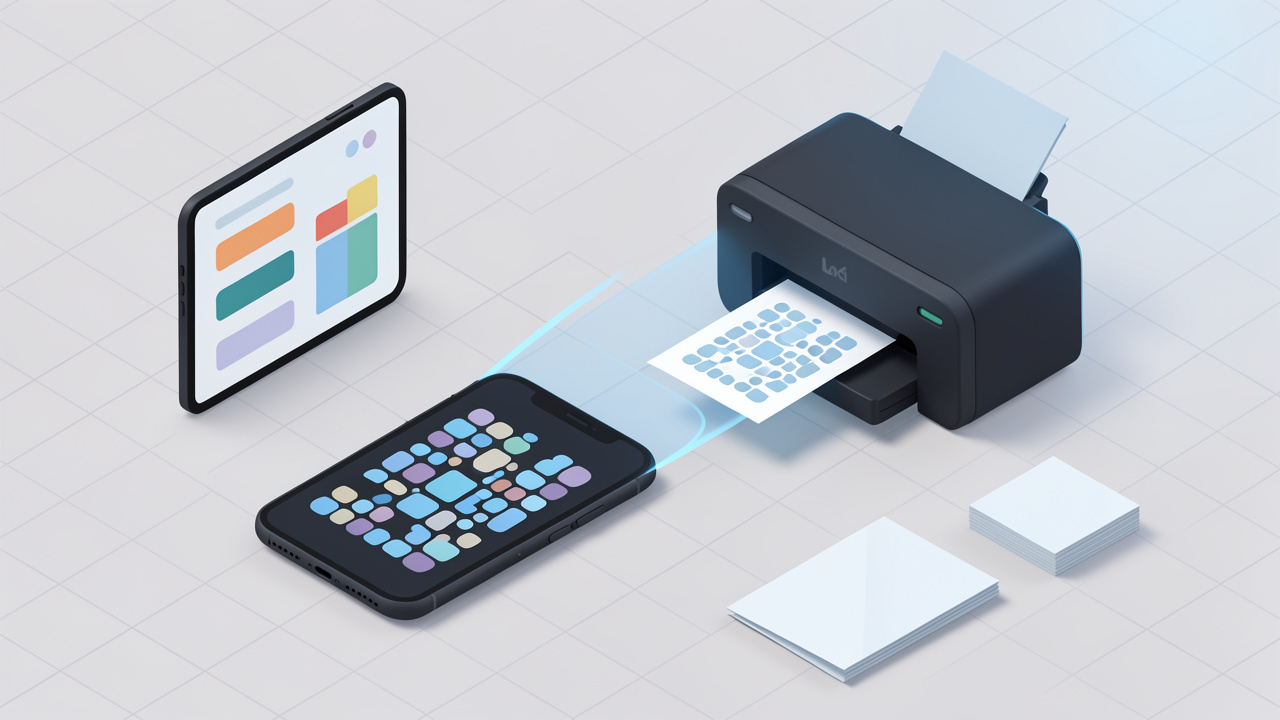
A good QR code generator online can turn a plain link, menu, contact card, or payment request into something people can scan in seconds.
A bad one can leave you with blurry exports, broken redirects, weak analytics, or a printed code you cannot change after 1,000 flyers are already out the door.
That is why choosing the right tool matters. Small business owners want something fast and affordable. Freelancers care about branding and ease of use. Developers often need APIs, automation, and predictable output. This guide covers all three angles, with a practical how-to, a balanced comparison, and a clear decision framework so you can pick the right online QR code generator without trial and error.
What is an online QR code generator?
Quick definition and how it works
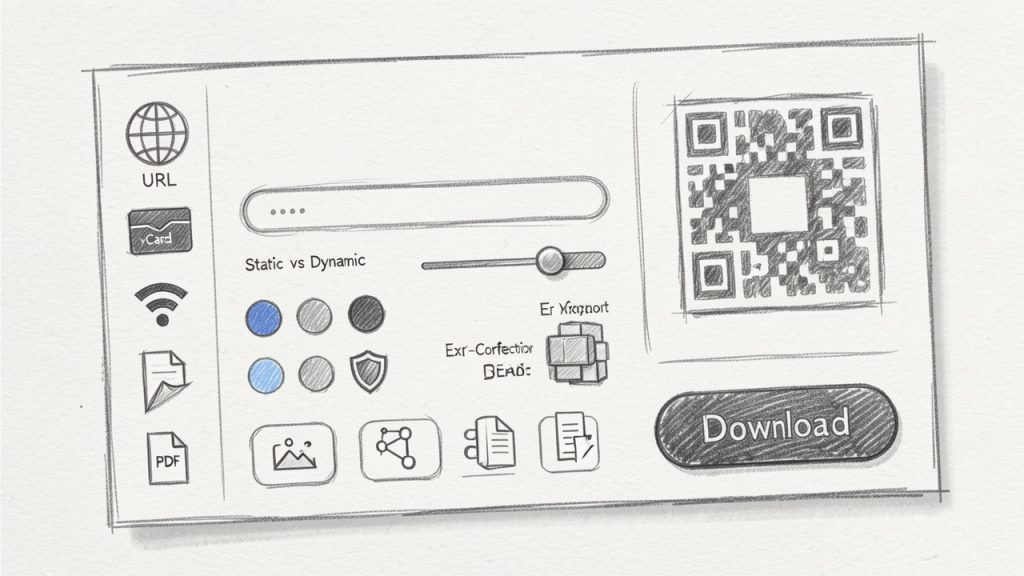
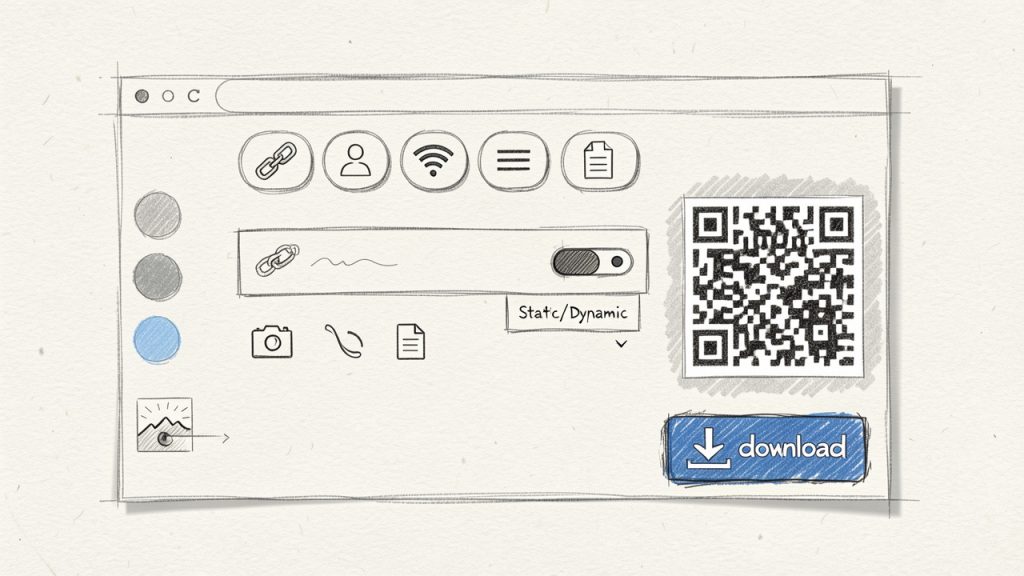
An online QR code generator is a web-based tool that converts information into a scannable QR code image. Instead of installing software, you open a browser, choose a content type, paste in your data, and download the finished code as an image or vector file.
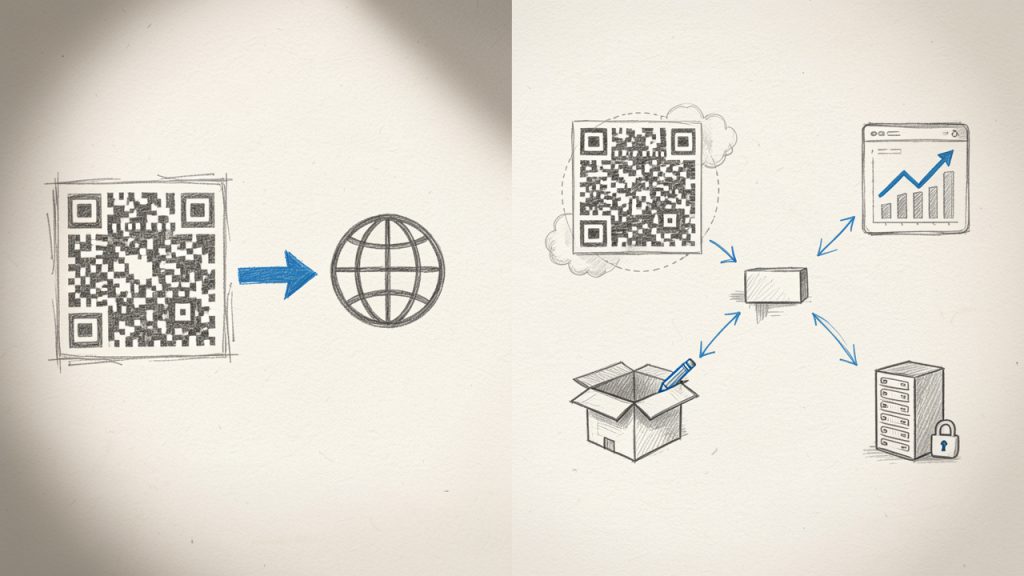
Behind the scenes, the tool encodes your content into a matrix of square modules. A phone camera reads that pattern, reconstructs the data, and triggers an action such as opening a URL, joining Wi-Fi, saving a contact, or displaying text. Most generators also let you choose export formats like PNG, SVG, or PDF, and many offer design controls such as colors, frames, and logo placement.
QR codes also include error correction, which allows the code to remain scannable even if part of it is damaged or covered. That is useful on packaging, signage, or business cards. But higher error correction can make the pattern denser, so customization needs to be handled carefully.
Common QR code types (URL, vCard, Wi‑Fi, text, email, SMS, PDF, event)
Most online tools support the most common QR code formats used by businesses and individuals. A URL QR code is the simplest and most common, often used for websites, menus, forms, landing pages, app downloads, and portfolios.
A vCard QR code stores contact details so someone can save your name, phone number, email, and company instantly. Wi‑Fi QR codes let guests join a network without typing a password. Email and SMS QR codes prefill communication details, which is useful for support or lead capture. PDF and file-based QR codes point users to downloadable assets such as brochures or manuals. Event QR codes can contain calendar information like date, time, and location.
For business use, URL and dynamic landing page codes dominate because they are flexible and measurable. For personal use, vCard, Wi‑Fi, and text codes are often enough.
Static vs dynamic QR codes, key differences and use cases
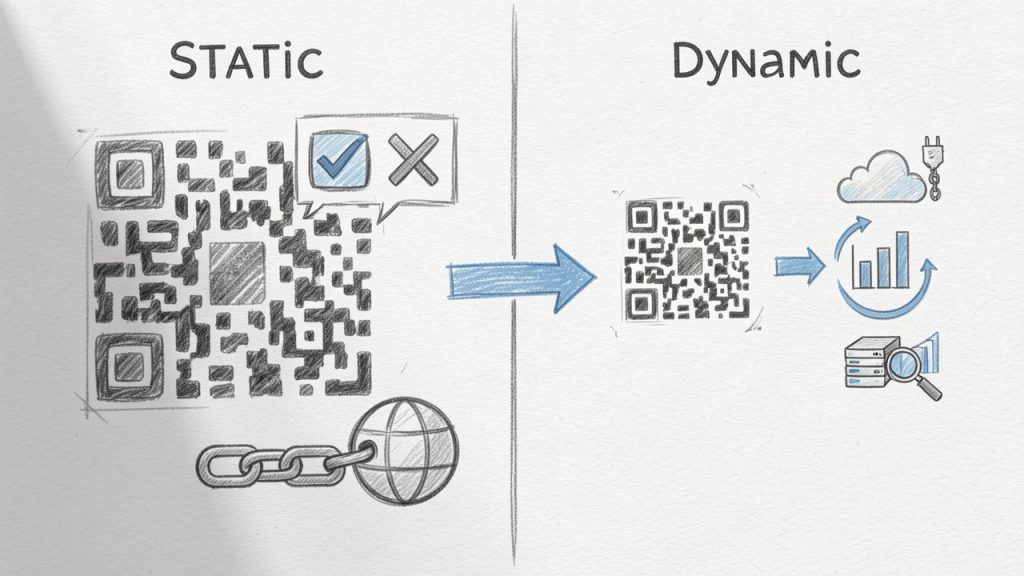
A static QR code directly stores the final content. If you encode a URL into it, that URL is permanent. Static codes are usually free, simple, and ideal for information that will not change, such as a personal website, a permanent portfolio link, or a stable support page.
A dynamic QR code points to a short redirect URL managed by the provider, which means you can change the final destination later without changing the printed code. This is extremely useful for restaurant menus, campaigns, product packaging, event materials, and any situation where content may evolve after printing.
Dynamic codes also enable scan analytics, device insights, geographic trends, and campaign management. The trade-off is that they usually require a paid plan and depend on the provider’s infrastructure. If the subscription ends or the provider changes limits, your code behavior may be affected, so provider reliability is a real selection factor, not just a pricing detail.
Why use an online QR code generator, benefits and limitations
Benefits, speed and accessibility
The main appeal of a QR code generator online is speed. You can go from idea to downloadable file in under a minute, without installing desktop software or dealing with graphic design tools. That matters when you need a code for a flyer, invoice, event badge, or product insert right away.
Online tools are also accessible from anywhere. A freelancer can create a vCard QR code on a laptop, a café owner can update a menu from a tablet, and a marketer can build campaign codes from a browser while collaborating with a remote team. Many platforms provide templates, brand color controls, logo options, and multiple file formats so the same code can be used on social posts, posters, print collateral, and packaging.
Limitations, privacy and reliability
Not every free tool is truly free in practical terms. Some add watermarks, limit high-resolution exports, or gate dynamic codes behind a subscription. Others let you build a code but retain control over tracking links, analytics dashboards, or branded landing pages.
Privacy is another real issue. If you create dynamic QR codes through a third-party platform, that provider may process scan data, destination URLs, campaign names, or visitor metadata. For basic use, that may be acceptable. For healthcare, finance, internal operations, or regulated customer data, it may not be.
Reliability matters too. If you print a dynamic code on packaging and the provider’s redirect service fails, users hit a dead end. For mission-critical use, you want strong uptime, account controls, and a clear understanding of what happens if your plan lapses.
When to choose a free tool versus paid or enterprise solutions
A free tool makes sense when you need static QR codes, simple exports, and no analytics. It is perfect for portfolio links, Wi‑Fi access cards, contact sharing, internal labels, or one-off printed materials where the destination will not change.
A paid tool is better when you need dynamic redirects, tracking, campaign organization, editable destinations, multiple team members, or brand consistency across many codes. An enterprise solution becomes worthwhile when QR codes are tied to customer journeys, asset management, retail packaging, large events, or compliance-sensitive workflows.
How to pick the best QR code generator for your needs
Key criteria you should check
Start with the use case, not the tool. If you need a QR code for a business card, almost any solid generator will do. If you need to manage 500 product QR codes, rotate destinations seasonally, and export data into your reporting stack, your shortlist gets much smaller.
The most important criteria are content type support, static versus dynamic options, analytics quality, customization controls, and export formats. For print, SVG and PDF matter because they scale cleanly. For digital use, PNG is often enough. If you are a developer or part of an ops team, look for API access, bulk generation, and campaign-level organization.
Security and privacy checklist
Before committing to a platform, ask simple but important questions. Does the site use HTTPS? Does it explain how scan data is stored? Can you restrict team access? Is there a way to delete codes or export ownership data? Does the provider document privacy compliance or data processing terms?
If you plan to collect user interactions through dynamic codes, especially in the EU or similar regulated markets, your privacy posture matters. QR scan analytics can include location patterns, device types, and timestamps. Even when data is aggregated, it can still fall into a broader compliance conversation.
Budget and licensing considerations
Pricing models vary more than people expect. Some tools are free for unlimited static codes but charge for dynamic ones. Others price by code volume, scan volume, or feature tier. A design platform may include QR generation as part of a broader subscription, while enterprise tools package analytics, integrations, and support into higher monthly contracts.
If you are comparing costs, calculate the total value of one printed mistake. A paid dynamic plan may cost less than reprinting menus, shelf talkers, or event materials because a destination changed.
Step-by-step guide, create a QR code online
Step 1, choose the QR code type and enter content
Begin with the end action you want the user to take. If the goal is to drive traffic, use a URL QR code. If the goal is contact sharing, use a vCard. If it is convenience in a physical location, Wi‑Fi may be the right fit.
Keep the destination clean and purposeful. For links, use final URLs that are mobile-friendly and fast-loading. If you are tracking campaigns, apply UTM parameters consistently so analytics are meaningful after the scan.
Step 2, select static or dynamic and set redirect options
Choose static if the destination will stay fixed. Choose dynamic if you might need to update the destination later, pause a campaign, A/B test landing pages, or review scan analytics.
For dynamic campaigns, define naming conventions early. A label like “Spring Poster” is not enough at scale. Use structured names such as “2026-Q2-Retail-Window-NYC-A” to make later reporting and management straightforward.
Step 3, customize design with accessibility in mind
A branded QR code can look great, but scan reliability always comes first. Maintain strong contrast between foreground and background. Dark code on a light background is still the safest choice. Avoid busy backgrounds, low-contrast color pairs, and oversized logos that eat into the scannable area.
If you add a logo, use an appropriate error correction level and test aggressively. Decorative frames can improve response rates because they signal action, but keep the quiet zone, the blank margin around the code, intact.
Step 4, set tracking and test across devices
If your platform offers analytics, enable them before launch. Use campaign naming and UTM structure that match the rest of your marketing stack. That way, scans can be tied back to source materials, locations, or placements.
Then test on multiple devices, under real conditions. A code that scans perfectly on a new flagship phone in bright office light may struggle on an older budget phone in a dim restaurant. Test both iPhone and Android if possible, and check common camera apps rather than relying on a single scanner app.
Step 5, download the right file format for print or web
Use PNG for quick digital use, social graphics, or slide decks. Use SVG for logos, signage, packaging, and any design that may be resized. Use PDF when delivering assets to printers or embedding in production-ready materials.
For print, avoid tiny codes. In many real-world cases, at least 2 x 2 cm is a practical minimum for close-range scanning, while posters and signage usually need more. If the scanning distance increases, the code size should increase too. A useful rule of thumb is that the scanning distance should be roughly ten times the code width.
Comparison: Top online QR code generators (features, pricing, pros & cons)
Overview of evaluated tools
The tools below are among the most visible and useful options for people searching for a QR code generator online. They differ in philosophy. Some focus on free static generation and design flexibility. Others focus on dynamic campaigns, enterprise controls, or template-driven design workflows.
Tool
Best For
Static Codes
Dynamic Codes
Analytics
Design Customization
API/Automation
Typical Pricing Position
QRCode Monkey
Free, high-quality static codes
Yes
Limited via related services
Limited
Strong
No major public focus
Free-first
QR Code Generator by Egoditor
General business use
Yes
Yes
Yes
Good
Limited compared with enterprise tools
Freemium
Beaconstac
Teams, enterprise, analytics
Yes
Yes
Strong
Good
Yes
Premium
QRStuff
Straightforward business use
Yes
Yes
Moderate
Moderate
Limited
Mid-range
Canva
Design-first users
Yes
Limited depending on workflow
Limited
Excellent in design context
No
Subscription ecosystem
QRCode Monkey
QRCode Monkey is one of the most popular choices for people who want a free online QR code generator with strong visual customization. It is especially appealing to freelancers, designers, and small businesses that need high-resolution codes quickly without getting pulled into a complex subscription flow.
Features include high-resolution PNG and SVG exports, logo and color customization, and support for multiple content types. Its simplicity and quality output make it a reliable pick for brochures, posters, packaging mockups, or business cards.
Its main advantages are ease of use and excellent free static QR code generation with strong customization for visual branding. The downsides are limited analytics and dynamic management, which make it less suitable for enterprise workflows that require campaign tracking or API automation.
This platform balances consumer simplicity and business functionality. It supports both static and dynamic QR codes, offers editable destinations and basic scan analytics, and provides business-ready templates for common use cases like promotions, menus, and landing pages.
It is a good fit for marketers, local businesses, agencies, and teams who want editable destinations and tracking without committing to enterprise pricing. Advanced analytics may be limited compared with enterprise platforms, and free access is narrower than static-only tools, so costs can rise as usage grows.
Beaconstac is geared toward serious business use where dynamic QR codes, analytics, team controls, integrations, and operational reliability matter. It supports advanced dynamic QR management, campaign analytics, team and enterprise features, API and integration support, and is built for compliance-aware environments.
This tool is strong for scale and governance, making it suited to packaging, retail, field marketing, customer journeys, and multi-location campaigns. The trade-offs are higher cost and increased setup discipline to get full value, so it may be overkill for basic personal use.
QRStuff is an established, practical option for users who want a broad selection of QR content types without a design-heavy workflow. It supports many content types, static and dynamic options, and a simple interface, which makes it useful for educators, small businesses, and non-designers.
Its appeal is breadth and familiarity rather than cutting-edge design controls. Customization is less polished than some competitors and analytics depth may not satisfy larger teams, but it remains a solid practical option for many scenarios.
Canva is not a dedicated QR platform, but it is valuable for users who already design flyers, menus, posters, and social graphics there. Generating a QR code inside a layout saves time and preserves visual consistency, which is why many small businesses prefer it.
Canva’s strength is context and template integration rather than deep analytics or dynamic campaign management. If you need enterprise-level tracking or API access, a dedicated QR platform will be a better fit.
In print, placement matters almost as much as the code itself. A QR code tucked into a crowded corner of a flyer often underperforms, even if it scans fine. Give it room, pair it with a clear call to action, and make the destination match the user’s context. A poster in a shop window should not send users to a cluttered homepage; it should route to the exact offer.
For business cards, use a QR code to reduce friction. A vCard or booking link often performs better than a generic homepage. For posters and public signage, expect scan rates to depend heavily on visibility, urgency, and the clarity of the action promised.
Restaurants and menus
Restaurant QR codes need durability and trust. If the code links to a PDF menu that loads slowly, the user experience breaks immediately. A mobile-friendly webpage is often better than a heavy file. The code should be easy to wipe clean, physically visible, and not buried among decorative patterns.
Dynamic QR codes are especially valuable here because menus change. One printed table card can continue working across seasonal updates, item changes, or language variations.
Events and ticketing
For events, QR codes can handle registration, maps, agenda pages, and ticket validation. Security matters more in this context. If codes grant access or reveal attendee information, do not treat them as casual marketing assets.
A dynamic QR setup can help rotate destinations or disable outdated pages after the event. It also allows organizers to track where attendee engagement is strongest, such as entrances, booths, or printed schedules.
Product packaging and inventory
On packaging, QR codes often outlive the original campaign timeline, which makes dynamic management especially useful. A code can first support a launch page, then later route to instructions, warranty registration, or updated compliance information.
For inventory or asset tracking, reliability beats decoration. Use high contrast, consistent labels, and durable materials. Fancy styling rarely helps in warehouse conditions.
Contactless payments and check-ins
Payment and check-in flows raise the stakes because users expect speed and confidence. If you link to payment pages, use trusted domains and clear branding. If you support venue check-ins, consider privacy disclosure and how long associated data will be retained.
Troubleshooting and FAQs
Why won’t my QR code scan?
The most common causes are low contrast, insufficient size, poor print quality, broken quiet zone, or over-customization. If you inserted a large logo, changed the eye shapes, and used a gradient on a dark background, the design may simply be too aggressive.
Start by testing the plain black-and-white version. If that scans reliably, add branding back gradually.
How to track scans and where analytics might be misleading
Scan analytics are useful, but they are not perfect. A “scan” may represent a camera recognition event, a redirect hit, or a user who never fully loaded the destination page, depending on the provider. That means QR platform data and web analytics may not match exactly.
Use QR scan data as directional insight, then confirm behavior with landing-page analytics and campaign tags.
How to change destination after printing
You can only change the destination after printing if the QR code is dynamic. Static codes are fixed once generated.
If flexibility matters, always choose dynamic for printed materials with any chance of future updates.
Legal and privacy questions
If your QR setup collects scan metadata or routes users to forms, privacy obligations may apply. In GDPR-sensitive contexts, be transparent about data collection, minimize unnecessary tracking, and coordinate with your legal or compliance team when scan data links to identifiable individuals.
Recommended workflow and checklist before launch
A reliable QR workflow prevents expensive mistakes. Treat QR codes like mini digital products, not just images. Define the objective, assign ownership, test under real conditions, and keep a version record of every live code.
Before launch, confirm the destination URL, mobile usability, print size, contrast, file format, and device testing coverage. After launch, monitor scan trends, landing-page conversions, and failure signals such as sudden drop-offs or geographic anomalies.
Stage
What to Check
Why It Matters
Pre-launch
Destination URL, UTM tags, mobile page speed
Prevents broken journeys
Design review
Contrast, quiet zone, logo size, CTA text
Protects scan reliability
Testing
iPhone, Android, bright light, dim light, print sample
Reduces real-world failure
Deployment
Final export format, print proof, version naming
Avoids production mistakes
Post-launch
Scan trends, page conversions, redirect status
Enables optimization
Resources and tools
Quick references (size and print table, contrast rules)
A few practical guidelines go a long way. Keep contrast high, preserve the quiet zone, and scale the code to match the expected scanning distance. For close-up materials like table tents or business cards, a modest size may work. For walls, posters, or storefront glass, increase size generously.
Use Case
Recommended Starting Size
Best Format
Business card
2 x 2 cm
SVG
Flyer or brochure
2.5 to 3 cm
SVG or PDF
Table tent/menu card
3 to 4 cm
SVG or PDF
Poster
4 cm and up
SVG or PDF
Packaging label
Depends on viewing distance, often 2.5 cm+
SVG
Links to tools and further reading
For tool evaluation, start with the official sites mentioned in this guide. For standards and technical background, consult authoritative references such as ISO-related materials, printer guidelines, and analytics platform documentation. Also review your web analytics setup so scan traffic is categorized properly.
Free assets (print-ready templates, QR test checklist)
If you build QR codes regularly, create your own internal assets: a print proof template, a naming convention sheet, and a device testing checklist. These lightweight documents save more time than hopping between tools.
Conclusion, which QR generator should you use?
If you want the best free QR code generator online for static, high-quality, customizable exports, QRCode Monkey is an easy recommendation. If you want a balanced business tool with dynamic options, QR Code Generator by Egoditor is a practical fit. If analytics, team management, and scale are priorities, Beaconstac is the stronger choice. If you prefer straightforward breadth, QRStuff still holds up. If your workflow starts in design, Canva is the most convenient.
The right choice depends less on the QR code itself and more on what happens after the scan. Pick the tool that matches your need for flexibility, measurement, and reliability.
Then test it like it matters, because once a QR code is printed, it often does.
You have a PDF that needs editing, a client asking for a Word file, or a contract trapped in a scanned image. Converting a PDF into an editable Word document is one of those everyday productivity tasks that can save hours of manual retyping. Fortunately, there are reliable, free ways to do it that work for small business owners, freelancers, developers, and anyone who values speed and accuracy.
This article explains what a free Pdf to word converter actually does, the trade-offs to expect, how conversion works behind the scenes, and clear, practical steps to get the job done quickly and safely. Read on to choose the right approach for your file type, privacy requirements, and desired outcome.
What is a Pdf to word converter?
A Pdf to word converter is a tool that transforms a Portable Document Format file into an editable Microsoft Word document, usually .doc or .docx. The goal is to preserve the original layout, text, images, tables, and fonts as closely as possible while producing content you can change, comment on, or repurpose.
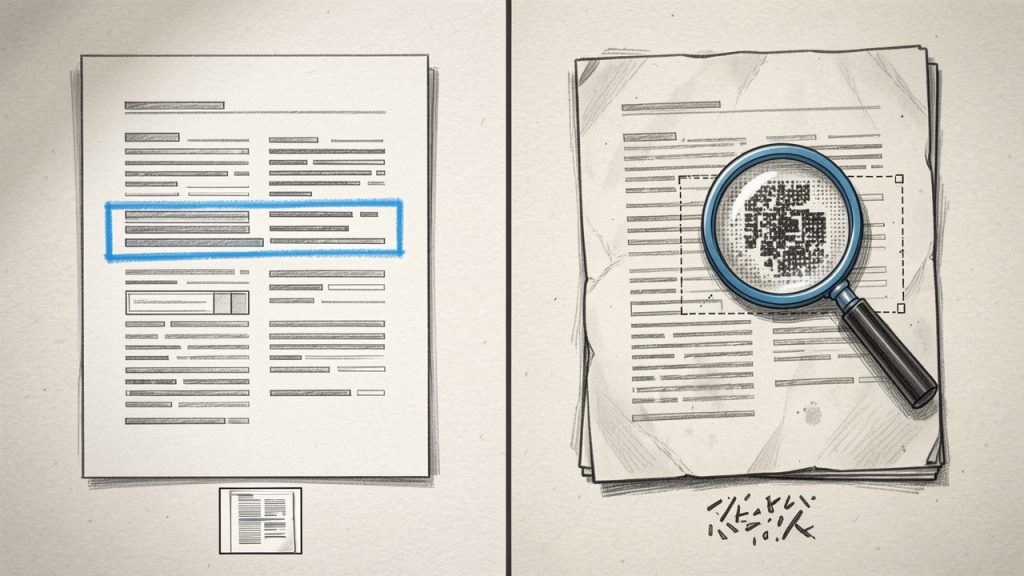
Not all conversions are the same. A simple text PDF created from a Word export converts with high fidelity because the PDF already contains selectable text. A scanned PDF, which is an image of each page, requires optical character recognition, or OCR, to extract text. OCR adds complexity and often requires trade-offs between accuracy, formatting, and speed.
Think of conversion like translating a printed newsletter into a document template. You want the translation to keep headlines, columns, and images in place, but you also want the text to be editable without extra cleanup. A good free converter balances that, and this article helps you pick one depending on the file you have and the result you need.
Key Aspects of Pdf to word converter
Accuracy and formatting fidelity
When you search for Pdf to word converter, accuracy will be the central concern. Tools differ in how well they preserve fonts, spacing, columns, headers and footers, and image placement. Converting a one-page resume is usually straightforward, but multi-column brochures, complex tables, or documents with custom fonts often need manual tweaks after conversion.
Accuracy generally depends on how the PDF was created. PDFs generated from digital sources like Word or InDesign contain embedded text and layout information that converters can map to Word styles. Scanned documents require OCR, which introduces possible misreads for unusual fonts, low-resolution scans, or handwritten notes.
OCR and scanned documents
A free converter that includes OCR is essential if your PDF is a scan. OCR analyzes the pixels and predicts letters and words. Modern OCR is quite good with printed text at reasonable resolution, but expect to proofread and correct errors, especially in columnar layouts and tables.
Some free OCR tools let you choose the language, output format, and recognition accuracy. Higher accuracy may increase processing time, and cloud-based OCR tools might upload files to remote servers, which raises privacy considerations.
Privacy and security
Privacy is a major factor for business and freelance users. Free online converters often process files on remote servers. If you are converting confidential contracts, financial statements, or personally identifiable information, verify the service’s privacy policy and retention rules. Desktop or open-source solutions that run locally avoid the upload step and keep data on your machine.
Always check whether the converter uses encryption during upload, how long temporary files are retained, and whether the provider explicitly deletes files after conversion. When in doubt, use an offline method.
File size limits and batch conversion
Free online converters commonly impose file size limits or daily quotas. If you work with large PDFs or need bulk conversions, these restrictions can slow workflows. Desktop tools usually handle larger files and batch processing more efficiently, but may require more setup.
Batch conversion capability is a practical consideration for agencies and freelancers who need to convert dozens of files at once. A free desktop solution or scripted approach tends to scale better than free web forms.
Compatibility and output quality
Not all converters produce the same .docx structure. Some convert visually, embedding text into text boxes and fixed positions, which preserves appearance but makes editing awkward. Others reconstruct paragraph styles and headings, which creates a more natural editing experience in Word. For long-form documents or those you plan to revise, prefer tools that produce editable flow text rather than fixed-position blocks.
Speed and convenience
For quick one-off conversions, an online free converter is often the fastest option. For repetitive work, desktop tools and integrated solutions like Google Docs or Microsoft Word may save time. Developers may prefer command-line or API-based free tools they can script into pipelines.
How to Get Started
Quick decision guide
Begin by evaluating three factors: sensitivity of the document, complexity of layout, and how often you need to convert files. If the document is confidential, choose an offline method. If layout is complex and fidelity matters, test a couple of tools and compare the outputs. If you convert frequently, invest time in a desktop or scripted solution.
Prerequisites
Before converting, ensure the PDF is high enough quality for OCR if needed. Scanned PDFs should be at least 200 to 300 DPI for better OCR accuracy. Make sure you have an editor that can open .doc or .docx files, and confirm you have permission to convert and edit the document. As a safety measure, keep a copy of the original PDF before conversion.
Step-by-step: Converting with a free online tool
Upload the PDF file to the converter website.
Select the output format as Microsoft Word (.doc or .docx).
Choose OCR options if your file is a scanned image.
Start the conversion and wait for the process to finish.
Download the resulting Word document and open it for proofreading.
This process is fast for simple documents and convenient when you are away from your main workstation.
Step-by-step: Converting offline using desktop software
Open Microsoft Word and choose File, Open, then select the PDF.
Allow Word to convert the PDF to an editable document.
Review the converted document and correct any formatting or OCR errors.
Save the file as .docx.
If you prefer open-source, LibreOffice can import PDFs and let you export to editable document formats, though results vary with layout complexity.
Tips for best results
Start with the highest-quality PDF available. If the PDF contains multiple languages, select the appropriate OCR language. After conversion, focus on headings, lists, tables, and special characters during proofreading. If fonts are missing, substitute similar ones to maintain layout while keeping text editable.
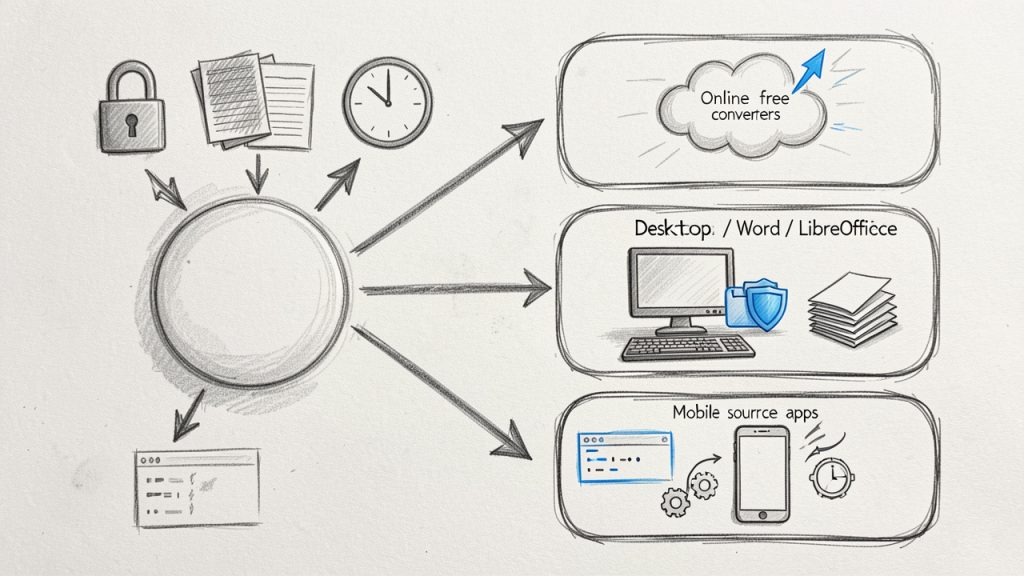
Comparison table: Types of free converters
Type
Cost
Best for
Pros
Cons
Online free converters
Free, sometimes limited
Quick single-file conversions
Fast, no install, easy UI
File size limits, potential privacy concerns
Desktop converters (Word, LibreOffice)
Free with existing software
Frequent users, large files
Local processing, no upload needed
Variable fidelity with complex layouts
Open-source tools and CLI
Free
Developers, automated workflows
Scriptable, no vendor lock-in
Requires setup, technical knowledge
Mobile apps
Free tiers available
Scanning and quick edits on the go
Handy for fieldwork, built-in camera OCR
Ads, in-app limits, privacy trade-offs
Handling complex elements: tables, images, and forms
Tables often cause the most trouble during conversion. Simple tables typically convert cleanly, but nested tables or those with merged cells may break into image elements or text blocks. If preserving table data is critical, consider extracting tables to CSV using a tool designed for table recognition, then reinsert or rebuild them in Word.
Images generally convert as embedded images that retain position. For forms and fillable fields, converting to Word will not preserve form functionality. If you need an editable form, consider recreating it in Word or using form-building tools after conversion.
Privacy-conscious workflows
If privacy matters, run conversions locally whenever possible. Use desktop applications, virtual machines, or open-source CLI tools that keep files on your device. If you must use online services, choose providers with clear data-deletion policies and TLS encryption. Avoid uploading files containing sensitive personal data or financial information unless the service explicitly supports secure workflows.
Common pitfalls and how to fix them
A frequent issue with a free Pdf to word converter is layout breakup, where paragraphs become text boxes or headings lose their styles. To fix this, paste the text into a fresh document and reapply styles, or use Word’s Find and Replace to remove extra line breaks.
Another pitfall is misrecognized characters after OCR, such as confusion between 0 and O or l and 1. A quick skim for common patterns and language-specific spell-check tools substantially reduces these errors.
Finally, images or graphics may lose resolution during conversion. If image quality is critical, extract the original images from the PDF before conversion and reinsert high-resolution copies into the Word document.
When to choose paid tools
Free converters cover many needs, but paid solutions become worthwhile for high-volume workflows, guaranteed security, batch automation, or the best possible fidelity for complex layouts. If you often convert legal documents, marketing collateral, or large manuals, evaluate paid options that offer enterprise-grade OCR, batch processing, and SLAs for data handling.
Conclusion
A Pdf to word converter is an indispensable tool for modern productivity when used with an awareness of its limits. For quick edits and one-off files, free online converters are efficient, while desktop and open-source solutions are better for privacy and bulk work. Understand whether your PDF contains selectable text or scanned images, choose the right tool for fidelity and privacy, and always proofread the converted Word file.
Next step: try a short test conversion with a non-sensitive PDF to compare results. If you need help choosing tools based on a specific document type or workflow, share a brief description and I will recommend a tailored approach.
Removing the background from an image does not have to be expensive or technically intimidating. Whether you sell products online, create social posts, build websites, or prepare presentations, a clean subject on a transparent background makes your visuals pop and improves professionalism. This article explains how to remove the background from an mage, what to expect from free tools, and practical steps to produce high-quality cutouts without costly subscriptions.
You will learn the difference between automated and manual methods, how to choose the right approach for your workflow, and quick tactics to improve results. The goal is to give small business owners, freelancers, and productivity-minded users a clear, actionable path to remove backgrounds effectively while avoiding common traps like low-resolution output or hidden watermarks.
What is it?
Removing a background means isolating the main subject of an image and replacing or making the surrounding area transparent. When you remove a background from an image, you use tools or techniques that let you create a transparent PNG, a clipped object for placement on colored banners, or a neatly masked subject for more advanced editing. The end result can be used for product listings, profile pictures, marketing assets, or layered designs.
There are two broad approaches. Automated tools use machine learning and edge detection to create a quick cutout with minimal input, often delivered in seconds. Manual methods rely on selection tools, masks, and brushwork, giving precise control for difficult edges like hair or transparent materials. Both approaches produce a similar goal, but they trade speed for control.
Technical concepts helpful to understand include alpha channels, masks, and clipping paths. An alpha channel stores transparency information so parts of the image can be fully or partially transparent. Masks allow non-destructive editing, letting you refine edges without permanently altering the original pixels. Clipping paths are vector outlines often used in eCommerce to guarantee crisp silhouettes.
Key Aspects of a background remover
Accuracy versus convenience
When considering free background removal, accuracy and convenience usually move in opposite directions. Fully automated web tools are convenient and fast, often delivering usable results for simple subjects on contrasting backgrounds. For complex scenes, manual refinement will be necessary to achieve professional quality. Understand that a single-click solution may require subsequent touch-ups to remove halos, preserve hair detail, or handle semi-transparent objects.
Output formats and resolution
Most users who remove backgrounds want a transparent result. PNG is the most common free format for transparency, while WebP can offer smaller file sizes with transparency support. Free tools sometimes limit output resolution, so check whether the tool preserves original image size or downsamples. If you plan to print or display large images, prioritize tools that maintain full resolution.
Privacy and data handling
Free online services may process images on remote servers. If your images contain sensitive information or unreleased product photos, consider an offline tool or verify the service privacy policy. Many reputable tools state they delete files after processing, but always confirm data retention policies before uploading proprietary assets.
Batch processing and workflow
Volume matters. For single images, an automated free tool is usually faster. For catalogs or multiple items, look for a method that supports batch processing. Some free desktop apps and web services offer batch options, while others require manual repetition. Time spent organizing a consistent shooting setup, with a solid background and even lighting, can drastically reduce time spent editing later.
Cost traps and licensing
A background remover can conceal limitations. Free tiers might add watermarks, impose daily credits, or restrict commercial use. Read the terms, and if you need high-volume or commercial licensing, evaluate paid plans. Free tools are excellent for testing and occasional use, and for long-term business consistency, plan whether a subscription is worth the efficiency gains.
How to Get Started
Before you begin, gather a few simple prerequisites to improve every result and speed up your workflow.
High-resolution image: Higher pixel counts retain detail after masking.
Contrasting background: A solid, contrasting background makes automatic detection more accurate.
Good lighting: Even lighting reduces shadows and color spill that confuse algorithms.
Original file: Keep the original unedited file so you can retry different methods.
Follow these steps to remove a background quickly using a typical free online tool, then use the alternative offline method if you prefer local editing.
Allow the automatic process to detect and remove the background.
Inspect the result at 100 percent zoom for edge artifacts and missed areas.
Use the refine brush or eraser to fix hairlines, semi-transparent edges, or small leftover pixels.
Export the final cutout as a PNG with transparency or WebP if file size is a concern.
Save a copy with a layer mask in a layered format if you plan further edits.
If you prefer an offline method for privacy or precise control, use a free editor such as GIMP or a web-based editor that supports masks. Open the image, create a duplicate layer, and use selection tools such as the foreground select, path tool, or quick mask to isolate the subject. Convert the selection to a mask and paint in or out to refine edges. Export as a transparent PNG when satisfied.
Tips to improve difficult cases
Working with hair, fur, glass, or motion blur can be challenging. Refine masks with feathering and contrast adjustments, manually paint on masks with a soft brush at low opacity to smooth transitions, and use color decontamination tools to remove background color bleeding from edges. For shiny or transparent objects, accept that some reflection or transparency is part of the object; sometimes adding a subtle shadow on a new layer gives a more natural result than trying to fully isolate transparent materials.
Troubleshooting common problems
If your cutout shows color fringes, add a small negative or positive contract to the mask edge to remove halos. If the tool fails on low-contrast subjects, try converting the image to higher contrast temporarily, perform the selection, then reapply to the original image. When hair is lost, switch to manual brush refinement and work at a high zoom level for precision.
Comparison of Free Background Removal Methods
Method
Ease of use
Quality
Output format
Best for
Limitations
Automated web AI
Very high
Good for simple subjects
PNG/WebP
Single images, speed
May downscale, limits/credits
Web-based editor (manual + auto)
High
Very good with refinement
PNG, layered exports
Fast manual fixes, browser-based
Learning curve, browser performance
Desktop editor (GIMP)
Moderate
Professional with time
PNG, PSD export via plugins
Privacy, full control
Requires skill, manual work
Mobile apps
Very high
Varies, often good
PNG
Quick social media edits
Quality varies, in-app purchases
Vector-based tracing
Moderate
Crisp for flat graphics
SVG, PNG
Logos and icons
Not suitable for photos, manual paths needed
Conclusion
Removing a background from an image for free is accessible and practical for business owners, freelancers, and developers who need clean visuals without heavy investment. Automated tools provide speed and convenience for straightforward images, while free desktop editors offer the privacy and precision needed for high-value or complex subjects. Pay attention to output formats, privacy policies, and any usage limits that may affect commercial workflows.
Next step, pick one approach and try it with a recent product photo or portrait. Practice with a high-contrast image to build confidence, then tackle more challenging shots as you learn masking techniques. If your needs grow, consider a paid option for batch processing and guaranteed resolution, but for many day-to-day tasks, free solutions deliver excellent results.
A JSON escape / unescape tool is a utility that escapes special characters in a JSON string (e.g., converts double quotes " to \" or newlines to \n) and unescapes those characters back to their original form, making JSON human-readable or suitable for use in various environments.
Why You Should Use a JSON Escape Tool
1. Prevent JSON Syntax Errors
Certain characters (like quotes " or backslashes \) can break your JSON if not escaped.
Escaping ensures the resulting string is valid JSON.
2. Embed User Input or Raw Text Safely
If you’re saving logs, code snippets, or user input inside JSON, escaping prevents issues like:
Unintended string termination
Broken JSON structure
3. Support for Special Characters
Characters like newline (\n), tab (\t), and Unicode symbols must be properly encoded to avoid display or parsing issues.
4. Avoid Security Risks
Escaping prevents malformed data or injections that might be exploited when JSON is parsed in browsers or other applications.
How a JSON Escape Tool Works
Accepts a raw string as input Example: swiftKopierenBearbeitenShe said: "That's awesome!\n"
Scans the string for special characters These include:
" → double quote
\ → backslash
Control characters (\n, \r, \t, \b, \f)
Non-ASCII characters (sometimes)
Replaces them with escaped sequences CharacterEscaped Form"\"\\\Newline\nTab\tUnicode\uXXXX Escaped result: jsonKopierenBearbeiten"She said: \"That's awesome!\\n\""
Outputs a valid JSON string
You can now insert this into any JSON document, API request, or data file without breaking it.
A CSS formatter is a tool that organizes and beautifies CSS code by adding proper indentation, spacing, and line breaks. It improves readability and consistency in CSS files.
Why Should You Use a CSS Formatter?
1. Improves Readability
Formats your code with consistent indentation, spacing, and structure.
Makes it easier for you and your team to quickly scan and understand styles.
2. Enforces Consistency
Teams often have style guides (e.g., indentation size, bracket placement).
A formatter ensures every file follows the same rules — automatically.
3. Easier Debugging
Clean, organized CSS helps you quickly find and fix issues.
You can spot duplicate selectors, unnecessary rules, or typos more easily.
4. Better Version Control
When code is formatted consistently, diffs in Git (or other version control) are cleaner.
You avoid messy diffs due to inconsistent spacing or indentation.
5. Faster Development
Tools like Prettier, CSScomb, or online formatters can auto-format your code.
You spend less time formatting manually and more time building.
6. Professionalism
It improves collaboration and makes onboarding easier for new developers.
Well-formatted code looks clean and polished — a sign of attention to detail.
How Does It Work?
A CSS formatter parses the CSS code into its structural components (selectors, properties, values), reorganizes the code with consistent indentation, line breaks, and spacing, and outputs the formatted CSS while preserving its functionality.
An HTML Formatter is a tool that takes raw or minified HTML code and reorganizes it with proper indentation, spacing, and structure to make it more readable and maintainable.
Raw HTML can be compact, messy, or difficult to navigate—especially when generated dynamically or written without formatting. An HTML formatter “cleans it up” for human eyes.
Why Should You Use an HTML Formatter?
Improved Readability Proper indentation and line breaks make it easier to understand the structure of your HTML document.
Easier Debugging Clean HTML helps you quickly identify mismatched tags, missing elements, or nested issues.
Code Consistency Team projects benefit from uniform formatting, making collaboration smoother.
Better Maintenance Well-formatted code is easier to update and extend over time.
Learning and Teaching Beginners can better understand how elements nest and relate when HTML is clearly formatted.
How Does It Work?
A Hex to RGB Converter works by:
An HTML Formatter works in three main steps:
Parsing The tool reads the HTML code and analyzes its structure (tags, nesting, attributes, etc.).
Structuring It determines the proper hierarchy of tags and how deeply each element is nested.
Outputting Formatted HTML It rewrites the code with line breaks and indentation that reflect the document’s structure.
A Hex to RGB Converter is a tool that converts color values from hexadecimal (hex) format to RGB (Red, Green, Blue) format.
RGB Format: Represents colors using three numbers (e.g., rgb(255, 87, 51)), each ranging from 0 to 255, corresponding to the intensity of red, green, and blue.
Hex Format: Used in HTML and CSS, it’s a 6-digit code (e.g., #FF5733) that represents colors using hexadecimal values.
Why Should You Use a Hex to RGB Converter?
Design Flexibility: Some design tools or frameworks require RGB values, even if your design uses hex codes.
Color Adjustments: RGB makes it easier to manipulate brightness or transparency programmatically.
Cross-Platform Consistency: Developers often need to convert colors between formats depending on where and how they are being used (web, mobile, graphics).
Ease of Understanding: RGB format is more intuitive when adjusting colors manually or applying effects like opacity or gradients.
How Does It Work?
A Hex to RGB Converter works by:
Splitting the 6-digit hex code into three 2-digit pairs:
HTML Escaping is the process of converting special characters into their corresponding HTML entities so that they are displayed as text in a browser instead of being interpreted as HTML code.
HTML Unescaping reverses this process — it converts HTML entities back into their original characters.
Why Should You Use HTML Escape/Unescape?
Security (Prevent XSS Attacks) Escaping helps protect against Cross-Site Scripting (XSS) by ensuring that user input is treated as text, not executable HTML or JavaScript.
Display Special Characters Safely Characters like <, >, &, and " have special meanings in HTML. Escaping ensures they display correctly.
Example: Displaying <div> as text on a page, not as an actual HTML element.
Data Integrity in Forms or Code Snippets When rendering code samples or form inputs, escaping ensures the content is not broken by embedded tags or symbols.
How Does It Work?
HTML Escaping replaces special characters with HTML entities: