JNTZN

Tag: manual post

  • How to Create a Manual Post: A Practical Guide

    A new manual post can be one of the simplest, most effective ways to publish information with control, clarity, and speed. When you are not relying entirely on automation, templates, or complex publishing workflows, manual posting gives you something many busy teams still need, precision.

    For small business owners, freelancers, developers, and productivity-focused users, that matters more than it may seem at first. A manually created post often means you decide exactly what goes live, when it appears, how it reads, and what action readers should take next. In a digital environment full of scheduled content, auto-generated pages, and duplicated updates, a hands-on post can feel more intentional and more useful.

    If you have been searching for what a new manual post really is, how it works, and whether it is still worth using, the short answer is yes. The longer answer is more practical, and that is where this guide comes in.

    What Is a Manually Created Post?

    A new manual post, sometimes described as a manually created post, is a piece of content created and published directly by a person rather than generated automatically by a system, feed, integration, or scheduling rule. The exact format depends on the platform. It could be a blog entry, a community update, a marketplace listing, a social post, a support article, or a content management system entry. What makes it manual is the method: a human writes it, edits it, formats it, and publishes it intentionally.

    That human choice matters because manual posting changes the publishing process. Instead of pushing content out through automation, you make active decisions about wording, structure, timing, metadata, and presentation. This often leads to stronger messaging, fewer mistakes, and better alignment with the immediate goal.

    For example, a freelancer announcing a service update may prefer a manually created post because they want every sentence to reflect their current offers. A developer documenting a product change may choose manual posting to avoid outdated auto-generated notes. A small business owner may publish a manual update to promote a flash sale, holiday hour change, or customer announcement with accurate context.

    In many systems, a new post created manually is also the default starting point for content publishing. You open the editor, add the title, write the body, upload media, choose categories or tags, and press publish. It sounds basic, but that direct workflow remains one of the most reliable ways to create content that feels human and relevant.

    Key Aspects of a New Manual Post

    Control Over Content Quality

    The biggest advantage of a manually created post is editorial control. You decide the tone, the structure, and the final message. That can be especially important when the content affects brand perception, customer trust, or search visibility.

    Automated systems are useful for speed, but they often struggle with nuance. They can repeat language, miss context, or publish generic updates that do not reflect what your audience actually needs. A manually written post lets you shape the message around a real purpose, whether that is to educate, convert, clarify, or update.

    This is also where quality tends to improve. Manual editing catches awkward phrasing, broken logic, and unsupported claims before they go live. For businesses and solo operators who cannot afford sloppy communication, that extra attention is valuable.

    Better Relevance and Timing

    A manually created post is often more timely because it responds to what is happening right now. That could mean a market change, a customer question, a product fix, or a sudden opportunity. Since you are writing the post directly, you can tailor it to the exact situation instead of waiting for a content pipeline or automation rule to catch up.

    This kind of responsiveness builds trust. Readers notice when content feels current and specific. They also notice when it feels stale, vague, or mass-produced. Manual posting helps reduce that gap.

    For instance, if your audience is confused about a pricing change, a quick manual post can explain the reasoning in plain language. If your software tool gets a new feature, a hand-written update can focus on the user benefit instead of just listing technical changes.

    Human Voice and Brand Consistency

    One reason manual posts still perform well is simple: people respond to people. A post written by someone who understands the business, product, or audience usually sounds more credible than a generic system output.

    That does not mean every manual post needs to be personal or informal. It means the content should sound deliberate. A professional voice, clear phrasing, and a recognizable style can make your posts more memorable over time.

    Brand consistency also improves when manual posts are created with intention. You can match your existing tone, use your preferred formatting, and keep your messaging aligned across channels. That consistency becomes especially useful when different types of readers interact with your content, such as customers, leads, collaborators, or support users.

    Search Engine Value

    From an SEO perspective, a manually created post often has a stronger foundation because it can be optimized naturally. You can structure headings properly, write useful meta text, clarify the topic, and include relevant keyword variations without stuffing them into the copy.

    In the case of a search phrase like “New Manual Post”, readability matters more than exact repetition. Search engines increasingly reward content that answers intent clearly. A helpful article about creating a new post manually, understanding manual publishing, and using direct post workflows can serve that intent better than robotic repetition.

    Manual posts also make it easier to add context. Search engines interpret relevance not just through keywords, but through related terms, structure, depth, and user value. A post that genuinely explains the topic has a better chance of performing well than one written only to satisfy a phrase match.

    Flexibility Across Platforms

    A manually created post is not limited to one type of tool or website. The principle applies across blogging platforms, CMS dashboards, e-commerce systems, documentation portals, project boards, and social channels. If there is a field where you enter content yourself and publish it by choice, you are working manually.

    That flexibility is useful for productivity-minded users because the skill transfers. Once you understand how to plan, write, and publish a manual update effectively, you can apply the same discipline in different environments. A good post is still a good post, whether it appears on a website, a help center, or a professional profile.

    The exact interface may change, but the process remains familiar: define the goal, write clearly, format for readability, review carefully, and publish with intent.

    How to Get Started With a Manually Created Post

    Start With a Single Purpose

    The most common mistake in manual publishing is trying to do too much in one post. Before writing anything, identify the one main purpose of the post. Are you informing readers, promoting a service, explaining a change, or answering a question?

    When that purpose is clear, decisions become easier. Your title becomes sharper. Your opening becomes more direct. Your call to action becomes more obvious. Without that focus, a manual post can quickly turn into a cluttered update that says a lot but achieves very little.

    A useful test is to finish this sentence before you start writing: This post exists to help readers do or understand one specific thing. If you can complete that sentence cleanly, you are on the right track.

    Choose a Clean Structure

    Even a short manual post benefits from structure. Readers scan first, then commit. If the content looks dense or disorganized, many will leave before they reach your key message.

    A simple structure works well in most cases:

    1. Opening: State what the post is about and why it matters.
    2. Middle: Explain the core information clearly.
    3. Closing: Tell the reader what to do next.

    This is not complicated, but it is effective. It also prevents a common problem with manual content, wandering off-topic. Good structure acts like a frame. It keeps the message readable and useful.

    Write for Real Readers, Not Just the Platform

    Manual posting gives you direct control, but that control only pays off if you write with the reader in mind. Think about what they already know, what they are trying to solve, and what might confuse them.

    For small business audiences, clarity usually beats cleverness. For developers, accuracy matters more than flair. For freelancers, trust and positioning may matter more than volume. A productivity-minded user often wants fast answers, minimal friction, and a clear next action.

    That is why strong manual posts tend to feel practical. They do not waste space. They respect the reader’s time. They explain enough to be useful, then move forward.

    Review Before Publishing

    A manual post should feel deliberate, and that means reviewing it before it goes live. Even a quick editing pass can make a major difference. Look for unclear phrasing, repeated ideas, formatting issues, broken links, and any detail that could age badly or confuse the audience.

    Use this short checklist before publishing:

    • Title clarity: Does the headline say what the post is actually about?
    • Reader value: Is the main benefit obvious in the first paragraph?
    • Formatting: Are headings, spacing, and links easy to scan?
    • Next step: Does the post tell the reader what to do after reading?

    This kind of review is one reason manual posting remains powerful. It creates a pause between drafting and publishing, and that pause often improves quality.

    Compare Manual Posting With Automated Publishing

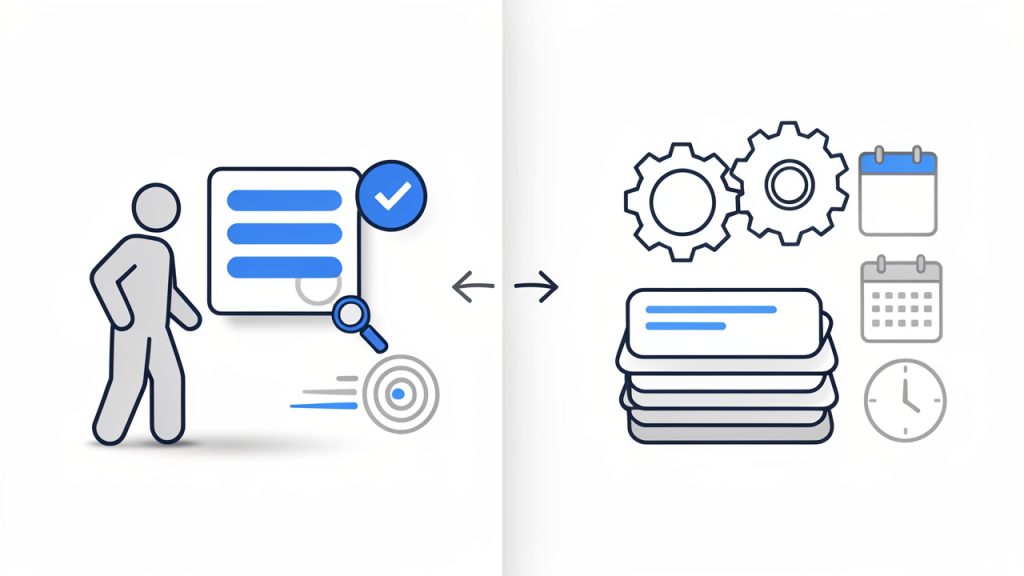
    Manual posting is not always better than automation. The right choice depends on the use case. Automation is efficient for repetitive updates, scheduled distribution, and large-scale workflows. Manual posts are stronger when accuracy, nuance, timing, or brand voice matter most.

    Here is a practical comparison:

    Factor Manual Post Automated Post
    Control High, every element is reviewed directly Lower, depends on system rules
    Speed at scale Slower for large volumes Faster for repeated publishing
    Tone quality More natural and intentional Can feel generic
    Error risk Lower when reviewed carefully Higher if bad data enters the workflow
    Best use case Announcements, thought leadership, updates, custom content Feeds, scheduled promotions, recurring data-based content

    For many users, the ideal setup is a hybrid model. Use automation for repetitive tasks, and reserve manual posts for high-value communication where precision matters.

    Build a Repeatable Workflow

    A manually created post becomes easier every time you create one if you follow a repeatable process. You do not need a complicated system. You just need a sequence that reduces friction and improves consistency.

    A practical workflow usually includes drafting the idea, defining the goal, writing the first version, editing for clarity, checking formatting, and then publishing. Over time, this routine speeds you up while protecting quality. That is especially useful for solo creators and lean teams who need efficiency without losing their voice.

    If you publish often, keep a simple template for recurring post types. For example, product updates, service announcements, and educational articles can each have their own structure. Templates save time, but the manual writing process keeps the content relevant and human.

    Conclusion

    A manually created post is more than just a basic content entry. It is a deliberate publishing choice that gives you control over message, timing, quality, and reader experience. In a crowded digital space, that control is often what makes content useful instead of forgettable.

    If you are getting started, begin with one clear purpose, use a simple structure, and review the post before publishing. That approach works whether you are updating a website, posting to a platform, documenting a feature, or sharing business news. The next step is straightforward: create one manual post with intention, then refine your process until it becomes one of your most reliable publishing habits.

  • Create Manual Posts with Control and Speed

    A new manual post sounds simple until it becomes a bottleneck. The moment a team relies on repetitive publishing steps, copy-paste workflows, scattered approvals, and inconsistent formatting, “manual” stops meaning “controlled” and starts meaning slow, error-prone, and expensive.

    For developers and efficiency-focused operators, the value of a manual post is not in the act of posting itself. It is in the precision, auditability, and intentional control that manual execution provides. When handled correctly, a manually created post can serve as a reliable publishing unit, a documented operational artifact, and a checkpoint in a broader content or product workflow.

    What is a manually created post?

    A manually created post refers to content that is created, configured, and published through direct human action rather than through automation, scheduled generation, or API-driven workflows. In practical terms, this usually means a user opens an editor or a publishing interface, enters the content, sets metadata, reviews formatting, and pushes the post live using an explicit sequence of steps.

    This model remains relevant even in heavily automated environments. Automation is excellent for repeatability, but it is often weak at handling nuance. A manually created post is useful when the content requires editorial judgment, case-specific formatting, legal review, stakeholder approval, or contextual timing that a rule-based system cannot safely infer.

    From a systems perspective, a manually created post is not merely “non-automated content.” It is a controlled intervention point in a publishing pipeline. That distinction matters. In a mature workflow, manual posting is often reserved for high-impact updates, sensitive announcements, documentation corrections, release notes, landing page changes, or operational messages where accuracy outweighs speed.

    Why manual posting still matters

    The assumption that automation should replace every manual process is usually too simplistic. In practice, teams need a balance between automation for scale and manual control for exceptions. A manually created post sits on the control side of that equation.

    For example, a product team may automate recurring blog syndication but still require manual handling for incident communications. A documentation team may use templates and content generation tools but insist on a manual post for version-specific deprecation notices. In both cases, the manual path exists because risk is higher than routine.

    That is why this approach often appears in operational contexts where governance matters. It is less about content volume and more about trust, visibility, and precision.

    Key aspects of a manually created post

    A useful way to understand manual posting is to break it into its operational properties. The post itself is only one layer. The surrounding mechanics, input quality, formatting discipline, approval logic, and publication environment are what determine whether the process is efficient or fragile.

    Human control and intentional publishing

    The defining feature of a manual post is intentional execution. Every field, every setting, and every action is chosen by a person. That creates friction, but it also creates accountability.

    This matters in environments where the cost of a mistake is high. A mistimed product announcement, a broken internal knowledge update, or an incorrect support notice can create confusion fast. Manual posting introduces a reviewable path in which a responsible user can validate content before publication.

    The trade-off is obvious. Human control improves judgment, but it also increases the chance of inconsistency. One user may apply proper taxonomy and metadata while another may skip key fields. This is why manual workflows require structure, not just access.

    Format consistency and structural integrity

    A manually created post is often where formatting drift begins. Without templates or validation rules, headings become inconsistent, tags lose meaning, metadata fields are omitted, and internal linking patterns deteriorate over time.

    For technical teams, formatting should be treated as a schema problem, even when content is entered by hand. A manual post still benefits from predefined field expectations, naming conventions, slug patterns, category logic, and content blocks that reduce ambiguity.

    The difference between a clean manual workflow and a chaotic one is rarely the writing quality alone. It is usually the presence or absence of structural guardrails. A publishing interface that enforces good defaults can make manual posting efficient without removing editorial flexibility.

    Workflow visibility and Audit Trails

    One of the strongest arguments for preserving a manual post option is observability. In well-designed systems, manual publishing creates a traceable record of who made the change, when it was made, what version was published, and what approvals were attached.

    This is the essence of Audit Trails.

    This level of traceability is particularly important for distributed teams. When multiple contributors touch content across product, marketing, support, and engineering, ambiguity creates operational drag. A manual post should therefore be connected to a clear status model such as draft, review, approved, published, and archived.

    If a platform lacks that visibility, the manual process becomes opaque. People start asking who changed what, why a field was left blank, or whether the published version reflects the approved draft. The issue is not that the post was manual. The issue is that the workflow lacked instrumentation.

    Speed versus accuracy

    Manual posting is often criticized for being slow. That criticism is valid, but incomplete. The more useful question is whether the process is slow in a productive way, or slow because the system is poorly designed.

    A productive delay is a review step that catches a legal risk, a broken link, or a messaging inconsistency. A wasteful delay is making a user re-enter the same metadata across multiple screens or forcing stakeholders to approve content through disconnected tools.

    That distinction is important for teams looking to improve efficiency. The goal should not always be to eliminate manual steps. The goal should be to eliminate low-value manual steps while preserving high-value decision points.

    Manual posts in developer and tooling environments

    For developers, the concept of a manually created post often intersects with content management systems, internal tools, admin dashboards, issue trackers, and operational knowledge bases. In these contexts, manual posting behaves less like casual publishing and more like a lightweight deployment event.

    A release note entered manually into a dashboard, for example, may trigger customer communications, documentation updates, or support references. An internal operations post might act as a runbook annotation. A manually created status update can become the canonical record during an incident response.

    This is where efficiency tools matter. A platform like Home can reduce friction by centralizing publishing surfaces, standardizing templates, and making manual content entry easier to validate and track. The point is not to replace the human step, but to make that step cleaner, faster, and less error-prone.

    How to get started with manual posting

    Getting started does not require a complex framework, but it does require a disciplined approach. A manual process becomes efficient when it is repeatable. That means the first version should be built around clarity, not improvisation.

    Define the purpose before creating the post

    Before opening the editor, the most important task is to define the function of the post. Is it informational, transactional, operational, or editorial? Is it meant for internal consumption, public discovery, stakeholder communication, or knowledge retention?

    This step prevents a common failure mode in manual publishing, where content is written first and structured later. When purpose is unclear, the post often ends up with weak metadata, poor hierarchy, and inconsistent calls to action. Clarity at the start reduces rework downstream.

    A useful mental model is to treat each post as an object with explicit properties. Audience, publication channel, review level, expected lifespan, owner, and update cadence should all be known before drafting begins. That turns the process from ad hoc writing into controlled content production.

    Standardize the input layer

    If a team wants manual posting to remain sustainable, the entry path must be standardized. This does not require heavy process overhead. It requires a small set of required conventions that every contributor follows.

    The essentials usually include a consistent title format; required metadata such as categories, tags, owner, and status; a defined content structure with a predictable heading hierarchy and section order; and a clear review logic that specifies when approval is mandatory.

    Even a lightweight standard dramatically improves output quality. It reduces decision fatigue and makes manual posts easier to search, maintain, and audit later.

    Build a repeatable review process

    A manual post should not depend on memory. If quality relies on whether a specific team member “usually remembers everything,” the system is fragile.

    Instead, implement a short pre-publish review routine. This can be embedded into the publishing tool or maintained as an editorial checkpoint. The routine should validate essentials such as title clarity, formatting consistency, links, metadata completeness, and audience alignment.

    For developer-oriented teams, it helps to think of this as a pre-deployment validation layer. The post is content, but the review model is operational. The same logic used to validate software changes can improve publishing quality when adapted appropriately.

    Reduce friction with better tooling

    The fastest way to improve manual posting is often not better writing guidance, but better tooling. When interfaces are cluttered, status handling is unclear, or collaborators must switch across too many systems, manual work becomes unnecessarily expensive.

    An effective publishing tool should support focused entry, reusable templates, role-based visibility, and straightforward version history. It should also make high-frequency actions fast, such as duplicating a prior post, applying taxonomy defaults, or routing a draft for approval.

    This is another area where Home can be useful. If the goal is to maintain the control benefits of manual posting without absorbing unnecessary administrative overhead, centralized workflow support becomes a practical advantage. Good tooling does not remove ownership. It removes noise.

    Measure what slows the process

    Many teams try to optimize posting by guessing. A better approach is to inspect where time is actually spent. Is drafting the slowest step, or is the delay happening in approvals, formatting correction, publishing permissions, or post-publication edits?

    A simple analysis comparing low-maturity and optimized processes often makes this easier to visualize. In low-maturity workflows, draft creation tends to be unstructured and inconsistent, metadata entry is optional or forgotten, review cycles are informal and chat-based, publishing actions are tool-dependent and error-prone, and post-publication tracking provides limited visibility. In an optimized manual process, draft creation is template-driven and predictable, metadata entry is required and validated, the review cycle has clear status and approver paths, publishing is guided and standardized, and versioning provides auditable tracking.

    This type of analysis often reveals that manual posting itself is not the problem. The problem is usually fragmented workflow design around the post.

    Practical operating model for manual posts

    A manual system works best when it is treated as a constrained process with clear boundaries. That does not mean bureaucratic overhead. It means defining what must be consistent and what may remain flexible.

    Establish ownership

    Every manually created post should have a clear owner. Ownership is not only about authorship. It also covers revision responsibility, update accountability, and archival decisions.

    Without ownership, posts age poorly. They become stale, contradictory, or disconnected from current operations. This is especially common in knowledge bases and internal publishing systems, where content persists long after the original author has moved on to other work.

    Ownership also improves response time. When a post requires correction, teams should not have to reconstruct who created it by scanning message history or metadata gaps.

    Design for reuse, not repetition

    Manual posting does not mean starting from zero each time. Reuse is one of the most important efficiency principles in any human-driven process.

    A reusable title structure, a standard introduction pattern, metadata presets, and post templates all reduce cognitive load. Writers can spend effort on the unique part of the content rather than rebuilding the same frame repeatedly.

    This is where many teams unintentionally waste time. They preserve manual control but fail to build reusable scaffolding. The result is slow execution with no corresponding quality benefit.

    Reserve manual posts for the right scenarios

    Not every publishing task deserves manual handling. Some should be automated, scheduled, or generated from system events. The strongest workflows distinguish between content that benefits from judgment and content that benefits from scale.

    A practical split looks like this: incident updates and internal policy changes generally benefit from a manual approach because they require contextual judgment and traceability. Release notes for major launches may need a manual or hybrid approach. Routine promotional posts are usually good candidates for automation or scheduling. Recurring status summaries can be automated with a manual review step.

    The operational takeaway is straightforward. Use manual posting where it creates value, not where it merely preserves habit.

    Common problems and how to avoid them

    The most common issues with manual posting workflows are not technical failures. They are process defects disguised as content problems.

    A frequent issue is inconsistent taxonomy. Posts are created successfully, but categories and tags vary so widely that search and retrieval become unreliable. This degrades the usefulness of the content system over time, particularly in environments with high documentation volume.

    Another issue is fragmented approval. Teams often review drafts in one tool, request changes in another, and publish in a third. By the time the post goes live, the source of truth is unclear. That raises the risk of publishing the wrong revision or missing requested edits.

    There is also the problem of silent drift. A manual post structure may work well initially, but over months, contributors adapt it informally. New fields get skipped. Headings become inconsistent. Link practices change. What was once a controlled process becomes an unstable convention.

    The solution in all three cases is the same: constrain the workflow at the right layer. Do not over-police writing. Instead, standardize structure, metadata, ownership, and review visibility. That preserves flexibility while maintaining operational coherence.

    Conclusion

    A manually created post is more than a piece of content entered by hand. It is a deliberate publishing action that trades automation for judgment, speed for control, and convenience for traceability when necessary. In the right context, that trade is not a weakness. It is an operational advantage.

    For developers and efficiency-minded teams, the next step is to evaluate whether manual posting is being used intentionally or simply inherited as a default habit. If it is valuable, standardize it. If it is slow, instrument it. If it is chaotic, support it with better tooling. A platform like Home can help centralize and streamline the process, but the core principle remains the same: manual work should be structured, not improvised.

  • How to Create a New Manual Post That Delivers Quality

    How to Create a New Manual Post That Delivers Quality

    Posting online should be simple, but it rarely feels that way when every platform pushes automation, scheduling, and one-click publishing. For many small business owners, freelancers, developers, and productivity-focused users, there is still real value in creating a manual post by hand. It offers control, clarity, and a chance to shape each message with intention, instead of relying on presets or bulk workflows.

    That matters more than it may seem. A manually created post is often where quality shows up first, whether you are publishing a blog update, writing a forum entry, sharing a product announcement, or adding content to a CMS. When you slow down long enough to craft the post yourself, you usually catch weak wording, broken formatting, and missing context before your audience does.

    This guide breaks down what a manual post actually is, why it still matters, and how to use it effectively without turning your workflow into a time sink. If you want better content with fewer mistakes and more control over the final result, manual posting is worth understanding.

    What a manual post is

    A manual post is content created and published directly by a person, rather than generated, imported, duplicated, or automated by a tool. The phrase can apply across many platforms. In a website CMS, it may mean opening the editor and writing a fresh article from scratch. In social media, it can mean composing a post directly instead of pulling from a queue. In internal tools, forums, and marketplace systems, it often means entering content manually, field by field.

    The defining trait is not the platform, it is the method of creation. A manual post is intentional. Someone decides on the title, body, formatting, links, media, and publishing timing in real time. That gives the creator full editorial control, which is often the difference between content that feels generic and content that feels relevant.

    For businesses and independent professionals, this approach has a practical advantage. Manual posting reduces the risk of publishing something outdated, mistimed, or poorly matched to the audience. Automation is powerful, but it works best when paired with judgment. A hand-built post brings that judgment into the process from the start.

    Why the term matters in different contexts

    The meaning of a manually created post can shift slightly depending on where you encounter it. In blogging platforms, it usually refers to a newly created article or update entered directly into the editor. In ecommerce systems, it may mean manually adding an announcement, listing, or update without syncing from another source. In community platforms, it can mean a fresh discussion thread started by a user.

    That flexibility is important because many readers search for the phrase without a single platform in mind. They are often trying to understand whether they should create content manually or let software handle the process. The answer depends on the goal. If precision, timing, and message quality matter, manual posting remains the stronger option.

    Manual posting versus automated publishing

    Automated publishing is built for scale. It saves time, keeps calendars moving, and helps teams maintain consistency. A manual post is built for accuracy and relevance. It lets you adapt your wording to the moment, respond to recent changes, and tailor the message to a specific audience or channel.

    Neither approach is inherently better in every situation. The real distinction is in trade-offs. Automation improves speed, while manual posting improves oversight. If you are announcing a feature update, responding to customer feedback, or sharing a time-sensitive message, the manual route often produces better results.

    Manual Posting Versus Automated Publishing

    Key aspects of manual posting

    The value of a manually created post comes down to several core qualities. These are not just abstract benefits. They affect how your content performs, how your audience perceives you, and how much cleanup you need to do after publishing.

    Control over message and tone

    One of the strongest advantages of manual posting is editorial control. You decide exactly how the message sounds, what details to emphasize, and what action you want the reader to take. That control is especially useful for brands and professionals who care about voice, credibility, and nuance.

    A scheduled or templated post can sound efficient but flat. A manually written post can reflect current context, customer concerns, or industry changes. That makes it more likely to feel timely and human. Readers may not consciously think, “This was carefully written,” but they often respond better when a message feels direct and considered.

    Better accuracy and fewer publishing errors

    Errors tend to appear where workflows become too automatic. The wrong link, an old screenshot, an outdated CTA, or a title that no longer fits can all slip through when content is pushed live without review. A manually created post creates a natural checkpoint. Because the content is being assembled intentionally, the creator is more likely to verify the details before hitting publish.

    This matters for more than grammar. Accuracy affects trust. A single incorrect date or broken URL can weaken the impact of an otherwise good post. Manual creation gives you the chance to catch those issues while they are still small.

    Flexibility across platforms

    A manually created post adapts well to different environments. You can shorten it for social, expand it for a blog, or adjust the structure for a product page, community board, or email update. That flexibility is useful for users who work across multiple systems and do not want every message forced into the same template.

    For small teams especially, this can be more efficient than it sounds. Instead of fighting the limits of automation tools, you create the right version for the right channel. The work feels more direct because it is shaped around the audience rather than around the software.

    Stronger quality for high-value content

    Not every piece of content deserves deep manual effort, but high-impact posts usually do. A launch announcement, service update, pricing change, customer-facing clarification, or thought leadership post should not feel rushed. These are the moments when a manual post has the greatest value.

    Think of it like handwriting an important note instead of sending a generic form letter. The extra care changes how the message lands. In digital publishing, that care often shows up in tighter structure, clearer wording, and more useful context.

    Time cost and workflow considerations

    Manual posting is not perfect. It takes longer, requires attention, and can become inefficient if used for everything. If you publish high volumes of repetitive content, creating each post manually may slow your team down and introduce inconsistency.

    The smartest approach is usually selective. Use manual posting where message quality, precision, or timing matter most. Use automation for routine publishing where the stakes are lower. That balance helps you protect quality without overwhelming your workflow.

    Scenario Manual post Automated post
    Product or service announcement Best for accuracy and tone control Risk of sounding generic or outdated
    Routine promotional content Can be effective but time-intensive Best for scale and consistency
    Customer response or clarification Best for relevance and nuance Often too rigid
    Multi-channel campaign adaptation Strong if each version needs tailoring Useful if platforms need identical messaging
    Time-sensitive updates Best when human review is essential Helpful only if pre-approved carefully

    How to get started with manual posting

    Getting started with manual posting does not require a complicated system. What it does require is a simple process that protects clarity and reduces avoidable mistakes. The goal is not to make posting slower, the goal is to make it more deliberate.

    Start with purpose, not format

    Before writing anything, define what the post needs to accomplish. Are you informing, persuading, updating, explaining, or inviting action? Too many posts begin with the editor open and no clear objective. That usually leads to filler, vague openings, and weak calls to action.

    When your purpose is clear, decisions become easier. You know what tone to use, what details matter, and what the reader should remember. A strong manual post starts with a simple question, what should this post do for the audience right now?

    Build the core message first

    Once the purpose is clear, draft the main message in plain language. Avoid polishing too early. Focus on the substance first. What happened? Why does it matter? What should the reader do next? If you can answer those three questions clearly, the rest of the post becomes easier to shape.

    This approach is useful because manual posting can tempt people into over-editing the surface before the core idea is strong. Think of the post like a storefront sign. If the message is unclear from a distance, better decoration will not fix it.

    Use a simple publishing workflow

    A lightweight workflow keeps manual posting efficient. You do not need a complex editorial stack if the content is straightforward. In most cases, the process can stay simple.

    Simple Publishing Workflow

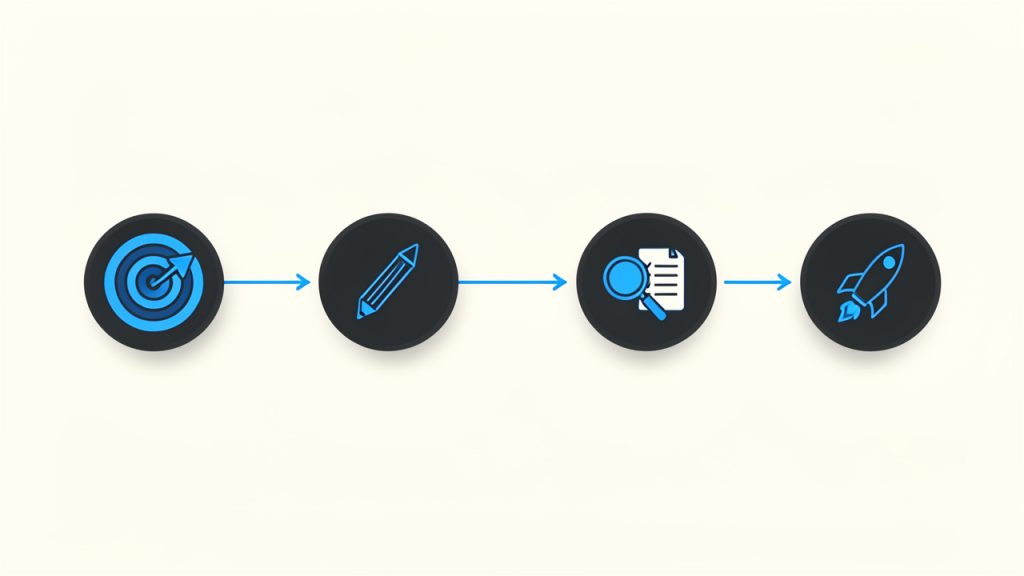
    A practical four-step routine works well for most small teams and solo creators:

    1. Define the goal of the post.
    2. Draft the message in plain, direct language.
    3. Review for accuracy, including links, dates, names, and formatting.
    4. Publish and monitor audience response or engagement.

    This kind of structure creates consistency without removing flexibility. It also helps prevent the common problem of treating every post like a one-off task with no quality check.

    Focus on readability and structure

    A manual post should be easy to scan and easy to understand. That means using clear headings where appropriate, short paragraphs, and a logical flow from opening to action. Readers often decide within seconds whether a post is worth their time. Dense formatting and vague openings make that decision easy in the wrong direction.

    Clarity also improves performance. Whether your audience is reading a blog article, platform announcement, or community update, they are more likely to engage when the structure helps them find meaning quickly. Good manual posting is not only about writing better, it is also about presenting information in a way that respects attention.

    Check context before publishing

    One of the biggest advantages of creating a post manually is that you can align it with the current moment. Use that advantage. Before publishing, ask whether anything has changed since the draft began. Has the timeline shifted? Has a feature changed? Has customer sentiment moved? Is the audience likely to interpret the message differently today than they would have yesterday?

    That final context check is where many manually written posts become noticeably stronger than automated ones. The content feels current because it is current. Even a small update to wording can make the difference between a post that feels canned and one that feels genuinely useful.

    Know when manual is the right choice

    Not every post needs to be manually created from scratch. The best candidates are posts with high visibility, sensitive information, changing details, or audience-specific nuance. If the content affects trust, understanding, or decision-making, manual creation is usually worth the extra effort.

    A helpful rule is to think in terms of risk. If publishing the wrong version would cause confusion, embarrassment, or missed opportunity, choose the manual route. If the message is routine and stable, automation may be perfectly fine.

    Conclusion

    A manual post is more than a basic publishing action, it is a deliberate way to create content with stronger accuracy, clearer intent, and better alignment with your audience. In a digital environment that often rewards speed over substance, manual posting remains one of the simplest ways to protect quality.

    If you want to get more value from it, start small. Use manual posting for your most important updates first, then build a repeatable process around what works. That next step gives you the best of both worlds, content that feels human and thoughtful, without making your workflow unnecessarily heavy.

  • Creating a New Manual Post for Precise Publishing

    Creating a New Manual Post for Precise Publishing

    Speed matters, but control matters more. In a world filled with automation, scheduled publishing, and one-click workflows, there are still moments when a manually created post is the right tool for the job. A new manual post gives the author direct control over timing, structure, formatting, and intent, which is often exactly what developers, operators, and efficiency-focused teams need.

    Automation vs Manual Post

    Automation optimizes for throughput, manual posting optimizes for intent, and neither is universally better. The right choice depends on the risk of mistakes, the complexity of the message, and the level of control required by the workflow.

    That is especially true when the content must be deliberate. Release notes, system updates, incident summaries, internal knowledge entries, and product announcements often benefit from a hands-on publishing process. Instead of relying on generated templates or automated triggers, a manual workflow creates space for validation, review, and precision.

    What Is a Manual Post?

    A manual post is a content entry created directly by a user rather than generated by an automation, imported from another system, or published through a scheduled pipeline. The phrase can apply across several environments, including CMS platforms, internal dashboards, knowledge bases, forums, developer portals, and productivity tools.

    The core concept is simple, but its value is often underestimated. A manual post is not just a basic entry form with a title and body. It is a controlled publishing event. The author chooses the structure, wording, metadata, attachments, and publication timing in a way that remains explicit and observable.

    For developers and operations-minded users, that distinction matters. Automated systems are excellent at scale, repetition, and consistency. Manual posting is better when the task requires judgment. If the content depends on context, needs human verification, or carries operational consequences, creating the post manually can reduce errors and improve clarity.

    A useful way to think about it is this: automation optimizes for throughput, while manual posting optimizes for intent. Neither is universally better. The right choice depends on the risk of mistakes, the complexity of the message, and the level of control required by the workflow.

    Where Manual Posting Fits in Modern Workflows

    A manually created post often appears in places where content has a direct operational function. Teams publish maintenance notices, deployment summaries, customer updates, policy revisions, or documentation patches by hand because those posts must reflect current conditions precisely.

    Manual Post Checkpoint

    In many systems, the act of creating a new manual post also acts as a checkpoint. It forces the author to confirm categories, tags, visibility rules, access permissions, and final wording. That pause can be more valuable than it looks, especially in environments where a small publication mistake has downstream effects.

    This is one reason manual posting remains relevant even in highly automated stacks. It is not a legacy habit. It is a control layer.

    Key Aspects of a New Manual Post

    Understanding a new manual post requires more than defining it. The practical value comes from its operational characteristics: control, accuracy, flexibility, and accountability.

    Direct Control Over Content and Timing

    The most immediate advantage of creating a post manually is direct control. The user decides what gets published, when it appears, and how it is formatted. There is no dependency on an external trigger, no waiting for a sync job, and no hidden automation logic altering the final output.

    This matters in time-sensitive scenarios. If a service status update needs to go live immediately, or an internal process change needs to be documented without delay, manual posting reduces the chain of dependencies. Fewer moving parts often means fewer failure points.

    That control also extends to tone and structure. Automated systems tend to favor consistency, which is useful until the message requires nuance. A manual post allows the author to adapt the content to the situation rather than forcing the situation into a rigid template.

    Higher Accuracy in Context-Sensitive Communication

    Manual posts are often more accurate when the topic involves exceptions, edge cases, or evolving conditions. A generated announcement may be technically correct at the time it is produced, but a human author can account for ambiguity, caveats, and context that automation cannot easily infer.

    For developers, this is familiar territory. Systems can validate syntax, but they cannot always validate meaning. The same principle applies to content. A new post created manually is valuable when semantic accuracy matters more than speed.

    This is particularly important for internal documentation and operational notices. If readers are making decisions based on the post, a manually reviewed and authored message can prevent misinterpretation. In practice, that translates into fewer follow-up questions, fewer corrections, and a lower chance of process drift.

    Better Fit for Review and Governance

    A manual posting process is easier to align with review rules, compliance requirements, and editorial governance. Because each post is explicitly authored, it is usually easier to inspect who created it, what changed, and when it was published.

    That visibility is useful in organizations where posts are not merely content assets but part of the operational record. Product teams, IT teams, legal reviewers, and support functions often need a publish flow that supports accountability. A manual post naturally supports that requirement because it begins with a conscious user action.

    This does not mean every manual workflow is automatically well-governed. It means the structure is more compatible with governance because the event is discrete and human-initiated. If the platform includes version history, draft states, approval checkpoints, or publication logs, the value becomes even stronger.

    Flexibility Without Full-System Complexity

    A new manual post is also attractive because it offers flexibility without requiring a large automation architecture. Not every team needs webhooks, queue processors, integration layers, and rules engines for publishing. In many cases, that stack introduces more overhead than value.

    A manual workflow is often sufficient when posting volume is moderate and content quality matters more than raw output. It can also serve as the fallback path when automation fails. Mature teams often keep both modes available: automated posting for routine events, and manual posting for exceptions, overrides, and critical communications.

    This hybrid approach is usually the most efficient. Automation handles repetition, manual posting handles judgment.

    Trade-Offs to Consider

    Manual posting is not perfect. It can be slower, more dependent on human discipline, and less scalable when volume increases. If multiple people create posts without a shared standard, formatting inconsistency and metadata errors can appear quickly.

    That is why the best manual systems are structured. They provide clear fields, validation rules, editorial guidance, and publishing constraints. A good interface reduces friction without removing control.

    The following comparison clarifies where manual posting tends to perform best:

    Workflow Type Best Use Case Strength Limitation
    Manual Post Creation High-importance updates, documentation changes, exceptions Precision and human judgment Slower at scale
    Automated Posting Repetitive updates, routine feeds, scheduled events Speed and consistency Weak contextual awareness
    Hybrid Workflow Mixed publishing environments Balance of control and efficiency Requires process design

    How to Get Started with a New Manual Post

    Starting with a new manual post should not mean starting without structure. The most effective setup is a lightweight process that preserves human control while minimizing avoidable friction.

    Define the Purpose Before the Platform

    Many teams begin with the tool, but the better starting point is the publishing intent. A manual post should exist for a reason. Is it meant to communicate an urgent update, document a change, share an insight, or create a permanent reference? The answer shapes everything that follows, from length to metadata to review requirements.

    Without that clarity, manual posting becomes inconsistent. One person writes a brief notice, another writes a long-form update, and neither uses the same categories or naming conventions. The result is a repository of posts that are technically published but operationally difficult to use.

    A useful baseline is to standardize four elements before authors begin: title pattern, audience, required fields, and publication criteria. This is enough structure to keep quality high without making the workflow heavy.

    Create a Repeatable Input Pattern

    A manual workflow becomes efficient when the inputs are predictable. Even if the post itself is written by hand, the author should know which elements are always required. That usually includes a clear title, summary, main body, tags or labels, visibility setting, and publication status.

    For efficiency-focused users, this is where systems thinking helps. A manual process does not have to be informal. In fact, the strongest manual publishing environments behave like well-designed forms. They reduce cognitive load by making decisions explicit and repeatable.

    If the platform supports templates, use them carefully. A template should provide structure, not force generic writing. It should accelerate the process while preserving room for context-specific detail.

    Start Small, Then Introduce Rules

    When implementing a new manual post workflow, it is better to begin with a narrow use case than to design for every scenario at once. Start with one content type, such as release updates or internal notices, and observe where authors hesitate or make mistakes.

    That observation phase matters. It reveals whether the issue is missing fields, unclear permissions, poor editor design, or weak review logic. Once the workflow is stable, additional rules can be added gradually. This may include approval steps, required tags, retention rules, or publishing windows.

    A compact onboarding model usually works best:

    1. Identify the post type that truly requires manual control.
    2. Define the minimum required fields for every new entry.
    3. Establish a review path if the content has operational impact.
    4. Measure errors and delays before expanding the workflow.

    This approach keeps the process practical. It also prevents overengineering, which is a common problem when teams try to make a manual workflow behave like a full automation platform.

    Choose a Tool That Supports Intentional Publishing

    The quality of a manual post is shaped by the interface used to create it. A good system should make drafting, editing, reviewing, and publishing straightforward. It should expose state clearly and avoid hidden behaviors that confuse authors.

    For teams that want efficiency without losing control, a platform like Home can be useful when it supports clear publishing states, lightweight templates, searchable archives, and role-aware permissions. The value is not simply that content can be entered manually. The value is that the system respects manual work as a first-class workflow rather than treating it as a fallback.

    That distinction matters for long-term adoption. If authors feel the manual path is awkward or underpowered, they will either avoid using it or publish with avoidable inconsistency. A platform designed for clarity turns manual posting into a reliable operational habit.

    Common Mistakes When Creating a New Manual Post

    The most common problem is not writing quality. It is process inconsistency. Teams often assume that because a post is manual, every detail can be improvised. That leads to vague titles, missing metadata, unclear ownership, and poor discoverability later.

    Another issue is treating manual posting as inherently slow. In reality, it is slow only when the workflow is undefined. A structured process with a clean interface can be fast enough for most high-value communication tasks.

    A third mistake is failing to distinguish between urgent and important posts. Not every manual post needs immediate publication. Some need careful review. Others need speed. If the workflow does not separate those cases, both quality and responsiveness suffer.

    Conclusion

    A new manual post remains a practical and often essential part of modern content operations. It offers direct control, stronger contextual accuracy, and better alignment with review, governance, and exception handling. For developers and efficiency-focused users, manual posting is not the opposite of optimization, it is a deliberate optimization for cases where judgment matters more than throughput.

    The most effective next step is to define one use case where manual publishing clearly outperforms automation, then build a lightweight, repeatable workflow around it. When the system is structured well, a manual post becomes more than a simple entry. It becomes a reliable mechanism for precise communication, operational clarity, and long-term content quality.

  • New Manual Post: Designing Controlled, Auditable Manual Workflows

    New Manual Post sounds simple, but in practice it sits at the intersection of control, repeatability, and operational efficiency. For developers and efficiency-focused users, that combination matters. Automated systems are fast, but they are not always appropriate. A manual post workflow provides deterministic input, explicit review, and a narrower risk surface when precision matters more than throughput.

    Its real value is that it introduces intentional execution into an otherwise automated environment, which can improve quality, reduce accidental changes, and make sensitive publishing steps easier to audit. When teams need reliable checkpoints, manual posting becomes less of a fallback and more of a deliberate system design choice.

    What is New Manual Post?

    A New Manual Post refers to the creation and submission of a new entry, update, record, or publication through direct human action rather than through a scheduled job, API-triggered workflow, or automation pipeline. The exact implementation varies by platform, but the underlying pattern remains consistent. A user opens an interface, inputs content or data, applies required metadata, performs validation, and then publishes or saves.

    In technical environments, this can describe several distinct actions. It may refer to publishing a blog post in a CMS without a content automation pipeline. It may describe creating a record in an internal admin dashboard. It may also refer to manually posting updates to a knowledge base, support portal, moderation queue, or deployment log. The term is broad, but the operational meaning is stable: a new item is created through manual intervention.

    That distinction matters because manual creation changes the system’s behavior. Automated posts optimize for scale and consistency. Manual posts optimize for judgment and contextual awareness. A human can evaluate edge cases, account for timing, catch formatting anomalies, and recognize whether a post should exist at all. In environments where errors are expensive, that judgment layer is often worth the added time.

    Why the concept matters in modern workflows

    Many teams assume that efficiency means full automation. In reality, efficient systems are usually hybrid systems. They automate repetitive, low-risk steps and preserve manual control for critical decisions. A New Manual Post fits neatly into that model because it can function as a controlled insertion point inside a larger workflow.

    For example, a development team might automate draft generation, metadata suggestions, and validation checks, then require a human to manually create or approve the final post. That approach keeps productivity high while reducing the chance of publishing incorrect or incomplete information. The manual step is not inefficiency. It is a control boundary.

    This is especially useful where content, status updates, or records affect users directly. A mistaken product announcement, a malformed release note, or an incorrectly tagged documentation update can create downstream confusion that costs more than the time saved through automation. Manual posting introduces friction, but often the right kind of friction.

    Key Aspects of New Manual Post

    A New Manual Post workflow is defined by a few core characteristics: human initiation, explicit field entry, context-sensitive review, and direct publication control. These characteristics seem basic, but together they create a workflow pattern with distinct strengths and weaknesses.

    Human initiation is the first defining factor. Nothing happens until a person decides to create the post. That means the act itself is intentional, and that intentionality changes quality outcomes. Teams can align a post with current business conditions, product changes, or internal approvals without needing to redesign automation rules every time a new edge case appears.

    Explicit field entry is the second aspect. In a manual process, titles, tags, descriptions, attachments, references, and publishing settings are often entered or verified one by one. This slows things down slightly, but it also surfaces mistakes that automation can hide. A user noticing a missing category or malformed summary before publication is a common and valuable failure-prevention mechanism.

    Control and accuracy

    The strongest argument for New Manual Post is control. Manual workflows allow contributors to see exactly what is being submitted and in what state. This is particularly relevant for technical documentation, compliance updates, product notices, and any system where publication creates a durable record.

    Accuracy benefits from that visibility. A person reviewing a post can catch semantic issues that validation rules might miss. An automated system may confirm that a field is filled in, but it cannot always determine whether the content is misleading, outdated, or contextually inappropriate. Manual posting adds a layer of editorial or operational sense-checking that is difficult to encode in software.

    That is why many organizations preserve manual post paths even when they have mature automation stacks. They do not keep them because the automation is weak. They keep them because not every publishing decision can be reduced to rules.

    Speed versus reliability

    Manual posting is slower than automated posting, and that trade-off is real. If a team must publish thousands of low-risk records per hour, manual entry is the wrong mechanism. But where reliability is more important than raw throughput, the slower process often produces better outcomes.

    This trade-off resembles the difference between batch processing and supervised release management. Batch systems are excellent for volume. Supervised systems are better for exceptions, approvals, and sensitive outputs. A New Manual Post belongs to the second category. It works best when each post carries enough importance to justify direct attention.

    The practical question is not whether manual posting is slower. It is whether the cost of a bad post exceeds the cost of a slower one. In many cases, particularly in technical or customer-facing contexts, the answer is yes.

    Traceability and governance

    Another key aspect is governance. Manual workflows are easier to pair with role-based access, approval checkpoints, and audit trails. When a post is created manually, the responsible user, timestamp, revision state, and publishing action can be recorded with clarity. That is useful for internal accountability and often essential for regulated environments.

    This is also where platform design matters. A weak manual posting interface can make users inconsistent and error-prone. A strong one supports predictable input, visible status indicators, and structured validation. Tools such as Home can improve this layer by centralizing manual workflows in a cleaner operational environment, reducing friction without removing control.

    When manual posting is the better choice

    There is no universal rule, but certain conditions strongly favor a New Manual Post workflow. It is usually the better option when content is high-impact, when approval context changes frequently, or when the source data is too variable for safe automation.

    The table below summarizes the practical difference between manual and automated posting models.

    Factor New Manual Post Automated Post
    Initiation Human-triggered System-triggered
    Speed Lower Higher
    Context awareness Strong Limited to programmed logic
    Error prevention Better for semantic and judgment-based issues Better for repetitive structural consistency
    Scalability Limited by human capacity High
    Audit clarity Often stronger at action level Strong if logging is well implemented
    Best use case Sensitive, high-value, exception-based publishing High-volume, repeatable, low-risk tasks

    How to Get Started with New Manual Post

    Getting started with New Manual Post begins with clarifying what kind of post is being created, who is responsible for it, and what conditions must be satisfied before publication. Many manual workflows fail because they are treated as informal tasks. A reliable manual post process should still be structured, even if it is not automated.

    The first step is to define the object model. A post may be content, a release note, a support update, a knowledge entry, or an internal record. Once that is clear, the required fields become easier to standardize. Standardization is important because it reduces variation without removing human control. The goal is not to script the post completely, but to ensure that every manually created item meets a minimum quality threshold.

    A practical manual posting setup usually requires:

    1. A defined template, including mandatory fields and preferred formatting.
    2. A responsible owner, who creates or approves the post.
    3. A review rule, even if it is lightweight.
    4. A destination system, such as a CMS, internal admin dashboard, or unified workspace like Home.

    Establish a repeatable workflow

    A manual process becomes efficient only when it is repeatable. That means contributors should know where to start, what sequence to follow, and what validation to perform before publishing. Without that structure, manual posting becomes inconsistent and difficult to scale even at a small team level.

    A good starting workflow often follows a simple sequence. The contributor creates the post, completes required fields, reviews formatting and metadata, verifies timing and destination, and then publishes. If approval is required, the publication step is replaced with a handoff state. Making each stage explicit reduces ambiguity and cuts down on avoidable errors.

    The system interface matters here. If users need to switch between multiple tabs, documents, and dashboards just to create one post, manual work becomes unnecessarily expensive. Consolidated environments are more effective because they reduce context switching. That is one reason platforms like Home are valuable. They support efficiency not by forcing automation everywhere, but by making controlled manual actions faster and cleaner.

    Define validation before publication

    The most common weakness in a New Manual Post process is the absence of clear validation. People assume manual means self-explanatory. It rarely does. Even experienced users benefit from a short, consistent verification pass before final submission.

    Validation should focus on correctness, completeness, and destination integrity. Correctness means the content itself is accurate. Completeness means required fields, tags, references, and attachments are present. Destination integrity means the post is going to the right place, under the right visibility, at the right time. A manual post can be well written and still fail operationally if it is published in the wrong environment.

    Teams with frequent manual posting tasks often benefit from a lightweight checklist embedded directly in the interface. This is more effective than storing process documentation in a separate location that users forget to consult. The best validation is visible at the moment of action.

    Reduce friction without removing oversight

    The phrase “manual process” often suggests inefficiency, but that is usually a design problem rather than an inherent limitation. Manual posting becomes painful when interfaces are cluttered, field requirements are unclear, and users lack reusable patterns. Improve those three areas, and the process becomes much more efficient.

    Templates are the first lever. They allow users to start from a known-good structure rather than a blank screen. Sensible defaults are the second lever. If a category, visibility level, or status is usually the same, the system should prepopulate it while still allowing edits. Contextual prompts are the third lever. They remind users what matters at the point of execution rather than burying guidance in documentation.

    The objective is not to eliminate the manual step at all costs. The objective is to remove unnecessary effort while preserving human review where it creates value.

    Practical implementation considerations

    For developers, the term New Manual Post often raises an implementation question: how should a system support manual creation in a technically sound way? The answer usually involves interface design, permissions, auditability, and state management rather than complex algorithms.

    A well-designed manual post system should clearly separate draft, review, and published states. It should also maintain revision history and identify the actor responsible for each transition. This makes the workflow legible and helps teams debug process failures. If a bad post goes live, the question should not be “what happened?” but “which transition failed and why?”

    Permissions are equally important. Not every user who can draft should be able to publish. Not every user who can publish should be able to edit historical records. Manual systems become safer when these responsibilities are explicit. That applies whether the posting environment is a custom internal tool or a packaged platform.

    Manual posting in hybrid systems

    The most effective real-world architecture often combines manual and automated components. For instance, metadata might be suggested automatically, formatting may be validated by the system, and notification delivery can occur after publication without human involvement. The actual creation and release of the post, however, remains manual.

    This hybrid model gives teams the best of both approaches. Automation handles repetitive mechanics. People handle judgment, timing, and exception management. New Manual Post is therefore not the opposite of automation. It is often the human checkpoint inside an automated ecosystem.

    That framing is useful because it prevents false choices. Teams do not need to decide between full manual control and full automation. They can design for both, assigning each part of the workflow to the mechanism that handles it best.

    Conclusion

    New Manual Post is more than a basic publish action. It is a workflow pattern built around control, accuracy, and accountable execution. For developers and efficiency-minded teams, its relevance comes from the fact that not every task should be automated, especially when a post carries operational, customer-facing, or compliance risk.

    The next step is to evaluate where manual posting currently exists in the workflow, where it should exist, and where it creates unnecessary friction. If the process is critical, formalize it. If the interface is messy, simplify it. If the team is juggling too many tools, consider a centralized environment such as Home to make manual posting faster without sacrificing oversight.

  • New Manual Post: Create Clear, Actionable Operational Docs

    New Manual Post: Create Clear, Actionable Operational Docs

    Manual workflows break faster than most teams admit, and they do not usually fail in dramatic ways. They fail quietly, through missed handoffs, duplicated edits, inconsistent formatting, unclear ownership, and the constant drag of doing the same task from memory instead of from process. That is where a New Manual Post becomes useful, not as a vague note or one-off update, but as a structured manual entry that captures a repeatable action in a form people can actually use.

    A flow diagram showing a sequence of handoffs between team members where small issues accumulate: missed handoff, duplicated edits, inconsistent formatting, and unclear ownership. Visual cues like warning icons and faded arrows indicate quiet failures that slow the workflow.

    For developers and efficiency-focused operators, the phrase New Manual Post can sound deceptively simple. In practice, it represents a documented unit of work, a new procedural record, announcement, or instruction set created manually to support operational clarity. Whether it is being used inside a knowledge base, internal publishing workflow, CMS, team documentation system, or productivity platform, its value comes from precision. A well-constructed manual post reduces ambiguity, creates traceability, and makes execution less dependent on tribal knowledge.

    What is New Manual Post?

    A New Manual Post is best understood as a manually created content entry designed to communicate a task, update, process, instruction, or operational standard. Unlike automated posts generated from triggers, integrations, or templates alone, a manual post is authored intentionally. It exists because human judgment is required, either to add context, validate information, apply domain expertise, or document a process that automation cannot reliably infer.

    In technical and operational environments, this matters more than it may first appear. Automation is excellent at repetition, but weak at interpretation. Teams still need manually authored records for change notices, troubleshooting instructions, release checklists, environment-specific steps, incident summaries, publishing approvals, and process exceptions. A new manual post fills that gap by acting as a controlled artifact, something a person creates when accuracy and nuance are more important than speed alone.

    The phrase can apply across several systems. In a content management platform, it may refer to a manually published article or documentation entry. In a workflow environment, it may be a new procedural update entered by an administrator. In an internal productivity stack, it may function as a knowledge object that supports onboarding, maintenance, or cross-team coordination. The exact implementation differs, but the pattern is consistent: a human-authored post used to preserve operational intent.

    That distinction is especially relevant for developers. In engineering organizations, teams often over-index on tooling and under-invest in documentation primitives. A New Manual Post becomes a bridge between system behavior and human execution. It explains not just what happened, but what someone should do next. That is often the most valuable layer in any workflow.

    Key Aspects of New Manual Post

    Manual creation as a quality control layer

    Manual creation is not a weakness, it is a quality control mechanism. When a team creates a new manual post, it is choosing to insert judgment into the process. That judgment can validate assumptions, remove noise, clarify dependencies, and contextualize exceptions.

    This is particularly important in systems where automated output is technically correct but operationally incomplete. A deployment notification may state that a service changed, but a manual post can explain rollback conditions, affected users, validation steps, and support implications. That additional layer is what makes information usable rather than merely available.

    Manual posts also create accountability. A person, team, or role owns the content. That means changes can be reviewed, timestamps can be tracked, and revisions can be tied to actual decisions. For organizations trying to improve governance, compliance, or reproducibility, that ownership model is foundational.

    Structure determines usefulness

    A New Manual Post succeeds or fails based on structure. Unstructured notes age badly. They become hard to scan, hard to trust, and hard to maintain. A strong manual post typically includes a clear title, a defined purpose, contextual background, action steps, ownership information, and update history if the process changes over time.

    This is where many teams lose efficiency. They create “documentation” that is really just a text dump. Readers then spend more time interpreting the post than they would have spent asking a teammate directly. That defeats the point. A manual post should reduce cognitive load, not increase it.

    A practical mental model is to think of each post as an interface. Just as a clean API exposes expected inputs and outputs, a useful manual post exposes the exact information the reader needs to act. If the post is about publishing content, it should specify prerequisites, review criteria, publication steps, and failure conditions. If it is about system maintenance, it should make the order of operations obvious.

    Context is as important as instruction

    Many process documents fail because they focus only on the steps. Steps matter, but context determines whether a reader can apply them correctly. A New Manual Post should explain why the process exists, when it should be used, and what happens if it is skipped or modified.

    That context is what makes a manual post resilient. Without it, the content works only for the original author or for the moment in which it was written. With it, the post becomes transferable across teams and durable over time. Someone unfamiliar with the system can still understand intent, constraints, and expected outcomes.

    For developers, this is similar to writing maintainable code comments or architectural decision records. A line of code can tell someone what is happening. Good documentation explains why that choice exists. Manual posts should operate under the same principle.

    Searchability and retrieval define long-term value

    A manual post that cannot be found might as well not exist. The long-term utility of a New Manual Post depends on naming conventions, categorization, metadata, and discoverability. Teams often create documentation faster than they create information architecture, and the result is predictable chaos.

    A post title should be descriptive enough to stand alone in search results. The body should contain terminology that matches how users actually search. Related tags, timestamps, project labels, and ownership markers all improve retrieval. For efficiency-focused users, this is not administrative overhead. It is the difference between a living system and a digital graveyard.

    This is one place where platforms such as Home can become particularly useful. When a workspace centralizes manual posts with clean navigation, consistent templates, and strong retrieval patterns, teams spend less time hunting for process knowledge and more time executing it.

    Manual does not mean anti-automation

    A common mistake in workflow design is treating manual and automated processes as opposites. In mature systems, they are complementary. A New Manual Post should exist where automation cannot safely decide, where human review adds value, or where process exceptions need to be documented.

    In practice, the best systems automate the predictable layer and reserve manual posts for the interpretive layer. A monitoring system can open an alert automatically. A human can then create a new manual post that explains remediation logic, customer impact, and temporary workarounds. A CMS can generate publication tasks, while an editor creates the manual post that defines standards for review and approval.

    This hybrid approach is usually the most efficient. It respects the strengths of software, without pretending that every business process can be reduced to a trigger-action chain.

    How to Get Started with New Manual Post

    Begin with a clear operational use case

    The fastest way to create a useless manual post is to start writing before defining its purpose. A new manual post should solve a specific operational problem. That problem might be recurring confusion, missed execution steps, onboarding friction, publishing inconsistency, or dependency on one experienced team member who “just knows how it works.”

    Before writing, identify the exact behavior the post should support. Ask what the reader needs to accomplish after reading it. If the answer is vague, the post will be vague too. If the answer is concrete, the content can be engineered around that outcome.

    A strong starting point is to classify the post by function. Is it instructional, procedural, informational, corrective, or approval-oriented? That classification shapes the structure. An incident recovery post needs a different format than a content publishing checklist or a handoff guide.

    Define a repeatable template

    A New Manual Post becomes scalable only when it follows a standard format. Without a template, every author writes differently, and readers are forced to relearn the layout every time. Standardization reduces reading friction and makes updates easier to manage.

    A simple template can be enough if it is consistent.

    A clean, labeled template mockup of a New Manual Post page, with sections for Title, Objective, Context, Procedure, Owner, Notes/Exceptions, and Last Updated. Show an example short checklist in the Procedure area to illustrate actionable steps.

    Most teams benefit from a consistent structure that identifies purpose, prerequisites, the ordered procedure, owner, exceptions, and the last updated date. This kind of structure is especially effective for technical teams because it mirrors system design discipline. Inputs, outputs, dependencies, and control points are all easier to identify when the content model is stable.

    Write for execution, not for elegance

    A New Manual Post should be optimized for action. That means concise wording, explicit instructions, and minimal ambiguity. Many teams write process documents as if they are internal essays. That style tends to hide the actual work inside explanatory prose. The better approach is execution-first writing, where each paragraph moves the reader toward a decision or task.

    That does not mean removing detail. It means organizing detail so it supports usage. If a step has prerequisites, state them before the step. If a step can fail, mention the failure condition where it matters. If a process varies by environment, segment the instructions accordingly instead of burying the distinction in a later paragraph.

    Third-person, technical documentation style can be valuable. It encourages precision and discourages unnecessary flourish. For efficiency-minded readers, that style is respectful. It saves time and reduces interpretation risk.

    Test the post with a new reader

    The real quality test for a New Manual Post is not whether the author understands it, it is whether someone less familiar with the task can use it successfully. If possible, have a colleague, new team member, or adjacent stakeholder follow the post exactly as written. Observe where they hesitate, ask questions, or make assumptions.

    Those points of friction reveal missing context and weak phrasing. In technical environments, this is the documentation equivalent of usability testing. A process document that only works for experts is incomplete. It may still have value, but it is not yet operationally mature.

    Testing also exposes hidden dependencies. If the reader needs prior access, domain knowledge, or another internal document to complete the task, the post should make that explicit. Good manual posts surface those assumptions instead of silently relying on them.

    Maintain it as a living asset

    A manual post should not be treated as a static artifact. Processes evolve, tools change, permissions shift, and exceptions become normal behavior over time. If the post is not reviewed periodically, it will drift away from reality and eventually become a source of error rather than efficiency.

    This is why ownership matters. Every New Manual Post should have a maintainer, even if updates are infrequent. A post without an owner usually becomes stale. A post with an owner has a better chance of remaining useful because someone is responsible for validating it against current operations.

    Teams that manage documentation well often integrate manual post maintenance into existing review cycles. Release updates, quarterly audits, onboarding reviews, and incident retrospectives all create natural opportunities to refresh relevant posts. In a centralized environment such as Home, this process becomes easier because documents, owners, and usage patterns can be tracked in one place.

    Focus on the first few high-friction workflows

    Teams often overcomplicate adoption by trying to document everything at once. A better method is to start with the processes that produce the most waste, confusion, or rework. Those are the workflows where a New Manual Post will deliver visible value quickly.

    Start by identifying the recurring task that causes the most avoidable questions or errors, document the current best-known process in a structured manual post, validate the post with one or two real users performing the task, and refine the content based on confusion points, omissions, and edge cases.

    That approach turns documentation into an operational improvement loop instead of a one-time writing project. It also helps build organizational trust. When people see that manual posts solve actual problems, adoption becomes easier.

    Conclusion

    A New Manual Post is not just another content entry, it is a practical mechanism for turning fragmented know-how into usable process knowledge. When created with structure, context, and ownership, it improves consistency, speeds onboarding, reduces preventable mistakes, and gives teams a clearer path from information to action.

    The next step is straightforward: choose one workflow that currently depends too much on memory or messaging, and create a single well-structured manual post around it. If the post is easy to find, easy to follow, and easy to maintain, it will do more than document work, it will make the work itself more reliable.