

JavaScript files often grow quietly. A few utility functions here, a plugin there, one more analytics snippet, and suddenly your site feels heavier than it should. Pages take longer to render, users bounce sooner, and performance scores start slipping for reasons that seem frustratingly small. One of the simplest fixes is also one of the most overlooked: minify JS online.
For small business owners, freelancers, developers, and anyone managing a website without a full DevOps pipeline, online JavaScript minification is a practical shortcut. You do not need a complicated build system to remove unnecessary characters, reduce file size, and make scripts faster to deliver. You just need to understand what minification does, when to use it, and how to do it safely.
What is Minify js online?
Minify JS online refers to using a browser-based tool to compress JavaScript code by removing anything the browser does not need to execute it. That usually includes whitespace, line breaks, comments, and sometimes even shorter variable names where safe. The result is a leaner version of the same script, designed to load faster while preserving functionality.
Think of it like packing for a trip. Your original JavaScript file is a suitcase with everything laid out neatly, folded, and labeled for readability. That is great for developers. The browser, however, does not care about neat folding or labels. It only cares that the essentials are in the bag. Minification strips away the presentation and keeps the logic.

This matters because websites move across networks, not just within your own device. Even a modest reduction in file size can improve loading time, especially on slower mobile connections or for visitors far from your hosting server. If your site relies on JavaScript for menus, forms, sliders, checkout flows, or tracking, smaller files can directly improve responsiveness.
How minification differs from compression
It helps to separate minification from compression, because the terms are often mixed together. Minification changes the code itself by removing unnecessary characters and simplifying structure where possible. Compression, such as Gzip or Brotli, happens at the server level and reduces the file during transfer.
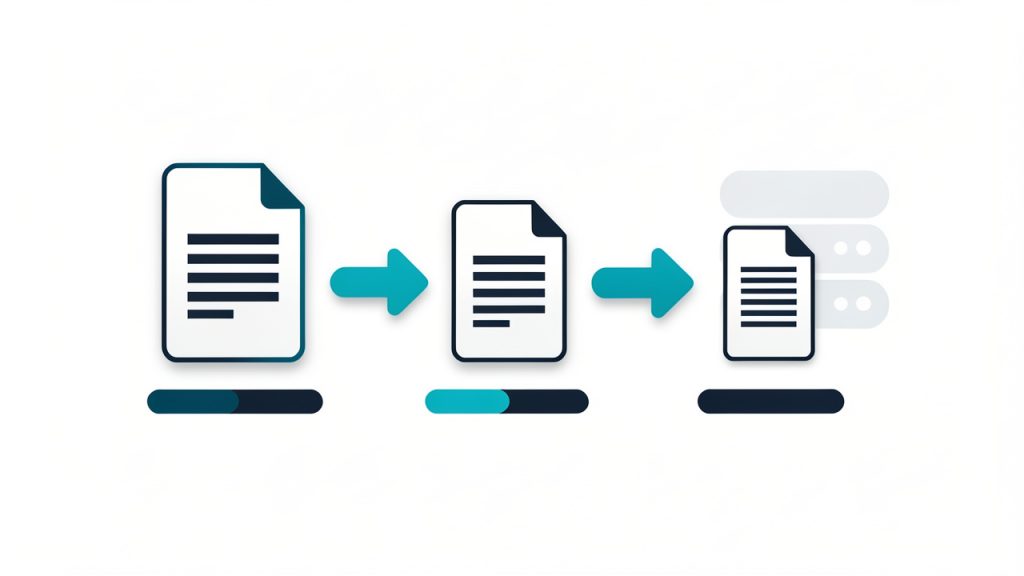
These two methods are not competitors, they work best together. A minified file is already smaller before it reaches the server, and then compression can reduce it even further in transit. If you want better performance, using both is usually the right move.
Why online tools appeal to non-technical users
Not everyone wants to install Node.js, configure bundlers, or manage a command-line workflow just to optimize one JavaScript file. That is why online minifiers remain popular. They are fast, accessible, and useful for one-off tasks or lightweight projects.
For freelancers updating client landing pages, marketers embedding scripts, or small teams maintaining a brochure site, an online tool can remove friction. Paste the code, click a button, copy the result, and publish the slimmer version. It is simple, and in many cases, that simplicity is exactly the point.
Key Aspects of Minify js online
Using an online JS minifier sounds straightforward, but there are important details that affect quality, reliability, and safety. The best results come from understanding what to expect from the tool and what trade-offs may come with convenience.
Smaller file size and faster page loads
The most obvious benefit of choosing to minify JS online is file size reduction. JavaScript written for humans tends to include indentation, comments, spacing, and descriptive variable names. All of that improves maintainability, but none of it is required for execution.
When you minify the script, the browser downloads less data. That can shave milliseconds or more off the loading process, which matters more than many site owners realize. Performance is cumulative. A little improvement in one script, another in an image, and another in server caching can add up to a noticeably faster experience.
This is especially valuable for mobile users. On high-speed desktop internet, a bulky script may feel acceptable. On a weaker connection, it becomes friction. Faster delivery can lead to better engagement, lower abandonment, and a smoother first impression.
Cleaner delivery, not cleaner development
A common misunderstanding is that minification is a way to improve the codebase itself. It is not. Minified JavaScript is harder to read, harder to debug, and unpleasant to maintain. Its purpose is delivery, not development.
That means you should always keep the original, readable source file. Treat the minified output as a production asset, not as your working version. If something breaks later and the only version you have is minified, troubleshooting becomes far more difficult than it needs to be.
Potential obfuscation, but not true security
Some people assume minified code is protected code. That is only partly true, and not in a meaningful security sense. Minification can make JavaScript less pleasant to read at a glance, but it does not secure business logic, API keys, or sensitive operations.
If confidential data or critical validation logic lives in client-side JavaScript, minification will not protect it. Browsers still receive the code, and determined users can still inspect it. Security must come from server-side design, authentication, authorization, and proper data handling, not from shrinking the script.
Online convenience versus local control
Online tools are convenient, but they come with trade-offs. When you paste code into a web-based tool, you are often sending that code through a third-party service. For public scripts or non-sensitive code, that may be acceptable. For proprietary client work, internal tools, or unreleased products, it may not be.
This is where context matters. If you are minifying a simple front-end helper for a small website, an online tool is usually fine. If you are handling commercial code, scripts with tokens, or anything confidential, a local build process may be safer.
The choice is not about which option is universally better. It is about matching the tool to the risk level and workflow.
Minification and debugging
One reason developers hesitate to minify too early is debugging. A readable source file makes it much easier to find syntax issues, inspect logic, and diagnose browser errors. Once code is minified, line numbers often collapse and stack traces become less intuitive.
That is why the timing of minification matters. You should test the original version first, confirm it works, and only then create the minified build. If a problem appears after minification, compare the production file to the tested source and verify that no unsupported syntax or formatting issue crept in.
Typical features of online JS minifiers
Not all online tools do the exact same job. Some only remove whitespace and comments. Others perform more advanced optimizations, such as shortening variable names, collapsing expressions, or warning about syntax issues.
If you are a casual user, basic functionality may be enough. If you are optimizing larger scripts or trying to squeeze out better performance, advanced options can make a measurable difference.
How to Get Started with Minify js online
The good news is that getting started is easy. The better news is that doing it well does not require much extra effort. A smart process helps you get the benefits of minification without introducing avoidable bugs.
Start with a clean, tested JavaScript file
Before you minify anything, make sure your original JavaScript works exactly as intended. This sounds obvious, but many users discover errors only after minification and assume the tool caused the issue. In reality, minification often exposes an existing problem, such as a missing semicolon in older code patterns, malformed syntax, or hidden formatting mistakes.
Work from a readable source file that you have already tested in the browser. Keep that original version saved separately. If you are editing scripts for a client, preserve a backup before making any production changes.
Use a simple workflow
A reliable online minification workflow can be very short:
- Paste or upload your tested JavaScript into the online minifier.
- Run the minification and review the output for obvious issues.
- Replace or save the production version, then test it on your live or staging page.
That is enough for many small projects. The key is not the complexity of the process, but the discipline of testing before and after.
Check browser behavior after minification
Once you publish the minified file, load the pages that depend on it and actually use the features involved. Click the menu. Submit the form. Open the modal. Trigger the slider. Watch for console errors and broken interactions.
Minification should preserve behavior, but website environments are messy. Scripts can conflict, load in the wrong order, or depend on external libraries. If something changes after deployment, do not assume the minifier is inherently broken. Compare versions, check dependencies, and verify that file references are correct.
Be careful with third-party or already minified files
Many libraries already ship with a .min.js version. If you try to minify an already minified file again, you may not gain much, and you might make debugging harder. In some cases, aggressive reprocessing can even create avoidable issues depending on the tool and the script.
If you are using common libraries, check whether an official minified build already exists. That version is often the safest production choice because it was generated and tested by the library maintainers.
Know when online minification is enough
For a small brochure site, a single landing page, a lightweight portfolio, or a few custom scripts, using an online tool to minify JS online is often all you need. It is quick, free, and low-friction.
But once your project grows, your workflow may need to evolve. If you are managing multiple files, transpiling modern JavaScript, bundling dependencies, or deploying frequently, manual online minification becomes less practical. At that point, build tools such as bundlers, task runners, or CI-based workflows offer better consistency.
This is not a reason to avoid online minifiers. It is simply a reminder that the right tool depends on the stage of the project.
Practical signs you should switch to a local workflow
An online tool is ideal when speed and simplicity matter most. A local or automated workflow starts making more sense when you notice repeatable friction. That usually happens when you are editing several JavaScript files each week, versioning production assets, or collaborating with other developers who need a predictable build process.
Here is a quick comparison to help frame the decision:
| Situation | Online JS Minifier | Local Build Tool |
|---|---|---|
| One or two files | Excellent fit | Possible, but more setup |
| Non-technical user | Easy to use | Can feel complex |
| Frequent deployments | Repetitive | Efficient |
| Sensitive or proprietary code | Less ideal | Better control |
| Team collaboration | Limited | Stronger workflow |
| Advanced optimization | Moderate | Best option |
For many readers, the sweet spot is simple: use online minification for lightweight tasks, and graduate to local automation when your process starts repeating itself.
Common mistakes to avoid
One of the biggest mistakes is overwriting the original source file with the minified one. It saves a moment now and creates headaches later. Always keep your readable version. Future edits should happen there, not in the compressed file.
Another frequent issue is minifying code that has not been tested in isolation. If you are copying snippets from plugins, forums, or mixed project files, syntax problems can slip through unnoticed. Minification is not a substitute for validation. It is the last polish before delivery.
There is also a privacy mistake that many users do not think about. If your JavaScript contains tokens, endpoint details, client-specific logic, or unpublished features, pasting it into an online tool may not be appropriate. Convenience should not override basic caution.
How minification supports SEO and user experience
While JavaScript minification is not a magic SEO button, it contributes to the broader performance signals search engines care about. Faster pages tend to create better user experiences. Better user experiences can support stronger engagement. And technical efficiency helps reduce the drag that slows modern websites down.
This matters even more on mobile-first websites. Search visibility is tied increasingly to real-world usability, not just keywords and metadata. If your pages feel sluggish because they rely on bloated scripts, that can affect both visitors and performance benchmarks.
For small business websites, the value is practical. A faster site feels more professional. It reduces friction before a user calls, books, buys, or fills out a form. In many cases, the person visiting your site will never notice that your JavaScript was minified. They will only notice that the site feels quick and smooth. That is the outcome that matters.
Conclusion
Choosing to minify JS online is one of the simplest ways to make a website leaner without investing in a full development pipeline. It reduces unnecessary file weight, supports faster loading, and gives small teams and solo site owners a practical path to better front-end performance.
Start with a tested source file, use an online minifier carefully, keep the original version untouched, and verify the result in a real browser. If your workflow stays small, that may be all you need. If your project grows, you can always move to a local build setup later. The next step is simple: take one JavaScript file from your site, minify it, test it, and measure the difference.
Leave a Reply