

A new manual post can be the simplest thing in your workflow, or the reason your publishing process feels slow, inconsistent, and harder than it should be. For small business owners, freelancers, developers, and productivity-focused teams, the phrase sounds straightforward. In practice, it often represents a very specific challenge, creating and publishing content by hand, with intention, without relying on full automation.
That matters more than it seems. Manual posting gives you control over timing, wording, formatting, and context. It can help you avoid robotic content, catch mistakes before they go live, and tailor each update to a real audience. At the same time, it can become messy if there is no system behind it.
If you are trying to understand what a manual post is, when a new manual post makes sense, and how to make the process efficient, this guide gives you a practical framework. The goal is not just to define the term, but to help you use manual posting in a way that supports speed, quality, and consistency.
What Is a New Manual Post?
At its core, a manual post is a piece of content created and published directly by a person, rather than generated, queued, or distributed entirely through automation. That content might be a blog post, social media update, marketplace listing, community announcement, changelog entry, or internal knowledge-base article. The common thread is simple, a human is actively writing, editing, and posting it.
For many businesses, manual posting is still the default way to publish important updates. A freelancer may write a client-facing project update manually to make the tone more personal. A small ecommerce store may manually publish a product announcement to ensure pricing, images, and offers are accurate. A developer may create a manual release note because technical changes need precision and context that automation often misses.
The word new matters here as well. It signals that this is not just an edit to existing content or a recycled template. It is a fresh post, created for a current purpose. That may sound obvious, but in content workflows, the difference between a truly new post and a duplicated or lightly modified one has real implications for search visibility, user trust, and brand credibility.
A manual post is not automatically better than an automated one. It is better when the situation calls for judgment. If timing, nuance, compliance, branding, or audience sensitivity matter, a manual approach usually delivers stronger results.
Key Aspects of a New Manual Post
Control and accuracy
One of the biggest advantages of creating a post manually is control. You decide the headline, the structure, the formatting, the call to action, and the exact moment the content goes live. That control is valuable when details matter, especially in customer-facing communication.
Accuracy is often where manual posting proves its worth. Automated systems are useful, but they can publish outdated information, pull the wrong template field, or miss contextual issues. A manual process creates a natural review point. You can catch an expired offer, a broken link, a formatting issue, or wording that feels off before your audience sees it.
For productivity-minded users, this can seem like extra effort. In reality, it is often preventive efficiency. Spending five more minutes before publishing can save hours of cleanup, customer confusion, or reputation repair later.
Personalization and tone
A manual post usually feels more human because a human wrote it. That is not just a branding preference, it affects engagement. Readers can often tell when content was created from a rigid template or published in bulk without much thought.
When you create a manual post, you can adapt your message to the audience, platform, and moment. A LinkedIn post announcing a service update should not sound like a support article. A product launch email should not read like a tweet. Manual creation helps you shape tone with purpose.
This is especially useful for small businesses and solo professionals. You may not have a large content team, but you do have the advantage of authenticity. A carefully written manual post can build trust in a way generic content rarely does.
Flexibility across platforms
The practical meaning of a manual post changes depending on where it appears. On a website, it may involve drafting, formatting, optimizing metadata, and publishing in a content management system. On social media, it may mean writing a platform-specific caption, attaching media, choosing the right tags, and posting at the right time.
That flexibility is both a strength and a risk. It allows you to tailor content precisely, but it can also create inconsistency if there is no process. The same announcement can end up with different wording, mismatched visuals, or conflicting links across platforms if every post is handled ad hoc.
The solution is not to eliminate manual work. It is to support it with a light structure. Think of manual posting like cooking without a meal kit. You have more freedom and usually better results, but only if you know the recipe and keep the ingredients organized.
Time investment versus strategic value
Manual posting takes time. There is no point pretending otherwise. If you publish frequently, the effort can add up quickly. That is why many teams swing hard toward scheduling tools, templates, and automation.
Still, the right question is not whether manual posting takes time. The better question is whether the value of direct control outweighs the time required. For high-stakes content, the answer is often yes. For repetitive updates, the answer may be no.
A useful way to think about it is to separate content into tiers. Important announcements, original thought leadership, sensitive updates, and client-specific communication often deserve a manual workflow. Routine reminders, evergreen reposts, and standardized notices may be better handled through templates or automation with review.

Note: Time investment is not uniformly bad. Allocate manual effort to high-value posts where context, accuracy, and tone materially affect outcomes, and automate where repeatability and scale matter.
SEO and discoverability
If your manual post lives on a website or blog, search visibility matters. A manually created post gives you the chance to optimize title structure, internal links, readability, keyword use, and metadata with more care than an automated pipeline might allow.
That does not mean stuffing awkward phrases into the content. In fact, good SEO depends on the opposite. If you are targeting a phrase like a phrase such as “new manual post”, the content should use those terms naturally and in a way that makes sense to readers. Search engines increasingly reward clarity, relevance, and user value over mechanical repetition.
Manual posting can support SEO because it encourages editorial judgment. You can identify what the reader actually needs, create a cleaner structure, and answer related questions in plain language. That often performs better than thin, mass-produced pages.
How to Get Started With a New Manual Post
Start with a clear purpose
Before you write anything, define what the post is supposed to accomplish. That sounds basic, but it eliminates a surprising amount of wasted effort. A manual post without a clear objective usually turns into vague content that does not inform, persuade, or convert.
Ask yourself whether the post is meant to announce, educate, sell, update, clarify, or invite action. A single post can do more than one of those things, but one primary goal should lead. When the purpose is clear, decisions about tone, structure, and length become much easier.
For example, a business update post should prioritize clarity and timeliness. A promotional post should focus on benefits and a strong call to action. An educational article should answer questions with enough depth to be genuinely useful. Purpose shapes everything.
Build a simple repeatable workflow
You do not need a complicated content system to create good manual posts. You need a reliable one. Even a lightweight workflow can reduce friction and improve quality dramatically.
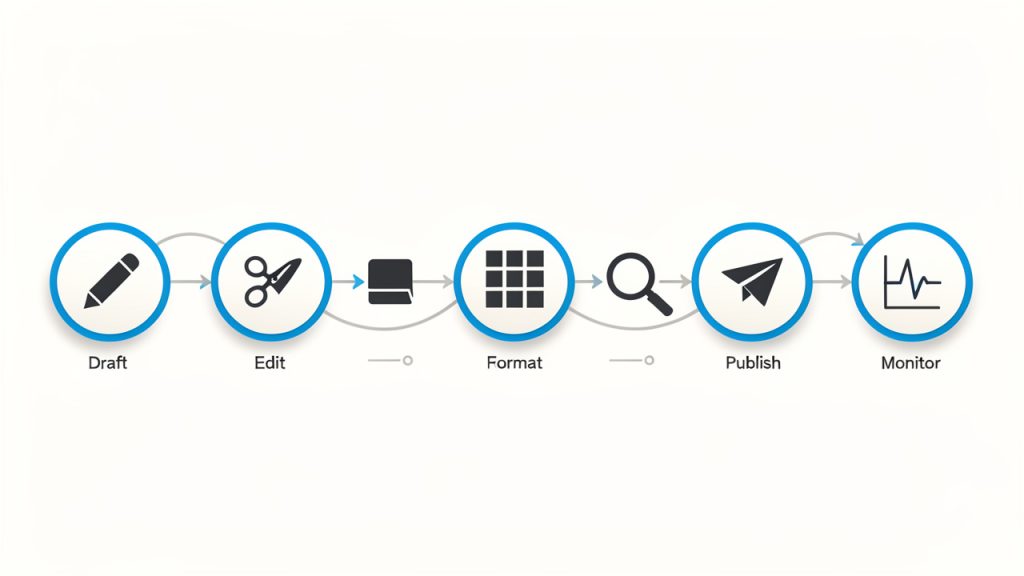
A practical manual posting process often includes these steps:
- Draft the message with one clear goal.
- Edit for clarity, tone, and accuracy.
- Format it for the platform where it will appear.
- Review links, visuals, dates, names, and calls to action.
- Publish at the most appropriate time.
- Monitor performance and feedback after posting.
The reason this works is simple. It turns manual posting from a random act into a manageable routine. That is especially important for freelancers and small teams who switch between client work, operations, and marketing throughout the day.
Use templates without sounding templated
There is a common misconception that manual posting and templates are opposites. They are not. The smartest workflows combine both. A template can save time on structure while still leaving room for customization and human judgment.
For instance, you might use a standard format for product updates, service announcements, or content summaries. The template handles recurring elements like title style, image size, metadata fields, or CTA placement. The actual message, however, is still written manually to match the moment.
This balance matters. Too much structure makes every post feel interchangeable. Too little structure creates delays and inconsistency. The goal is guided flexibility, not rigid repetition.
Focus on readability and platform fit
A strong manual post is not just well written, it is well presented. That means short paragraphs, clear headings where appropriate, strong opening lines, and formatting that suits the platform.
A website article can support more depth. A social post needs speed and punch. A community update should be easy to scan. A marketplace listing should prioritize clarity and trust. The same information may need to be expressed differently in each context.
This is where manual effort pays off. You can shape the presentation to fit user behavior. People do not read a support update the same way they read a promotional caption. Matching the format to the platform improves engagement and reduces confusion.
Measure what happens after publishing
A manual post should not end when you hit publish. One of the most overlooked parts of a manual workflow is the feedback loop. If you never review performance, you are relying on guesswork.
Look at the signals that matter most for the platform and purpose. On a blog post, that may be time on page, scroll depth, clicks, and conversions. On social media, it may be saves, comments, shares, or link clicks. For client communication, it may simply be response quality or reduced follow-up questions.
You do not need enterprise analytics to learn from manual posts. Even basic observation can reveal patterns. You may notice that shorter intros perform better, certain headlines get more clicks, or posts published at specific times earn stronger engagement. Over time, those small insights turn manual posting into a smarter system.
Common Challenges and How to Avoid Them
One of the most common problems with manual posting is inconsistency. When content is created only when someone remembers or feels inspired, publishing becomes irregular. That hurts audience expectations and weakens overall momentum. The fix is not constant output, it is a realistic cadence you can maintain.
Another issue is overediting. Because manual posts are hands-on, it is easy to spend too long polishing details that have little impact. Perfectionism can slow down publishing to the point where timely content loses relevance. The better standard is clear, accurate, and useful. If those three are in place, the post is usually ready.
There is also the risk of fragmented messaging. When multiple people create manual posts without shared guidelines, the brand can start sounding inconsistent. A simple style guide helps. It does not need to be formal or complicated. Even a one-page reference with preferred tone, formatting rules, naming conventions, and CTA style can make a major difference.
| Aspect | Manual Posting | Automated Posting |
|---|---|---|
| Control | High, with direct human oversight | Lower, depends on setup |
| Speed at scale | Slower for large volumes | Faster for recurring content |
| Personalization | Strong, easier to tailor | Limited unless deeply configured |
| Error prevention | Better for context-sensitive checks | Better for repetitive consistency |
| Best use case | Important, nuanced, timely content | Routine, repeatable distribution |
For most productivity-focused users, the best answer is not choosing one method exclusively. It is knowing when each one serves the goal.
When a New Manual Post Makes the Most Sense
A manual post is especially valuable when the content carries business, reputational, or relational weight. That includes service changes, product launches, client updates, sales announcements, policy clarifications, and original insights intended to build authority.
It also makes sense when audience context matters. If your readers are responding to a trend, a recent event, or a current concern, a manually created post allows you to speak directly and appropriately. Automated content often lacks that awareness.
For developers and technical teams, manual posts are useful when publishing release notes, outage explanations, setup instructions, or migration updates. Precision matters in those scenarios. One vague sentence can create support tickets, confusion, or implementation mistakes.
For freelancers and service businesses, a manual post can function as a relationship tool. A short, carefully written update can remind clients and prospects that there is a real person behind the brand, paying attention and communicating with intention.
Conclusion
A new manual post is more than content published by hand. It is a deliberate choice to prioritize accuracy, control, tone, and context. In a world full of automation, that choice can be a competitive advantage when used well.
The smartest approach is not to publish everything manually or automate everything blindly. It is to build a workflow where manual posting is reserved for the moments that deserve a human touch, then support that process with simple systems that keep it efficient.
Your next step is practical, choose one type of content you publish regularly, define a clear manual posting workflow for it, and use that process for the next three posts. You will quickly see where manual effort adds value, where templates can save time, and how to create content that feels both efficient and genuinely human.
Leave a Reply