JNTZN

Author: olemai

  • How to Convert WMA Files to MP3 Quickly

    How to Convert WMA Files to MP3 Quickly

    Converting a WMA file to MP3 sounds simple until you actually need to do it fast. Maybe a client sent audio in the wrong format. Maybe an old voice recording will not play on your phone. Or maybe you are organizing a library of training files, podcasts, or archived interviews and keep running into compatibility issues.

    That is where the need to convert WMA into MP3 becomes practical, not technical. MP3 remains one of the most widely supported audio formats across phones, browsers, editing tools, cloud platforms, and everyday media players. If you want fewer playback problems and easier file sharing, turning WMA audio into MP3 is often the quickest fix.

    What is converting WMA to MP3?

    At its core, converting WMA to MP3 means changing an audio file from Windows Media Audio (WMA) format into MP3, a more universally accepted format. Both use lossy compression, but they were designed with different ecosystems in mind. WMA was developed by Microsoft and was once common in Windows-based software and older digital music libraries. MP3, by contrast, became the default standard for portable audio because it works almost everywhere.

    For most users, the format itself matters less than the outcome. You want your audio to open, play smoothly, upload easily, and work across devices without extra apps or compatibility warnings. That is why MP3 still dominates for everyday use. Whether you are handling business recordings, webinar exports, customer support clips, or personal audio files, MP3 is usually the safer destination format.

    People search for ways to convert WMA into MP3 because they want a quick, free, and reliable conversion method. They are not usually looking for a deep lesson in audio engineering. They want a file that simply works. That said, understanding a few basics helps you avoid quality loss, bloated files, or failed conversions.

    Why WMA still shows up

    WMA is not obsolete, but it is less convenient than it used to be. Many older desktops, CD rips, archived media collections, and legacy business systems still produce or store audio in WMA format. If you have inherited files from an older workflow, there is a good chance WMA is part of the mix.

    This matters for small teams and freelancers because legacy files tend to surface at inconvenient moments. A training department may need old audio modules republished. A virtual assistant may be asked to upload recordings into a modern content platform. A developer may need compatible assets for an app or browser-based tool. In each case, converting from WMA into MP3 removes friction.

    Why MP3 remains the default choice

    MP3 is popular for one simple reason, compatibility. It plays nicely with websites, smartphones, editing tools, email attachments, cloud storage systems, and social platforms. If your goal is broad usability, MP3 is often the right final format.

    It also offers a practical balance between file size and sound quality. For spoken-word audio, such as interviews, lectures, voice notes, and webinars, MP3 usually provides more than enough quality without creating oversized files. That balance is especially useful when you are sharing files with clients or uploading them through limited dashboards.

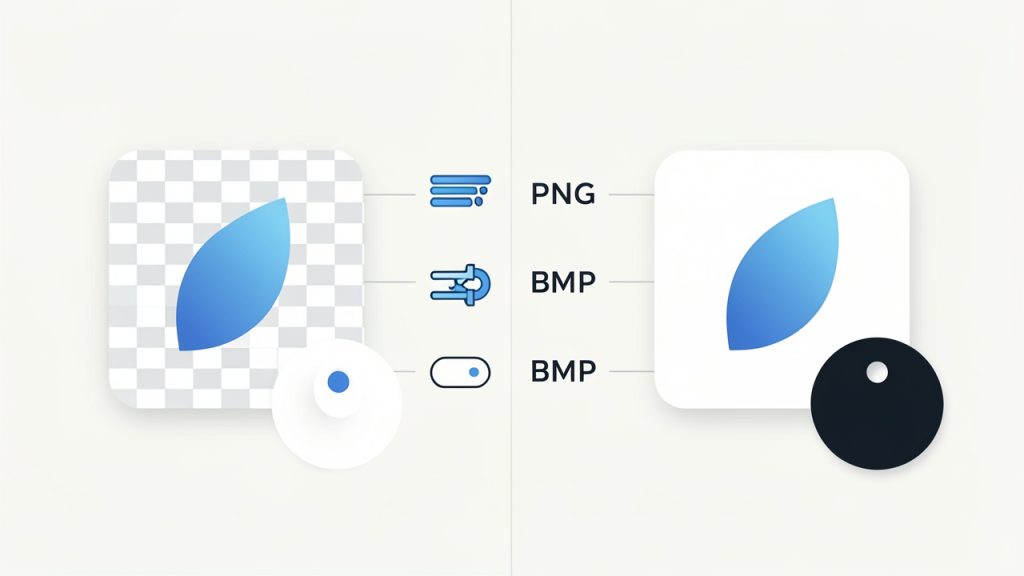
    Compatibility comparison illustration: where each format works best.

    Key aspects of converting WMA into MP3

    Converting audio is not just about changing the extension. A good conversion preserves the listening experience while making the file easier to use. To do that well, you need to think about quality, file size, compatibility, and workflow.

    Audio quality and compression

    Both WMA and MP3 use compression, which means they reduce file size by removing some audio data. When you convert a compressed file into another compressed format, there is usually some degree of quality trade-off. In plain language, each conversion can shave off a little detail.

    For most business and everyday use cases, this is not a major problem. If you are converting a spoken recording, meeting audio, or standard music file for normal listening, the difference may be negligible. But if the source file is already low quality, or if you convert it multiple times, the loss can become noticeable. That is why it is smart to convert from the original WMA file once and keep a backup of that source.

    Bitrate plays a major role here. A higher MP3 bitrate generally means better audio quality and a larger file. A lower bitrate creates smaller files but can introduce artifacts or dullness. For voice-heavy content, moderate settings often work well. For music, you may prefer a higher bitrate to retain more depth and clarity.

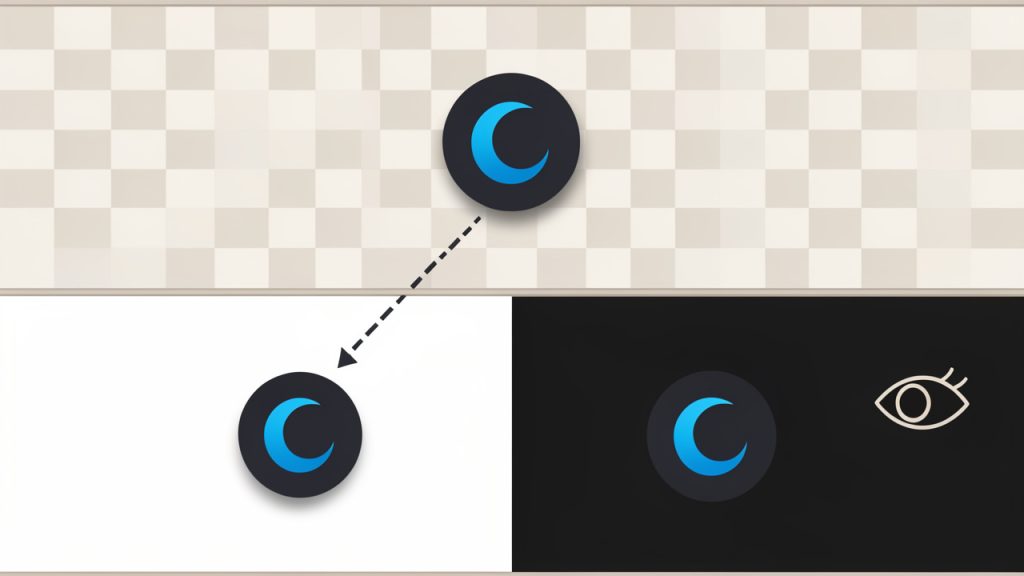
    Bitrate vs quality vs file size graphic: shows audio quality vs file size with markers for low, moderate, and high bitrates and a note about repeated conversions lowering quality.

    File size and storage efficiency

    One reason users search for ways to convert WMA files into MP3 is file sharing. Modern workflows rely on uploads, email attachments, cloud syncing, and mobile downloads. If a file is awkwardly formatted or too large, it slows everything down.

    MP3 gives you more control over size because many converters let you choose output settings. That can be useful if you are preparing files for a website, online course, client portal, or internal knowledge base. Smaller files upload faster and stream more smoothly, which improves the experience for your audience.

    The trade-off is straightforward. Smaller files are convenient, but compressing too aggressively can hurt quality. The ideal setting depends on how the audio will be used. A customer-facing podcast deserves more care than a simple internal memo recording.

    Device and platform compatibility

    Compatibility is the strongest case for converting WMA audio into MP3. WMA may still work in certain desktop environments, but support is less consistent on mobile devices, browser tools, and non-Windows platforms. If you need a format that behaves predictably across ecosystems, MP3 is the practical answer.

    This is especially relevant for freelancers and small businesses that use a patchwork of tools. You might record on one device, edit on another, upload through a browser, and share with clients using entirely different systems. MP3 reduces the chance that someone on the other end will reply with, “I cannot open this file.”

    Speed, simplicity, and online tools

    Most users do not want to install heavy software just to convert a few files. That is why online converters are popular. They are fast, accessible, and often free for basic use. You upload the WMA file, choose MP3 as the output, and download the converted version.

    That convenience comes with a few considerations. If the audio contains sensitive client information, internal meetings, or private interviews, you should pay attention to privacy policies and file retention rules. Convenience is valuable, but trust matters more when the content is confidential.

    For non-sensitive files, online conversion is often the easiest route. It is especially useful for occasional tasks, quick turnarounds, and lightweight workflows where installing desktop software would be overkill.

    A simple format comparison

    Format Full Name Best For Compatibility Typical Benefit Typical Limitation
    WMA Windows Media Audio Older Windows-based libraries and legacy systems Moderate Efficient in some Microsoft environments Less universal support
    MP3 MPEG Audio Layer III General playback, sharing, web use, mobile devices Very high Broad compatibility and flexible file sizes Possible quality loss at low bitrates

    How to get started converting WMA files into MP3

    If you need to convert a file today, the process is usually straightforward. The key is choosing the right method for your situation. A one-off personal file may call for an online converter, while frequent batch work may be better handled with installed software.

    Choose the right conversion method

    Start by thinking about volume and sensitivity. If you only have one or two audio files and they are not confidential, an online tool is often enough. It is quick, requires no setup, and works from almost any device. If you regularly convert recordings, or you need better control over output settings, dedicated desktop software may be more efficient.

    Browser-based tools are ideal for convenience. Desktop apps are better when you need batch conversion, offline access, or stronger privacy. The best tool is the one that fits your workflow without creating extra steps.

    Use sensible output settings

    When converting a WMA file to MP3, avoid choosing settings blindly. Think about where the audio is going next. If it is for speech, online learning, virtual meetings, or internal documentation, you can often use a moderate bitrate and get a clean result with manageable file size.

    If the file contains music, layered sound, or anything intended for polished public listening, choose higher quality settings. You do not need to over-optimize, but you do want to avoid making the file sound thin or distorted. It is often worth testing one sample conversion before processing a whole batch.

    Follow a basic conversion workflow

    For most tools, the process looks like this:

    1. Upload or import the WMA file.
    2. Select MP3 as the output format.
    3. Choose quality settings, if available.
    4. Start the conversion.
    5. Download and test the MP3 file on the device or platform where it will be used.

    The last step matters more than people think. A file that converts successfully is not always a file that performs well in the real world. Test playback, confirm the duration is correct, and make sure the audio sounds as expected before you send it to a client or publish it online.

    Organize files for repeated use

    If conversion is part of your regular workflow, a little organization saves time. Keep your original WMA files in a clearly labeled archive folder. Store the converted MP3 files separately. Add naming conventions that identify the version, date, or intended use.

    This is especially helpful for agencies, consultants, and content teams. Audio assets pile up quickly, and confusion grows when files have similar names but different formats. A simple folder structure can prevent duplicate work and make future updates easier.

    Common problems and how to avoid them

    One common mistake is converting a file several times. Every repeated conversion can degrade quality, so it is better to convert once from the original source and keep that original safely stored. Another issue is choosing output settings that are too low, which can make voice recordings sound muffled or metallic.

    Playback issues can also happen if the file extension changes but the actual format does not. A proper conversion tool re-encodes the file correctly. Simply renaming the extension from .wma to .mp3 does not work. If a converted file seems broken, try a different converter or re-export with more standard settings.

    Conclusion

    Converting WMA audio into MP3 is ultimately about making audio easier to use. MP3 wins because it is widely supported, easy to share, and flexible enough for everything from voice notes to customer-facing content. If you are dealing with older files or inconsistent playback, conversion is often the fastest way to remove friction from your workflow.

    Your next step is simple. Pick one file, convert it to MP3, and test it on the device or platform where it needs to work. If the result sounds right and plays everywhere you need it, you have a repeatable process you can use again and again.

    For a quick refresher on converting a WMA file to MP3, see this short guide on common WMA file to MP3 conversion steps.

  • How to Convert M4A to MP3 Quickly and Safely

    How to Convert M4A to MP3 Quickly and Safely

    Converting an audio file should not feel like a technical chore, yet many people still get stuck when they need to turn an M4A file into MP3 quickly. You download a voice note, podcast clip, interview recording, or product demo, and suddenly the file will not play nicely in your preferred app, browser, car stereo, or editing workflow.

    That is why interest in converting an M4A file to MP3 remains high. People want a format that is easy to share, widely supported, and simple to use across devices. If you are a freelancer sending audio to clients, a small business owner repurposing recordings, or a developer organizing media assets, understanding how this conversion works can save time and reduce friction.

    What does converting an M4A file to MP3 mean?

    At its core, converting an M4A file to MP3 means changing one audio file format into another. M4A is commonly associated with Apple ecosystems and AAC audio encoding, though it can also contain other codecs. MP3, by contrast, is the long-standing universal standard that almost every device, app, and platform understands.

    The reason this matters is compatibility. An M4A file may sound perfectly fine, but it is not always the most convenient format for playback, upload, archiving, or client delivery. MP3 is often the practical fallback because it works almost everywhere, from older hardware to web upload tools and lightweight editing software.

    It also helps to understand that format conversion is not just a filename change. You are typically re-encoding the audio. That means the software reads the source file and creates a new version in MP3 format. In many cases, this is straightforward, but the output quality depends on the settings you choose and the quality of the original file.

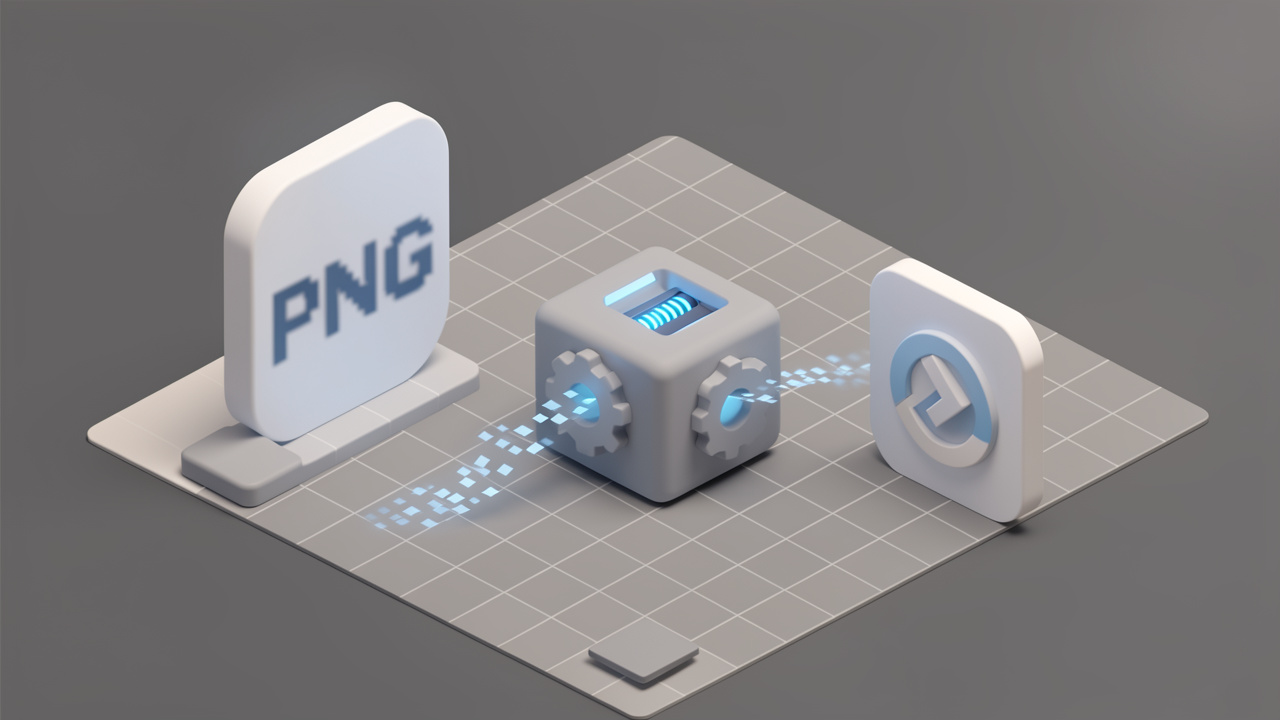
    A simple diagram showing an M4A file icon feeding into a converter process labeled “re-encode (not rename)”, producing an MP3 file icon. Include arrows, a note that codec/encoding changes occur, and a small warning about potential quality loss if re-encoding compressed sources.

    Why M4A exists in the first place

    M4A became popular because it can deliver good audio quality with efficient compression. For many users, especially those working in Apple-centric environments, it is a practical format for music, voice recordings, and exported media. It is smaller than uncompressed formats and often sounds excellent at modest file sizes.

    The issue is not that M4A is bad. The issue is that MP3 is more universally accepted. If your goal is broad compatibility rather than format efficiency, converting an M4A file to MP3 is often the easiest way to avoid playback issues later.

    Why people still prefer MP3

    MP3 survives because it solves a real problem. It plays in legacy systems, embedded devices, online tools, and countless media players with little drama. When someone asks for an audio file “that just works,” they usually mean MP3.

    For business and productivity-focused users, that reliability matters. If you are sending audio to a client, uploading media to a platform with unclear format support, or preparing files for a team with mixed devices, MP3 is often the safest option.

    Key aspects of converting M4A files to MP3

    Before converting audio, it helps to know what actually changes, what does not, and where mistakes happen. This is where a lot of users lose quality unnecessarily or choose settings that are larger than needed.

    Audio quality and compression

    One of the biggest concerns when converting from M4A to MP3 is quality loss. Both formats are usually compressed, and MP3 conversion often introduces another round of lossy compression. If the original M4A was already compressed, the new MP3 will not improve the sound. At best, it preserves most of what is there. At worst, poor settings make the result noticeably worse.

    That said, quality loss is often negligible for everyday use if you choose sensible bitrates. For voice recordings, meetings, webinars, and spoken content, a moderate bitrate is usually more than enough. For music or polished branded audio, you may want higher settings to avoid artifacts.

    A simple way to think about it is this, you are trading some efficiency for compatibility. If compatibility is your priority, that trade often makes perfect sense.

    File size and bitrate

    Bitrate determines how much data is used per second of audio, which affects both sound quality and file size. Higher bitrate usually means better quality and bigger files. Lower bitrate means smaller files but more aggressive compression.

    For many practical use cases, the best bitrate depends on the content:

    Use Case Recommended MP3 Bitrate Why It Works
    Voice notes, calls, meetings 64 to 128 kbps Keeps files small while preserving clear speech
    Podcasts, interviews, webinars 96 to 160 kbps Balances spoken-word clarity and manageable size
    Music, brand audio, richer sound 192 to 320 kbps Better for full-range audio and repeated listening

    A two-axis graphic: bitrate on the horizontal axis, with file size rising and perceived audio quality on the vertical axis (quality curve flattening at higher bitrates). Overlay recommended bitrate ranges highlighted for Voice (64–128 kbps), Podcasts (96–160 kbps), and Music (192–320 kbps).

    This matters if you are handling many files. A freelancer managing dozens of client recordings or a small team archiving support calls can save substantial storage by choosing the right bitrate instead of defaulting to the highest option.

    Metadata and organization

    Another overlooked part of converting M4A files to MP3 is metadata. Metadata includes the title, artist, album, recording date, and sometimes embedded artwork. Some converters preserve this automatically. Others strip it out unless you use specific settings.

    If you are converting a large library of files, metadata can be the difference between a clean archive and a folder full of generic filenames. For business users, it also affects searchability and internal organization. A file named “audio-final-3.mp3” is far less useful than one with proper tags and a clear naming convention.

    Speed, privacy, and workflow

    The best conversion method is not always the most powerful one. It is the one that fits your workflow. Online converters are convenient when you need a quick result and do not want to install software. Desktop tools are better when you need speed, privacy, batch processing, or more control.

    If your files include sensitive content, such as customer calls, interviews, internal recordings, or unreleased media, privacy becomes a serious factor. Uploading audio to an online converter may be fine for public or low-risk content, but many businesses prefer local conversion to keep everything on-device.

    A quick comparison of common conversion approaches

    Method Best For Main Advantage Main Trade-Off
    Online converter Fast one-off tasks No installation Privacy and file size limits
    Desktop app Frequent use Better control and batch processing Requires installation
    Built-in media software Casual users Familiar interface Fewer advanced options
    Professional audio tool Editors and creators Precise settings and export control More complexity

    How to get started converting M4A to MP3

    The good news is that converting an M4A file to MP3 is usually simple. The better news is that you do not need an advanced audio background to do it well. A few smart choices at the start can save you from poor output, oversized files, or repeated work.

    Start with the end use in mind

    Before you convert anything, ask one practical question: what is this file for? If the MP3 is meant for client review, internal sharing, uploading to a web form, or playback in a car or phone, convenience is likely the priority. If the audio will be edited later, archived, or published publicly, quality and consistency matter more.

    This small decision shapes everything else. It influences bitrate, naming, folder structure, and whether you should convert one file manually or automate a batch process. Productivity-minded users often skip this step, then end up reconverting the same files later.

    Choose the right tool for your situation

    If you only need to convert one or two files occasionally, an online tool may be enough. The experience is usually simple, upload the M4A, choose MP3, pick a quality setting, and download the converted file. For non-sensitive recordings, this can be the fastest route.

    If you convert audio regularly, a desktop solution usually makes more sense. It gives you more reliable performance, better batch handling, and fewer restrictions on file size. It also makes repeat work easier, especially if you often process meeting recordings, customer interviews, or content assets in volume.

    Use a sensible conversion process

    A clean workflow helps avoid clutter and accidental quality issues. Keep it simple:

    1. Check the source file and confirm the M4A plays correctly.
    2. Choose MP3 settings based on voice or music use.
    3. Convert a single test file before processing a large batch.
    4. Review the output for sound quality, filename accuracy, and metadata.
    5. Batch convert the rest only after the test looks right.

    This approach takes a minute longer upfront, but it reduces mistakes dramatically. It is especially useful in client-facing workflows where broken or mislabeled files create avoidable friction.

    Avoid common mistakes

    A surprisingly common mistake is choosing the highest possible bitrate for everything. That sounds safe, but it often creates larger files without meaningful benefit, especially for speech. Another mistake is converting already low-quality audio and expecting the MP3 to sound better. Conversion changes format, not source quality.

    People also forget to standardize filenames. If you are converting ten files today, you may remember what they are. If you revisit them in three months, messy naming becomes a real operational problem. Clear file labels, dates, and project references make your audio library far easier to manage.

    When online tools make sense

    Online conversion tools are ideal for quick, lightweight tasks. If you have a short voice memo and need to send it in a more compatible format, they remove friction. For busy professionals, that convenience is valuable.

    Still, it is worth reading the basic terms of service and checking whether files are stored temporarily. For sensitive recordings, local tools are the safer default. Convenience should not come at the cost of privacy when the audio contains business-critical information.

    When you should keep the original M4A

    Converting to MP3 does not mean deleting the source file. In many cases, keeping the original M4A is the smarter move. If you need to reconvert later at a different bitrate, create alternate versions, or preserve the best available source, the original file remains valuable.

    Think of the M4A as your master copy and the MP3 as the delivery copy. That mindset is especially helpful for creators, agencies, and businesses building reusable media libraries.

    Conclusion

    Converting an M4A file to MP3 is ultimately about making audio easier to use. MP3 remains the format people trust for wide compatibility, simple sharing, and dependable playback across platforms. If your goal is speed and convenience, the conversion process can be quick. If your goal is quality and repeatability, a little planning goes a long way.

    The next step is straightforward, choose a tool that matches your workflow, test one file with the right bitrate, and keep the original M4A for backup. That gives you a practical, low-friction system for handling audio without wasting time or sacrificing usability.

  • MP3 to WAV: When to Convert and How It Affects Quality

    MP3 to WAV: When to Convert and How It Affects Quality

    Converting MP3 to WAV sounds simple, but it often becomes confusing the moment audio quality, file size, compatibility, and editing needs enter the picture. Many people assume one format is just as good as the other, or that conversion somehow “restores” lost sound data. It does not. A little clarity saves time, storage, and frustration.

    If you are a small business owner preparing podcast clips, a freelancer editing voice recordings, a developer handling media assets, or someone trying to make an audio file work in the right app, understanding MP3 to WAV conversion matters. The right choice depends on what you need the file to do next, not just on what sounds familiar.

    What is MP3 to WAV?

    At its core, MP3 to WAV means converting an audio file from the MP3 format into the WAV format. MP3 is a compressed audio format designed to reduce file size. WAV is typically an uncompressed audio format that preserves more raw audio data and is widely used in editing, production, and professional workflows.

    Side-by-side visual comparing MP3 vs WAV: left panel shows a simplified, 'thinner' waveform with parts faded or missing and a small file-size icon labeled MP3 (lossy/compressed); right panel shows a fuller, detailed waveform and a large file-size icon labeled WAV (uncompressed).

    The key difference is not just the file extension, it is how the audio is stored. An MP3 removes parts of the sound data to make the file much smaller. This is called lossy compression. A WAV file, by contrast, usually stores audio in a much less compressed or uncompressed form, which makes it larger and easier for editing software, recording systems, and some hardware devices to process accurately.

    This leads to an important point that many users miss. Converting an MP3 into WAV does not improve the original audio quality. If the MP3 already lost data during compression, that missing information does not magically come back when you save it as WAV. What conversion does do is make the file more suitable for certain tasks, especially where compatibility and editing stability matter.

    A metaphorical illustration showing an MP3 file with pieces removed (like missing puzzle pieces) being converted into a larger WAV file where the missing pieces remain absent — emphasizing that conversion does not restore lost audio data.

    A simple way to think about it is this. MP3 is like a highly compressed image sent over messaging apps to save space, WAV is more like the original working file used in design software. Turning the compressed image back into a larger file does not recreate the missing detail, but it may make it easier to use in a professional workflow.

    Key Aspects of MP3 to WAV

    Why people convert MP3 to WAV

    The most common reason for converting MP3 to WAV is workflow compatibility. Audio editors, video production tools, DAWs, transcription systems, and some broadcasting platforms often handle WAV files more predictably than MP3s. WAV files are simpler for software to decode because they usually do not rely on the same compression logic as MP3.

    Another major reason is editing performance. When you edit audio repeatedly, cut sections, apply effects, normalize volume, or mix tracks, working with WAV can reduce the chance of introducing additional compression artifacts. Editors often prefer WAV because it gives them a more stable source format, even if the original audio began as MP3.

    There is also the issue of device and platform requirements. Some systems, including legacy hardware, professional recording devices, call systems, and speech processing tools, specifically request WAV uploads. In those cases, the conversion is not about quality improvement, it is about meeting a technical requirement.

    MP3 vs WAV at a glance

    Feature MP3 WAV
    Compression type Lossy Usually uncompressed
    File size Small Large
    Audio quality Reduced to save space Higher retention of source audio
    Best use case Streaming, sharing, storage Editing, production, archiving workflows
    Compatibility in editors Good, but sometimes less ideal Excellent
    Can conversion restore lost quality? No No

    This comparison highlights the practical trade-off. MP3 is efficient, WAV is flexible. One is built for convenience, the other for production.

    Audio quality misconceptions

    One of the biggest misconceptions around MP3 to WAV is the belief that WAV automatically means “better sound.” That is only true if the source audio was already high quality. If your original file is a 128 kbps MP3, converting it to WAV simply creates a much larger file that contains the same compressed audio quality.

    That does not mean the conversion is pointless, it means the benefit is functional, not magical. For example, if you need to import voice audio into editing software, sync it with video, or deliver it to a platform that rejects MP3 uploads, WAV becomes useful even though it does not improve the sound itself.

    A second misconception is that all WAV files are identical. In reality, WAV files can vary by sample rate, bit depth, and encoding settings. A 44.1 kHz, 16-bit WAV may be perfectly fine for music delivery, while 48 kHz, 24-bit is more common in video and production environments. Understanding those settings matters when precision is important.

    File size and storage implications

    Storage is where the difference becomes obvious fast. An MP3 might be only a few megabytes, while the same audio as WAV can be ten times larger or more. For a solo creator working on a few clips, that may not matter. For a business processing hundreds of recordings, it matters a lot.

    Larger files take longer to upload, download, sync, and archive. If you convert everything by default without a reason, your storage bill and project clutter can grow unnecessarily. That is why MP3 to WAV should be intentional. Use WAV where editing, system compatibility, or delivery standards require it. Keep MP3 where portability and smaller files are the priority.

    For teams and freelancers, this decision affects project management too. WAV files are better as working files, MP3 files are often better as sharing files. Knowing when to use each can keep both quality expectations and storage demands under control.

    How to Get Started with MP3 to WAV

    Start with your actual goal

    Before converting any file, ask a practical question: Why do I need WAV? If the answer is “to improve quality,” you may not get the result you expect. If the answer is “my editor, client, software tool, or system requires WAV,” then the conversion makes sense.

    This small mindset shift prevents wasted time. A lot of users convert files simply because WAV sounds more professional. Sometimes it is the right move. Sometimes it just creates larger files with no real benefit. The best workflow starts with the next step in your process, not the format name alone.

    For example, if you are sending a podcast episode draft to a client for approval, MP3 is often enough. If you are importing spoken word tracks into audio editing software for cleanup and mastering, WAV is usually the better choice.

    Choose the right conversion settings

    When converting MP3 to WAV, pay attention to the export settings if the tool allows it. The most common options include sample rate and bit depth. These settings do not restore lost quality from the MP3, but they can affect compatibility with downstream tools.

    For general use, 44.1 kHz, 16-bit WAV is a safe standard. For video production or professional post-production, 48 kHz is often preferred. If you are delivering files to a client or platform, use their required settings rather than guessing.

    If your conversion tool offers “high quality” presets, be careful not to confuse that label with source recovery. A high-quality WAV export from a low-bitrate MP3 is still limited by the original MP3. The conversion can preserve what remains, but it cannot recreate what was removed during compression.

    Use an online tool carefully

    Online converters are popular because they are fast and convenient. For many users, especially those handling a few files at a time, an online MP3 to WAV tool is the easiest option. You upload the MP3, choose WAV, convert, and download.

    That convenience comes with considerations. If your audio contains private interviews, client calls, unreleased media, legal recordings, or sensitive business material, be cautious. Not every free tool clearly explains how long files are stored or whether uploads are deleted after processing. For public or low-risk files, online conversion is usually fine. For confidential work, a trusted desktop app may be the safer route.

    If you do use a browser-based tool, look for clear file limits, transparent privacy policies, and support for the output settings you need. Ease of use matters, but so does control.

    A simple conversion workflow

    1. Upload your MP3 file to a trusted converter or open it in a desktop audio tool.
    2. Select WAV as the output format and review any settings like sample rate or bit depth.
    3. Convert and download the file, then test it in the app, editor, or system where you plan to use it.

    That is enough for basic needs. What matters more is checking the output file in the real destination environment. A conversion is only successful if the new WAV file works where you need it.

    Check the result before moving on

    After converting, play the WAV file and verify a few basics. Make sure the audio starts and ends correctly, volume levels are consistent, and the file opens in your target software. If the file is for client work or production, confirm that the sample rate matches project requirements.

    This verification step is often skipped, especially when converting in bulk. That can create avoidable problems later, such as sync issues in video timelines or rejected uploads on third-party systems. A quick check now can save a rework cycle later.

    If you handle audio regularly, it is smart to create a repeatable mini-workflow. Use the same settings, naming conventions, and storage folders each time. That level of consistency helps freelancers, teams, and small businesses stay organized as media files pile up.

    Conclusion

    MP3 to WAV conversion is less about making audio sound better and more about making it usable in the right context. MP3 is great for compact storage and easy sharing, WAV is better for editing, production, and systems that require a less compressed format. The conversion has value, but only when it supports your actual workflow.

    The next step is simple. Look at how you plan to use the file after conversion. If you need cleaner compatibility, easier editing, or a format accepted by professional tools, convert your MP3 to WAV with the right settings and verify the output. If not, keeping the file as MP3 may be the smarter and more efficient choice.

  • How to Convert Base64 to PDF — Quick Guide

    How to Convert Base64 to PDF — Quick Guide

    A PDF that refuses to open is frustrating enough. When the source comes as a long, unreadable Base64 string, it can feel even worse. You know the file exists somewhere inside that block of text, but turning it into a usable document is not always obvious, especially if you are juggling invoices, contracts, reports, or app-generated files.

    That is exactly where Base64 to pdf conversion comes in. It takes encoded document data and restores it into a normal PDF you can save, share, print, or archive. For small business owners, freelancers, developers, and anyone working with digital workflows, understanding this process can save time, prevent file errors, and make document handling far more reliable.

    What is Base64 to pdf?

    Base64 to pdf refers to converting a Base64-encoded string back into a standard PDF file. Base64 is a text-based encoding method that represents binary data, such as a PDF, in plain ASCII characters. This makes it easier to transmit files through systems that are designed to handle text rather than raw binary content.

    In practical terms, Base64 often appears when files are sent through APIs, embedded in JSON responses, stored in databases, attached to emails, or passed between web applications. Instead of receiving a file named document.pdf, you may receive a long string beginning with something like JVBERi0x…. That string is not random noise. It is the PDF, translated into text form.

    The conversion process simply reverses that translation. Once decoded, the Base64 content becomes a working PDF again. If the original data is valid and complete, the result should open normally in any standard PDF reader.

    Clear flow diagram showing Base64-encoded PDF recovery: leftmost column with source systems (API, email, database) feeding into a long Base64 text block icon; an arrow labeled "decode" pointing to a PDF file icon; final arrow to actions (save, print, share). Include small labels for "text transport layer" over the Base64 block and "original PDF" over the PDF icon.

    Why Base64 is used in the first place

    Base64 exists because many systems are more comfortable handling text than binary files. Some older communication protocols, web forms, and data transfer methods can corrupt or reject binary content. Encoding the file as Base64 creates a safer transport format.

    This matters in everyday business and technical workflows. A freelance designer might receive a signed PDF through an automation platform. A small business owner might export archived records from a system that stores documents as encoded strings. A developer might build a web app that receives PDF data from an API response. In all of these cases, Base64 is not the final format. It is a delivery format.

    That distinction is important. Base64 is not a document type, and it is not a replacement for PDF. It is just a way to carry the PDF from one place to another.

    What a Base64 PDF string looks like

    A Base64 string is usually long and continuous, made up of uppercase and lowercase letters, numbers, plus signs, slashes, and sometimes equals signs at the end. In some cases, it may also include a prefix such as data:application/pdf;base64, before the encoded content begins.

    That prefix is useful in web contexts because it tells the browser what kind of file is being represented. But if you are decoding the content manually or uploading it into a converter, you may need to remove that prefix first. The actual Base64 data starts after the comma.

    If the string has been copied from an email, spreadsheet, or exported file, spacing and line breaks can also cause problems. A valid Base64 to pdf conversion depends on receiving the complete string without accidental edits.

    Annotated example of a Base64 string: show a long continuous line of characters with a highlighted prefix segment (data:application/pdf;base64,) separated from the encoded content. Add callouts pointing to characters allowed (A–Z, a–z, 0–9, +, /) and padding equals signs at the end. Include a small note showing the comma as the split point between prefix and actual data.

    Key Aspects of Base64 to pdf

    The most important thing to understand is that successful conversion depends on clean input data. When a PDF does not decode correctly, the problem is often not the converter. It is usually a broken Base64 string, a missing prefix issue, an incomplete copy-paste, or corrupted source data from the system that generated it.

    This is why Base64 to pdf can seem easy in one scenario and confusing in another. If the source is complete and properly encoded, conversion is almost instant. If the source has been trimmed, altered, or wrapped incorrectly, the output file may be unreadable or fail to generate entirely.

    Common use cases

    Base64 to pdf conversion appears in more places than many people realize. In business settings, it often shows up in automated invoicing, e-signature workflows, customer document portals, and cloud-based record systems. A platform may package a generated PDF as Base64 to send it safely through an API.

    Developers see it constantly in web and mobile applications. An app may generate a PDF receipt, encode it in Base64, and send it to a front end for download. A backend service may receive PDF uploads as encoded strings for temporary processing. Even browser-based tools sometimes use Base64 under the hood when previewing downloadable content.

    For non-technical users, the experience is often accidental. You expected a file and got a wall of text instead. That usually means the PDF was delivered in encoded form and now needs decoding.

    Base64 to pdf vs other file conversion tasks

    This process is different from a traditional file conversion like Word to PDF or JPG to PDF. In those cases, you are changing one file format into another. With Base64 to pdf, you are not really changing the content itself. You are restoring the original binary file from an encoded text version.

    That difference affects expectations. A standard format conversion may alter layout, compression, fonts, or quality. A Base64 to pdf conversion should not do that. If done correctly, it recreates the exact original PDF data.

    This is also why it is often used in document-sensitive workflows. Contracts, receipts, tax forms, and legal documents need to remain intact. Base64 encoding helps move them safely, and decoding brings them back without modifying the document structure.

    Security and privacy considerations

    Whenever you handle Base64-encoded PDFs, you are still handling the actual document content. Even though the data looks scrambled, Base64 is not encryption. Anyone with access to that string can decode it into the original PDF.

    That is especially important for financial files, client records, HR documents, medical forms, or signed agreements. If you are using an online Base64 to pdf converter, think carefully about what kind of data you are uploading and whether the service is appropriate for sensitive information.

    For businesses and developers, local conversion is often the safer route when privacy matters. Keeping the decoding process inside your own environment reduces exposure and gives you more control over storage, retention, and compliance.

    Typical problems users run into

    One frequent issue is the inclusion of extra characters before or after the Base64 string. This often happens when content is copied from logs, web pages, or exported JSON. Even a small interruption can break the conversion.

    Another problem is incomplete data. Base64 strings can be extremely long, and if part of the content is cut off, the PDF will not reconstruct properly. Some tools also struggle when line breaks are inserted in the wrong place, especially if the string was pasted from a formatted document or spreadsheet.

    There is also the issue of file type mismatch. Sometimes users assume a string represents a PDF when it actually encodes a PNG, ZIP file, or another document type. If the source is not really a PDF, decoding it as one will fail no matter how many times you try.

    Quick comparison of common approaches

    Method Best For Pros Trade-offs
    Online Base64 to pdf tool Fast one-off conversions Simple, no setup, beginner-friendly May raise privacy concerns for sensitive files
    Local desktop utility Repeated offline use Better control, no browser upload May require installation
    Custom script or app logic Developers and automated workflows Scalable, flexible, integrates with systems Requires technical setup and testing
    Browser-based manual decoding Lightweight personal tasks Convenient for quick checks Not ideal for confidential business documents

    How to Get Started with Base64 to pdf

    If you are new to this, the easiest path is to start by checking the source string carefully. Make sure you actually have Base64 data for a PDF, not just a partial snippet. If the string includes a prefix like data:application/pdf;base64,, note whether your chosen tool expects the full value or only the encoded portion.

    For a quick conversion, many users choose an online tool. That works well for non-sensitive documents and occasional tasks. You paste the string, run the conversion, and download the resulting PDF. If the document opens correctly, the process is done.

    A simple workflow for first-time users

    Most Base64 to pdf tasks follow the same basic sequence:

    1. Copy the full Base64 string from the source without truncating it.
    2. Remove any unnecessary prefix or extra characters if your tool requires clean encoded data only.
    3. Decode the string into PDF format using a trusted converter or local method.
    4. Open and verify the PDF to confirm that pages, text, and formatting appear correctly.

    This sounds straightforward, and in many cases it is. The real challenge is accuracy. A clean input almost always leads to a smooth result.

    How developers usually handle it

    For developers, Base64 to pdf is often part of a broader workflow rather than a one-time file rescue. You might receive Base64 in an API response, decode it server-side, and write the output as a .pdf file. Or you may let a front end trigger a browser download after decoding a response from a backend service.

    In these situations, validation matters. It helps to confirm that the string is complete, verify the MIME type if available, and handle decoding errors gracefully. When documents are customer-facing, even a small file corruption issue can create support tickets and undermine trust.

    Developers should also be mindful of performance. Base64 increases data size compared to raw binary. That is acceptable for many workflows, but at scale it can affect payload size, memory use, and response times. For large documents or high-volume systems, direct file handling may sometimes be more efficient than passing everything as Base64.

    How to tell if your Base64 string is valid

    A valid PDF encoded in Base64 usually decodes into a file that begins with the standard PDF header internally. You will not always inspect that manually, but a reliable conversion result should open in a normal PDF viewer without warnings or blank pages.

    If the file will not open, first go back to the source string. Check whether the content was cut off. Look for pasted spaces, line wrapping, quote marks, or metadata mixed into the actual encoded data. If a prefix is present, test whether removing it helps.

    It is also worth confirming the origin. If the string came from an API, log export, or database field, verify that the source system actually generated a PDF. Mislabeling happens more often than many users expect.

    Choosing the right method for your workflow

    The right Base64 to pdf method depends on context. If you only need to decode a receipt once, convenience is probably your priority. If you handle confidential business records regularly, privacy and control matter more. If you are building a product or automating document delivery, repeatability and error handling become essential.

    That is why this topic matters beyond a one-time conversion. It sits at the intersection of usability, security, and workflow design. A good process is not just about getting a PDF today. It is about making document handling dependable tomorrow.

    Practical tips for smoother results

    • Keep the source intact: Avoid editing or reformatting the string unless necessary.
    • Check for the data prefix: Some tools accept it, others require only the raw Base64 portion.
    • Use secure methods for sensitive files: Treat Base64 data like the document itself.
    • Verify the output immediately: Open the PDF and confirm that it matches expectations.

    These small checks save time because they catch the most common failure points early. In document workflows, that kind of consistency matters more than speed alone.

    Conclusion

    Base64 to pdf is simpler than it first appears. You are taking text-encoded document data and restoring it to its original PDF form. Once you understand that Base64 is just a transport layer, the process becomes much easier to manage.

    Whether you are a freelancer trying to recover a client file, a small business owner dealing with automated documents, or a developer integrating file delivery into an application, the same rules apply. Start with clean data, choose the right conversion method, and treat encoded documents with the same care you would give the final PDF.

    Your next step is straightforward. Take the Base64 string you have, verify that it is complete, and decode it using a method that fits your privacy and workflow needs. If the output opens cleanly, you have not just solved one file problem. You have learned a practical skill that makes digital document handling far more efficient.

  • Base64 to Text: Decode Base64 Safely and Easily

    Base64 to Text: Decode Base64 Safely and Easily

    A long string ending in = can look like nonsense, but it often hides something very ordinary, a message, a config value, a file header, or plain readable text. If you have a Base64 string and need to turn it back into text, the good news is that the process is usually simple. The challenge is knowing which tool to use, how to spot the right variant, and how to avoid privacy mistakes along the way.

    This guide explains Base64 to text conversion in plain language first, then gives you practical methods for browsers, terminals, and common programming languages. It also covers the parts many quick converter pages skip, including URL-safe Base64, data URI cleanup, character encoding issues, JWT payloads, and secure handling of sensitive data.

    What is Base64 and why you encounter it

    Definition: Base64 encoding in simple terms

    Base64 is a way to represent binary data as text. Instead of sending raw bytes directly, Base64 transforms them into a limited set of characters that are easier to transport through systems built for text.

    That is why a Base64 string often looks like a block of letters, numbers, slashes, plus signs, and sometimes one or two = characters at the end. It is not meant for humans to read directly. It is meant for computers to pass around safely.

    A quick technical note helps here. Base64 takes data and splits it into 6-bit chunks, then maps each chunk to a character from a 64-character alphabet. If the original data length does not divide evenly, Base64 uses padding, usually =, to complete the output.

    Why Base64 exists: binary-to-text transport and common use-cases

    Many older and modern systems handle text more reliably than raw binary. Base64 solves that compatibility problem. It lets images, attachments, tokens, and other binary content travel through channels that expect text.

    That is why you see Base64 in APIs, HTML data URIs, email attachments, certificate files, and authentication tokens. It is not encryption, and it is not compression. It is simply an encoding format.

    The trade-off is size. Base64 makes data about 33% larger than the original. That sounds inefficient, and it is, but the benefit is portability and predictable transport.

    Where you commonly see Base64

    You will often run into Base64 in places where systems need to embed or move data without worrying about binary corruption. A common example is an image embedded directly into HTML or CSS using a data URI, such as data:image/png;base64,....

    Developers also see Base64 in API payloads, particularly when binary files are sent in JSON. Security-related tools use it in JWT tokens, though those use the URL-safe variant. Email systems use Base64 for attachments and MIME parts, and certificate-related formats may contain Base64-encoded blocks inside text files.

    If a string is long, contains only letters, digits, +, /, _, -, and maybe =, there is a fair chance you are looking at Base64 or one of its close variants.

    How Base64 encoding works (brief technical overview)

    The algorithm in steps: grouping, 6-bit chunks, mapping to alphabet, padding

    The process is easier to understand if you think in layers. Original text is first stored as bytes. Those bytes are grouped in sets of 3, which gives 24 bits. Base64 then splits those 24 bits into 4 groups of 6 bits each.

    Each 6-bit value maps to one Base64 character. That is how 3 bytes become 4 text characters.

    For example, the text Hi becomes the Base64 string SGk=. The trailing = appears because Hi is only 2 bytes, not 3, so the output needs padding to complete the final block.

    Diagram showing the Base64 encoding process: 3 input bytes (24 bits) grouped together, split into four 6-bit chunks, each mapped to a Base64 character. Include an example: ASCII for 'Hi' (0x48 0x69) shown as bytes, padded with zeros to make 24 bits, resulting 6-bit values, mapped to characters 'S', 'G', 'k', '=' with the '=' shown as padding. Annotate '3 bytes -> 4 chars', '6-bit chunks', and 'padding when input length ≠ multiple of 3'.

    Base64 alphabet and variants

    Standard Base64 uses this character set: uppercase letters, lowercase letters, digits, +, and /. Padding is done with =.

    A very common variant is Base64URL, used in URLs and JWTs. It replaces + with - and / with _. It also often omits padding. That small change matters, because a standard decoder may reject URL-safe input unless you normalize it first.

    Another variation appears in MIME email content, where line breaks may be inserted every 76 characters. If you copy encoded data from an email, those line breaks usually need to be removed before decoding.

    Side-by-side comparison of Base64 alphabets/variants: left column labeled 'Standard Base64' showing characters A–Z a–z 0–9 + / and '=' padding; right column labeled 'Base64URL' replacing '+' with '-' and '/' with '_' and noting 'padding often omitted'. Include a small note/arrow showing how to normalize URL-safe to standard (+/ and add padding) before decoding.

    Common pitfalls: padding, line breaks, character set assumptions

    Many Base64 decoding errors come from tiny formatting issues. Missing padding is common in JWTs and URL-safe strings. Embedded whitespace or line breaks are common in emails and certificates. Data URI prefixes are common in web contexts.

    Another frequent issue is not Base64 itself, but the character encoding of the decoded bytes. You may decode the Base64 correctly and still see gibberish if the output is not UTF-8 text. It could be Latin-1, UTF-16, compressed data, or even a binary file.

    That is why Base64 to text conversion is really a two-step interpretation. First decode the Base64. Then determine what the resulting bytes actually represent.

    How to convert Base64 to text: quick methods

    Online tools and one-click converters

    For non-sensitive data, a browser-based converter is the fastest route. Paste the Base64 string, decode it, and inspect the result.

    Tools on domains such as base64.guru, www.base64decode.org, and www.utilities-online.info are commonly used for quick checks. They are convenient, but convenience comes with a warning. If the string may contain tokens, personal data, customer records, API secrets, or private messages, avoid random online tools and decode locally instead.

    If your input begins with a data URI prefix like data:text/plain;base64,, remove everything before the comma first. Most good tools handle this automatically, but not all do.

    Browser devtools and console

    If you want a local method in the browser, open developer tools and use JavaScript in the console. This works well for short text strings.

    const input = "SGVsbG8gd29ybGQ=";
    const cleaned = input.replace(/^data:[^,]+,/, "").replace(/s+/g, "");
    const text = decodeURIComponent(
      Array.from(atob(cleaned), c => "%" + c.charCodeAt(0).toString(16).padStart(2, "0")).join("")
    );
    console.log(text);
    

    For a URL-safe string, normalize it first.

    const input = "SGVsbG8td29ybGQ";
    const normalized = input
      .replace(/-/g, "+")
      .replace(/_/g, "/")
      .padEnd(Math.ceil(input.length / 4) * 4, "=");
    
    console.log(atob(normalized));
    

    The first example handles UTF-8 text more reliably than a plain atob() call. That matters when the decoded text includes non-English characters.

    Command-line options on Linux and macOS

    On Unix-like systems, the built-in base64 command is often enough.

    echo 'SGVsbG8gd29ybGQ=' | base64 --decode
    

    If the input may contain whitespace or a data URI prefix, clean it first.

    echo 'data:text/plain;base64,SGVsbG8gd29ybGQ=' | sed 's/^data:[^,]*,//' | tr -d 'nrt ' | base64 --decode
    

    To normalize a URL-safe string:

    s='SGVsbG8td29ybGQ'
    s=$(printf "%s" "$s" | tr '_-' '/+')
    pad=$(( (4 - ${#s} % 4) % 4 ))
    s="${s}$(printf '=%.0s' $(seq 1 $pad))"
    printf "%s" "$s" | base64 --decode
    

    If base64 behaves differently on your system, openssl is another option.

    echo 'SGVsbG8gd29ybGQ=' | openssl base64 -d -A
    

    The -A flag helps when line breaks are involved.

    Windows PowerShell

    PowerShell makes Base64 decoding straightforward for text.

    $input = "SGVsbG8gd29ybGQ="
    $bytes = [Convert]::FromBase64String($input)
    $text = [System.Text.Encoding]::UTF8.GetString($bytes)
    ### $text
    

    To handle a URL-safe string and missing padding:

    $input = "SGVsbG8td29ybGQ"
    $normalized = $input.Replace('-', '+').Replace('_', '/')
    switch ($normalized.Length % 4) {
      2 { $normalized += "==" }
      3 { $normalized += "=" }
    }
    $bytes = [Convert]::FromBase64String($normalized)
    [System.Text.Encoding]::UTF8.GetString($bytes)
    

    To remove a data URI prefix:

    $input = "data:text/plain;base64,SGVsbG8gd29ybGQ="
    $cleaned = $input -replace '^data:[^,]+,', ''
    [System.Text.Encoding]::UTF8.GetString([Convert]::FromBase64String($cleaned))
    

    Programming examples: Python, JavaScript, Java, C#

    If you are building the conversion into an app or script, use the language’s standard library where possible.

    Python:

    import base64
    
    s = "SGVsbG8gd29ybGQ="
    cleaned = s.split(",", 1)[-1].strip()
    decoded = base64.b64decode(cleaned)
    print(decoded.decode("utf-8"))
    

    Python with URL-safe Base64:

    import base64
    
    s = "SGVsbG8td29ybGQ"
    cleaned = s.split(",", 1)[-1].strip()
    padding = "=" * (-len(cleaned) % 4)
    decoded = base64.urlsafe_b64decode(cleaned + padding)
    print(decoded.decode("utf-8"))
    

    JavaScript in Node.js:

    const input = "SGVsbG8gd29ybGQ=";
    const cleaned = input.replace(/^data:[^,]+,/, "").replace(/s+/g, "");
    const text = Buffer.from(cleaned, "base64").toString("utf8");
    console.log(text);
    

    Java:

    import java.nio.charset.StandardCharsets;
    import java.util.Base64;
    
    String input = "SGVsbG8gd29ybGQ=";
    String cleaned = input.replaceFirst("^data:[^,]+,", "").replaceAll("\s+", "");
    byte[] decoded = Base64.getDecoder().decode(cleaned);
    String text = new String(decoded, StandardCharsets.UTF_8);
    System.out.println(text);
    

    C#:

    using System;
    using System.Text;
    
    string input = "SGVsbG8gd29ybGQ=";
    string cleaned = System.Text.RegularExpressions.Regex.Replace(input, @"^data:[^,]+,", "");
    byte[] bytes = Convert.FromBase64String(cleaned);
    string text = Encoding.UTF8.GetString(bytes);
    Console.WriteLine(text);
    

    Step-by-step: Decode Base64 to readable text securely

    Step 1: Identify if string is Base64

    A Base64 string often has a recognizable pattern. It usually contains only letters, digits, +, /, _, -, and optional = padding. It may be very long and may not contain obvious words.

    A quick heuristic is useful, but not perfect. Some ordinary strings can accidentally match the Base64 character set. The best test is to try decoding with a strict decoder and see whether the result makes sense.

    Step 2: Clean the input

    Before decoding, remove anything that does not belong to the encoded payload. That includes data URI prefixes, line breaks, spaces, tabs, and sometimes enclosing quotes.

    If you are dealing with JWTs or URL parameters, convert - back to + and _ back to /. Then restore missing = padding if needed so the length becomes a multiple of 4.

    Step 3: Choose a safe tool

    If the string may contain credentials, customer records, signed tokens, internal logs, or confidential documents, decode it offline using your terminal or a local script.

    Online converters are fine for test strings and harmless samples. They are not a good home for secrets. The same principle applies to screenshots, browser sync, and clipboard history. Sensitive data has a way of traveling farther than expected.

    Step 4: Decode and interpret the result

    Once decoded, inspect the output carefully. If it is readable text, you are done. If it looks scrambled, the issue may be the text encoding rather than the Base64.

    UTF-8 is the most common encoding, but not the only one. Tools like file on Linux or libraries such as chardet in Python can help identify likely encodings.

    echo 'SGVsbG8gd29ybGQ=' | base64 --decode | file -
    
    import chardet, base64
    data = base64.b64decode("SGVsbG8gd29ybGQ=")
    print(chardet.detect(data))
    

    Step 5: Troubleshooting common errors

    If you see invalid character errors, the input may contain whitespace, a data URI prefix, or URL-safe characters that were not normalized.

    If decoding succeeds but the output looks like random symbols, the data may not be text at all. It could be an image, a PDF, compressed bytes, or another encoded layer. In some cases, it is text in a different character set, such as UTF-16 or ISO-8859-1.

    Examples: Real-world Base64-to-text conversions

    Decoding a data URI

    Suppose you have this input:

    data:text/plain;base64,SGVsbG8sIHdvcmxkIQ==

    Remove the prefix and decode the rest. The result is:

    Hello, world!

    If the data URI says image/png instead of text/plain, the decoded output is binary image data, not readable text. That distinction matters.

    Extracting a message from a Base64 email part

    An email body or attachment section may include:

    VGhhbmsgeW91IGZvciB5b3VyIG9yZGVyLg==

    That decodes to:

    Thank you for your order.

    In real emails, line breaks are often inserted automatically. Remove them before decoding.

    Decoding a JWT payload

    JWTs are split into three parts separated by dots. The middle part is the payload and usually uses Base64URL, not standard Base64.

    A payload like:

    eyJzdWIiOiIxMjM0NTY3ODkwIiwibmFtZSI6IkpvaG4gRG9lIiwiaWF0IjoxNTE2MjM5MDIyfQ

    decodes to JSON text like:

    {"sub":"1234567890","name":"John Doe","iat":1516239022}

    This is useful for inspection, but decoding a JWT is not the same as validating it. Anyone can decode it. Trust requires signature verification.

    Recovering text from logs or config files

    You might find a config value like:

    YXBpX2tleT1kZW1vMTIz

    Decoded, this becomes:

    api_key=demo123

    That can be helpful in troubleshooting, but it also shows why Base64 should never be treated as a security feature. It only obscures content, it does not protect it.

    Security, privacy, and integrity considerations

    Never paste secrets into untrusted online tools

    This is the most important practical rule. A Base64 string may contain passwords, private tokens, invoices, identity data, or full file contents. If you paste it into an online converter, you may be sharing that information with a third party.

    Use browser tools, local scripts, or terminal commands whenever the data matters. For businesses and freelancers, that small habit reduces avoidable risk.

    Malicious payloads and why decoding may be risky

    Decoded content is not always harmless text. It could be JavaScript, a macro-enabled document, an executable, or compressed malware. Decoding alone does not execute content, but opening the resulting file might.

    If the decoded output is not clearly text, treat it like an unknown file. Save it carefully, inspect it in a controlled environment, and scan it before opening.

    Verifying integrity

    Base64 does not prove authenticity or integrity. It only changes representation.

    If you need to know whether decoded data is genuine, look for checksums, digital signatures, or protocol-level verification. With JWTs, that means validating the signature using the correct key and algorithm. Reading the payload is easy. Trusting it is a separate step.

    Handling encoded files safely

    When Base64 wraps a file, decode it to disk only if necessary. Then use antivirus or sandbox tools if the origin is uncertain.

    For teams handling customer uploads, logs, or attachments, a simple policy helps: decode locally, inspect file type, scan, then open.

    Advanced topics and troubleshooting

    When decoding yields gibberish

    If the result is unreadable, several things may be happening. The decoded bytes may use the wrong character set. The content may be compressed. Or the string may be encoded more than once.

    A classic clue for gzip-compressed data is the magic byte sequence 1f 8b after decoding. In that case, you must decompress after Base64 decoding.

    echo 'H4sIAAAAA...' | base64 --decode | gunzip
    

    Detecting and handling double-encoded data

    Sometimes Base64 is applied twice. After the first decode, you get another Base64-looking string instead of meaningful text.

    If the first decoded result still matches Base64 patterns and decodes cleanly again, you may be dealing with double-encoded data. This shows up in logs, migrations, and systems where multiple layers try to “safely” wrap the same value.

    Base64 vs other encodings

    Base64 is not the only text-friendly encoding. Hex is simpler and easier to debug by eye, but it doubles size. Base32 is useful in some interoperability contexts. Base58 avoids visually confusing characters and is popular in blockchain-related systems.

    For general binary-to-text transport, Base64 remains the default because it balances efficiency and compatibility well.

    Performance and size considerations

    Base64 increases storage and transfer size by roughly one-third. For occasional values, that is minor. For large attachments or high-volume APIs, it matters.

    Encoding and decoding are fast, but moving oversized payloads through JSON or email still adds cost. If performance is important, prefer direct binary transfer where the system supports it.

    Tools and resources: recommended utilities and references

    The best tools are usually the ones already on your machine. Terminal utilities such as base64, openssl, and PowerShell’s [Convert]::FromBase64String() are reliable and private. For application code, use the standard libraries in Python, Node.js, Java, and .NET rather than hand-rolled decoders.

    If you need an online converter for harmless sample data, choose well-known sites and avoid anything that asks for sign-in, permissions, or uploads unrelated metadata. Examples people commonly use include base64.guru and base64decode.org, but local decoding is still the safer default.

    For authoritative references, start with RFC 4648 for Base64 and Base64URL rules. For JWT behavior, consult RFC 7519. For email-related line wrapping and content transfer details, MIME standards remain the key reference point.

    FAQ: quick answers to common reader questions

    Is Base64 encryption?

    No. Base64 is encoding, not encryption. Anyone can decode it with basic tools.

    Why does decoding sometimes produce strange characters?

    Usually because the decoded bytes are not UTF-8 text, or because the content is binary, compressed, or encoded again. The Base64 decode may be correct even if the displayed text is not.

    Can I safely share Base64-encoded strings?

    Only if you would also be comfortable sharing the underlying content. Base64 does not meaningfully protect sensitive information.

    How do I detect if a string is Base64 programmatically?

    The most dependable method is to try decoding with validation enabled, then inspect whether the result is expected. Pattern matching helps, but it is only a heuristic.

    Conclusion and best-practices checklist

    Base64 to text conversion is easy once you know what to look for. Clean the input, identify the right variant, decode with a trusted local tool, and then interpret the output using the correct text encoding. If something looks wrong, the issue is often padding, URL-safe characters, MIME line breaks, or non-UTF-8 output.

    Use online converters only for non-sensitive samples. For everything else, decode locally and inspect carefully. If your next step is practical, start with the method that matches your environment: browser console, terminal, PowerShell, or a short script in your preferred language.

  • Base64 to Hex: Decode Bytes and Output Hex

    Base64 to Hex: Decode Bytes and Output Hex

    If you have ever copied a Base64 string out of an API response, a certificate file, or a debugging log and then needed it in hexadecimal form, you already know how awkward that conversion can feel.

    The data is there, but it is wrapped in a different encoding, and one wrong assumption can turn a valid byte sequence into nonsense.

    That is where Base64 to hex conversion becomes useful. It is a practical, everyday task for developers, security professionals, freelancers working with integrations, and even non-technical users handling encoded assets.

    Once you understand what is actually being converted, the process becomes simple, reliable, and much easier to troubleshoot.

    What is Base64 to hex?

    At a basic level, Base64 to hex means taking data that has been represented using Base64 encoding and converting it into a hexadecimal representation of the same underlying bytes.

    The important phrase here is the same underlying bytes. You are not changing the meaning of the data. You are only changing how that data is displayed.

    Base64 is a text-based encoding that uses letters, numbers, and a few symbols to represent binary data in a compact ASCII-friendly format.

    It is commonly used when binary content needs to travel through systems that prefer text, such as email, JSON payloads, or web APIs. A Base64 string might look like SGVsbG8=.

    Hex, short for hexadecimal, represents the same data using base-16 notation. Each byte is usually shown as two hex characters, such as 48 65 6c 6c 6f.

    If the Base64 string above decodes to the bytes for the word “Hello,” the hex output would be 48656c6c6f.

    Why this conversion matters

    This conversion is common because different tools and workflows expect different formats.

    A cryptography library may display a hash in hex. A browser or API may send a payload in Base64. A debugging tool may ask for raw bytes or hex values. In each case, the actual information is identical, but the representation changes.

    For small business owners or freelancers using automation tools, this may show up when connecting services, validating webhook payloads, or checking token data.

    For developers, it often appears in backend services, security work, binary protocols, and file inspection.

    For productivity-minded users, an online Base64 to hex converter can save time when quick validation is all that is needed.

    Base64 and hex are not interchangeable

    A common misunderstanding is thinking Base64 and hex are competing storage formats. They are not. Both are encodings of binary data, but they serve different purposes.

    Base64 is more compact than hex when representing binary as text. Hex is more readable at the byte level and often easier to inspect manually.

    If you are comparing byte patterns, checking magic numbers in files, or reading cryptographic values, hex is often the better view. If you are transporting data through text-only systems, Base64 is usually more convenient.

    Key Aspects of Base64 to hex

    Understanding a few core ideas makes Base64 to hex conversion much easier and helps you avoid the most common mistakes.

    The conversion happens in two steps

    The process is conceptually simple. First, you decode the Base64 string into raw bytes. Then, you render those bytes as hexadecimal. That is all.

    A simple flow diagram showing the two-step conversion: (1) Base64 string input -> decode -> raw bytes (visualized as a row of byte boxes), (2) raw bytes -> render -> hexadecimal string output. Include arrows and labels: 'decode Base64 to bytes' and 'format bytes as hex'.

    What often causes confusion is skipping the byte layer mentally. People sometimes try to “translate” Base64 characters directly into hex characters, but that is not how it works.

    Base64 and hex are both views of bytes, so the bytes have to remain the reference point.

    A useful analogy is file compression and file naming. If you rename a .zip file to .txt, the content does not become plain text. Likewise, if you look at bytes through Base64 or through hex, the bytes remain unchanged. Only the notation changes.

    Padding and valid Base64 input

    Many Base64 strings end with one or two equals signs, such as = or ==. These are padding characters.

    They help make the encoded output align correctly. Some systems include them, while others omit them, especially in URL-safe contexts.

    A good Base64 to hex tool should handle standard Base64 correctly and should clearly indicate if the input is malformed. If the input length is off, or if invalid characters appear, the converter may fail or produce misleading output. This is why validation matters, especially in security or API work.

    Standard Base64 vs URL-safe Base64

    Not all Base64 strings look exactly the same. Standard Base64 uses characters like + and /, while URL-safe Base64 replaces them with - and _.

    This small difference matters.

    If you try to decode a URL-safe Base64 string with a strict standard decoder, it may fail unless the tool supports both forms. This is especially relevant when dealing with JWT segments, OAuth tokens, and web application payloads.

    If your converter supports automatic normalization, the job becomes much easier.

    Hex output styles vary

    Hex output is not always shown in one universal style. Some tools output lowercase letters, such as 48656c6c6f, while others use uppercase, such as 48656C6C6F.

    Some insert spaces between bytes, and some prefix values with 0x.

    These differences usually do not affect the underlying data, but they matter when you compare values across tools or paste results into a script. If you are troubleshooting, it helps to know whether formatting differences are cosmetic or meaningful.

    Format Style Example Typical Use
    Lowercase hex 48656c6c6f Common in many developer tools
    Uppercase hex 48656C6C6F Seen in documentation and some security tools
    Spaced bytes 48 65 6c 6c 6f Easier manual inspection
    Prefixed hex 0x48 0x65 0x6c Low-level or educational contexts

    Character encoding can complicate interpretation

    The conversion itself is about bytes, not text. That distinction matters.

    Once you decode Base64, the result might be text, a file fragment, compressed data, an image header, encrypted bytes, or something else entirely.

    If the bytes represent UTF-8 text, the hex output may correspond to familiar characters. If the bytes represent a binary file, the hex may look random. This does not mean the conversion failed. It simply means the original content was not plain text.

    That is why a Base64 to hex converter is often used as a diagnostic step. It reveals what bytes are actually present, even when the decoded content is not human-readable.

    Practical use cases

    In real workflows, Base64 to hex shows up more often than many people expect.

    Security analysts use it to inspect keys, tokens, and binary signatures. Developers use it to validate API payloads and compare byte-level values across systems. Automation users may rely on it when transforming data between services that expect different formats.

    Imagine you receive a Base64-encoded webhook signature from one service, but your verification library logs the expected bytes in hex. You need a clean conversion path to compare them accurately.

    Or consider a binary attachment embedded in JSON. Converting Base64 to hex can help confirm whether the file starts with the correct header bytes before you save or process it.

    How to Get Started with Base64 to hex

    The easiest way to start is with a trusted online tool or a quick script in your preferred language.

    The right choice depends on whether you need a one-time conversion or a repeatable part of your workflow.

    If you only need to inspect a value occasionally, an online Base64 to hex converter is ideal. Paste the Base64 string, run the conversion, and review the hex output. This is fast, especially when debugging integrations or checking encoded values from logs or browser tools.

    If you work with encoded data regularly, a script gives you more control. It also makes it easier to automate repetitive tasks, validate input, and handle URL-safe variants consistently.

    A simple example

    Suppose your input is SGVsbG8=.

    A concrete example panel that shows the three parallel representations of the same data: left column 'Base64: SGVsbG8=', middle 'Bytes (hex pairs): 48 65 6c 6c 6f' shown as byte boxes, right 'Hex string: 48656c6c6f'. Optionally include a small label 'represents the ASCII text "Hello"' to tie to human-readable text.

    That Base64 string decodes to the bytes of the word “Hello”. When shown in hex, the output becomes 48656c6c6f.

    This is a small example, but it illustrates the pattern clearly. The Base64 string is not converted into letters. It is decoded into bytes, and those bytes are displayed in hexadecimal notation.

    Quick ways to convert Base64 to hex in code

    If you want to handle this in a script or application, here are straightforward examples.

    import base64
    
    b64 = "SGVsbG8="
    raw_bytes = base64.b64decode(b64)
    hex_output = raw_bytes.hex()
    
    print(hex_output)  # 48656c6c6f
    

    In Python, the process is very clean. You decode the Base64 string into bytes, then call .hex() on those bytes. This is one of the easiest ways to test values locally.

    const b64 = "SGVsbG8=";
    const buffer = Buffer.from(b64, "base64");
    const hexOutput = buffer.toString("hex");
    
    console.log(hexOutput); // 48656c6c6f
    

    In Node.js, Buffer handles both parts of the conversion. This is especially useful in backend development and API debugging.

    echo "SGVsbG8=" | base64 --decode | xxd -p
    

    On many Unix-like systems, command-line tools can do the job quickly. This approach is handy for terminal-based debugging, though exact command behavior may vary by platform.

    What to check before converting

    Before running any Base64 to hex conversion, it helps to verify a few basics.

    Confirm the string is actually Base64 and not plain text or another encoding.

    Check whether it is standard Base64 or URL-safe Base64.

    See whether missing = characters need to be restored.

    Decide whether you want compact hex, spaced bytes, or uppercase formatting.

    These checks prevent most conversion errors. They also save time when the issue is not the converter, but the input itself.

    Common mistakes to avoid

    One of the most frequent errors is converting the Base64 text characters to hex rather than decoding the Base64 first.

    For example, turning the ASCII characters S, G, V, s into hex is not the same as converting the encoded payload into hex bytes. That mistake produces the hex of the string itself, not the original data.

    Another common issue is pasting in a value that includes line breaks, extra spaces, or metadata such as a data URI prefix. For instance, a string like data:image/png;base64,... needs to be stripped down to the actual Base64 payload before conversion.

    A third issue is assuming the result should always be readable. If the original data is compressed or encrypted, the hex output will look opaque. That is expected. Hex is faithful, not necessarily friendly.

    Online tool versus local conversion

    For convenience, online tools are hard to beat. They are fast, accessible, and useful when you need a quick answer without opening an editor or terminal.

    They are particularly helpful for freelancers, operations teams, and users who do not want to write code for a one-off task.

    For sensitive data, local conversion is usually the better choice. If the Base64 string contains credentials, tokens, internal payloads, or private keys, handling the conversion on your own machine reduces risk.

    This is simple but important.

    Method Best For Main Advantage Main Consideration
    Online converter Quick, one-off tasks Fast and easy Avoid for sensitive data
    Local script Repeatable workflows Flexible and automatable Requires basic setup
    Command line Developer debugging Very fast in terminal Platform syntax may vary

    Conclusion

    Base64 to hex is a straightforward conversion once you focus on the byte layer.

    Base64 is one textual encoding of binary data, and hex is another. The job is not to translate characters directly, but to decode the Base64 into raw bytes, and then display those bytes as hexadecimal.

    That simple understanding unlocks a lot of practical value. You can inspect API payloads more accurately, compare cryptographic data across tools, debug integrations with confidence, and avoid the common pitfalls that waste time.

    The next step is simple: take a real Base64 value you work with, convert it to hex using a trusted tool or a small script, and verify the output against your workflow. Once you do it a couple of times, the process becomes second nature.