

Posting online should be simple, but it rarely feels that way when every platform pushes automation, scheduling, and one-click publishing. For many small business owners, freelancers, developers, and productivity-focused users, there is still real value in creating a manual post by hand. It offers control, clarity, and a chance to shape each message with intention, instead of relying on presets or bulk workflows.
That matters more than it may seem. A manually created post is often where quality shows up first, whether you are publishing a blog update, writing a forum entry, sharing a product announcement, or adding content to a CMS. When you slow down long enough to craft the post yourself, you usually catch weak wording, broken formatting, and missing context before your audience does.
This guide breaks down what a manual post actually is, why it still matters, and how to use it effectively without turning your workflow into a time sink. If you want better content with fewer mistakes and more control over the final result, manual posting is worth understanding.
What a manual post is
A manual post is content created and published directly by a person, rather than generated, imported, duplicated, or automated by a tool. The phrase can apply across many platforms. In a website CMS, it may mean opening the editor and writing a fresh article from scratch. In social media, it can mean composing a post directly instead of pulling from a queue. In internal tools, forums, and marketplace systems, it often means entering content manually, field by field.
The defining trait is not the platform, it is the method of creation. A manual post is intentional. Someone decides on the title, body, formatting, links, media, and publishing timing in real time. That gives the creator full editorial control, which is often the difference between content that feels generic and content that feels relevant.
For businesses and independent professionals, this approach has a practical advantage. Manual posting reduces the risk of publishing something outdated, mistimed, or poorly matched to the audience. Automation is powerful, but it works best when paired with judgment. A hand-built post brings that judgment into the process from the start.
Why the term matters in different contexts
The meaning of a manually created post can shift slightly depending on where you encounter it. In blogging platforms, it usually refers to a newly created article or update entered directly into the editor. In ecommerce systems, it may mean manually adding an announcement, listing, or update without syncing from another source. In community platforms, it can mean a fresh discussion thread started by a user.
That flexibility is important because many readers search for the phrase without a single platform in mind. They are often trying to understand whether they should create content manually or let software handle the process. The answer depends on the goal. If precision, timing, and message quality matter, manual posting remains the stronger option.
Manual posting versus automated publishing
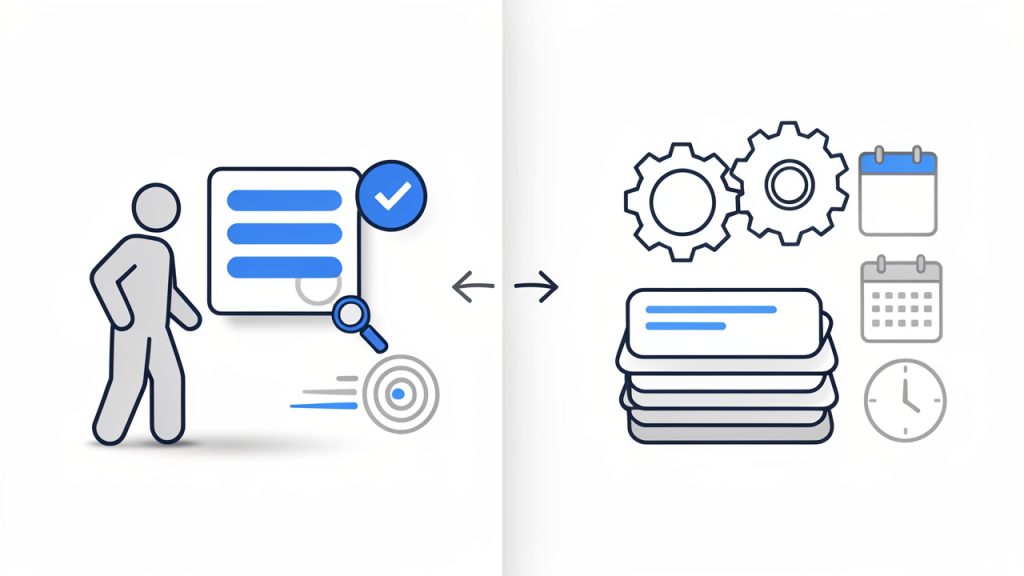
Automated publishing is built for scale. It saves time, keeps calendars moving, and helps teams maintain consistency. A manual post is built for accuracy and relevance. It lets you adapt your wording to the moment, respond to recent changes, and tailor the message to a specific audience or channel.
Neither approach is inherently better in every situation. The real distinction is in trade-offs. Automation improves speed, while manual posting improves oversight. If you are announcing a feature update, responding to customer feedback, or sharing a time-sensitive message, the manual route often produces better results.
Key aspects of manual posting
The value of a manually created post comes down to several core qualities. These are not just abstract benefits. They affect how your content performs, how your audience perceives you, and how much cleanup you need to do after publishing.
Control over message and tone
One of the strongest advantages of manual posting is editorial control. You decide exactly how the message sounds, what details to emphasize, and what action you want the reader to take. That control is especially useful for brands and professionals who care about voice, credibility, and nuance.
A scheduled or templated post can sound efficient but flat. A manually written post can reflect current context, customer concerns, or industry changes. That makes it more likely to feel timely and human. Readers may not consciously think, “This was carefully written,” but they often respond better when a message feels direct and considered.
Better accuracy and fewer publishing errors
Errors tend to appear where workflows become too automatic. The wrong link, an old screenshot, an outdated CTA, or a title that no longer fits can all slip through when content is pushed live without review. A manually created post creates a natural checkpoint. Because the content is being assembled intentionally, the creator is more likely to verify the details before hitting publish.
This matters for more than grammar. Accuracy affects trust. A single incorrect date or broken URL can weaken the impact of an otherwise good post. Manual creation gives you the chance to catch those issues while they are still small.
Flexibility across platforms
A manually created post adapts well to different environments. You can shorten it for social, expand it for a blog, or adjust the structure for a product page, community board, or email update. That flexibility is useful for users who work across multiple systems and do not want every message forced into the same template.
For small teams especially, this can be more efficient than it sounds. Instead of fighting the limits of automation tools, you create the right version for the right channel. The work feels more direct because it is shaped around the audience rather than around the software.
Stronger quality for high-value content
Not every piece of content deserves deep manual effort, but high-impact posts usually do. A launch announcement, service update, pricing change, customer-facing clarification, or thought leadership post should not feel rushed. These are the moments when a manual post has the greatest value.
Think of it like handwriting an important note instead of sending a generic form letter. The extra care changes how the message lands. In digital publishing, that care often shows up in tighter structure, clearer wording, and more useful context.
Time cost and workflow considerations
Manual posting is not perfect. It takes longer, requires attention, and can become inefficient if used for everything. If you publish high volumes of repetitive content, creating each post manually may slow your team down and introduce inconsistency.
The smartest approach is usually selective. Use manual posting where message quality, precision, or timing matter most. Use automation for routine publishing where the stakes are lower. That balance helps you protect quality without overwhelming your workflow.
| Scenario | Manual post | Automated post |
|---|---|---|
| Product or service announcement | Best for accuracy and tone control | Risk of sounding generic or outdated |
| Routine promotional content | Can be effective but time-intensive | Best for scale and consistency |
| Customer response or clarification | Best for relevance and nuance | Often too rigid |
| Multi-channel campaign adaptation | Strong if each version needs tailoring | Useful if platforms need identical messaging |
| Time-sensitive updates | Best when human review is essential | Helpful only if pre-approved carefully |
How to get started with manual posting
Getting started with manual posting does not require a complicated system. What it does require is a simple process that protects clarity and reduces avoidable mistakes. The goal is not to make posting slower, the goal is to make it more deliberate.
Start with purpose, not format
Before writing anything, define what the post needs to accomplish. Are you informing, persuading, updating, explaining, or inviting action? Too many posts begin with the editor open and no clear objective. That usually leads to filler, vague openings, and weak calls to action.
When your purpose is clear, decisions become easier. You know what tone to use, what details matter, and what the reader should remember. A strong manual post starts with a simple question, what should this post do for the audience right now?
Build the core message first
Once the purpose is clear, draft the main message in plain language. Avoid polishing too early. Focus on the substance first. What happened? Why does it matter? What should the reader do next? If you can answer those three questions clearly, the rest of the post becomes easier to shape.
This approach is useful because manual posting can tempt people into over-editing the surface before the core idea is strong. Think of the post like a storefront sign. If the message is unclear from a distance, better decoration will not fix it.
Use a simple publishing workflow
A lightweight workflow keeps manual posting efficient. You do not need a complex editorial stack if the content is straightforward. In most cases, the process can stay simple.
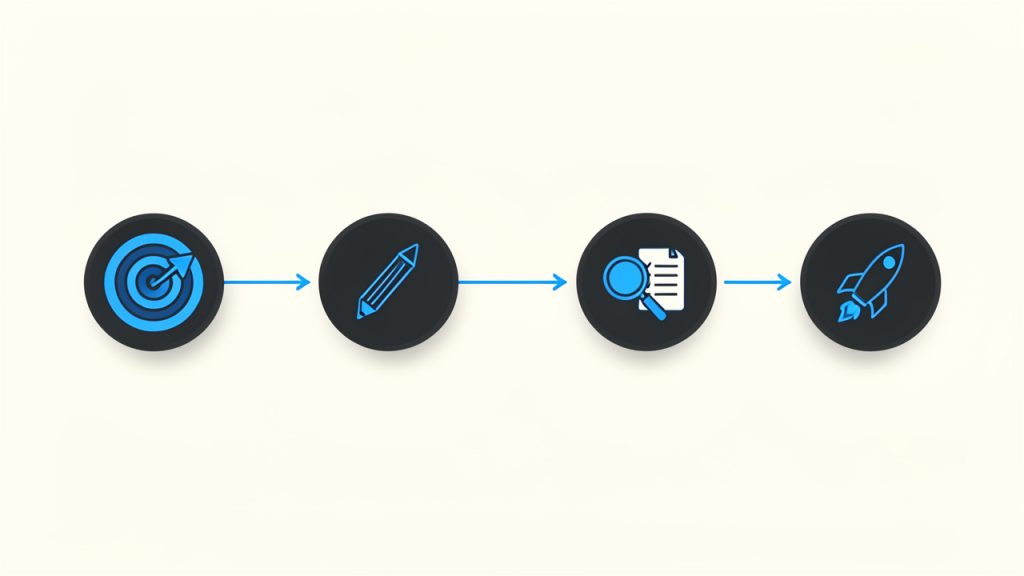
A practical four-step routine works well for most small teams and solo creators:
- Define the goal of the post.
- Draft the message in plain, direct language.
- Review for accuracy, including links, dates, names, and formatting.
- Publish and monitor audience response or engagement.
This kind of structure creates consistency without removing flexibility. It also helps prevent the common problem of treating every post like a one-off task with no quality check.
Focus on readability and structure
A manual post should be easy to scan and easy to understand. That means using clear headings where appropriate, short paragraphs, and a logical flow from opening to action. Readers often decide within seconds whether a post is worth their time. Dense formatting and vague openings make that decision easy in the wrong direction.
Clarity also improves performance. Whether your audience is reading a blog article, platform announcement, or community update, they are more likely to engage when the structure helps them find meaning quickly. Good manual posting is not only about writing better, it is also about presenting information in a way that respects attention.
Check context before publishing
One of the biggest advantages of creating a post manually is that you can align it with the current moment. Use that advantage. Before publishing, ask whether anything has changed since the draft began. Has the timeline shifted? Has a feature changed? Has customer sentiment moved? Is the audience likely to interpret the message differently today than they would have yesterday?
That final context check is where many manually written posts become noticeably stronger than automated ones. The content feels current because it is current. Even a small update to wording can make the difference between a post that feels canned and one that feels genuinely useful.
Know when manual is the right choice
Not every post needs to be manually created from scratch. The best candidates are posts with high visibility, sensitive information, changing details, or audience-specific nuance. If the content affects trust, understanding, or decision-making, manual creation is usually worth the extra effort.
A helpful rule is to think in terms of risk. If publishing the wrong version would cause confusion, embarrassment, or missed opportunity, choose the manual route. If the message is routine and stable, automation may be perfectly fine.
Conclusion
A manual post is more than a basic publishing action, it is a deliberate way to create content with stronger accuracy, clearer intent, and better alignment with your audience. In a digital environment that often rewards speed over substance, manual posting remains one of the simplest ways to protect quality.
If you want to get more value from it, start small. Use manual posting for your most important updates first, then build a repeatable process around what works. That next step gives you the best of both worlds, content that feels human and thoughtful, without making your workflow unnecessarily heavy.
Leave a Reply